Finding the right automated SEO monitoring tool shouldn't drain your time or budget. This guide cuts through the noise to show how a real-time monitoring tool tracks your rankings. You will discover how to spot technical issues and how to focus your efforts on growing your business.
How automated SEO monitoring works
An automated SEO monitoring service continuously scans your website and Google Search results, tracking keyword position shifts the moment they occur. Think of it as an ever-vigilant assistant watching your search performance around the clock, ready to alert you to any changes.
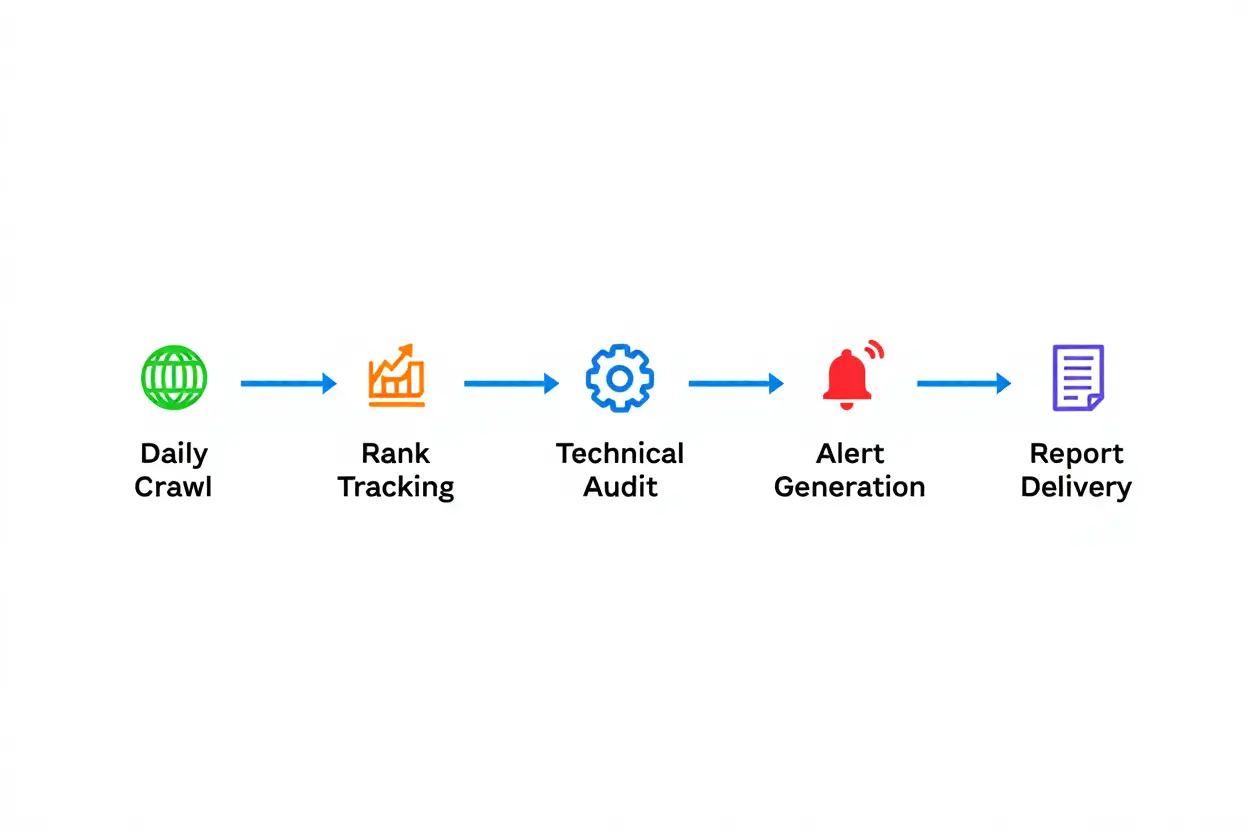
Core tracking and auditing flow
On a daily basis, your SEO monitoring tool records current keyword positions, either by checking search results or by pulling Search Console data. Reliable rank tracking automatically compares these positions with historical data to flag only the most significant movements. Simultaneously, technical scans routinely identify crawl errors, broken links, and page speed issues so you can prioritize fixes effectively.
Your Google Search Console data automatically syncs with the rank tracking data to create a unified, holistic view. Linking your Search Console directly shows how shifts in keyword rankings affect your actual traffic. This connection helps you clearly demonstrate the business value of your ongoing optimization efforts.
Alerts, integrations, and reporting
Effective SEO monitoring means you never have to wait for a weekly report. You can set up configurable alerts to notify you instantly if a tracked keyword shifts significantly or if crawl errors suddenly spike. Severity thresholds ensure you're alerted only about the changes that truly matter.
Native integrations with various platforms mean initial setup takes minutes, not weeks. You can seamlessly oversee all your projects and data directly from a single, unified SEO monitoring dashboard. For agencies, this centralized oversight dramatically cuts down the time required to create and share client reports.
Scheduled weekly or monthly reports automatically deliver rankings, traffic estimates, and competitor benchmarks straight to your inbox. This automated reporting keeps your entire team aligned without imposing any extra manual effort. It lets you focus your energy on strategy rather than on tedious data collection and compilation.
Local, mobile, and international coverage
Modern rank tracking monitors keyword positions with granular detail, down to the zip-code level for local businesses. You can segment results by device type and track performance across multiple languages for global brands. This detailed visibility helps e-commerce stores effortlessly understand their regional marketing performance.
Daily updates are standard, but enterprise-level options offer real-time refreshes for critical campaigns. This level of precision transforms raw data into highly actionable market insights for your team, ultimately allowing you to allocate resources exactly where they will have the greatest impact.
Key metrics and outcomes to track
Executing an SEO strategy without diligent tracking is essentially educated guesswork for your marketing team. An automated SEO monitor delivers concrete, actionable data directly tied to your business outcomes. This empowers you to demonstrate clear ROI to stakeholders while making confident, data-driven optimization decisions.
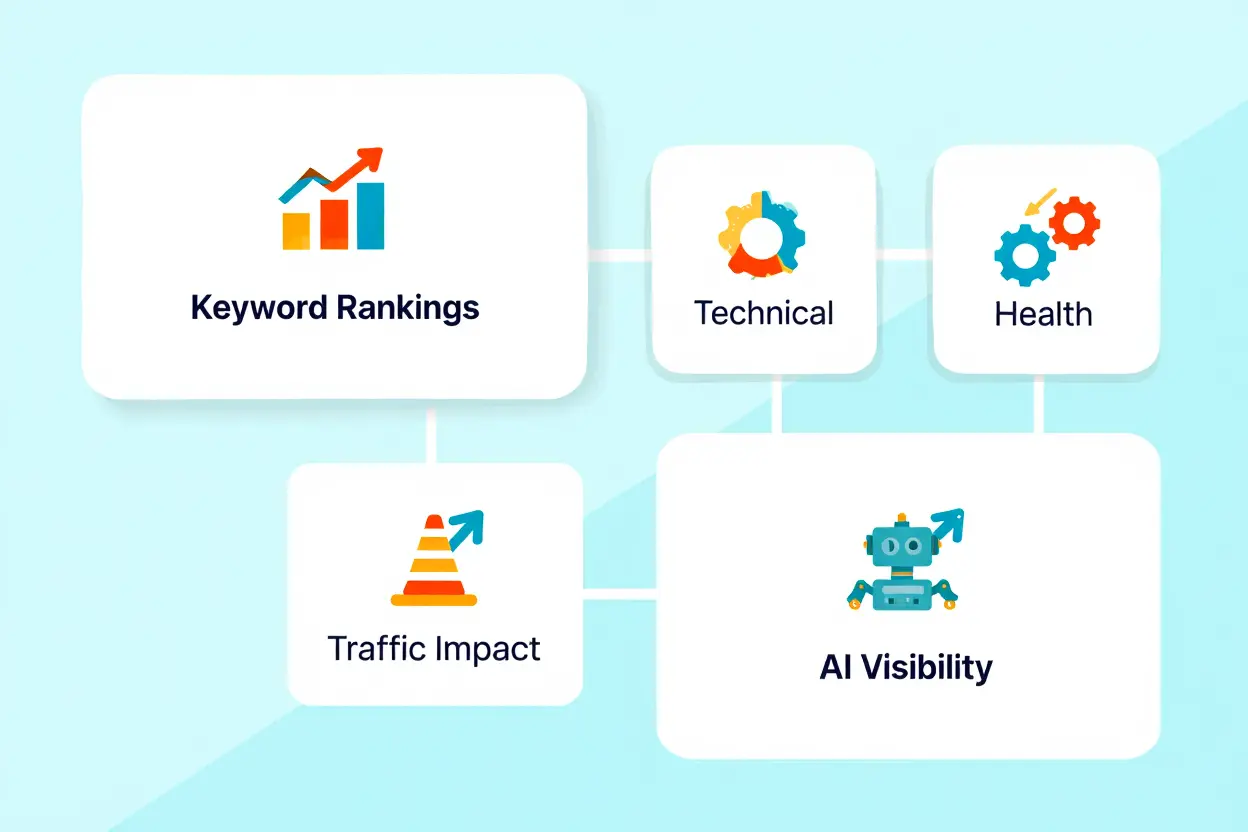
Rankings, SERP features, and AI results
Tracking your performance daily enables you to monitor keyword ranking positions across various search engines. It captures standard rankings as well as SERP features like featured snippets and AI overviews. This holistic perspective reveals both your areas of strength and the points where competitors are capturing your potential search traffic.
- Keyword ranking positions: Monitoring daily positions at scale logs your precise placement for every tracked keyword. This facilitates the rapid identification of any sudden improvements or declines in rank.
- SERP feature visibility: You gain the ability to track appearances in featured snippets, local packs, and AI-generated answers. This helps you understand your complete presence on the search results page, beyond simple organic rankings.
- Competitor rank gaps: Direct, side-by-side comparisons clearly illustrate where your competitors are outranking you. This spotlights valuable keywords that could break onto the first page with a focused optimization effort.
Long-term, historical tracking uncovers valuable trends and helps you accurately pinpoint seasonal patterns over time. You can easily correlate the specific impact of content updates on your overall performance. This simplifies the process of linking ranking fluctuations to particular site modifications or major search algorithm updates.
Technical health and indexation signals
Effective AI visibility tracking and a comprehensive SEO analysis delve deeper than surface-level rankings to diagnose the underlying reasons for performance shifts. Crawlability assessments directly connect technical problems to your site's ranking health. Additionally, indexation audits verify which of your pages are being properly crawled and interpreted by Google.
Customizable dashboards allow you to tie specific on-page HTML changes or content revisions directly to subsequent ranking movements. For instance, if revising a product description results in an overnight ranking boost, the platform immediately flags this event. This validates your strategic decisions and builds confidence for implementing similar tactics at scale.
Business impact and ROI
The most direct measure of ROI is sustainable growth in search traffic. Organizations that utilize consistent SEO monitoring frequently experience a substantial rise in organic traffic within a few months.
Identifying technical issues early via a thorough SEO audit helps avert unexpected traffic collapses. Securing stable organic rankings reduces your overall reliance on paid advertising. For agencies, comprehensive automated SEO monitor tools drastically cut down on manual reporting hours, freeing up time for more valuable strategic client initiatives.
| Metric | Typical Improvement | Time to Realize |
| Organic traffic volume | Varies by site and competition | 3–6 months |
| Organic clicks from AI optimization | Varies by site and competition | 4–8 weeks |
| Conversion rate lift | Varies by site and offer | 6–12 weeks |
| Crawl error reduction | Depends on the fixes applied | 1–2 weeks |
| Report creation time savings | Hours saved on each report | Immediate |
Best Tools and How to Choose
Choosing the perfect SEO tool from the many available options requires focusing on three key factors: platform compatibility, the depth of features, and overall ease of use. Let's explore the best SEO monitoring tools and what you should consider before making your choice.
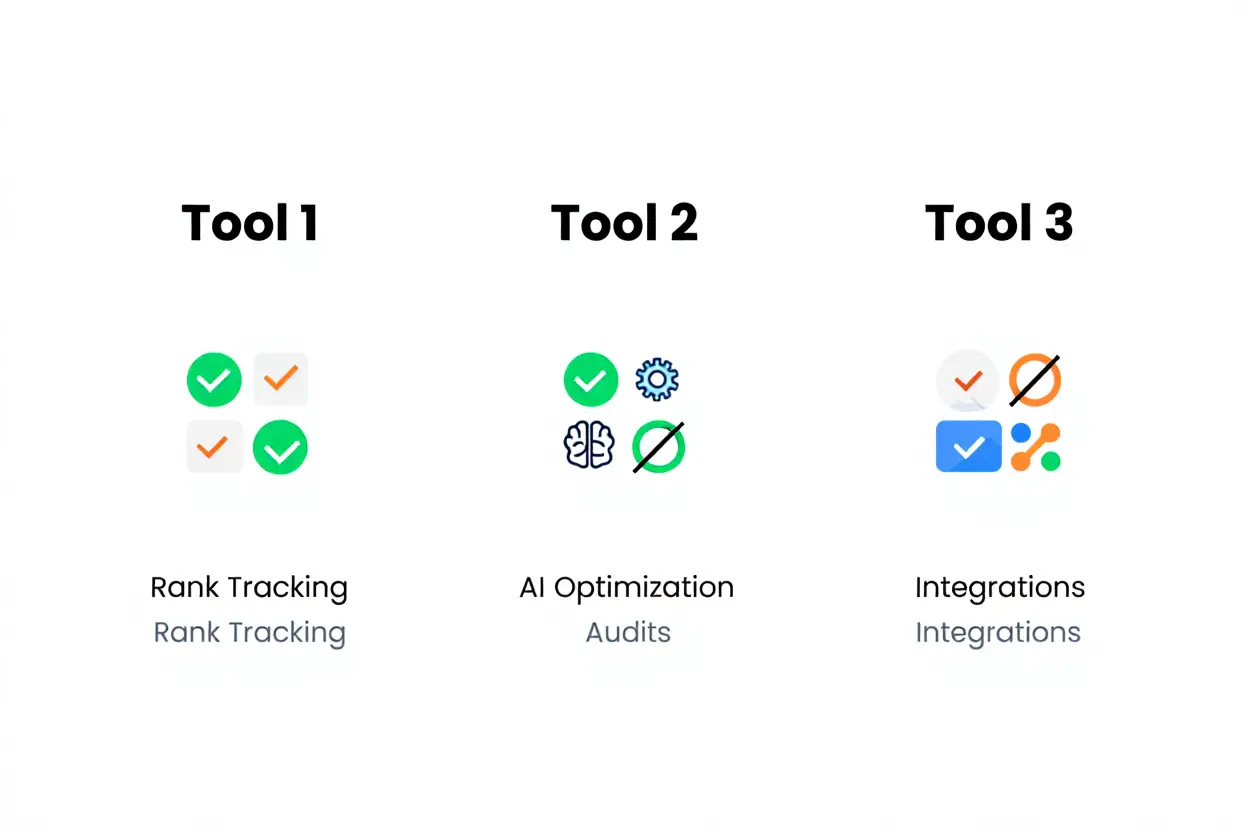
Sedestral and Platform-Specific Options
An automated SEO monitor like Sedestral brings several essential functions together in one unified platform. It offers reliable daily rank tracking, real-time checks, AI-powered content optimization, and thorough keyword research. Native integrations make syncing with websites like Shopify, Wix, and WordPress completely seamless.
- Daily rank tracking: Clicks, impressions and average positions come day by day from your Google Search Console for every query your site appears on, and Sedestral keeps the history beyond Search Console's 16 months.
- Real-time audits: Run an instant SEO audit on all page types to identify issues like duplicate content or slow loading speeds. Fixes are prioritized based on a clear quality score to improve your site’s overall health.
- AI content optimization: Enhance your content through semantic analysis and smart automation to boost engagement. You can quickly generate optimized articles and publish them directly to your chosen platforms.
- Keyword research integration: Automatically import data from Google Search Console to uncover profitable new opportunities. It highlights promising keywords and flags significant ranking shifts for competitive tracking.
Wix users benefit from a dedicated monitoring tool that continuously scans web pages to provide actionable improvements. It tracks keyword ranking changes day by day, allowing users to adjust their strategies quickly without manual effort. This powerful tracking is available through automated SEO monitoring.
Shopify merchants enjoy consolidated audits and AI-driven optimizations from an intuitive dashboard. Continuous site audits quickly identify underperforming pages, so you can address issues promptly. Access these essential features directly via the automated SEO monitor.
Essential Features to Evaluate
When comparing options, prioritize daily updates and real-time alerts for critical keywords. Ensure the tracking covers specific geographic areas and separates mobile from desktop results. Trying an automated SEO monitor free trial helps confirm the platform is a good fit for your team.
Responsive alerts are crucial for reacting quickly to unexpected ranking drops. Verify that the platform stores detailed historical data for at least six months, enabling effective trend analysis before committing to a pricing plan.
Always evaluate SEO software based on reporting depth and ease of use. Check if it integrates with Google Search Console to combine organic traffic and ranking data seamlessly. Look for no-code features and customizable dashboards to keep your team informed without extra meetings.
Fundamentally, search engine optimization boosts website visibility by improving technical infrastructure and content relevance. Webmasters rely on these advanced platforms to monitor index status and performance metrics continuously. Expand your knowledge of these practices with SEO monitoring tools.