You're navigating a sea of SEO tactics that struggle to deliver lasting results. Keyword research, link building, and technical tweaks often blend into an indistinguishable blur. Today, modern search engines place far less emphasis on exact keyword matches.
Instead, they prioritize understanding entities. This comprehensive guide to entity SEO explains what entities are and why they are fundamental to your search rankings. You'll discover how to build a powerful, effective strategy centered around entities.
Mastering this approach helps your content appear in more search results without constantly chasing algorithm updates. It also increases your chances of earning rich snippets and makes dominating voice search far more achievable.
What is entity SEO and why it matters
This strategic approach shifts your focus from individual keywords to distinct, recognizable concepts. Search engines utilize natural language processing and the knowledge graph to connect these elements semantically. Your goal is to help Google understand your topic deeply by showcasing your expertise through clear entity relationships.
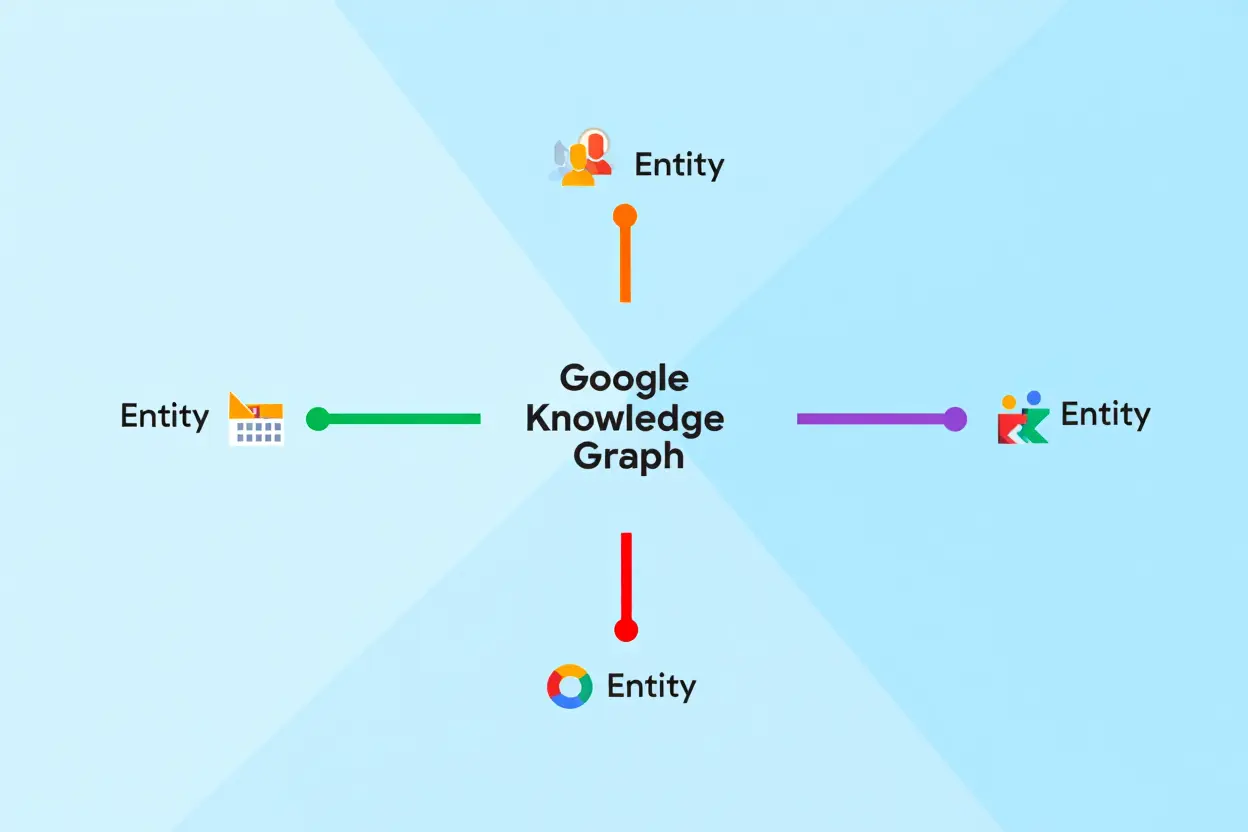
How entities differ from traditional keywords
Traditional SEO treats search queries as simple strings of text, whereas entity-based content treats subjects as unique, interconnected concepts. By utilizing schema markup and strong contextual signals, you focus on highlighting specific details rather than obsessing over keyword density. This smarter approach allows you to rank for a wide array of related queries without resorting to unnatural keyword stuffing.
Keywords still play a role, but entities are what allow search engines to truly understand user intent. Disambiguation occurs through advanced entity recognition, which relies on structured data and clear contextual clues. In the end, these distinct elements are what trigger valuable features like knowledge panels and AI-generated answers—something basic keywords alone cannot accomplish.
- Entity clarity: Search systems instantly recognize your core topic through proper schema markup and context.
- Query expansion: A single optimized page can rank for dozens of long-tail variations.
- Rich results: Strong entity signals and valid structured data make pages eligible for features like product snippets.
- Voice search alignment: Voice assistants depend heavily on recognizing entities to answer questions conversationally.
Proper entity optimization naturally complements standard keyword research rather than replacing it entirely. You structure your content around the specific concepts those popular search terms refer to. This strategy leads to more comprehensive topical coverage and significantly better performance across all modern search interfaces.
Entity recognition in modern search algorithms
Modern search algorithms have evolved to comprehend human language contextually. This impressive capability is powered by NLP (natural language processing) systems that evaluate your content. When search bots crawl your pages, they extract details and cross-reference them with known databases to determine what your content is genuinely about.
Search platforms no longer just index words—they actively interpret underlying meaning. A high relevance score means your page can rank well across numerous complex query variations. Modern algorithms reward pages that thoroughly explore an entity from multiple angles, reinforcing the core message.
Benefits of entity-based optimization for rankings
Well-structured content ranks better because it clearly establishes topical authority. When your pillar pages comprehensively cover main concepts and related subtopics, algorithms recognize your site as an authentic expert. These vital signals of expertise translate into significantly higher rankings for hundreds of related search queries.
Rich results remain a major factor in boosting online visibility. Many helpful features, like product carousels, depend heavily on clear entity signals to function correctly. With clean structured data, your brand can easily appear in AI-generated summaries and conversational search results.
Embracing this forward-thinking approach effectively future-proofs your entire digital strategy. As new AI models become primary search interfaces, they rely heavily on clear, factual data to determine which sources to trust. A strong digital footprint ensures your content gets recommended automatically across all emerging discovery platforms.
Identifying Core Entities for Your Content Strategy
Start by auditing what your business actually represents—your brand, products, and industry concepts are all relevant entities. While many websites develop content inconsistently, you should clearly define your primary targets and explore related entities to find untapped opportunities. This foundational entity identification process lays out a strategic path forward for the months ahead.
How to Discover Primary and Related Entities
Begin by listing your main targets. Remember that a key entity—like a fitness product—often connects to broader exercise ideas. This network of connections reveals the semantic structure you'll need to build around your strategy. You can also use AI-powered extraction tools to review competitor content and identify gaps where they rank for high-traffic queries.
Entity identification isn’t a one-time task; it's an evolving practice. Continuously pull entities from competitor content and track ranking trends to spot new opportunities. By filling strategic gaps, you keep your content fresh and competitive.
Leverage tools like the Google Natural Language API or third-party SEO platforms to analyze top-ranking pages in your niche. These tools help show which terms frequently appear together—highlighting important semantic relationships. Your content should reflect these natural links to help both users and search engines navigate with ease.
Disambiguating Entities with Contextual Signals
Ambiguity can weaken your entity signals, so always clarify meaning when using potentially confusing words. Make your intent clear through descriptive context, precise internal links, and accurate schema markup. By intentionally linking back to pillar pages, you simplify how topics connect.
Use detailed schema markup to give each entity a stable identifier—this tells search engines exactly what you’re referencing. Apply the same logic to semantic relationships by linking deeply to relevant subpages. These deliberate connections clarify how entities relate and reinforce your site’s structure.
- Context Clues in Text: Introduce each entity with clear qualifiers and explain its relevance upfront.
- Schema Markup Precision: Use @id URLs to assign unique identifiers and avoid confusion on platforms like Google.
- Internal Link Anchors: Anchor text should match exact entity names instead of vague phrasing.
When items vary across international markets, treat them as separate entities with unique URLs and tailored schema. For example, pages in different languages can link to the same Wikidata entry to show they’re equivalent. But keep in mind—differences in regional search behavior might call for custom treatment based on query data.
Mapping Entity Relationships for Topical Coverage
Create a visual entity map to highlight your key focus areas and how different entity relationships interconnect. Expand from your main topics to sub-entities and related ideas—this visual roadmap can guide your strategy moving forward. This structured method ensures thorough coverage and boosts your site’s topical authority.
AI tools can automatically pull entities from competitors’ content. Compare their mapping to yours to identify high-potential gaps. Focus on creating content in areas with strong search demand and lower competition. This way, you systematically build semantic depth around the exact entities your audience is searching for.
Implementing schema markup for entity recognition
Schema markup functions as the precise language that tells Google exactly what entities exist on your page. Using the recommended JSON-LD standard keeps your HTML clean while ensuring accurate entity recognition. Applying appropriate schema markup to every page forms the essential foundation of effective entity SEO.
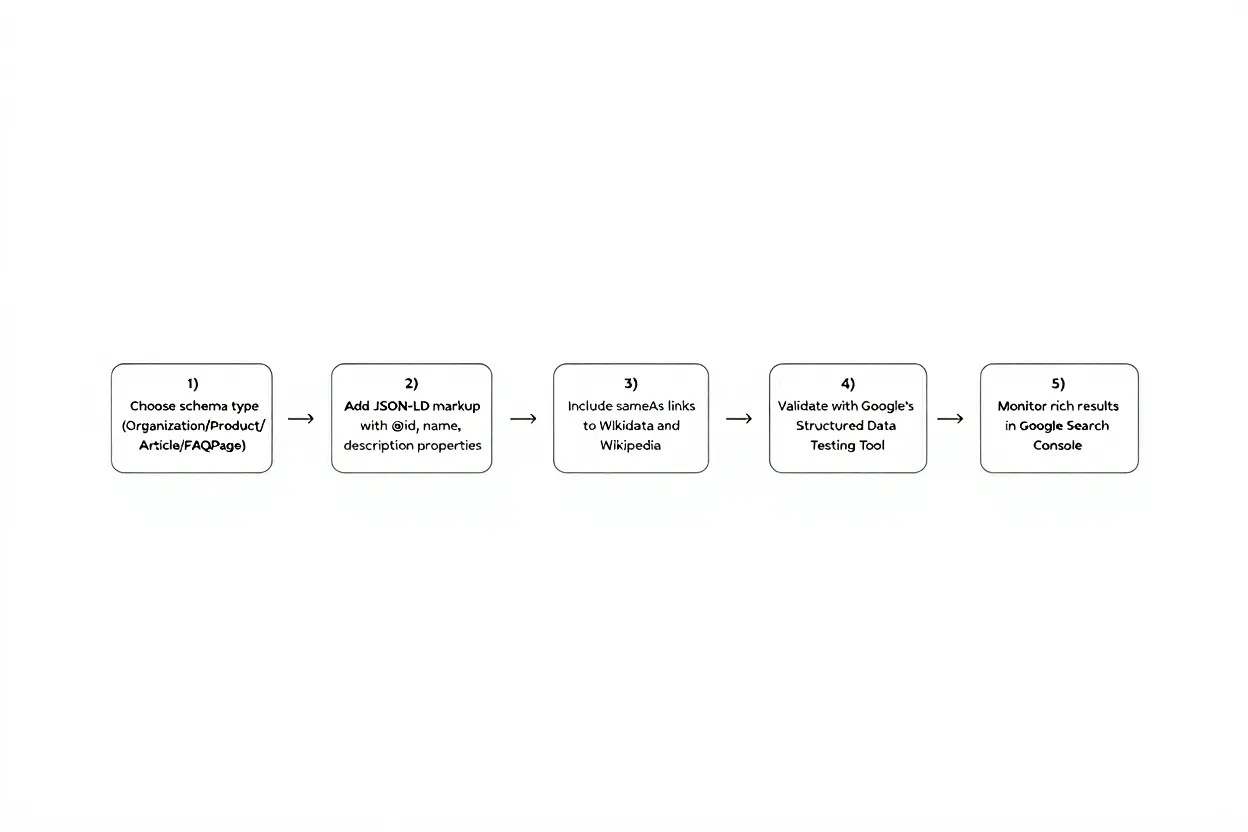
Essential schema types for entity optimization
For proper entity optimization, apply tailored structured data formats like Article or Organization schema depending on your content. These specific tags clearly signal the core entity covered throughout your webpage. Google relies on these explicit declarations to display accurate rich results for your content.
Assigning stable entity identifiers with @id
The @id property acts as a permanent, stable identifier for your entity across changing page URLs. This consistent reference allows search engines to recognize when multiple pages discuss the identical topic. Ultimately, structured data functions as the vital glue connecting your entire semantic web together.
- Stable @id assignment: Create permanent, memorable URLs for each core entity and reference them consistently.
- sameAs linking: Link your @id to authoritative external sources (Wikipedia, Wikidata), reinforcing your credibility.
- Cross-page references: Every page mentioning a specific topic should reference its @id via schema markup.
Utilize the sameAs property to connect your identifiers with established databases like Wikipedia and Wikidata. These external citations act as powerful votes of confidence from highly authoritative sources. Consequently, establishing these links significantly strengthens your overall position within the knowledge graph.
Creating Entity-Rich Content That Ranks
Even the most perfect schema markup and internal linking strategy won't help if your content is thin or poorly structured. To create truly entity-rich content, you need to thoroughly explore a topic and answer every possible question a user might have about that specific entity. A detailed semantic SEO guide can show you how to strategically organize this information for maximum impact.
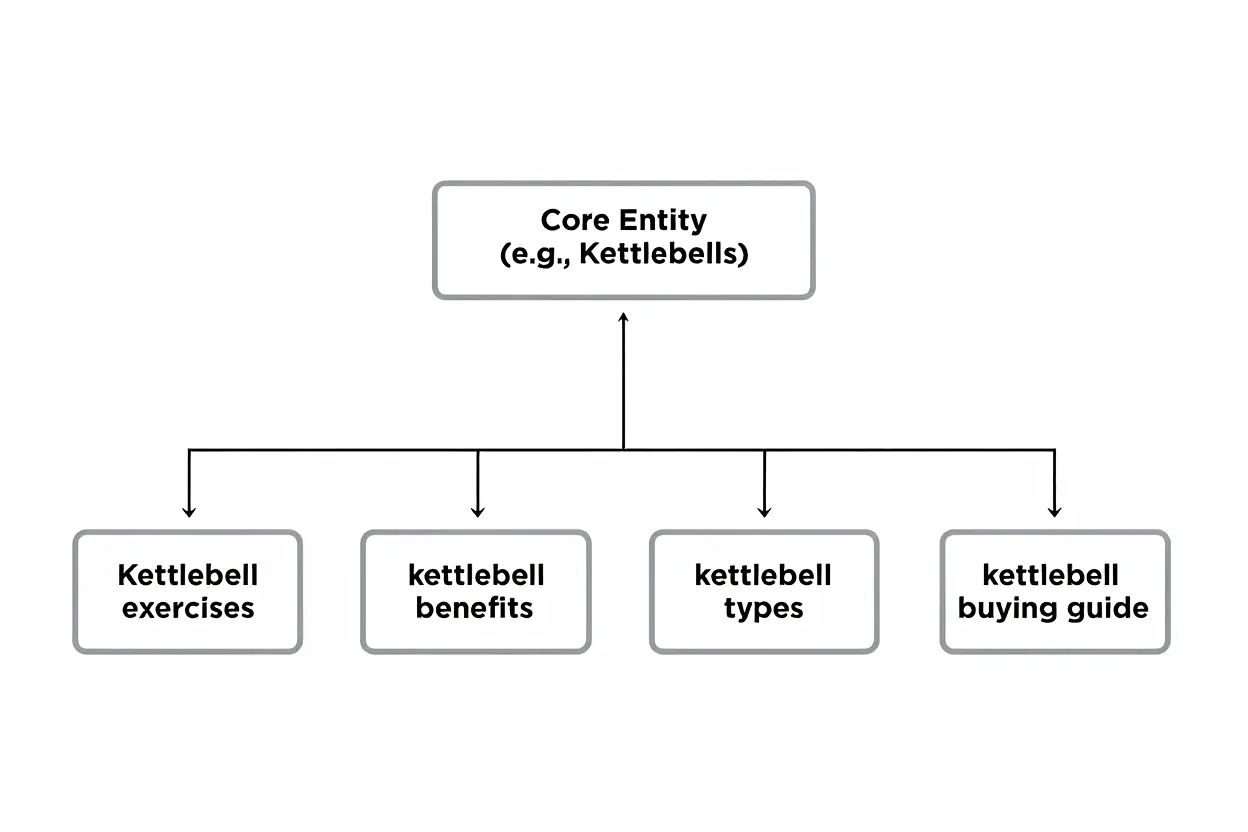
Structuring Pillar Pages Around Core Entities
Your pillar page should act as a comprehensive guide that introduces the primary entity right from the start—much like a Wikipedia entry does. Proper content optimization involves structuring this information logically with clear headings and in-depth coverage. By doing this, you ensure that every user question gets answered directly on the pillar page or through a linked cluster page.
When you build your pillar pages with attribute-focused sections, you cover the full depth of a concept, product, or organization. Each section reinforces the main topic while naturally introducing related entities, which boosts semantic richness. In fact, applying SEO content maxims from trusted research improves both relevance and readability—something search engines highly value.
Building Topic Clusters for Entity Coverage
Effective topic clusters are supporting pages that dive deeper into specific aspects of your primary subject. Each one addresses a distinct user intent and seamlessly introduces sub-entities and related concepts. This interconnected structure signals to Google that your website offers authoritative and exhaustive coverage of these entities.
- Intent-based organization: Create clusters tailored to informational, comparison, and transactional search queries.
- Content gap filling: Every cluster page should address a specific gap found during competitor analysis, ensuring your content stands out.
- Semantic bridge-building: Use cluster pages to introduce and interlink relevant ideas, demonstrating how concepts relate to one another.
- Internal linking density: With natural anchor text, create dense links back to the pillar page, building a tightly interconnected semantic web.
Arranging your clusters around user intent helps you address informational, comparative, and transactional queries effectively. Covering all stages of the search funnel guides users through their journey while capturing the entire audience. Ultimately, this holistic approach helps you establish topical authority within your niche.
Integrating Semantic Keywords and Synonyms Naturally
Discovering semantic keyword variations allows you to effortlessly enhance your entity optimization approach. Sprinkle these synonyms naturally throughout your text—almost like organizing a well-structured schema. This semantic SEO strategy tells search engines that your content understands the topic from many linguistic angles.
Using question-based headers that reflect real user queries can dramatically boost your visibility. Specific headings like these improve your odds of capturing featured snippets and ranking well in voice search. When you offer clear, concise answers, both users and algorithms will reward your site with stronger engagement signals.
Measuring and Improving Entity SEO Performance
Improving your entity SEO strategy depends on accurate measurement, but many websites struggle to track performance correctly. To get it right, you need to monitor essential entity performance metrics—specifically, tracking how well your entities rank and whether your brand appears in relevant knowledge panels. Staying consistent with these measurements keeps your efforts efficient and helps you avoid wasting time on tactics that don’t deliver results.
Tools for Auditing Entity Salience and Coverage
Google’s Natural Language API is a highly useful tool that evaluates your content by analyzing each entity and assigning it a salience score. Use this regularly to assess your key pages, making sure your most important articles maintain strong relevance to their primary topics. If a page has a low salience score, refining your language and adding intentional internal linking can reveal clear opportunities for optimization.
- Salience Score Analysis: Assess your top-performing pages to see how closely search engines link them to their main subject matter.
- Coverage Scoring: Evaluate how many essential attributes—like product details, benefits, and frequently asked questions—your content currently includes.
- Competitor Entity Extraction: Use automated tools to analyze competitors’ content, identifying topics you’ve missed and uncovering new ranking opportunities.
Semantic audits use AI-powered tools to scan your website and pinpoint topics that are absent from your content. These audits generate coverage scores that reflect your content’s comprehensiveness, making it easier to spot knowledge gaps and create relevant material to address them. Using these data-rich insights reduces guesswork and helps you prioritize what to publish next.
It’s also helpful to track how many unique search queries your topical pages attract. This kind of broad query coverage is a clear sign of topical authority, which proves more valuable than ranking for just one keyword. As your targeted coverage expands, watching these numbers grow confirms that your strategy is working.
Tracking Rankings and Rich Results for Entities
Set up dashboards specifically designed to track overall visibility—not just traditional keyword rankings. Monitoring rich results and brand mentions is crucial because these prominent features often attract significantly more traffic than standard organic results. If your brand shows up in search results for competitor terms, it’s a clear signal that your entity signals are gaining strength.
Keep a close watch on query expansion to track your site’s growing expertise and industry influence. After months of consistent cluster-building and smart schema optimization, a well-optimized page will naturally rank for hundreds of related search terms. This organic expansion is one of the best signs of an effective, forward-thinking SEO strategy.
Always analyze sudden traffic surges that come from AI-generated search results. If one of your optimized pages gets a spike in clicks from these summaries, it means automated systems considered your content highly relevant. As more users turn to voice search and AI interfaces, performing well in these areas becomes essential for sustained growth.
Maintaining Entity Data Across Knowledge Bases
Your core data appears across multiple platforms—your own website, the Knowledge Graph, Wikidata, Wikipedia, and industry directories. Inconsistencies across these sources can weaken your signals and lower your overall authority. Regular audits of these external profiles help you catch and correct discrepancies, ensuring your brand maintains one consistent identity everywhere.
Citations from authoritative sources regularly strengthen your trustworthiness. Every relevant mention on respected news sites or industry directories boosts your credibility and emphasizes your role in the market. Building a strong external citation network not only elevates your digital presence but also increases your chances of qualifying for rich search results.