SEO automation is the practice of using specialized software and AI to handle repetitive SEO tasks with minimal ongoing human intervention. Discover the fundamentals of SEO to better understand how search engine optimization works, then see how automation supercharges your overall SEO strategy. This guide explains what SEO automation is, outlines its typical workflow, and highlights top automation tools that boost performance today.
What is SEO automation and how does it work?
Think of SEO automation as a tireless digital helper that manages keyword research, performs technical audits, and schedules content publication—even while you’re offline. Rather than manually inspecting every page or writing each meta description, automation tools continuously gather data, monitor ranking fluctuations, and apply improvements automatically.
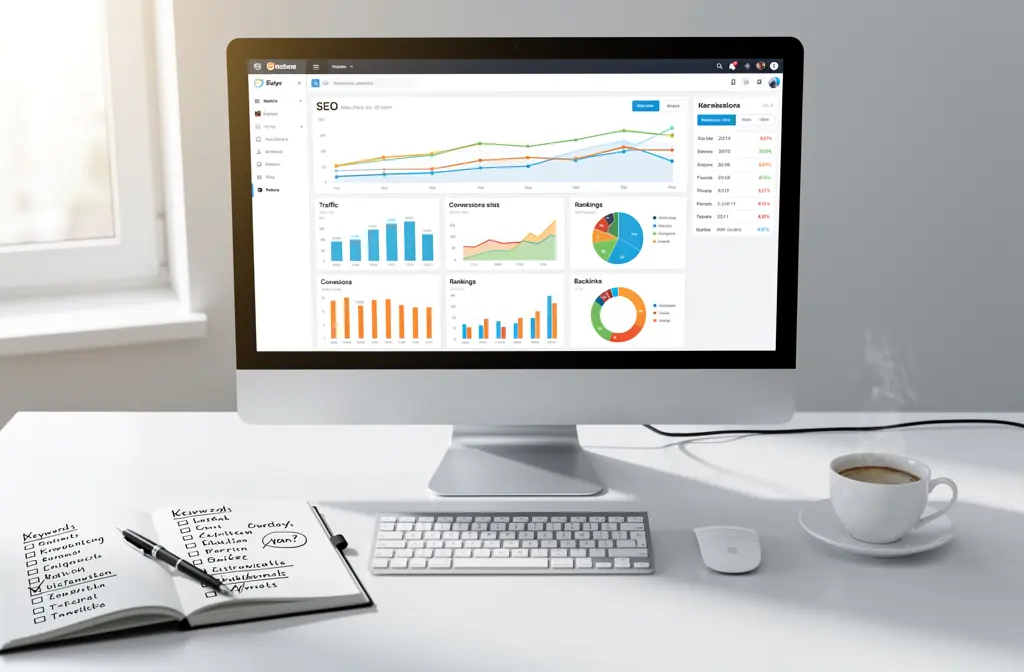
Core definition and purpose of automation
SEO automation delegates repetitive jobs—like keyword research, content generation, and site auditing—to AI-powered SEO systems that operate around the clock. Your guide to SEO task automation starts here: by automating routine chores, teams free up valuable time for strategic planning, branding efforts, and creative choices that drive meaningful traffic growth.
The goal remains straightforward: save time and reduce errors. Automated systems process analytics consistently, identify issues early, and enforce SEO best practices page by page to protect rankings and improve visibility.
E-commerce brands, in particular, leverage automation as a competitive edge. They automate the optimization of product descriptions, react to seasonal keyword trends, and scale organic traffic across thousands of products—all without expanding their team.
How AI-powered automation processes SEO data
AI-powered SEO automation follows a five-step workflow that transforms raw data into actionable insights and optimized content. The system integrates with Google Search Console, analytics dashboards, and keyword APIs, then initiates smart actions like metadata updates or alert notifications.
- Data collection: The tool aggregates metrics from Google Search Console, analytics platforms, competitor tools, and your CMS to evaluate current performance.
- Analysis and insight generation: AI models compare your content against leading competitors, uncover new keyword opportunities, and prioritize tasks based on search intent and ranking potential.
- Automated action triggers: When the system detects a broken link, ranking drop, or content gap, it automatically generates tasks, suggestions, or alerts.
- Content and metadata generation: The tool creates optimized copy, writes title tags and meta descriptions, and suggests FAQs and internal links—all without manual input.
This cycle repeats on a schedule you set—whether daily, weekly, or monthly—ensuring every page is continually refined. Human experts still oversee strategic decisions, but the system handles the heavy lifting and automates the finer details.
Business benefits of automating SEO tasks
The time savings are significant: a task that once took four hours may now take just fifteen minutes. Those reclaimed hours can be redirected toward high-level SEO strategy—planning content pillars, analyzing competitors, and refining automation tools to enhance performance.
Automation also improves consistency. Systems apply uniform quality checks to every page, eliminating issues like missing H1 tags, incomplete meta descriptions, and broken internal links. This builds trust with search engines, supports higher rankings, and increases organic traffic visibility.
Managing SEO workflows manually can often feel like an overwhelming task. Keyword research alone can consume hours, technical audits require specialized crawlers, and publishing content demands strict formatting. Automation simplifies these pain points by handling repetitive tasks efficiently. Learn how AI can automate your SEO strategy and identify which parts of your workflow you can delegate right away to refocus your team's efforts.
Essential workflows you can automate in SEO
Not every SEO task benefits equally from automation, but repetitive, data-heavy processes become true game-changers when automated. Start by identifying which areas of your workflow have the greatest impact on ranking and traffic. Focusing here ensures tangible results without adding unnecessary complexity.
Technical audit and site health monitoring
Begin your SEO workflow automation by implementing automated audits. Continuous crawlers scan your entire website, map its architecture, detect broken links, find missing schema markup, and flag mobile usability issues—all without manual intervention. Each detected issue can trigger a ticket automatically, speeding up resolution and safeguarding your search rankings.
- Automated crawl analysis: Bots examine site structure, pull metadata, and uncover errors far faster than any manual tool.
- Broken link detection: The system identifies dead-end URLs before they harm user experience or damage ranking potential.
- Technical issue alerts: Real-time monitoring catches crawl errors, duplicate content, and mobile optimization gaps as soon as they occur.
- Priority remediation tickets: Automation scores issues by impact and recommends solutions, directing developers toward high-priority actions.
Rather than waiting for a monthly review, ongoing monitoring catches ranking risks within hours. Quick fixes prevent competitors from taking advantage of your site’s vulnerabilities.
Keyword research and content planning workflows
Conducting keyword research used to take weeks. Teams would juggle multiple tools, group search terms, and debate which keywords to prioritize. With automation, massive datasets are processed in hours, revealing high-intent keywords and clustering them logically.
AI analyzes search intent and uncovers content gaps that competitors are already ranking for. It suggests content angles, recommends secondary keywords, and can even auto-generate briefs. Your strategy becomes driven by data instead of guesswork.
Automated content creation and publishing process
This is where the true potential of AI-powered SEO shines. Provide the system with a target keyword or product, and it can draft a fully optimized article—complete with headings, internal links, meta descriptions, and image suggestions. By learning from sample content, it adapts to your brand voice for consistency.
The outcome is a seamless SEO automation workflow that takes an idea from conception to publication in minutes. Your writers can focus on creativity while the tool handles formatting, SEO compliance, and publishing logistics.
Effective automation tools can turn the tedious grind of SEO into a seamless, efficient engine that runs on its own. It's crucial to select solutions that align with your team's workflow, integrate smoothly with your existing systems, and consistently deliver dependable data and results. We encourage you to Automate Your SEO Content Creation using platforms specifically engineered for modern e-commerce and publishing. These tools empower teams to pursue scaling SEO with automation, eliminating complexity and guesswork from the process.
Best SEO Automation Tools and Platforms
Navigating the crowded marketplace of SEO automation tools can be daunting, but a select group of automation platforms truly succeed in reducing manual effort. The best tools offer a powerful combination of accurate data, seamless integrations, and user-friendly interfaces that don't require a technical background to operate.

Top Tool Categories for Different SEO Tasks
The most effective approach to scaling SEO with automation involves assigning each specific keyword task to the specialized tool designed for it. One platform might specialize in deep audit reviews, another in precise tracking of your ranking positions, and a third in bulk content optimization. A sophisticated SEO strategy seamlessly connects these various SEO automation tools into one cohesive workflow.
- Technical audit and crawling tools: Tools like Screaming Frog systematically crawl every page on your site. They extract missing metadata, identify broken links, and sync with Google Search Console to automatically surface any indexing problems.
- Rank tracking and competitive analysis: Platforms such as SEMrush and Ahrefs monitor keyword movements in real-time. They provide instant alerts for ranking drops and help you dissect competitor backlink strategies.
- Content optimization and outline generation: Solutions like Surfer SEO and MarketMuse analyze top-performing pages. They provide keyword ratio suggestions, generate FAQ ideas, and build content outlines that are aligned with the best results on the SERPs.
- Workflow orchestration and integrations: Automation platforms like Zapier and Make allow you to automate repetitive tasks. This includes generating schema markup, sharing posts to social media, and logging performance metrics across your entire software stack.
Furthermore, Google Data Studio (called Looker Studio until April 2026) acts as a central hub, bringing together data streams from all your tools. It creates automatically refreshed dashboards, enabling stakeholders to easily track performance without waiting for custom reports. With hourly updates, raw data is transformed into clear visual stories that directly inform strategic decisions.
| Tool category | Primary function | Best for | Time savings |
| Technical audit tools | Site crawling, issue detection | Identifying broken links, missing schema, crawl errors | 4-6 hours per week |
| Rank tracking tools | Keyword monitoring, competitor analysis | Tracking ranking progress, spotting opportunities | 3-5 hours per week |
| Content generation tools | Article writing, outline creation | Creating optimized content at scale | 10-15 hours per week |
| Workflow automation platforms | Integration and task orchestration | Connecting tools, automating repetitive processes | 5-8 hours per week |
Platform Integrations That Automate Content Publishing
Modern SEO automation tools should connect directly to your content management system without needing custom code. Native integrations for platforms like Webflow, Wix, WordPress, Shopify, and PrestaShop allow you to automate the entire publishing workflow. This means you can push finished HTML, images, and metadata to go live on a set schedule, ensuring every page remains fully optimized.
- One-click CMS publishing: Simply link your automation platform, set up straightforward approval steps, and let the system handle publishing automatically—no tedious manual formatting needed.
- Metadata and schema auto-population: Essential elements like title tags, meta descriptions, FAQ schema, and product data are filled in automatically. This guarantees every page adheres to technical SEO best practices.
- Internal linking automation: The system intelligently finds relevant internal pages and inserts contextual anchor links, which helps strengthen topic clusters and boosts ranking potential.
- Sitemap and index monitoring: Your XML sitemap updates whenever new content is published, with accurate lastmod dates that help Google spot changes. Google retired its sitemap ping endpoint in 2023, so it reads your sitemap on its own schedule.
This level of deep integration fundamentally changes your publishing process. Content creators can concentrate entirely on messaging and quality, while the tool handles all the technical checks, automating every last detail. Drafts can move to a live status within minutes—complete with perfect formatting, advanced content optimization, and full SEO automation. This not only boosts site performance but also frees up valuable time for more strategic work like comprehensive monitoring, in-depth tracking, and refining your overarching SEO strategy.
Successfully implementing automation requires thoughtful planning rather than just adopting a new tool because it looks impressive. Discover AI-powered SEO automation to understand how the right automation tools can help you select, set up, and measure systems that genuinely enhance your SEO automation workflow.
How to Implement SEO Automation Successfully
Poorly implemented automation drains budgets and lowers team morale, while a structured approach preserves both resources and motivation. Start with small, controlled tests to validate your assumptions with real data. Expand gradually only once you've confirmed positive results. This step-by-step process reduces risk, demonstrates ROI early on, and builds confidence before committing to an enterprise-level platform.
Key Criteria for Selecting the Right Tool
First, verify that any platform you're considering addresses your actual needs instead of adding unnecessary features. Even a highly-rated SEO audit automation tool is worthless if it doesn’t integrate with your CMS or deliver reliable analytics. Base your selection on criteria tied directly to your unique workflow, constraints, and ranking goals.
- Integration Capability: Your chosen tool must connect seamlessly—via API, not manual uploads—with Google Search Console, Analytics, your CMS, and any existing tracking dashboards.
- Data Accuracy and Reliability: Select automation tools that provide trustworthy insights so you’re not misled by inaccurate keyword suggestions.
- Ease of Use and Collaboration: Features like role-based permissions, shared dashboards, comment threads, and detailed logs help teams collaborate efficiently without constant support requests.
Don't overlook security and data privacy, even if vendors minimize their importance. Ensure the platform encrypts all data transfers, doesn’t resell your information, and supports Single Sign-On (SSO) or SAML if your organization requires it.
Also consider scalability and governance. The best solutions allow you to create reusable workflow templates and manage multiple sites with ease, preventing a costly migration as your needs grow.
Step-by-Step Guide to Getting Started with Automation
Start by conducting a full audit of your current processes. Identify the most time-consuming tasks—such as manual rank checks, weekly reporting, or hunting down broken links. Choose one repetitive task to automate first; for many, daily tracking is a great place to begin. A one-week pilot test will deliver tangible data to confirm the tool's usefulness.
Once your accounts are connected, schedule crawls and alerts. Allow the system to track rankings daily, send automated email summaries, and perform nightly technical audits to detect new broken links. Once set up, these automated routines run quietly in the background, only notifying you when something requires attention.
Maintain human supervision as you scale. Although machines can generate content outlines, suggest keywords, and identify technical issues, editors should still review content, validate ranking recommendations, and ensure all automated actions align with brand strategy. This balanced approach boosts efficiency without sacrificing quality.
Best Practices for Measuring Automation Success
Measure the hours saved each week. If rank-tracking automation reclaims four hours per week, that’s a clear win. Two hundred hours saved per year can be reallocated to strategy, content, or product improvements—powerful proof to secure ongoing support from leadership.
Continuously monitor accuracy. If the tool misses ranking changes or generates poor content, address the issue promptly or consider alternatives. Your SEO automation should outperform manual efforts in speed, accuracy, and consistency—otherwise, it doesn’t belong in your toolkit.