A content hub strategy is more than just a trendy concept; it organizes scattered blog posts into a structured, searchable knowledge base that search engines value. This guide details what a content hub is, how it boosts SEO rankings and organic traffic, and how to create a system that turns visitors into loyal customers.
What defines an effective content hub
Posting random articles and hoping they rank is exhausting for any marketer. When you group your digital content around one specific topic, a content hub turns your website into a trusted resource for readers and search engines alike.
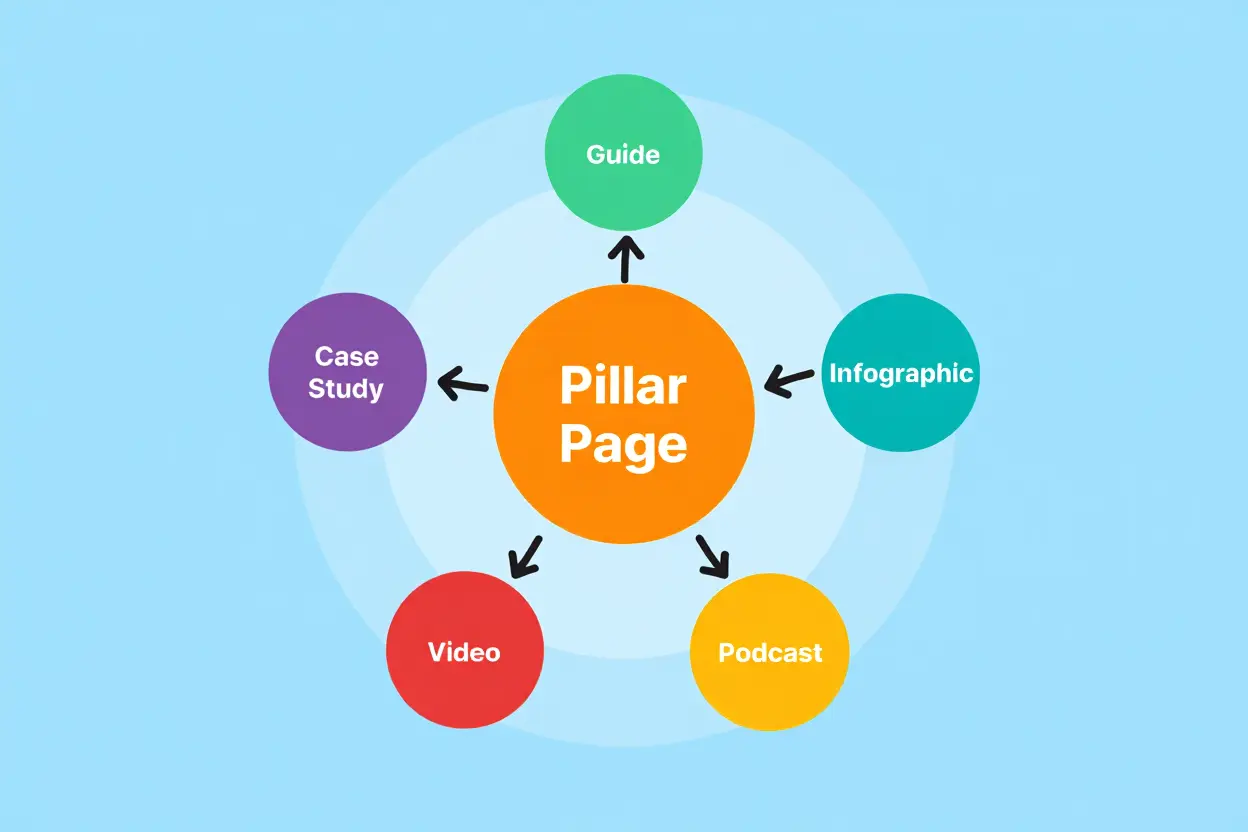
Core architecture of the hub-and-spoke model
Think of it as a well-organized library: a central pillar page gives a comprehensive overview, while supporting pages dive into related subtopics. This content hub and spoke structure demonstrates topical authority, helping Google quickly recognize your expertise.
- Pillar page: A durable, core resource targeting your main keyword—it links to all supporting content and attracts visibility for broad, high-traffic terms.
- Spoke pages: Detailed articles focusing on long-tail keywords that explore a specific topic in depth, each linking back to the pillar to strengthen the hub.
- Sub-spoke pages: Optional deep-dive articles addressing niche questions. These build a content hierarchy that shares link authority across your pillar content.
This interconnected layout spreads authority effectively, showing search engines that your website leads the conversation on a subject. When crawlers discover this organized network, they reward your site with stronger topical authority and a wider range of keyword rankings.
How content hubs differ from traditional blogs
A standard blog publishes content based on trends; a content hub follows a strategic plan. Pillar content supports long-term goals, while scattered blog posts rarely build lasting ranking power or establish your brand’s authority.
Successful hubs depend on consistent publishing, a logical structure that helps users navigate, and alignment with broader marketing goals. A typical blog is like a scrapbook of ideas—a content hub acts as a go-to reference that visitors bookmark and return to.
Real-world content hub examples that deliver results
Adobe’s former CMO.com hub blended articles, videos, and podcasts for marketing leaders before being folded into Adobe’s business site. This diverse content hub strategy made Adobe a go-to resource for CMOs.
Deloitte Insights offers summaries, interactive charts, and full research papers, letting users choose their level of engagement. This approach keeps both casual readers and experts interested, supporting sustained traffic.
One footwear brand built a hub around “Shoes,” with spokes for Athletic, Work, and Dress categories, plus sub-articles on fit, materials, and care. This structure captures search intent at every stage of the customer journey, dominating SEO for countless footwear-related queries and driving consistent traffic.
SEO Advantages of a Strategic Content Hub
Building a content hub is far from pointless busywork; a hub concentrates your efforts on one topic instead of scattering them across unrelated posts. These SEO gains continue to build, creating a self-reinforcing loop of increased visibility, stronger topical authority, and sustained organic traffic that grows consistently month over month.
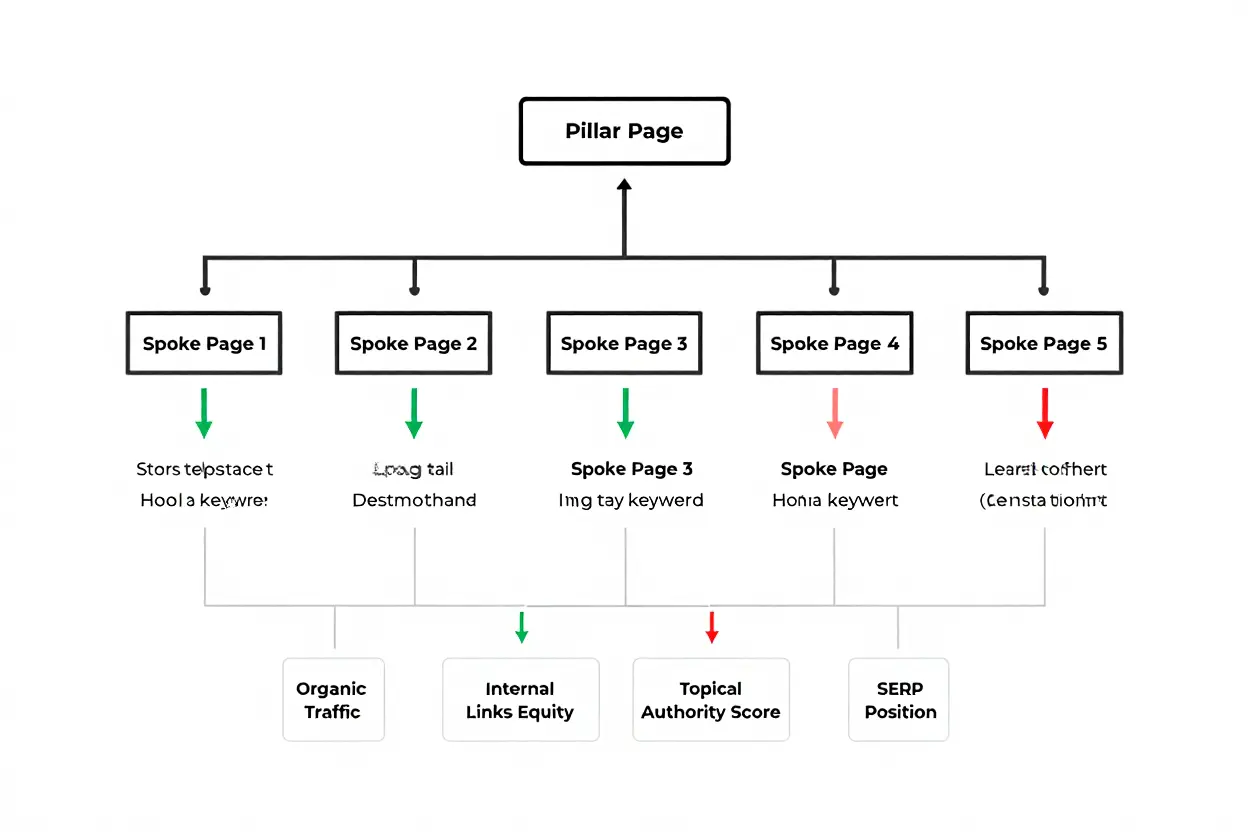
Building Topical Authority Through Clustered Content
Organizing articles into a unified hub sends a powerful signal to search engines that your website is an expert on the subject. As a result, algorithms tend to reward both the pillar page and all supporting content with better rankings, making the entire domain appear as an authoritative content library rather than a collection of disconnected articles.
- Semantic Clustering: Grouping related content teaches search engines to see your site as a complete guide on the topic, not just a random mention.
- Keyword Relevance Signals: Interconnected articles strengthen intent alignment, helping algorithms accurately match each page with the right user search queries.
- Authority Accumulation: Backlinks to any supporting page pass equity through internal links back to the pillar, raising the authority of the entire topic cluster.
- Fresh Content Signals: Regularly updating your supporting content shows ongoing research and relevancy, which helps maintain strong positions in competitive search results.
Creating a content hub helps build algorithmic trust. Search engines favor sites that demonstrate depth, and a well-organized hub communicates expertise far more effectively than scattered blog posts ever could.
Internal Linking Structures That Boost Rankings
Many SEO strategies fall short because internal linking feels arbitrary. In contrast, a well-planned hub architecture creates intentional pathways that guide organic traffic while emphasizing key pages. A clear hierarchy, strategic anchor text, and smooth navigation send unmistakable signals to search engines about the relative value of pages across your site.
- Hierarchical Link Equity Distribution: Supporting pages pass authority to the pillar page, focusing ranking power where it's most impactful and elevating the entire cluster.
- Contextual Anchor Text Optimization: Every internal link uses descriptive, keyword-rich anchor text that clarifies semantic relationships within your content hub.
- User Journey Navigation: Readers move naturally from introductory articles to deeper resources, increasing session length and reducing bounce rates—engagement metrics that boost SEO.
- Search Crawl Efficiency: Logical linking pathways help search engines quickly index all related content, preventing valuable pages from being orphaned or overlooked.
Organic traffic compounds as your hub matures: visitors land on specific articles, follow internal links to related content, and spend more time on-site. This creates a virtuous cycle of growing dwell time and improved rankings.
Measuring and Optimizing Hub Performance Over Time
You can’t improve what you don’t measure. That’s why it's essential to track rankings, traffic flow, conversions, and backlink growth across your entire content library. Tools like Google Search Console, analytics dashboards, and specialized SEO platforms help identify your top-performing hub pages and show where you may need more internal links or on-page updates.
Run quarterly content audits to refresh outdated information, add new research, and fill content gaps where fresh articles could capture new search intent. This commitment to ongoing improvement keeps your hub relevant—exactly the kind of high-value related content that both search engines and users reward with sustained traffic.
| Metric | Target | Tools | Action if Underperforming |
| Pillar page organic traffic | 5-10% month-over-month growth | Google Analytics, rank tracking tools | Add internal links from top-performing spokes; refresh examples |
| Average spoke page ranking | Position 1-10 for target long-tail keywords | Google Search Console, rank tracking tools | Optimize title tags, add more internal links from pillar, expand word count |
| Hub dwell time | 3+ minutes average per session | Google Analytics, heatmap tools | Mix content formats (videos, infographics), improve navigation clarity |
| Backlinks to hub pages | Monthly growth in referring domains | Ahrefs, SEMrush, Google Search Console | Create link-worthy assets (research, tools); promote on industry forums |
Implementing Your Digital Marketing Content Hub Strategy
Now that you understand what a content hub is and how it powers modern marketing results, the next challenge lies in building one without getting overwhelmed. Seamlessly integrate your hub into your broader digital marketing ecosystem so every component—from campaigns to email and social media—strengthens the others and drives consistent organic traffic.
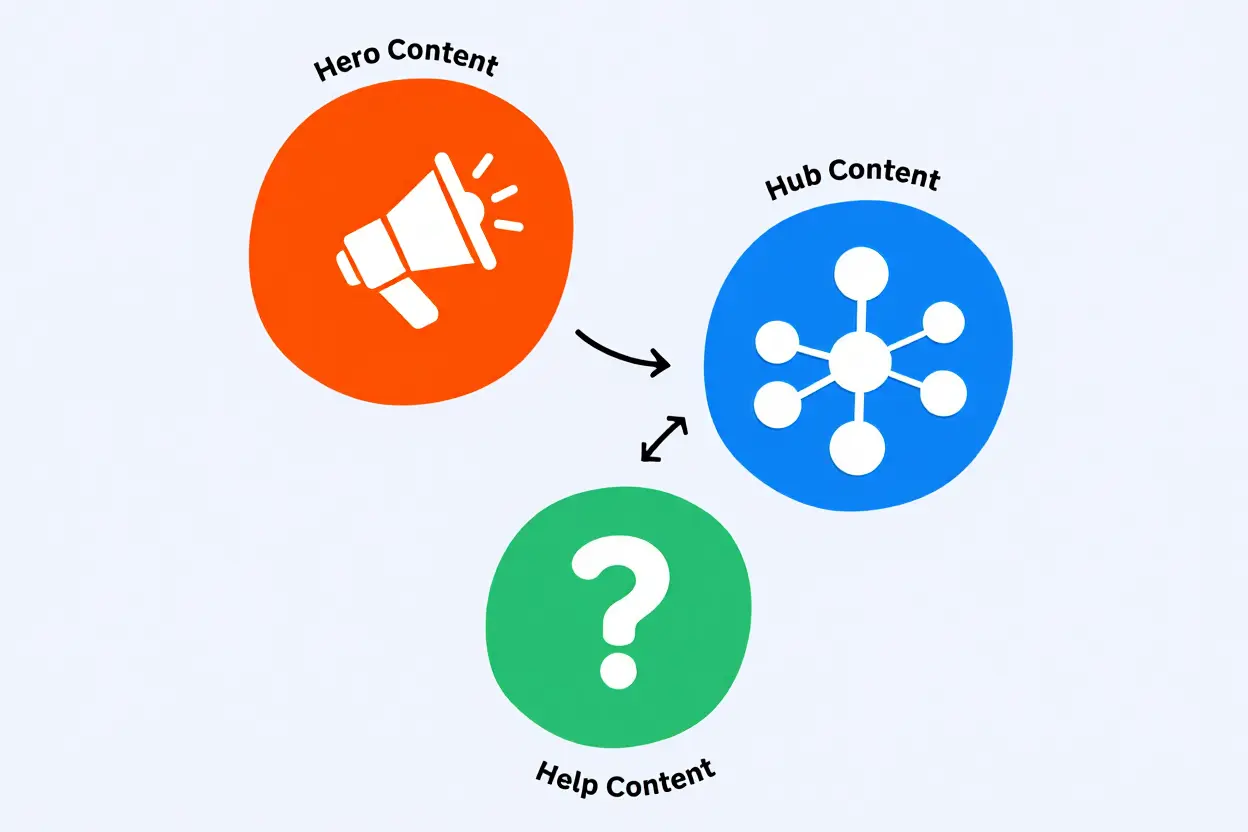
Integrating Hero, Hub and Help Content Frameworks
Your marketing engine operates on three interconnected gears. Hero content grabs attention and brings in first-time visitors, while the hub provides ongoing value that keeps them engaged. Help content, such as quick guides and FAQs, solves immediate problems and gently guides readers back into the hub, extending their time on your website.
- Hero-to-Hub Funneling: After launching a major campaign or viral piece, include clear internal linking to relevant hub articles—turning short-lived attention into lasting organic traffic.
- Hub-to-Help Pathways: When hub articles highlight common questions, direct users to helpful pages that deliver instant answers, encouraging micro-conversions and warming up potential leads.
- Help-to-Hub Depth Journeys: Make sure every FAQ or short guide points readers toward more in-depth hub resources. This builds topical authority and increases session duration.
Create a visual content map to illustrate how these three tiers connect. This helps your team align publishing schedules, prevent topic overlap, and ensure every piece supports your overall content hub strategy—not just standalone goals.
Leveraging AI Tools for Scalable Content Production
Writing dozens of supporting articles manually can take months—AI tools can shrink that timeline to just days. They help draft outlines, suggest titles, and recommend internal linking opportunities, making your content creation process more scalable without increasing overhead.
Keep in mind: AI-generated drafts still require human review. Fact-check, polish the tone, and add nuance that AI may miss. This human touch turns automated text into authoritative content that targets long-tail keywords, strengthens topical authority, and improves your overall content strategy.
Converting Website Traffic into Qualified Marketing Leads
A hub that draws visitors but doesn’t capture data is little more than a vanity metric. Incorporate lead magnets—like newsletters, gated guides, or interactive tools—to turn organic traffic into measurable leads and revenue.
Repurpose top-performing articles into downloadable checklists or step-by-step guides that require an email address. Link hub analytics to your CRM and automation platforms to identify which pathways produce high-value customers—helping justify continued investment in your content hub.