Let's take a proper look at branded content, the marketing approach that builds genuine connections between brands and the people they want to reach. You'll see how it turns communication into real stories, strengthens your brand image and keeps your audience coming back.
What branded content means
Branded content has changed the way marketing works. It rewrites the relationship between brands and their customers, putting emotion and engagement ahead of straight promotion. If you want a digital strategy that performs, you need to understand how it works.
What is branded content
Branded content covers everything a brand produces to share its world and its values, without leaning on direct advertising. Storytelling sits at the heart of the customer relationship, and that's what builds lasting bonds with your audience.
- A memorable story: a consistent narrative that builds a brand universe nobody else has
- Creative freedom: the brand shapes its own voice, without the constraints of classic ad formats
- Voluntary engagement: people consume this content because they want to, not because they have to
- Added value: every piece brings something useful, whether that's information, entertainment or inspiration
This approach turns brands into genuine media outlets, able to produce high-quality content. The Michelin Guide is the textbook example: created for motorists, it has served the brand for over a century without ever directly promoting tyres.
So what's the fundamental difference from traditional advertising? Branded content aims to build a lasting preference rather than trigger an immediate purchase. Growing the customer relationship step by step works especially well in a world drowning in information.
Key goals and benefits
Storytelling is the engine of this strategy, letting brands express their values in a natural way. That narrative creates an emotional connection that goes far beyond a simple transaction.
Branded content serves several goals at once. Building awareness usually comes first, especially for new brands. Improving how people perceive your brand matters just as much if you want to stand out from the competition.
Loyalty is one of the biggest wins of this approach. By creating a brand world people genuinely enjoy, companies turn customers into ambassadors. Those customers share the content that moves them, spontaneously, and that word of mouth on social media is worth its weight in gold.
Examples and flagship formats
Branded content formats keep evolving to fit new platforms. Right now, video is still the most engaging format, combining image, emotion and recall. Web series, documentaries and short films give brands the ideal space to express themselves.
Podcasts are doing very well too, building a privileged relationship with listeners. The format lets brands share their expertise while strengthening ties with their community. Written content, whether articles, company magazines or white papers, is still essential for SEO and for establishing authority.
Branded content vs content marketing
Telling branded content apart from content marketing is essential if you want a digital strategy that actually works. The two concepts overlap, but they chase different goals and speak to their audiences in different ways. Combine them intelligently and you get far more out of your overall marketing strategy.
Essential differences
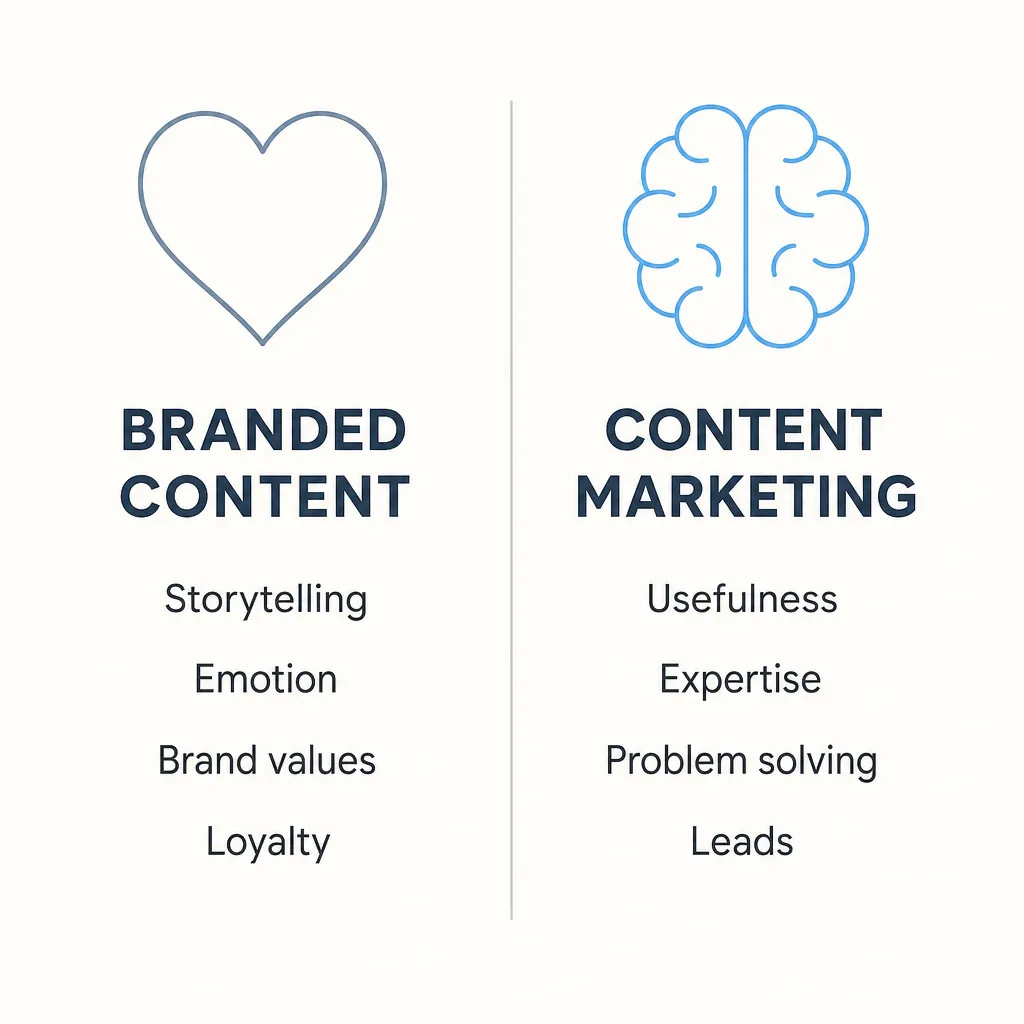
Content marketing is firmly customer-centric: it answers practical questions and guides people through their customer journey. Its main job is to capture qualified leads and improve conversions through hands-on content (tutorials, case studies, how-to guides).
Branded content, on the other hand, showcases the brand's world and values to build a lasting emotional connection. The goal here isn't an immediate conversion but a preference for the brand. People consume this content because they identify with the brand, not because they're looking for a specific answer.
Goals and KPIs compared
Depending on whether a brand leans towards branded content or content marketing, its key metrics will look quite different: engagement and awareness for the first, commercial performance for the second.
- Awareness and image: branded content boosts recognition and improves how a brand is perceived
- Lead generation: content marketing captures prospects through high-value content
- An engaged community: branded content rallies an audience around shared values
Bringing the two together creates a powerful synergy: branded content nurtures the emotional attachment, and content marketing turns that preference into concrete business opportunities.
| Criterion | Branded Content | Content Marketing |
| Main goal | Awareness and attachment | Lead generation |
| Approach | Brand-centric | Customer-centric |
| Priority KPIs | Engagement, reach, shares | Traffic, leads, conversions |
| Typical formats | Videos, podcasts, events | White papers, webinars, guides |
When to use each approach
Choosing between branded content and content marketing comes down to your business goals and your market. In B2B, content marketing usually dominates, because it educates buyers and generates leads, while branded content helps establish your position in the industry.
For B2C brands, branded content excels at creating a distinctive world, especially in crowded markets. Content marketing rounds this out by addressing the concrete needs consumers have along their buying journey.
Implementing a branded content strategy
A successful branded content strategy needs a rigorous method, from the initial thinking through to rollout. The essential part is aligning your brand's values with what your target audience expects, which gives your content strategy a solid foundation.
Key operational steps
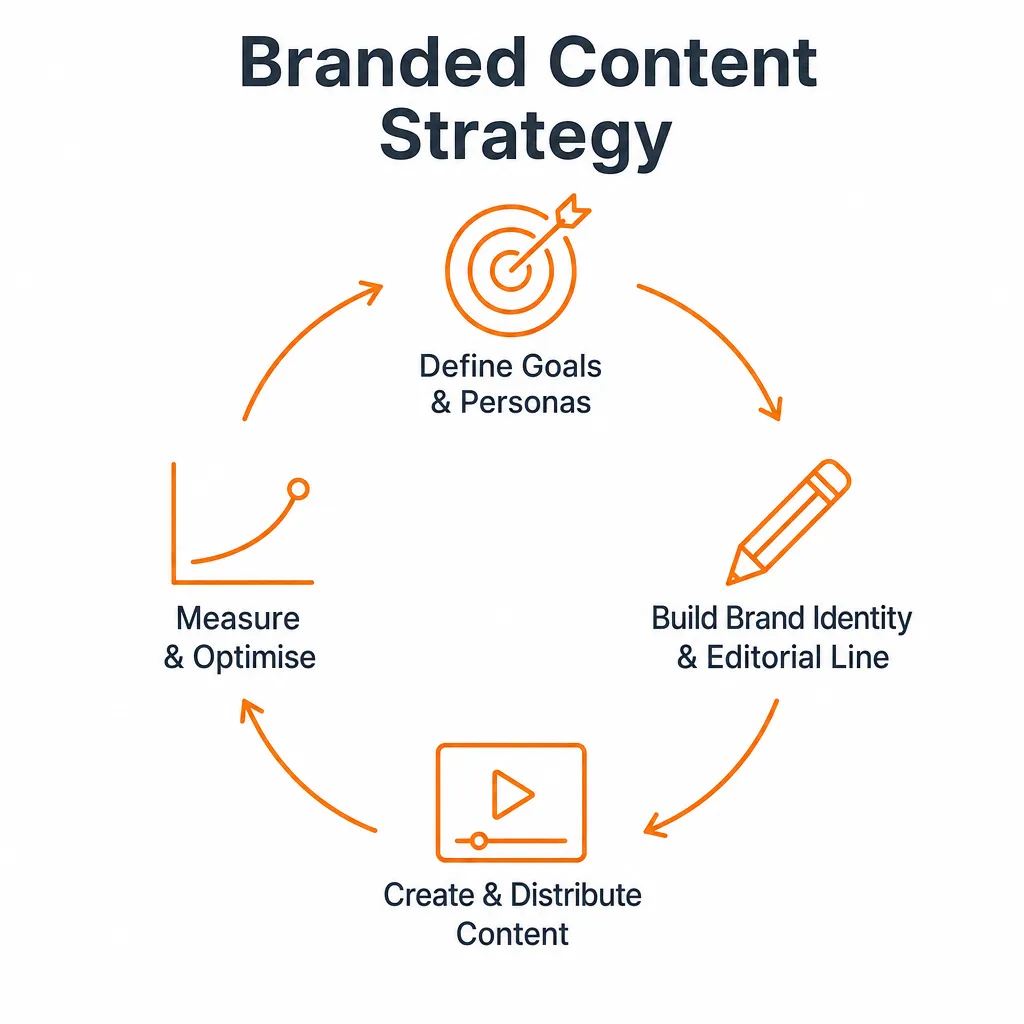
To build a branded content strategy that's relevant, start by setting clear goals (the SMART method) and pinning down your personas precisely. That strategic groundwork makes sure your content resonates with your audience while serving your business objectives.
The next step is building your brand identity: values, tone of voice and art direction all need to be nailed down. Those elements form the framework of your editorial strategy and keep every piece of content consistent.
- Competitor benchmark: analyse what your industry is doing so you can stand out
- Editorial framework: structure your editorial line and plan your calendar
- Resource planning: anticipate the people, tools and budget your content production will need
The creation phase calls for close collaboration between every discipline (writing, design, video and social media management). Efficient approval processes are essential to keep both quality and deadlines on track.
Priority formats and channels
Pick your formats based on how your audience behaves, and bake SEO best practice in from the start. On social platforms, high-performing short formats need to sit alongside in-depth content that showcases your expertise.
Multi-channel distribution, with the message adapted to each platform, maximises your visibility. It lets you reach your audience at different touchpoints, which reinforces recall and engagement. Bringing in user-generated content can add a welcome dose of authenticity.
Measurement and continuous optimisation
Evaluating results relies on KPIs aligned with your original goals. Analyse engagement, reach and sentiment to measure the impact on your community, while tracking traffic and conversions for the business impact.
Regular performance monitoring shows you what's working and guides your adjustments. Actively listening to your audience is crucial if you want your editorial strategy and your brand strategy to keep evolving.
Examples and the role of an agency
Branded content comes in many forms, and some standout examples prove it. The most inspiring brands show they can tell powerful stories that reach their audience, whatever industry they're in.
An inspiring branded content example
Red Bull is the perfect illustration of a brand turning itself into a genuine media company. This branded content example shows how to build a coherent world around core values, like adventure and pushing limits, without ever needing to pitch the product directly.
The Red Bull Stratos jump in 2012 was the high point of that strategy: with around 8 million people watching live on YouTube, a record at the time, this historic event is now inseparable from the brand's image. A perfect blend of spectacle, emotion and values on display.
Airbnb takes a remarkable approach too with its "Host Stories", which spotlight the experiences of its hosts. These authentic accounts reinforce the human side of the platform and nurture a real sense of community, which in turn builds trust among new users.
When to bring in an agency
Hiring a specialist agency makes sense when a company lacks in-house resources or wants to speed up its strategy. These professionals bring technical expertise, an outside perspective and a valuable network of talent to produce content that lands.
- Strategic expertise: the agency shares its industry knowledge and trend analysis to steer the strategy effectively
- Production capacity: its multidisciplinary teams guarantee professional, consistent content
- Outside perspective: a fresh pair of eyes spots opportunities and prevents strategic blind spots
Working with an agency means clarifying goals from day one and setting up an efficient approval process. That partnership approach gets the best results while protecting the brand's identity.
Production best practices
A branded content strategy succeeds on regular, high-quality production. That takes a rigorous creative process, from ideation through to publication, with approval and optimisation along the way.
Transparency is paramount, particularly for sponsored content. Clearly disclosing partnerships keeps the public's trust and complies with the rules in force, from FTC endorsement guidelines and the UK's ASA and CAP Code to each platform's own disclosure requirements.
Adaptability is essential too: high-performing brands know how to adjust their output to new trends and feedback from their community. That flexibility keeps content relevant in a digital world that never stops changing.
Branded content roles and jobs
The rise of branded content has created new roles specialising in designing and managing these narrative strategies. These professionals combine creativity with strategic analysis to run high-performing campaigns that meet the brand's objectives.
What is a branded content manager
The branded content manager runs a brand's entire editorial strategy, from concept through to results analysis. As the guardian of message consistency, they make sure every piece of content accurately reflects the brand's identity.
- Editorial strategy: they set the direction, plan production and lead the creative teams
- Content production: they oversee the creation of articles, videos, podcasts and other formats according to the agreed schedule
- Project management: they orchestrate collaboration between everyone involved and keep budgets and deadlines under control
- Analysis and optimisation: they measure performance, identify areas for improvement and refine the strategy
This central role demands real people skills to rally teams around a shared vision. The branded content manager works hand in hand with the marketing, communications and sales departments to align goals and create synergies.
Key skills and tools
Branded content expertise takes a smart mix of creative and analytical skills. Professionals need to master the art of storytelling while making the most of advanced tech tools.
- Storytelling and writing: build engaging narratives and adapt the tone to each audience and channel
- Digital tools: be comfortable with CMS platforms, analytics tools and visual design software
- Data and ROI: interpret performance, understand KPIs and demonstrate the value created
In a market that never stands still, keeping a close eye on the market is essential to catch new trends. That agility lets you keep innovating and guarantees the content you produce stays relevant.
Organisation and KPIs
Branded content is judged on specific indicators, different from classic marketing metrics. Engagement, recall and brand image are the main criteria for assessing campaigns.
Organisation varies with company size: SMEs often favour versatile profiles who mix branded content and community management, while large groups build dedicated teams for each format.
The current trend is a "glocal" approach, combining global consistency with local adaptation. That cultural challenge is crucial for international brands that want to resonate authentically in every market.
Let AI Handle Your Content Publishing
Alya researches keywords, writes and publishes content directly to your CMS, WordPress, Shopify, Wix and more, on autopilot.