Your site has top-notch content and flawless technical optimisation, yet your visibility still won't take off? The problem is probably your link building strategy. Far from being just another SEO technique, this strategic approach is how you build the popularity and legitimacy of your site. It's what turns a well-built website into a go-to reference in the eyes of search engines.
This complete guide goes well beyond the basics. You'll find a proven method for building a network of links that is solid, sustainable and resistant to algorithm mood swings. Every inbound link should strengthen the trust search engines place in you and push your pages up the organic rankings.
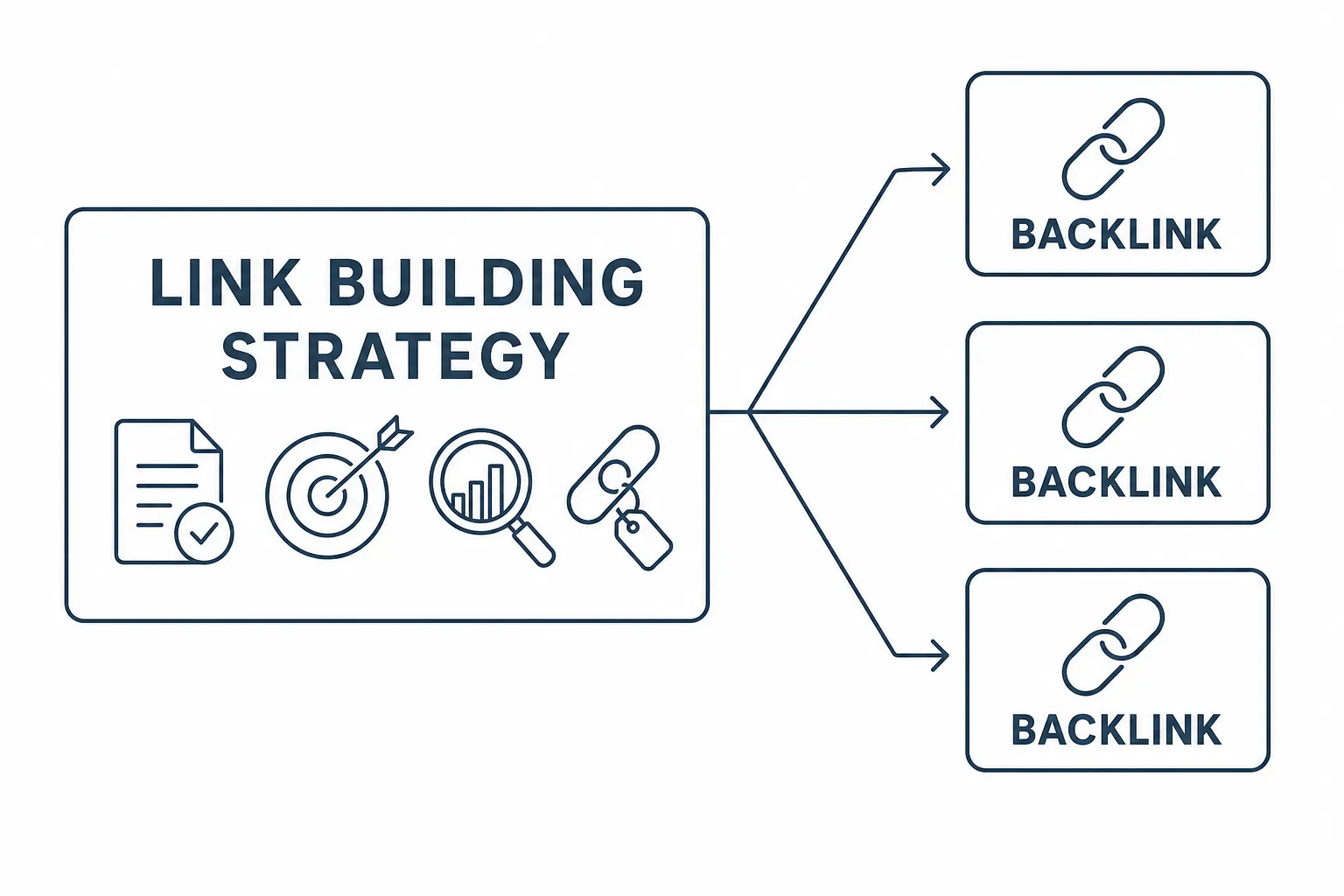
Link building vs backlinks: the fundamental difference
Before you boost your online presence, let's nail down these key concepts. They're often confused, but the distinction matters for any strategy aimed at strengthening the authority of your site.
What is a backlink?
A backlink (or inbound link) is a hyperlink placed on an external site (Site A) that points to your site (Site B). It's the fundamental unit of link building. Each backlink acts as a signal of trust, passing "link juice" to your target page. Their impact varies with their source and context, though. There are two main types:
- dofollow: passes its full SEO value (the precious " link juice") and is the gold standard for strengthening your authority. Example: a natural link in a specialist article gives an instant boost to the product page it points to.
- nofollow (nofollow link): tells search engines that you would rather not endorse the link. Since 2019 Google treats nofollow as a hint rather than a strict directive, and the link can still drive qualified traffic and naturally diversify your link profile.
What is effective link building?
Effective link building is the overall strategy for acquiring those backlinks. It's a methodical process designed to earn relevant links that increase the weight and visibility of your site. The approach combines link creation, hunting for high-quality opportunities and rigorous monitoring of your link network.
In short: the backlink is the operational unit, link building is the strategic plan. This essential SEO technique needs a considered approach to deliver its full potential. To dig deeper into these key concepts and other fundamentals of the trade, check out our SEO glossary: the essential definitions you need to know.
Why link building is essential for your SEO
Search engines have moved on: keywords alone no longer decide organic rankings. They now place huge importance on the reputation and authority of a site. When a site earns plenty of links from trustworthy sources, that's proof of its quality and usefulness. It's exactly what the E-E-A-T concept (Experience, Expertise, Authoritativeness, Trustworthiness) captures.
Every quality backlink is a vote of trust. A link from an influential and topically close site carries far more weight than hundreds of meaningless links. For example: a single contextual link inside an expert article on a well-known blog will do more for your rankings than dozens of links from worthless directories.
Effective link building works on three levels in your SEO strategy:
- Better rankings: a well-documented effect. Relevant backlinks strengthen your domain authority and push your pages up the results. Topical relevance and the context the link sits in are decisive.
- Faster indexing: crawlers explore the web by following links. A backlink from a frequently crawled site can get your new content indexed in a matter of hours.
- Qualified traffic: beyond SEO, a well-placed link on a high-traffic site sends you a steady stream of targeted visitors, which makes your strategic content pay off.
Link building is one of the three fundamental pillars, alongside technical optimisation and content quality.
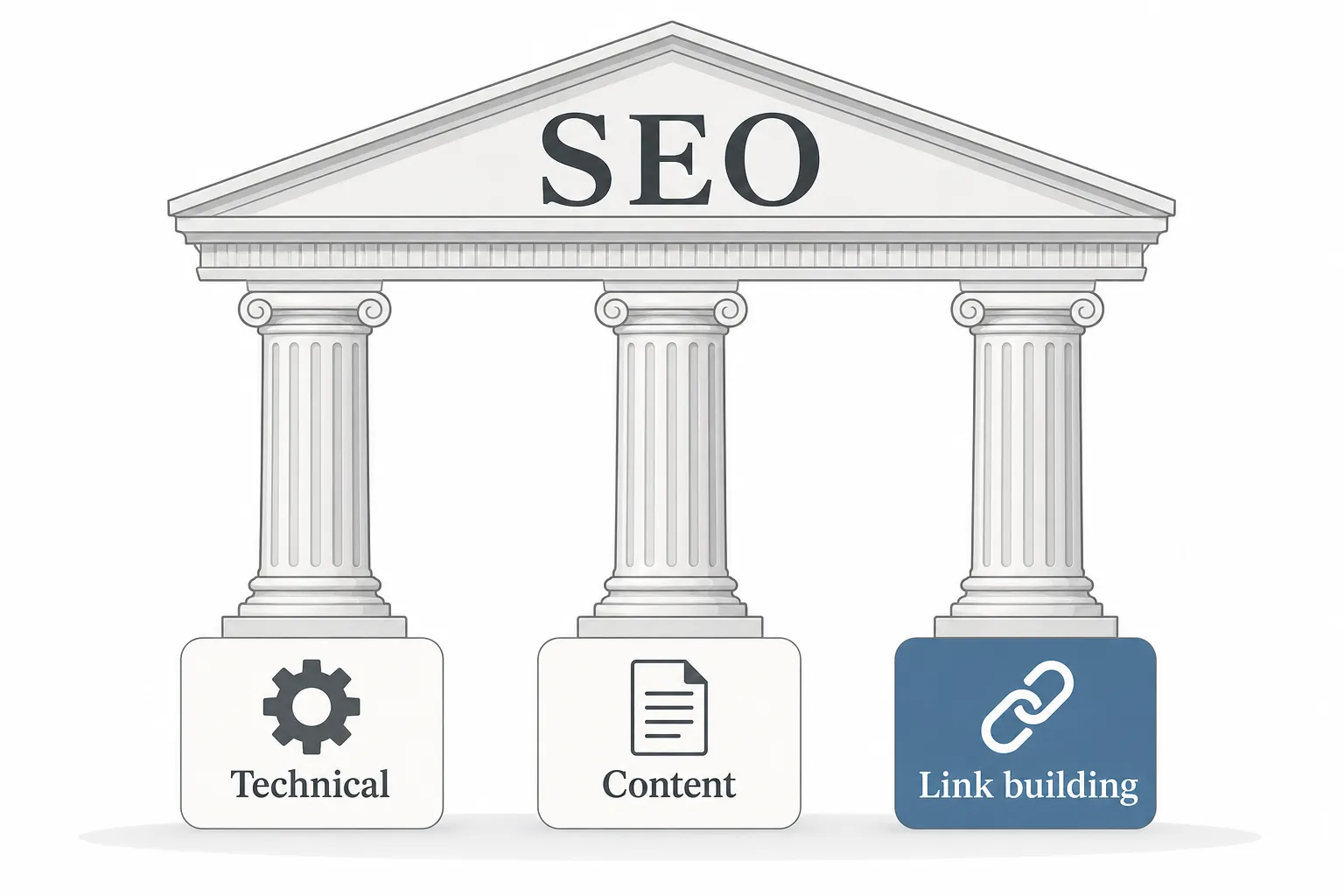
To go further, read our complete guide to SEO for beginners.
Building your strategy: the 4-step roadmap
To make your link building strategy work, you need a disciplined method. Here's how to structure your approach to earn backlinks that are effective and built to last.
Step 1: the initial audit (where do you stand?)
Start by assessing your current situation: analyse your link profile in detail, along with those of your three main competitors. This initial diagnosis is crucial, and our complete guide to SEO competitor analysis shows you how to go about it. Ask yourself these fundamental questions:
- How many unique referring domains do you have?
- What's the average value of those domains (using metrics like Trust Flow or Domain Rating)?
- How are the different anchor types distributed across your current profile?
- Which pages earn the most backlinks for your competitors? (A goldmine of inspiration!)
Our guide shows how central Ahrefs is to orchestrating your link building strategy: in-depth link analysis (dofollow/nofollow, referring domains, DR/UR), opportunity spotting through Content Gap, real-time alerts to monitor competitor links, broken link recovery and rigorous disavow management. It stresses the need to favour backlink quality, anchor diversity and a technical audit to make the most of your link juice. You'll find practical methods (Site Explorer, Site Audit, Rank Tracker) to prioritise your actions and measure your progress in 2026. Discover our Ahrefs guide to sharpen your link building in 2026.
Step 2: identifying link opportunities
Mix your techniques to earn backlinks and build links, so you end up with a balanced, credible profile. Always favour natural links that sit naturally in the content:
- Guest posts: pitch premium content to influential blogs in your industry. This editorial route to acquiring links is still relevant as long as it brings genuine value to readers.
- Broken link building: spot dead links on authority sites and suggest your content as a replacement. A win for the webmaster, and a source of quality external links for you.
- Digital PR: build relationships with journalists and experts to get your research quoted, which naturally generates backlinks from reputable sources.
- Creating "link magnets": produce content so valuable it attracts links on its own: detailed studies, free tools, punchy infographics. Speed up production with a well-configured AI-powered SEO content generator.
- Reclaiming unlinked mentions: use monitoring tools to find mentions of your brand with no hyperlink, then reach out to those sites to turn them into backlinks to your domain.
Step 3: choosing your targets (where to place your links?)
The secret of good link building lies in the quality and relevance of your sources. A single backlink from an authority site like The Guardian or a portal that specialises in your industry carries far more weight than dozens of worthless links. Make sure the target site shares your topic to maximise the transfer of authority. If you're targeting a local audience, don't hesitate to approach regional media: their external link can make all the difference.
Step 4: planning and pacing
To look natural to search engines, avoid earning too many backlinks in a short space of time. Steady growth, say 2 to 5 links a month, looks far more credible than 200 links overnight. Effective link building takes time and a gradual approach to build a link profile that is solid and durable.
The anatomy of a perfect link: your quality checklist
Before you sign off on a link, run it through these must-have criteria. In any link building strategy, always put quality ahead of quantity.
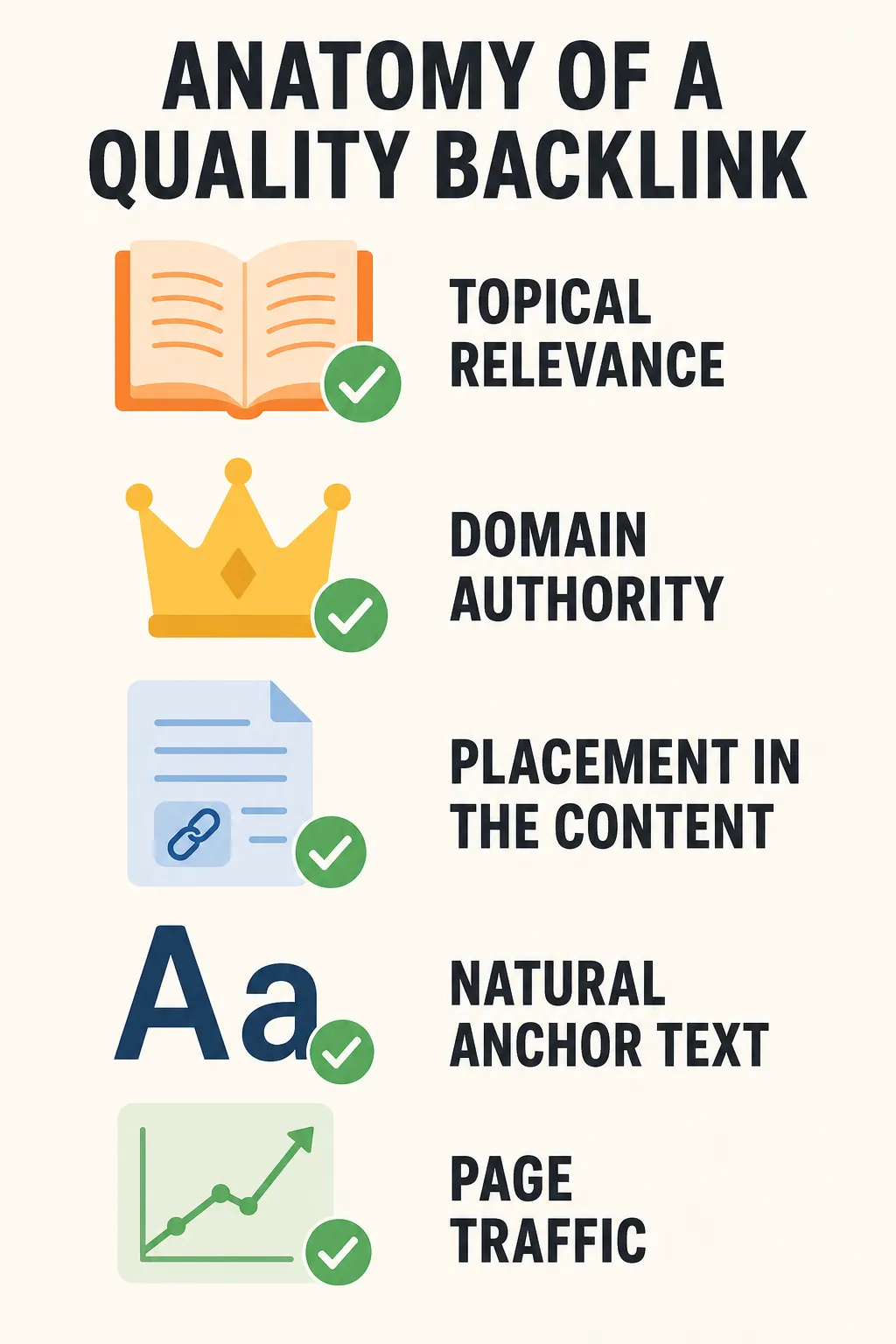
- ✅ Topical relevance: does the source site cover a topic close to yours? A link from a cooking blog to a car website would be counterproductive. That consistency reinforces the authority being passed on.
- ✅ Domain authority: is the site recognised in its field? Check its Trust Flow, Domain Rating and traffic to gauge its SEO potential.
- ✅ Link placement: is the link naturally embedded in the main content? A contextual link is worth far more than one tucked away in the footer.
- ✅ Relevant anchor text: does the link's anchor look natural? Alternate between brand names, keywords, long-tail phrases and neutral wording.
- ✅ Source page traffic: does the page hosting your link actually get traffic? A link on a busy page sends a stronger signal and can bring you qualified visitors.
Link juice is the transfer of authority between web pages through links. To get the most out of that exchange, an effective link building strategy is a must: well-structured internal linking, appropriate anchors and topically relevant quality backlinks. That's how you durably strengthen the authority of your key pages and improve your organic rankings. Our link juice guide also covers dilution (less value passed as the number of links grows) and offer concrete fixes: favour relevant backlinks, use 301 redirects and the canonical tag wisely to preserve your SEO equity. Analysing results with tools like Ahrefs or Search Console rounds off the approach. A good SEO strategy therefore combines natural link acquisition, optimised architecture and technical rigour for maximum visibility. Discover our tips to optimise your link building and your link juice.
Link exchanges and anchors: best practices for staying natural
In a link building strategy, direct link exchanges (between two sites) should be avoided because Google spots them easily. Three-way exchanges (between three sites) are no safer: any exchange arranged to pass ranking credit is a link scheme in the eyes of Google. That said, earning natural links with nothing given in return remains the best way to protect your credibility.
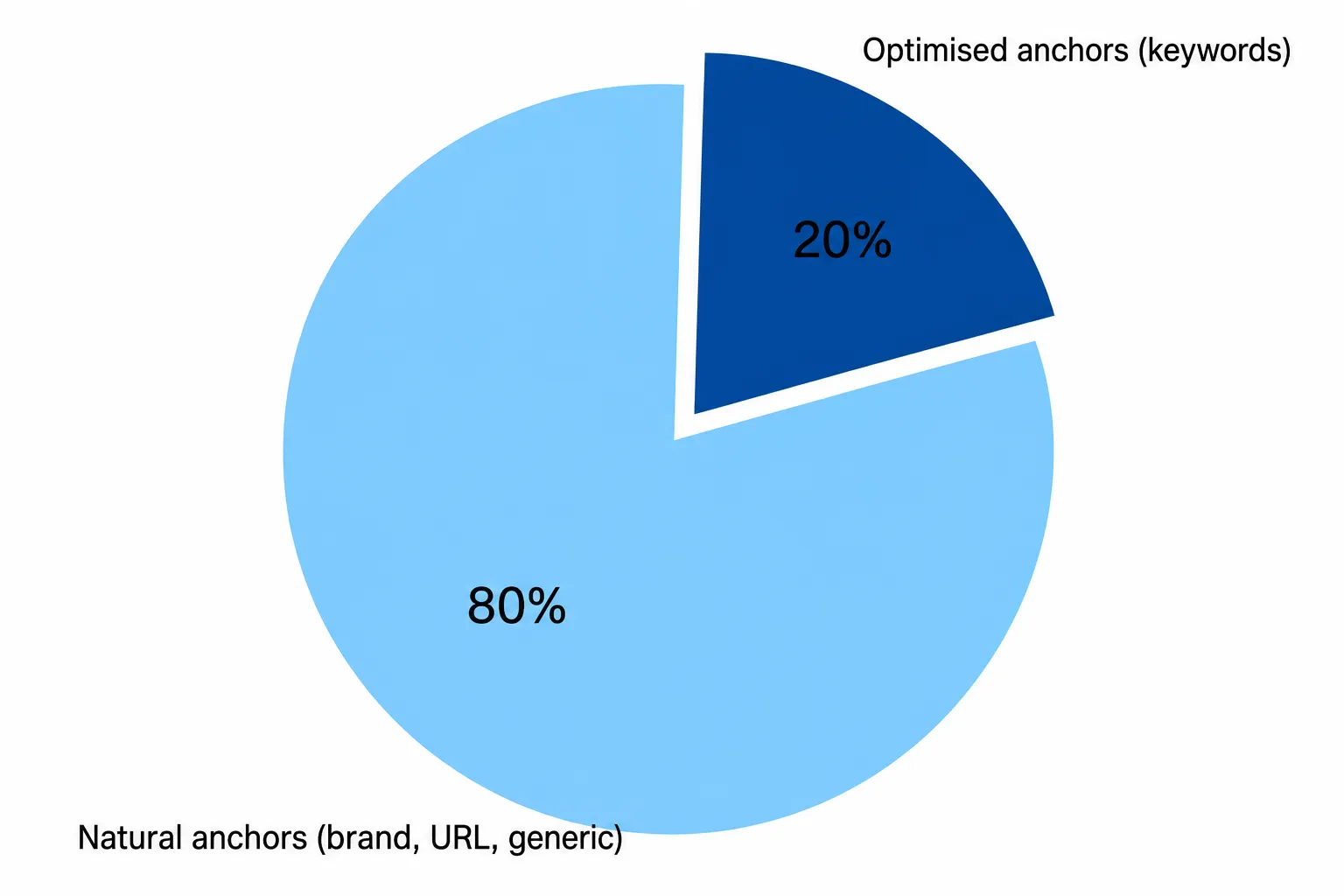
When it comes to anchor text, apply the 80/20 rule intelligently to keep a balanced link profile:
- 80% natural anchors: favour your brand name, the bare URL or generic phrases ("learn more") for an authentic look.
- 20% optimised anchors: use your strategic keywords or their variations sparingly to strengthen your rankings without overdoing it.
This diversification builds a link profile that search engines find credible.
Link building marketplaces: accelerator or trap?
Link building marketplaces make acquiring external links a lot easier, but you need to pick partner sites carefully to avoid any nasty surprises. Keep in mind that Google treats paid links that pass ranking credit as link spam: a purchased link should carry rel="sponsored" or rel="nofollow".
Advantages
- Time saved: quickly find sites that have already been vetted, with clear metrics such as Trust Flow, traffic and topic.
- Simplicity: manage your orders, content creation and publications from a single interface for a more efficient SEO strategy.
- Security: reliable marketplaces guarantee your backlinks stay live and offer remedies if something goes wrong.
How to choose a good marketplace and pick the right sites?
- Assess the marketplace: check how reliable its metrics are, the quality of its support and how regularly it vets the other sites it lists.
- Examine the partner site: don't rely on the numbers alone. Browse the site properly: is its content genuinely relevant? Does it fit your brand image? Is it updated regularly?
This table will help you optimise your choices before you buy a link:
| Main criterion | Metric to check | Impact on your strategy |
| Authority | Trust Flow, Domain Rating, Authority Score | Determines how much SEO strength is passed on and its influence on your rankings. |
| Relevance | Topical Trust Flow, domain topic | Ensures a consistent, topical transfer of authority, which Google rewards. |
| Visibility | Monthly organic traffic | Reflects the site's popularity and its potential to send you traffic. |
| Profile health | Referring domains to backlinks ratio | Checks the site isn't handing out too many links, which could undermine your SEO credibility. |
Running a PrestaShop store? Our dedicated guide walks you through a link building strategy tailored to PrestaShop to optimise your rankings. Start by checking the technical fundamentals (site speed, proper indexing, URL structure), then work on your authority by acquiring relevant backlinks within your niche. Use proven methods such as guest blogging, digital PR or broken link building. Back all this up with a well-structured editorial strategy (pillar content plus supporting articles) and track your results with Google Search Console, GA4 and specialist tools. Focus on quality over quantity, and always test in a staging environment before going live. Find out how to optimise link building for your PrestaShop store.
Let AI Handle Your Content Publishing
Alya researches keywords, writes and publishes content directly to your CMS, WordPress, Shopify, Wix and more, on autopilot.