Does the technical vocabulary of SEO feel like a foreign language? This guide is for you. Much more than a simple glossary, this SEO glossary gives you every key you need to understand how search engine optimisation works and move comfortably through the world of search engines.
Its purpose? To help you understand how Google works, improve the visibility of your web pages and turn your content into a source of qualified traffic. This complete guide covers the fundamentals, the best practices and the advanced techniques that push your pages to the top of the results and help you hit your goals.
SEO fundamentals: the basics you cannot skip
Whether you're starting from scratch or optimising an existing site, these concepts sit at the heart of any effective SEO strategy. These must-know terms are the pillars you need to perform in organic results.
What is SEO and why is it vital for your business?
SEO (Search Engine Optimisation) covers every on-page, off-page and technical method used to improve a site's visibility in the organic results of search engines. For every query, Google's algorithm analyses and ranks web pages against hundreds of relevance and quality signals.
SEO isn't just a list of keywords; it has to match the user's search intent. For example, optimising the title tag, the meta description and the heading tags of a product page helps grow organic traffic.
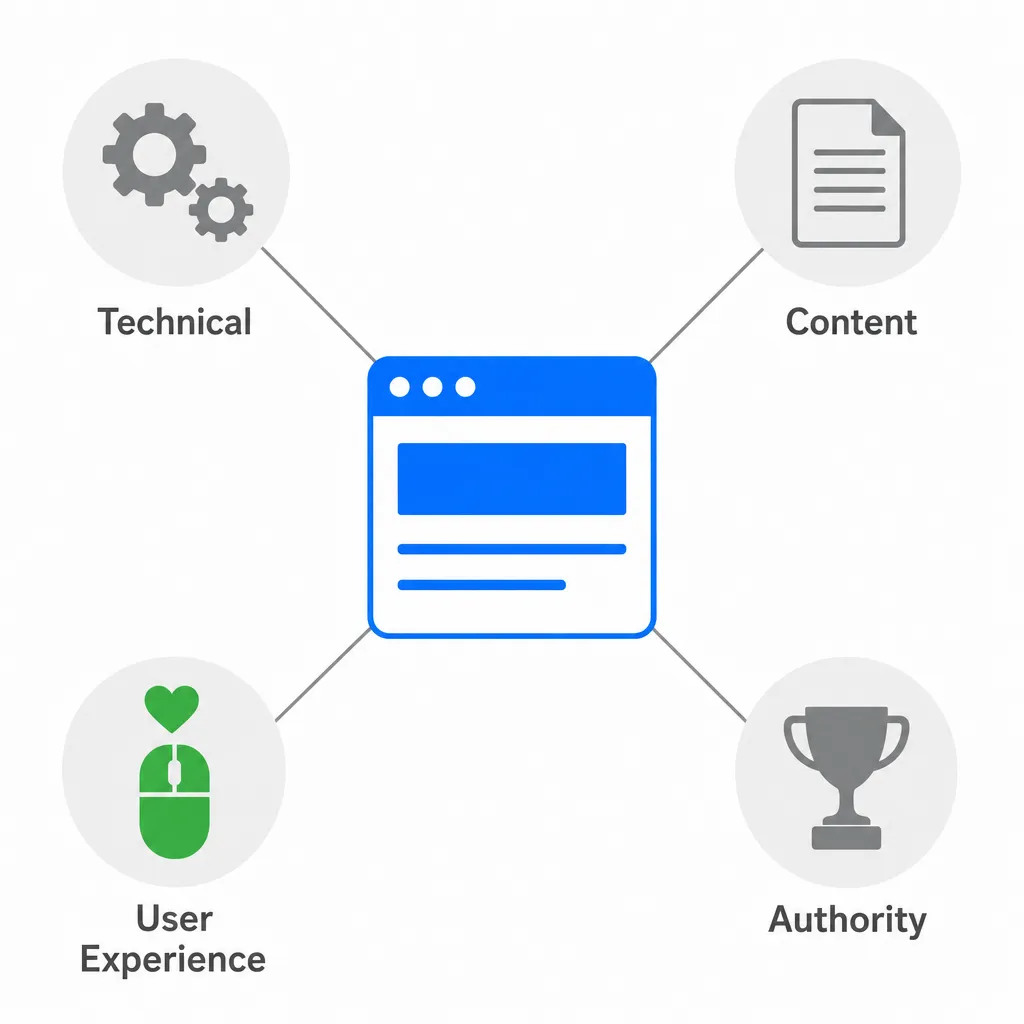
A good SEO strategy puts you among the first results, where most of the traffic goes. It's the most powerful way to attract a relevant, lasting audience while strengthening your online presence and your credibility. Three core pillars structure SEO:
- Technical - The foundations: make crawling and indexing easy, and guarantee speed, security and mobile compatibility. Key actions: create and submit a sitemap.xml in Google Search Console; check that robots.txt doesn't block any important link or page.
- Content - The core: offer pages that answer queries precisely, are well structured (H1/H2/H3) and optimised (title tag, meta description, alt attributes).
- Popularity/Link building - The reputation: favour relevant backlinks over a pile of worthless links.
You'll need to accept a lead time (the "time to results" of SEO) that can range from a few weeks to several months depending on competition and the site's authority; during that period, keep a close eye on your click-through rate. To assess quality, Google relies on the E-E-A-T principle:
- Experience: Is the content written by someone with real hands-on practice of the topic?
- Expertise: Is the author a recognised specialist in this field?
- Authoritativeness: Is this website seen as a reliable source on this subject?
- Trustworthiness: Does the site inspire confidence through its professionalism and its security measures?
Why title and meta tags matter so much
Your conversation with Google and your visitors starts with these strategic HTML elements. Their optimisation lets you fine-tune a page's title and its metadata effectively.
- The title tag: Shown in blue in the search results (SERP), it must include your main keyword and make people want to click. It's a key factor in your ranking position.
- The meta description: This teaser text appears under your title in the results. Although it doesn't directly influence rankings, this meta tag remains decisive for boosting your click-through rate (Google sets no official length, so keep it concise to avoid truncation).
- The H1 tag: The main heading of your page, it must be unique and consistent with the title tag so Google clearly understands the topic.
This guide lays out the fundamentals of SEO and offers a complete glossary of search engine optimisation: key definitions (crawl, indexing, HTML structure, internal linking, link building, long-tail queries, rich snippet...), concrete actions (technical optimisations, editorial work, content production, link strategy) and essential tools (Google Search Console, GA4, PageSpeed Insights), plus a method to improve your site's visibility.
Building an optimised URL: clarity first
A readable, well-organised URL makes indexing easier for search engines while improving the user experience. It's a pillar of technical optimisation.
- Best practice: Go for a short, explicit structure with keywords separated by hyphens.
- Ideal example:
www.yoursite.com/seo-glossary-complete-definitions - Avoid: Complex addresses full of codes or technical parameters
- Problem example:
www.yoursite.com/index.php?cat=12&page_id=78
Use 301 redirects to guide visitors and bots from old URLs to the new ones, and implement the canonical tag to tell Google which version is the original when you have duplicate content.
Behind the scenes at Google: crawling and indexing pages
For your pages to earn an excellent ranking in the search results, understanding how Google crawls and evaluates websites is fundamental. This process directly shapes your online visibility.
How crawling a page works
Google's crawler, Googlebot, continuously scans the web by following the links between pages. When it discovers new content, it decides whether that content deserves a place in its index so it can appear in search results.
Good optimisation of your crawl budget (the set of URLs Google can and wants to crawl on your site) is essential. By analysing your server logs, you can identify which pages Googlebot has visited.
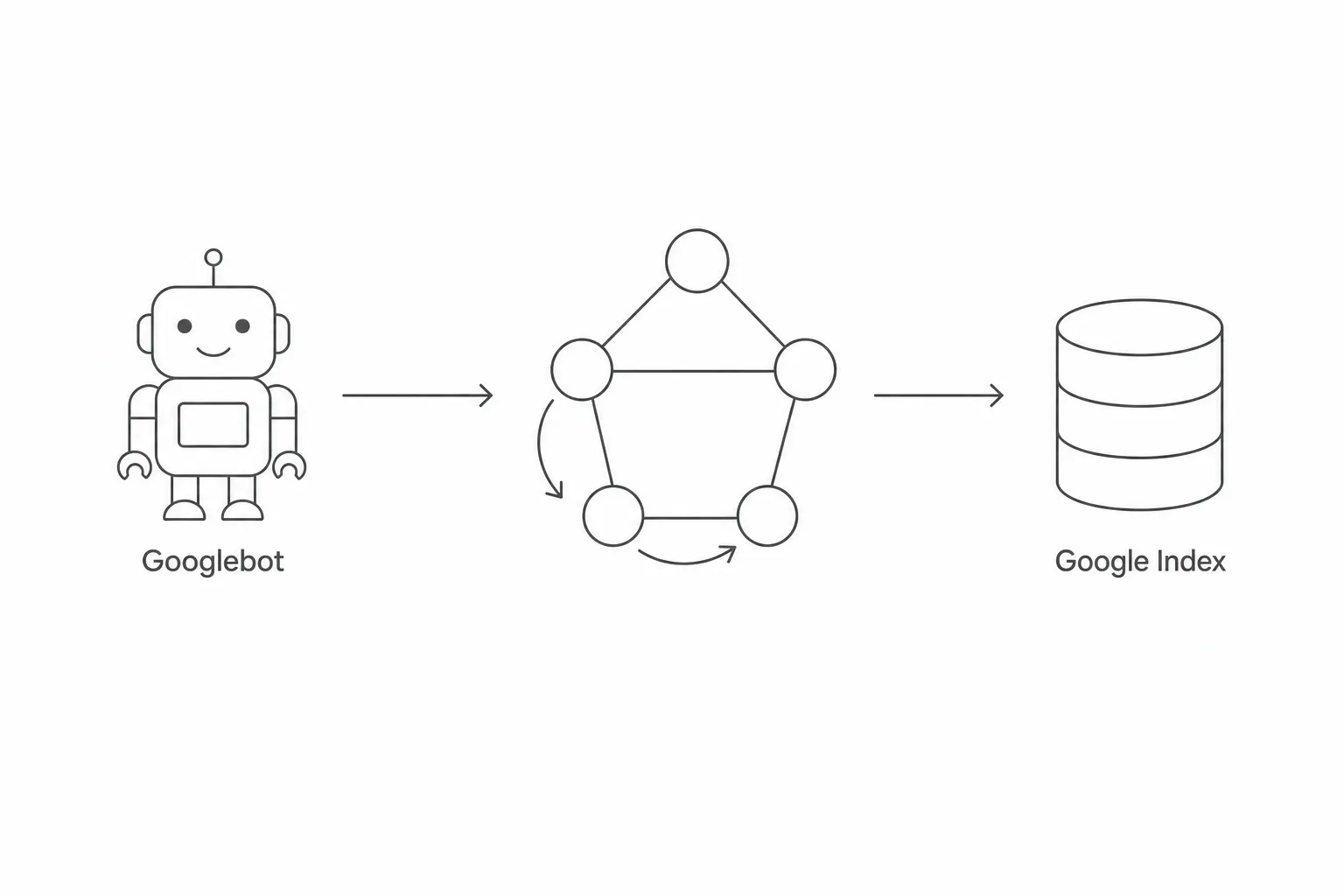
This mechanism lets Google assess the quality and relevance of a page's content. Google has never confirmed a honeymoon period: the ranking of new pages simply becomes more stable as Google gathers signals.
Sitemap and robots.txt: the two allies of your technical optimisation
- Sitemap.xml: This file lists all your important URLs and guides Google to your strategic pages. It's an essential tool for getting them discovered.
- Robots.txt: It tells bots which sections of the site they may crawl. It offers no real protection, but it preserves your crawl budget by keeping crawlers away from irrelevant areas.
An AI-powered content generator built specifically for SEO: it analyses the SERP for your keyword, scans hundreds of thousands of terms to define the structure and the topics to cover, produces unique copy aligned with search intent, handles the optimisation of keywords, HTML markup and readability, adds suitable visuals and publishes in one click through native connectors. With extra features - SEO audit, rank tracking, topic clusters and a content editor - this tool automates the key steps to create high-performing articles that are ready to rank right away.
Generate optimised SEO articles in one click
Architecture and content: advanced optimisations
Internal linking: weaving your web of authority
Internal linking, a flagship SEO technique, means connecting your pages intelligently to create an ecosystem that benefits your SEO. Here's why this method is crucial:
- It redistributes SEO power fairly: your best content passes its weight on to weaker pages.
- It guides visitors towards complementary resources, improving their journey.
- It helps Google grasp the organisation and relative importance of your pages more clearly.
A well-designed system of internal links makes crawling easier for bots and consolidates your site's architecture. Vary your anchor text for authentic, effective internal linking. The topic silo method - pairing a pillar page with satellite content - structures your subject area and concentrates topical link juice.
This practical guide clarifies the concept of search intent in SEO, presents its four main categories (informational, navigational, commercial, transactional) and breaks down step by step how to: analyse the SERPs, choose your keywords, use Google Suggest and SEO tools, organise topic clusters, and adapt both content and pages to the intent detected. It's rounded out with practical examples, signals to watch (featured snippets, local pack, carousels) and actionable advice to boost relevance, targeted traffic and conversion rate.
Read the complete guide to decoding search intent
Optimising for snippets and images
To improve your visibility in the search results, focus on these two pillars:
- Winning position zero (the featured snippet): this privileged block answers queries instantly. Winning strategies:
- State the question explicitly (ideally as an H2)
- Give a concise answer (under 50 words) in a suitable format (list, table...)
- Mastering alt attribute optimisation: these tags play two roles:
- Avoid:
<img src="seo.jpg" alt="photo123">(too vague) - Prefer:
<img src="seo-strategy.jpg" alt="Diagram of an internal linking strategy optimised for SEO">(precise and contextual)
These optimisations turn your pages into premium results, significantly lift your CTR from the SERPs and, at the same time, make your content more accessible to every user.
SEO strategy: keywords and link building to improve your rankings
Keywords: understanding the intent behind searches
Choosing the right keywords, the queries people type into Google, isn't just about picking popular phrases. What matters is understanding what the user is really looking for and analysing how those queries are worded.
- Prioritise long-tail queries: Favour specific phrases like "best running shoes for flat feet", which clearly signal buying intent, over a generic term like "shoes". They're searched less often, but they convert better.
- Keep it natural: Weave your keywords subtly into your content. Fluid, relevant copy will always be worth more than artificial keyword stuffing.
Search intent is the precise goal behind a search, and it's the foundation of any content-driven SEO strategy. There are four main categories: looking for information, navigating to a specific site, comparing products and intending to buy. To identify that intent, look at the snippets Google highlights (such as featured snippets for informational queries), the local pack for local searches, or Shopping carousels for transactional intent.
Link building and authority: building your credibility
Domain authority, which directly influences your ranking, determines how credible your site looks in Google's eyes. It grows mainly through inbound links (backlinks) from other sites, each link strengthening your reputation. The method for earning those strategic links? Link building.
Start with topical relevance: a single link from a site specialising in your niche is worth more than ten links from generic directories. Vary your anchors: roughly 80% neutral or branded anchors, and 20% optimised anchors to avoid over-optimisation.
This guide details the concept of link juice: where it comes from (PageRank), how it flows between pages, the impact of outbound links, and offers concrete actions such as internal linking in topic clusters, strategic anchor choice, quality link building and managing 301 redirects and canonical tags. It also lists the essential tools (Google Search Console, Ahrefs...) to analyse these flows, warns against private blog networks (PBNs), and gives solutions to strengthen your important pages and optimise your SEO for the long run.
Read the complete guide to link juice
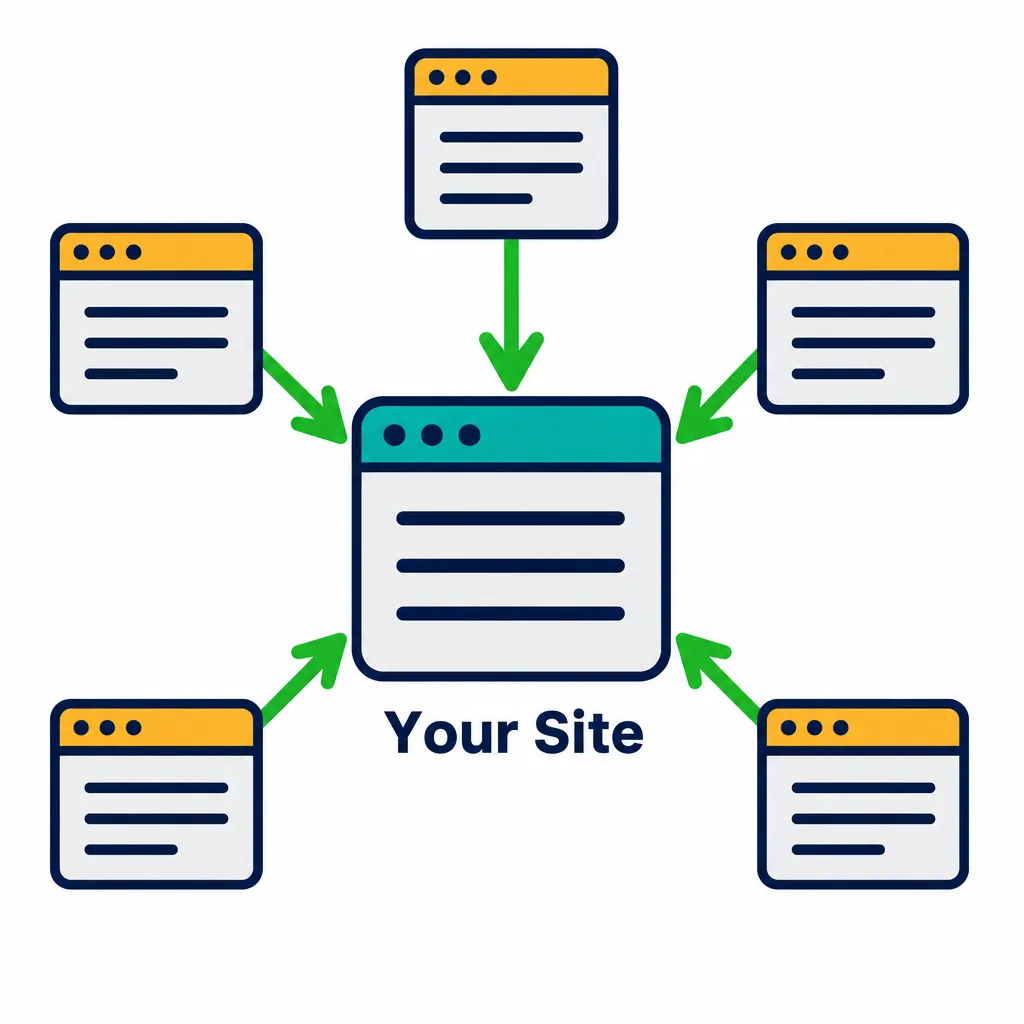
| Link type | Main impact | Expert tip |
| External links | Strengthens your site's credibility and improves its ranking in Google results. | Always put link quality first: one relevant link from a trusted site beats hundreds of links with no SEO value. |
| Internal linking | Makes crawling easier for bots and spreads traffic intelligently across your pages. | Link your new content to your best-performing pages to boost its visibility. |
| Nofollow link | Tells Google the link is not an endorsement; Google generally does not follow it. | Mark paid links with rel="sponsored" (nofollow is still accepted) and use nofollow for links you do not want to vouch for. |
A word of warning: Black hat techniques, such as buying links in bulk, risk penalties and can wipe out all your SEO efforts. For lasting traffic, favour an honest, consistent approach to creating content and links.
Advanced glossary and essential SEO tools
This complete glossary gives you the keys to mastering technical analysis and getting the most out of professional SEO tools. The goal: optimise your pages and boost your rankings.
Essential technical terminology
Dig into the fundamental concepts of search engine optimisation:
- PPC (paid search): Unlike organic SEO, this approach uses paid ad placements (such as Google Ads) to appear at the top of the search results.
- SEM: A strategy combining SEO, PPC and social media to maximise visibility and conversions.
- Core Web Vitals: Crucial metrics (LCP, INP, CLS) that directly influence rankings. INP replaced FID in 2024.
- Structured data: Markup added to your HTML code that helps Google understand your content better and display rich results.
Definition of an SEO tool: Software or a service specialising in keyword research, SERP analysis, on-page optimisation and performance tracking. Examples: Surfer, MarketMuse, Semrush, Ahrefs.
What is an SEO article and how do you optimise it?
SEO article, definition: Structured content (heading tags, meta tags, internal links) designed to answer a specific intent and generate traffic. Example: "How to fix a leaking tap" becomes a practical guide with images and an FAQ.
Keys to a high-performing SEO article:
- Pick the format that fits the intent: detailed guide (informational), comparison (commercial) or product page (transactional).
- Use Schema.org markup (Product, Article) and optimised images to enhance your results.
- Structure the content into clear sections (H2 "Symptoms", H2 "Solutions") to improve readability and rankings.
- Add related terms, an FAQ and relevant CTAs to increase visibility and conversions.
A well-optimised article (e.g. "Best running shoes 2026") attracts topical backlinks and strengthens your internal linking.
Operational strategy and best practices
A typical SEO process: keyword research, competitor analysis, writing, HTML optimisation, publishing. KPIs to track: position, impressions, CTR, bounce rate.
Names like NavBoost or Twiddlers come from court documents and leaks that Google has never documented, so optimise your pages for users rather than for these systems.
SEO keeps changing with every algorithm update, which can move the ranking of your pages. Black hat techniques must be avoided at all costs, as they can earn you penalties and a loss of rankings. Our analysis of rich snippets shows how Google automatically selects and displays the most relevant answers in its results.

Automate Your SEO With AI Agents
Sedestral connects six AI agents to your website to handle content, audits, rankings, backlinks and images, without the manual grind.