Hundreds of blog posts go live every day, and most of them sink without a trace. Knowing how to promote a blog post properly is what separates the articles that get read from the ones nobody ever sees. Here are five practical strategies to boost the visibility of your content, turn your posts into real growth levers and build an active audience that keeps coming back.
SEO and content foundations
Before you launch any promotion campaign, get the basics right. The quality of your content and its technical optimisation directly determine how well your marketing efforts pay off. A poorly structured post that barely shows up in search results will undermine everything you do to bring in qualified traffic.
How to optimise a blog in 2026
If you want to promote a blog post successfully, choose quality over quantity every time. Cutting your publishing rhythm (say, from eight posts a month down to three) can free up around twenty hours a month. Spend that time on promotion rather than churning out content on a conveyor belt.
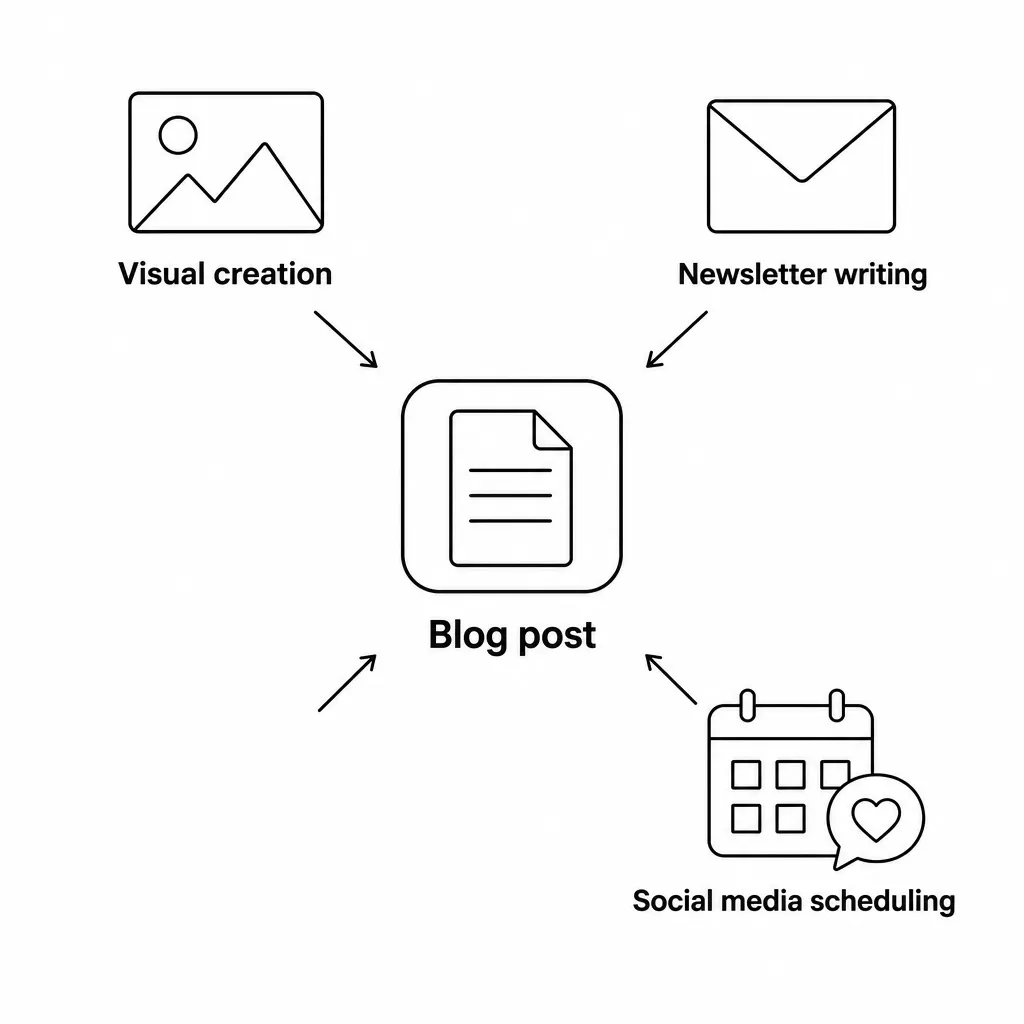
- Built-in planning: bake promotion into your post from the moment you outline it
- Visual assets: create images and infographics while you're still writing
- Email prep: draft your newsletters before the post even goes live
- Social calendar: schedule your social media posts ahead of time
This kind of methodical setup gets the most out of every piece of content. Dig into your traffic sources in Google Analytics to spot your best-performing channels. If Pinterest is sending a lot of visitors to your blog, for example, focus on creating optimised pins and put more resources there.
One keyword per post and a clear structure
On-page SEO is the foundation of your organic rankings. Pick one main keyword for each post and structure your content around what your audience is actually looking for. This targeted approach makes a real difference to where you land on Google.
A concrete example: for a post about phone repair in Manchester, go with the URL /phone-repair-manchester, put the search term in your main heading (H1) and write a meta description that makes people want to click. When every SEO element lines up like this, search engines have a much easier time indexing your page.
Update your evergreen content
Your older posts are often an untapped goldmine. Refreshing a seasonal piece (autumn tips, for instance) before republishing it gives you two wins: Google shows fresher content for queries where freshness is expected, and you get fresh material to promote across all your channels.
This update strategy works especially well for evergreen posts that cover timeless topics. Modernise the information, add recent examples or expand a few sections, and you breathe new life into existing content without spending the energy it takes to write a brand new article.
Activating social media
In 2026, social media is still a must if you want your blog posts to reach as many people as possible. But be careful: mechanically pushing the same post everywhere doesn't work anymore. To genuinely connect with your audience, you need to speak each platform's language, both in what you post and when you post it.
A multi-platform strategy without the spam
A smart strategy starts with choosing your channels carefully. Rather than spreading yourself thin, focus on the networks where your community actually hangs out. LinkedIn remains the go-to for professional content, X (formerly Twitter) is great for quick exchanges and real-time news, while Instagram wins people over with its visual approach.
The secret to content that actually gets shared? Adapting it to each ecosystem. Turn your blog post into a detailed LinkedIn post, a punchy thread on X, or a series of educational visuals on Instagram. It shows your audience you speak their language.
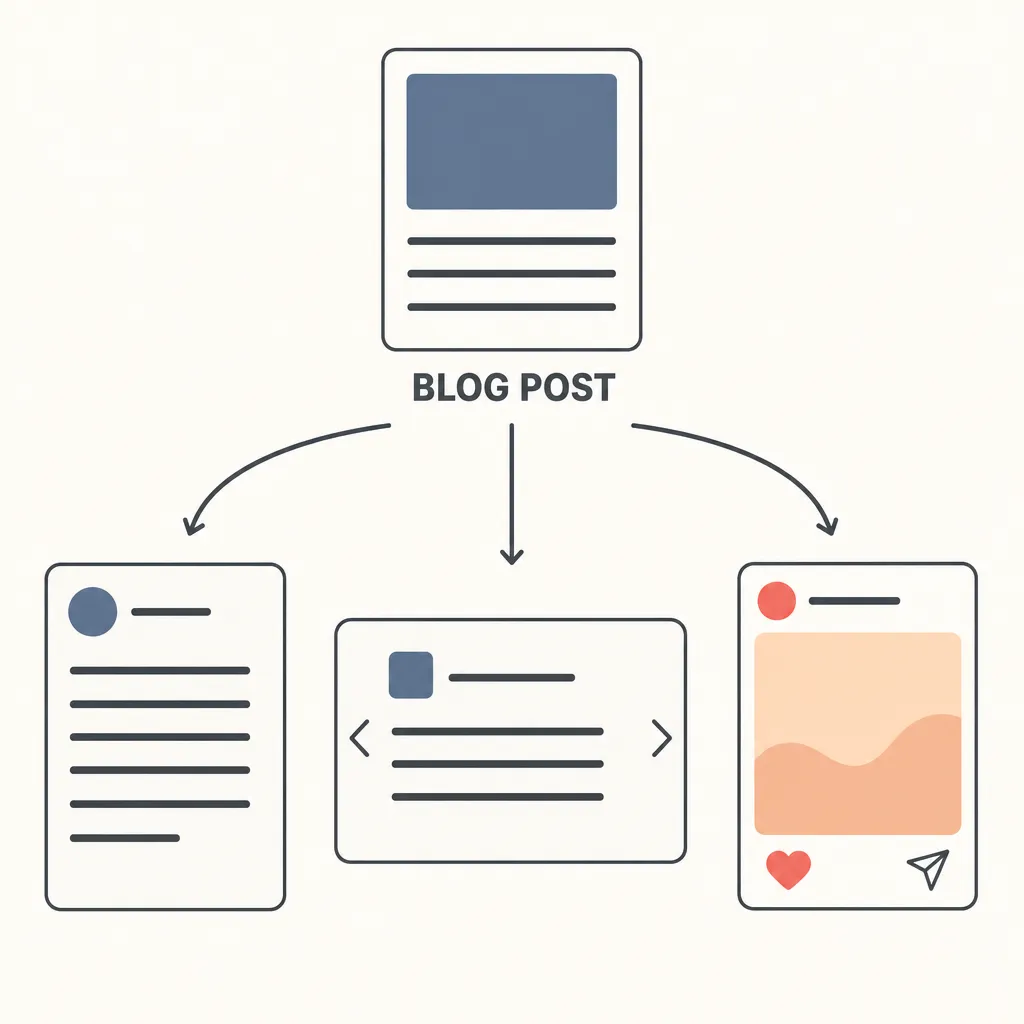
To keep your followers engaged without wearing them out, vary your angles. The same post can be reshared several times: with a key statistic, an open question, or a striking testimonial. That variety keeps the relationship alive while boosting your traffic.
Native formats and varied angles
Never underestimate the impact of Open Graph metadata. Set your og:title, og:description and og:image carefully to create previews people can't resist. A well-sized image (1200×630 pixels) becomes a click magnet in a crowded social feed.
Favour the native formats the algorithms reward: turn your posts into X threads, LinkedIn carousels or Pinterest infographics. They take longer to produce, sure, but they generate far more engagement than a bare link.
Enrich your strategy with a mix of media: short videos, infographics or animations. These formats grab attention in different ways and extend your audience beyond your current circle.
Optimised previews and timing
Timing is crucial if you want maximum visibility. Each network has its own tempo: LinkedIn runs on office hours, X peaks in the morning and late afternoon, while Instagram comes alive in the evenings and at weekends.
My favourite technique? Strategic teasing. Ten days before publication, drop hints across all your channels: excerpts in your newsletters, announcements in Stories, or a banner on your site. Building anticipation like this guarantees qualified traffic the moment your link goes live.
Converting with email and content
Email marketing is still the best-performing channel, with a strong return on investment: in Litmus's 2025 survey, 30% of marketers report $36 to $50 back for every $1 spent. Your main challenge? Turning casual visitors into engaged subscribers, the bedrock of a content strategy that delivers over the long run. That conversion takes a methodical approach and a healthy respect for the rules.
List, segmentation and GDPR
A successful email marketing campaign starts with building a quality list. Replace basic sign-up forms with a relevant lead magnet: offer a valuable resource (a checklist, a practical guide, an ebook) in exchange for contact details. This method attracts an audience that's genuinely interested in your topics.
Segmentation is crucial: sort your contacts by interest (marketing, entrepreneurship, productivity). This smart sorting significantly boosts your open and click rates. Only send each group the posts that matter to them, so nobody gets fed up and hits unsubscribe.
GDPR isn't optional (and if you're emailing US contacts, CAN-SPAM applies too). Collect explicit consent through a box that isn't pre-ticked, display a clear unsubscribe link and explain exactly how you'll use the data. That rigour builds trust and sets the stage for future conversions.
Effective notifications and automations
A great lead magnet converts visitors efficiently. Create a premium resource (a ready-to-use template, a mini course, a practical ebook) directly tied to your expertise. For a post about marketing on X, for example, offer a complete guide to gaining followers fast.
Automate your processes intelligently. Set up an RSS-to-email system so your community is automatically told about every new piece of content. Also drop links to your best posts into your automated emails (welcome, confirmation), a simple trick for generating qualified traffic with zero effort.
Every new post is an opportunity. Send a punchy email on launch day: a strong hook, a clear action verb ("Discover", "Download") and a CTA that stands out. This formula consistently gets more clicks than a message that drags on.
Signatures and built-in sharing
Optimise your email signatures as a traffic source. Automatically add your latest post via an RSS widget in the signatures of your whole team. This simple technique puts your content in front of everyone you do business with.
Encourage virality by adding share buttons to your emails. When a subscriber likes your content, they can share it instantly on LinkedIn or X, amplifying your organic reach. These strategic links turn your audience into engaged ambassadors.
Link strategies and reach
Backlinks and internal linking form the backbone of an effective SEO strategy, improving both your rankings and your online credibility. Manage these links strategically and you create an ecosystem of interconnected content that naturally draws your audience in.
Internal linking and key placements
Well-thought-out internal linking guides your visitors towards related content while strengthening your rankings. We recommend adding 4 to 5 relevant links to each post, pointing to in-depth resources. In a post about building landing pages, for example, link to your guides on high-converting CTAs or headline optimisation.
Make smart use of your high-traffic pages to maximise visibility. Add "Worth a read" modules to your homepage, place teasers on your product pages, or slip strategic links into your footer. These spots catch visitors who wouldn't necessarily go looking for your blog.
Recycle your existing content cleverly by folding it into bigger pieces. Combine three related posts into one complete guide, for example, while keeping links back to the originals. This approach adds value to your content and generates qualified leads at the same time.
Backlinks through collaborations
Earning relevant backlinks takes a genuine, relationship-driven approach. Start by identifying complementary blogs, then pitch win-win partnerships. Keep your message short and focused on the value for their community: "Your post on X is excellent. Our practical tool might be useful to your readers..."
Editorial collaborations make natural link exchanges easy. Cross-interviews, co-written posts or shared case studies create premium content that every party has an interest in promoting. Set clear expectations with each partner from day one.
Communities and syndication
An active presence in online communities positions you as an expert while opening up link opportunities. On Quora, Reddit or Facebook groups, give genuinely helpful answers first, then mention your resources discreetly. This respectful approach generates qualified traffic.
Syndicating on Medium or LinkedIn extends your audience, but the copy can outrank your original. Wait a few days after the original goes live, rework the headlines and intros and include a link back to your source site; where the platform allows it, ask for the copy to be noindexed, which is what Google recommends.
Online events are becoming powerful promotional levers. Put QR codes linking to your posts in your slides, cite your resources when you speak and share the links in the chat. This multi-channel approach turns every talk into a growth opportunity.
Amplifying with ads and measurement
Targeted ads are an effective way to grow your traffic and audience fast, while backing up your organic marketing strategy. They're a great way to get your content in front of relevant readers who would never have found your blog otherwise.
Targeting and high-performing formats
To get the most out of targeted advertising, start by defining your audience precisely. Distinguish between new visitors discovering you for the first time and people already loyal to your brand. This segmentation lets you tailor your messages perfectly.
- Lookalike audiences: build groups that resemble your best subscribers to widen your reach
- Engaged retargeting: retarget visitors who showed interest in your blog with tailored content
- Specific interests: use each platform's interest targeting to get your blog noticed by the right people
- Geotargeting: personalise your campaigns for your local audience where it makes sense
Each network has its own winning formats: carousels on Facebook and LinkedIn showcase several angles of your posts, short videos work well on Instagram, while text ads on Google answer users' searches directly.
Consistency between your ad and your landing page is essential. If you promise "5 tips to grow your blog", your content had better actually deliver those five tips. That match improves your conversions and how people perceive your quality.
Creative tests and conversions
A/B testing shows you what really works with your audience. Test different approaches: hard numbers, engaging questions or concrete benefits. Compare "90% of blogs fail" with "How to get your blog noticed", for example.
Your landing page deserves as much attention as your ad. A good click-through rate with few conversions usually points to a problem here. Test different CTA placements, forms and lead magnet offers to improve your results.
Constant optimisation is the key to success. Review your performance weekly, pause the underperforming ads and put more budget behind the winners. This step-by-step approach keeps improving your return on investment.
KPIs and iterations
Track the metrics that matter so you can make informed decisions. Beyond clicks, look at bounce rate, time on site and conversions to subscribers. Traffic that leaves immediately often reveals a gap between the promise and the actual content.
Compare performance across platforms to optimise your marketing budget. If LinkedIn brings in better-quality leads than Facebook at the same cost, focus your efforts there. This data-driven approach maximises your efficiency.
| Metric | Target | Optimisation actions |
| CTR | >2% | Test new visuals and headlines |
| Bounce rate | <50% | Improve the match between content and ad |
| Cost per conversion | Varies by industry | Refine audiences and bidding strategies |
How your metrics evolve tells you whether your adjustments are working. A steadily falling cost per acquisition combined with better-quality leads proves your strategy is paying off. These insights let you scale your campaigns with confidence.
A sustainable process for your blog
Promoting blog posts shouldn't be a one-off activity but an organised, regular strategy. This approach helps you maximise the reach of every post while steadily growing your audience and your blog's credibility.
Calendar and content repurposing
A high-performing promotion workflow starts while the content is being created. Plan ahead for visuals, Open Graph tag setup, email prep and scheduling your social media posts. This integrated method makes sure every post gets the distribution it deserves.
- Visual prep: create banners, infographics and social posts in parallel while writing
- Technical optimisation: check meta tags, Open Graph, internal links and mobile performance
- Email campaigns: prepare automated sequences and newsletters tied to the post
- Social calendar: schedule 30 days of content tailored to each platform
A 30-day plan multiplies your posts' visibility. Vary the angles: launch, deep dive, testimonials, seasonal refreshes. That variety avoids fatigue while keeping interest in your content alive.
Reaching beyond social media
Repurposing content into different formats is a major asset for widening your audience without piling on extra work. Turn your posts into podcasts for listeners, email series for your subscribers, or short videos for social platforms. That versatility lets you reach all kinds of people.
Push notifications and chatbots offer effective alternatives to traditional email. Add a "Push newsletter" option to your blog and set up a Messenger chatbot to automatically broadcast your new posts. These extra channels increase your presence without cannibalising your other efforts.
Let AI Handle Your Content Publishing
Alya researches keywords, writes and publishes content directly to your CMS, WordPress, Shopify, Wix and more, on autopilot.