Your website's success online rests largely on one strategic decision: how to choose an SEO agency. Get it right and it can propel your business forward. Get it wrong and you'll lose both time and money. Everything hinges on the quality of the partner you pick. To spot a reliable SEO agency, take a rigorous approach built on objective criteria.
Drawing on our expertise in organic search, we've watched businesses transform their visibility with the right strategy, and we've also seen promising projects collapse because of a poor agency choice. This guide distils what we know and gives you the keys to:
- Ask the right questions
- Spot the traps to avoid
- Find the partner who can sustainably improve the rankings of your website
Our pick of the essentials
- Put them to the test: The best proof of their expertise? Their own Google rankings for strategic keywords.
- Experience matters: Favour an agency with verifiable client references and deep knowledge of your industry.
- Transparency is non-negotiable: Demand a clear methodology, an itemised quote and reports you can actually understand. Be wary of unrealistic promises.
- A tailored approach: A good agency will always start with a full audit of your site so its strategy lines up with your business goals.
Essential criteria for evaluating an SEO agency
Before you commit, take the time to look at the key elements that reveal the true quality of an SEO agency and its ability to run an effective SEO campaign.
Check the agency's own rankings on Google
This is the most revealing test of all: a genuinely reliable SEO agency should first be able to rank itself on Google.
- Analyse their visibility: Search for terms like "SEO agency" or "SEO services" in your city or region. If the agency isn't on page one, how could it possibly improve your visibility?
- Financial stability: SEO is a long-term investment. Check the agency's financial health to avoid nasty surprises down the line.
- Meet the team: Ask to speak directly with the experts who'll manage your account. The human relationship matters enormously.
- Transparent methods: A good agency explains its approach in plain language, with no needless jargon. That clarity is essential when you're trying to evaluate how serious they are.
Examine client references and case studies
Fine words aren't enough - ask for hard evidence. Demand genuine, verifiable references and detailed client case studies, ideally in your own industry. What traffic gains were achieved? Over what period? Were the stated goals actually met?
Don't hesitate to contact some of their clients directly. Ask them specific questions about the results delivered, but also about the quality of communication, responsiveness and how well the agency explains what it's doing. These client reviews are invaluable when you're trying to choose your agency. A good SEO agency will hand over these client references without any fuss.
Check that the case studies include measurable indicators: organic traffic growth, number of keywords ranking in the top 10, improved conversions. For example, a 40% increase in traffic over a year for an e-commerce site, or a clear jump on strategic queries, are tangible proof.
SEO audit and methodology: the foundation of an effective strategy
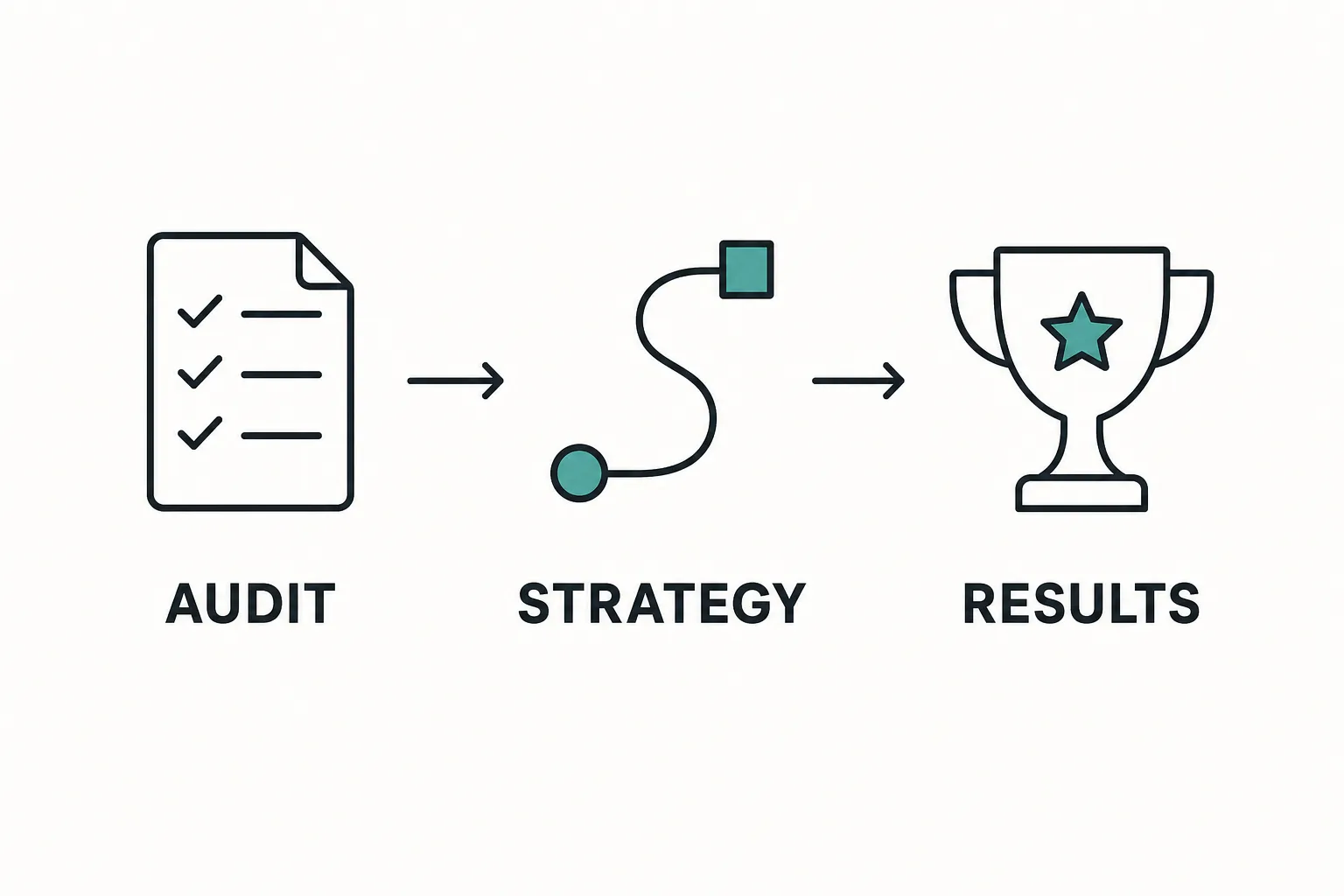
A serious SEO audit is the unavoidable starting point. Far more than a simple report, it's the diagnosis that will shape your entire strategy and help you in choosing an SEO agency.
Insist on a thorough technical diagnosis
This analysis has to go beyond surface appearances and examine the technical machinery of your site. It must cover these key areas:
- Architecture and crawling: Can Google's bots crawl your site easily? (Clean URLs, XML sitemap, robots.txt file, 404 error handling.)
- Performance and Core Web Vitals: Are load times optimised? The agency should analyse LCP (Largest Contentful Paint), INP (Interaction to Next Paint) and CLS (Cumulative Layout Shift). Bringing LCP down from 4.2 s to 1.8 s can radically transform the user experience.
- Duplicate content: Does your site contain duplicate content that could be fixed with canonical tags?
- Structure and markup: Is the heading hierarchy (H1 to H6) logical? Is the optimisation of metadata (title tag, meta description) relevant?
- Indexability: Are all your important pages correctly indexed in Google Search Console?
The report should lead to a prioritised action plan with realistic deadlines. A true professional will turn this diagnosis into SMART objectives. This technical expertise also needs to fit your platform; for an e-commerce site, for instance, it's crucial to master SEO optimisation on PrestaShop, Shopify or whichever e-commerce CMS you run.
Keyword research and competitor analysis
A real SEO agency always starts with in-depth keyword research. This fundamental step identifies the queries your audience is actually typing into Google.
- Competitor mapping: The agency identifies your main competitors, analyses their best pages and spots the "content gaps", those keyword opportunities they're neglecting.
- Keyword prioritisation: Favour long, specific queries (like "emergency drain unblocking 24 hours Manchester") that drive quick conversions rather than generic, hyper-competitive terms.
- Monthly monitoring: Every month, the agency tracks how your competitors' rankings are shifting and adjusts your content and link building strategy accordingly.
- Exploiting weaknesses: Spot poorly optimised pages on your competitors' sites and outrank them with expert content and a smart link strategy.
For example, a heating company could target the keyword "annual boiler service contract" if competitors are ignoring it, letting it pull in qualified leads fast.
Structure your site for optimal performance
After the technical audit and the semantic analysis, the agency should structure your site into logical topic clusters. The goal is to guide both visitors and search engines like Google, while strengthening the authority of your strategic pages through effective internal linking.
| Key step | Description | Recommended tools |
| Technical audit | Checking the technical basics: URLs, speed, indexing, Core Web Vitals. | Screaming Frog, Google Search Console, PageSpeed Insights |
| Competitor analysis | Identifying high-performing keywords and competitor strategies (content gap). | Ahrefs, Semrush, Majestic |
| Content strategy | Planning content matched to search intent to build topic clusters. | Surfer, Clearscope, AI SEO editors |
| Internal linking | Optimising the internal links between your key pages and their topic clusters. | Sitebulb, Gephi, internal link analysis tools |
This analysis work is the groundwork for building a high-performing SEO strategy, turning data into concrete, measurable actions with the right tools.
The pillars of action: technical SEO, content and link building
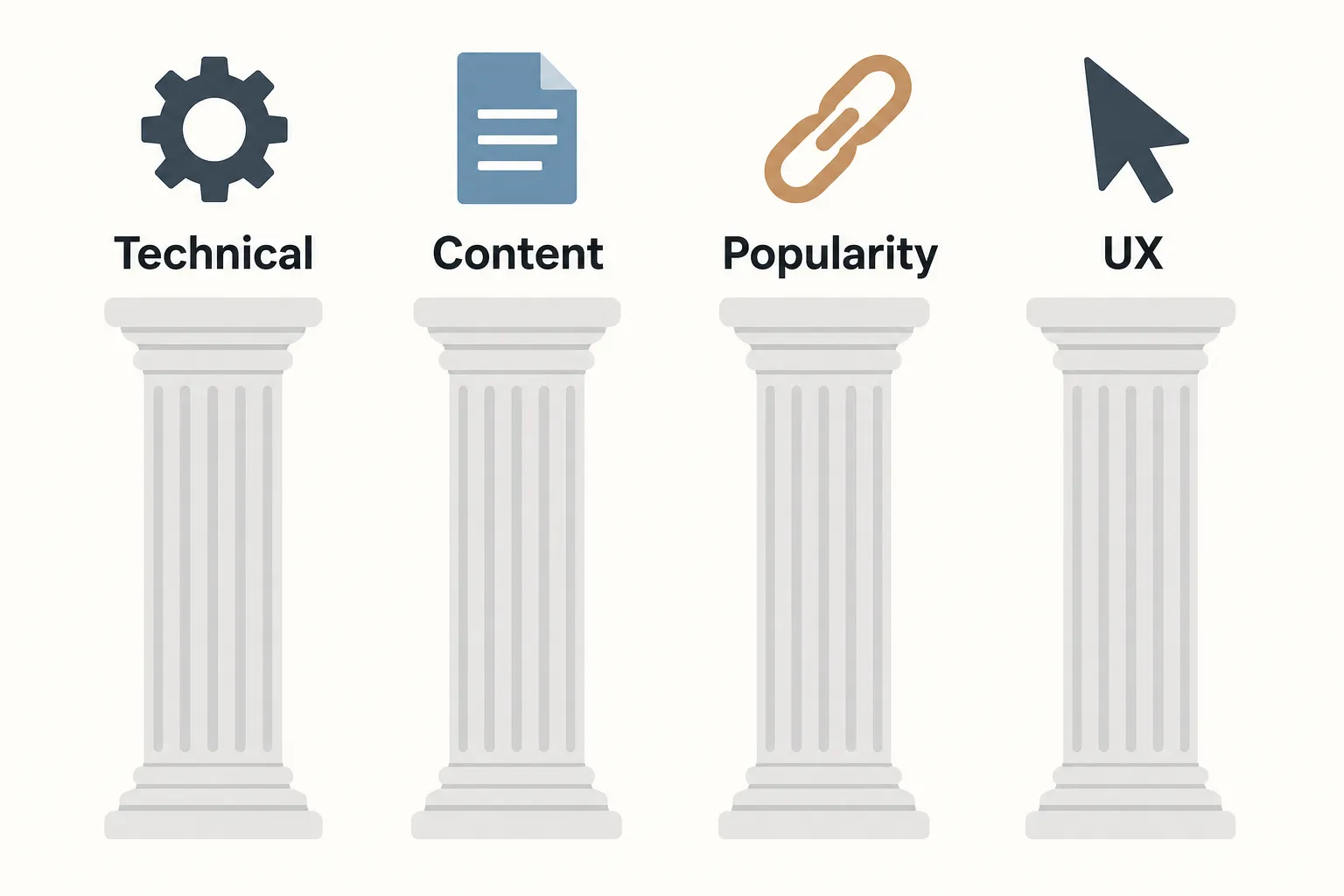
A high-performing SEO strategy rests on several key levers. The agency you pick must have a firm grip on these three fundamentals: technical SEO, content and authority (through link building).
Content strategy and E-E-A-T
Content is still king, but only optimised, credible copy really makes a difference. That demands a thorough command of SEO copywriting techniques. A serious SEO agency will systematically apply the E-E-A-T principles (Experience, Expertise, Authoritativeness, Trustworthiness).
- Rigorous methodology: The ideal agency follows a clear process: SERP analysis → identifying the semantic field → structuring the page → optimising media → building internal links.
- Topic clusters: Build pillar pages linked to supporting content to strengthen authority on a subject.
- Sensible use of AI: AI can help with research, but every piece of content must be reviewed, improved and signed off by an expert before it goes live.
- Focus on the user: Every page should answer the query precisely, with compelling headings, clear calls to action and a smooth experience.
- Editorial calendar: Set a regular publishing rhythm (say, 2 articles a month and 1 topic page a quarter) while regularly refreshing older content.
This guide lays out a complete methodology for creating effective SEO content in 2026 and gives you precise criteria for choosing an SEO agency: adherence to E-E-A-T principles, the ability to decode search results and user expectations, topic cluster creation, sticking to an editorial calendar, advanced technical optimisation (performance, markup, JavaScript handling) plus regular audit processes and continuous monitoring. It details a 5-step approach (SERP analysis, semantic research, architecture, media optimisation, internal linking), stresses moderate use of AI, suggests performance indicators (GSC, GA4) and illustrates everything with real cases - all things to check before you choose your agency. Check the full SEO methodology to choose your agency wisely
Ethical link building: building your authority for the long term
Backlinks remain decisive for rankings, but a bad strategy can be genuinely risky. Only ethical link building keeps you clear of penalties and builds a solid reputation.
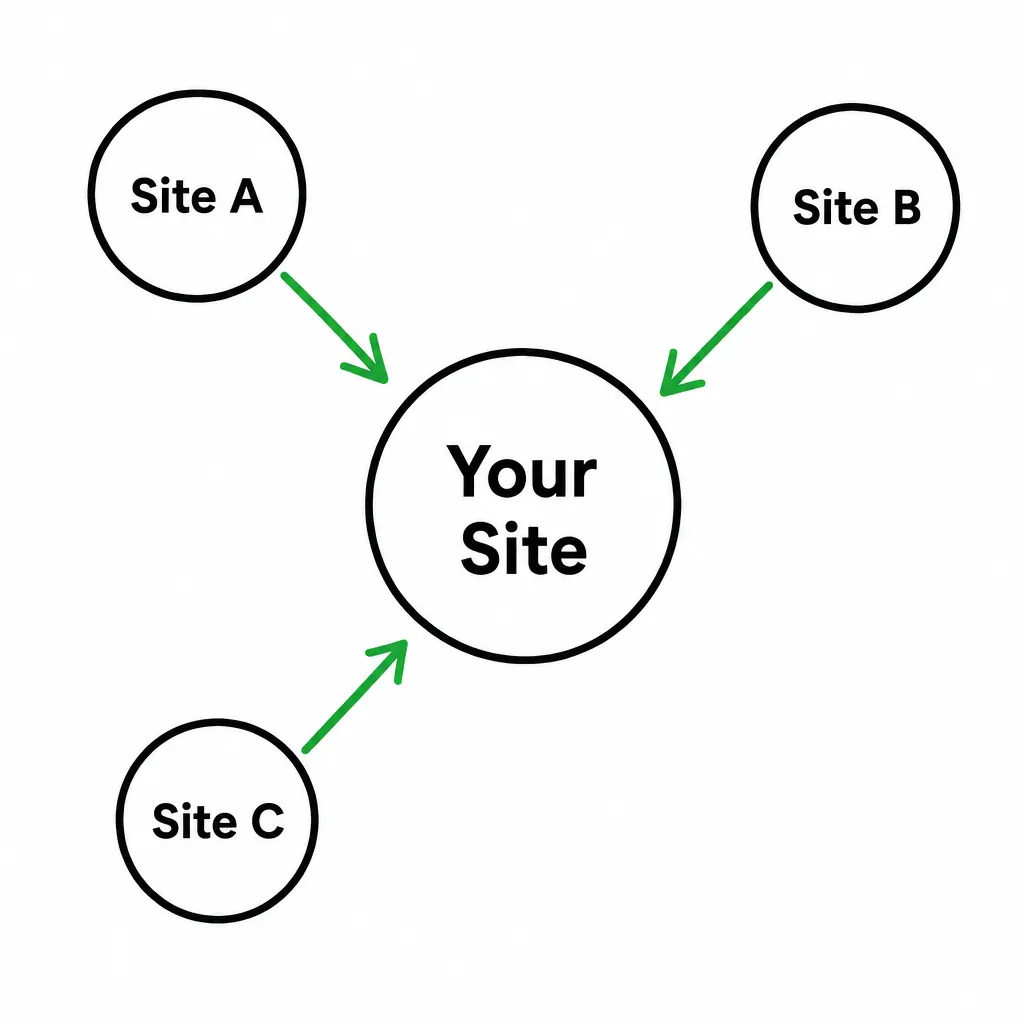
- Detailed backlink audit: A good SEO agency should start by carefully analysing your existing links and those of your competitors (using the Ahrefs Content Gap report in particular, and identifying broken links).
- Technical vetting of target sites: It's crucial to check their Trust Flow/Domain Rating, their organic traffic, the relevance of the link's context and their topical fit.
- Gradual, natural approach: Aim for steady acquisition (roughly 2 to 5 links a month) with varied anchors: 80% natural phrases (brand, URL or generic terms) and 20% optimised.
- Sustainable, diversified methods: Favour techniques like quality guest posting, digital PR, linkable assets (studies, tools, infographics), broken link reclamation and turning unlinked mentions into links.
- Constant monitoring: Use professional tools (Ahrefs, Semrush, Majestic) to track links, detect toxic backlinks and act pre-emptively. The agency should provide the list of partner sites, screenshots and published URLs.
This guide demystifies Private Blog Networks (PBNs), networks of sites created to artificially inflate a main site's authority, by explaining how they work, their advantages (control over links, fast results) and above all their dangers (detection by Google, heavy penalties, lasting traffic drops). It also gives you precise criteria to evaluate a link building strategy when choosing an SEO agency: backlink analysis, topical relevance of sources, anchor diversity, quality of referring sites and tracking through key indicators, while recommending more reliable methods like targeted guest blogging, digital PR and quality content that meets E-E-A-T standards. Find out why to avoid PBNs and how to choose a sustainable link building strategy
This complete guide to link building (2026) explains how to build an effective link strategy: dofollow vs nofollow differences, the initial audit of your backlinks and your competitors', acquisition techniques (guest posts, broken link fixes, media relations, linkable content) and target selection based on topic and authority. It offers a quality checklist (relevance, authority, link placement, anchors, traffic of source pages), best practice for varying anchors (the 80/20 rule), an optimal acquisition rhythm and the use of tools like Ahrefs to measure results - all things to evaluate when choosing an SEO agency. Discover the complete guide to link building (2026)
Tools and innovation: the weapons of performance
Your SEO partner absolutely must know the industry's essential tools, such as Google Search Console, Google Analytics, Semrush or Ahrefs, and be able to present their data in dashboards that are easy to read.
Assess their capacity to innovate too. Do they use AI for semantic analysis or real-time scoring of your content? Do they set up data visualisation tools to make their reports more accessible? Do they have an R&D team or in-house scripts (for spotting keyword cannibalisation, say) that speed up diagnostics and help prioritise actions?
The agency should also implement structured data (Article, Organization, VideoObject, Breadcrumb and, for stores, Product) to qualify for the rich results still supported in Google, while applying a rigorous quality process that includes a pre-publication checklist and monitoring for 30 days after go-live.
Quote, contract and ongoing support
Working with your SEO provider is a long-term relationship. It's crucial to set the ground rules clearly from day one to guarantee effective, transparent support.
Demand a detailed, transparent proposal
A quote can't just be a single price line. It should spell out exactly which services and deliverables are included:
- The scope of the initial audit: Which pages will be analysed? Which tools will be used?
- The monthly time allocation: How many hours will the team dedicate to your project each month?
- The concrete actions: Technical optimisation, content writing, link building, on-page optimisation... Every action should be clearly listed.
- Additional costs: If the agency bills for extra tools or link purchases, it must be stated without ambiguity.
- Reporting: How often you'll get reports and which key indicators are tracked (rankings, traffic, conversions).
Check the legal details and the company registration (Companies House in the UK, state business records in the US), and clarify every point before signing (scope, contract length, termination terms, ownership of deliverables). Compare at least three detailed proposals carefully and pick the best fit, which isn't always the cheapest.
Understand the methodology and the follow-up
Make sure you fully grasp the methodology being applied. Your provider should put forward a clear action plan with a long-term vision. The real added value lies in regular monitoring: periodic reviews (monthly/quarterly) and continuous adjustments that sustainably improve your rankings, your ROI and your customer acquisition cost.
The agency should provide:
- A precise timeline: audits, sprints and deliverables with clear deadlines.
- Monthly reports: access to your Search Console and Analytics accounts, a real-time dashboard and tracked indicators.
- Proactive monitoring: tracking Google updates, adjusting strategy and ongoing training for the team.
- Firm commitments (SLAs): a maximum 72-hour turnaround for urgent fixes, mandatory monthly check-ins and a named emergency channel.
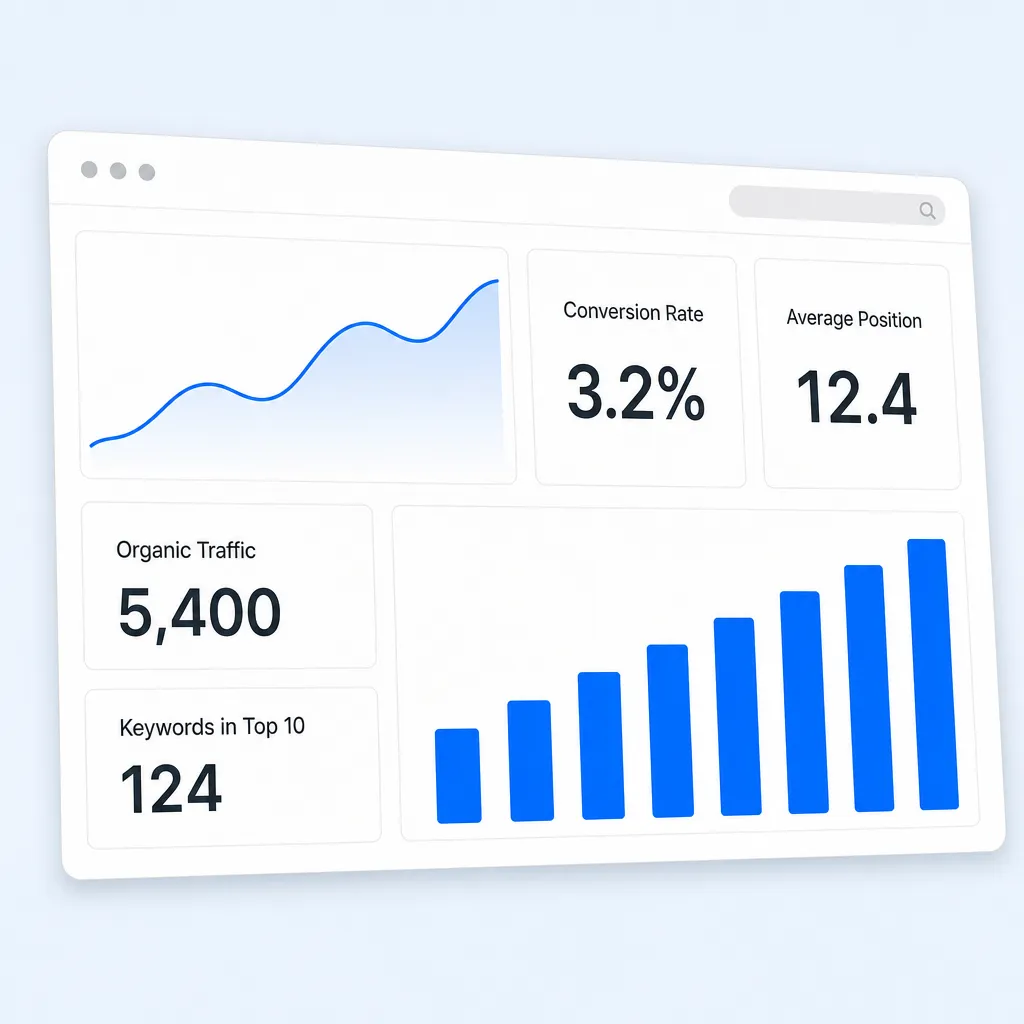
Red flags and realistic expectations
Watch out for these warning signs that should set alarm bells ringing:
- Unrealistic promises: be wary of "top 3 on Google" guarantees. No serious SEO agency can promise an exact ranking.
- Vague or missing reporting: a good agency delivers clear, detailed reports so you can measure progress.
- Prices that look too good: effective SEO takes time and expertise. Abnormally low prices usually hide dubious practices.
- A one-size-fits-all approach: your strategy should be tailored to your industry and your specific goals.
Keep your expectations realistic: the first results usually show up after 3-4 months, with ROI improving gradually depending on competition and the age of your site. An honest agency will offer you a transparent plan and steer clear of risky techniques like PBNs or mass link exchanges.
Data-driven approach and growth hacking
A good SEO agency takes a data-led approach to maximise optimisation and constantly improve return on investment.
A/B testing and an experimental mindset
Before rolling out a strategy across the board, the agency should:
- Test different options: compare variants of title tags, descriptions or layouts to identify what works best.
- Prioritise intelligently: use the PIE framework (Potential, Importance, Ease) to rank SEO actions.
- Validate statistically: make sure the results are significant before deploying at scale.
This guide digs into growth hacking: definition, key principles (testing, data culture, resource optimisation) and the AARRR framework, with real cases like Dropbox. It also shows how SEO (long-tail keywords, link building, UX) fits into that approach. If you're wondering how to choose an SEO agency, this content helps you identify the true experts through their rigorous methodology: A/B tests, precise tracking and cross-team collaboration. Read the growth hacking guide to choose your agency wisely
Continuous content plan and monthly reporting
The agency should build an ongoing editorial strategy based on your audience and SERP analysis, while getting more value out of your older content.
Monthly reports let you follow progress and the impact of the actions taken.
The agency should continuously watch for technical problems and provide concrete fixes to quickly resolve any crawl, indexing or performance issues.
Local SEO: a specific expertise to verify
If your business mainly serves local customers (shops, tradespeople, professional practices), make sure the agency has a firm handle on the specifics of local SEO:
- Google Business Profile optimisation: The provider should optimise your profile (photos, opening hours, reviews) and guide you in earning positive customer reviews.
- Local citations: Keep your NAP details (Name, Address, Phone) consistent across directories and specialist sites in your area.
- Localised content: Create dedicated pages for each geographic area you target, with relevant, original content.
- Local link building: Earn links from credible local sources (regional media, local partners).
Local SEO calls for a bespoke approach and specialist tools - check that the agency really has this expertise if it's relevant to your business.

Automate Your SEO With AI Agents
Sedestral connects six AI agents to your website to handle content, audits, rankings and backlinks, without the manual grind.