Does SEO feel needlessly complicated? You're not alone. But did you know that getting your head around one single concept could give your rankings a serious lift? That concept is what SEO specialists call "link juice", sometimes referred to as "link equity".
Despite appearances, this isn't something reserved for the experts. It sits at the very core of how search engines work. Learn how this precious "juice" flows, how it's shared and how to optimise it, and you can change your whole online presence. It all comes down to the art of balancing internal links and backlinks. Need a full glossary first? Our SEO glossary walks you through every key term.
In this article, we're going to demystify the concept for you. Beyond the definitions, you'll pick up hands-on techniques to boost your site's authority. Among other things, we'll cover:
- How internal linking acts as an authority distribution network
- Why relevant backlinks add weight to your content
- How simple tricks like redirects preserve your link equity
Ready to turn your links into a growth lever? Let's go.
What is link juice: definition and how it actually works
Think of a web page's authority as a precious elixir. Link juice (or link equity) is simply the transfer of value and credibility from one page to another, the target page, through a hyperlink.
The concept goes back to PageRank, the early Google algorithm that scored pages based on the quantity and quality of their inbound links. The public score was retired years ago, but the principle of authority transfer is still fundamental to how Google ranks pages today.
In short, every link works like a vote of confidence. The more quality "votes" a page collects, the more Google treats it as trustworthy and deserving of a strong position in organic search.
The different ways link juice is passed
Authority transfer happens in two main ways:
- Internal link juice: through the connections between the pages of your own site
- External link juice: through backlinks coming from other websites
One crucial note: only standard (dofollow) links pass this authority. Links tagged nofollow, sponsored or ugc act like closed valves. They let users navigate, but in theory they pass no authority at all.
Why is link juice so important for your rankings?
Google wants to serve the most reliable answers. A page that earns lots of quality links sends a powerful signal: it's a go-to reference on its topic.
By strategically channelling link juice towards your key pages, you're telling Google loud and clear: "This page is my main content on this subject!" In return, the search engine tends to rank it higher.
Back to basics: PageRank, where link juice comes from The idea of link juice originates in PageRank, the landmark algorithm that shaped how Google works. The visible PageRank score is long gone, but passing authority through links remains a pillar of Google's current algorithms. Every inbound link still counts as a vote of confidence between websites.
How link juice is passed and distributed
Understanding this transfer process is essential if you want to make the most of this valuable SEO asset. Every web page holds a reserve of link equity to hand out, and the linking page plays a key role here.
How effective the transfer is depends on several decisive factors:
- The authority of the source page: A link from a page with real standing passes far more link juice than a link from a weak page on the same domain.
- Topical relevance: A link between two pages that share a similar topic carries much more weight than an off-topic one.
- Link placement: A link embedded in the main content works far better than one buried in the footer. Because the whole page affects the transfer, it's crucial to optimise your HTML for SEO to get the full benefit.
- The number of outbound links: This is the principle of link juice dilution. The available juice is split proportionally between all the outbound links, which determines how much each link passes on.
Check out our complete guide to mastering Google Search Console. This free tool lets you:
- Track your site's performance (impressions, clicks, position)
- Spot and fix indexing problems through the "Pages" report and the URL inspection tool
- Submit your sitemap and analyse your data alongside Google Analytics
The guide also shows you how to audit your backlinks and internal links to strengthen your link equity (managing 301 redirects, 404 pages, orphan pages), along with practical advice on verifying ownership and using the disavow tool wisely. Apply these best practices to:
- Detect technical obstacles
- Optimise your titles and descriptions to improve CTR
- Structure your links effectively for better link juice distribution
Improve your link juice with our complete Search Console guide
Here's a simplified illustration of how link equity gets diluted:
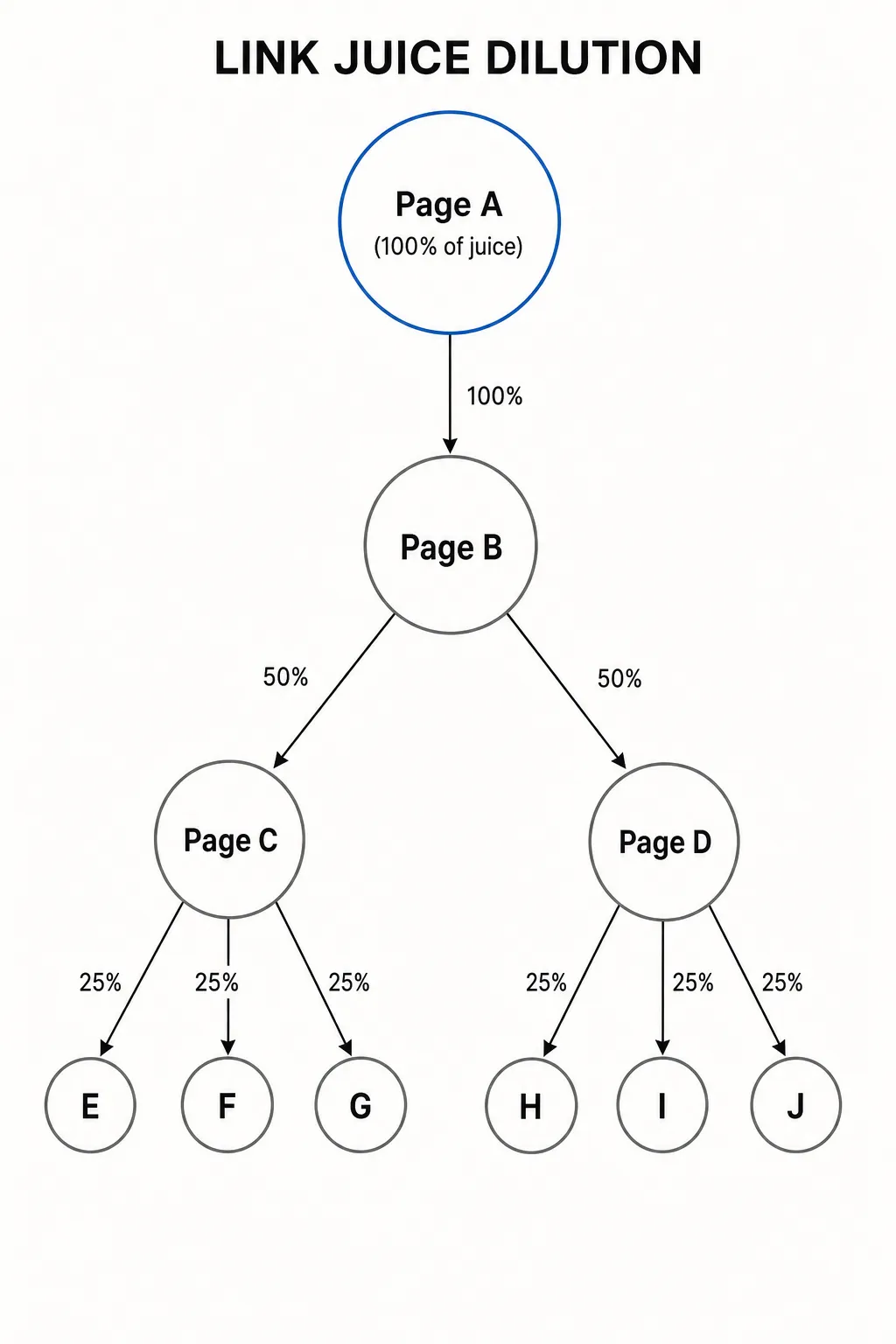
| Number of outbound links on page A | Link juice passed to each link |
| 1 link only | 100% of the available juice |
| 2 links | 50% each |
| 4 links | 25% per link |
| 10 links | Just 10% each |
Our advice: To get the most value from a link, always favour a single quality link over several mediocre ones. Choose your external site carefully: a relevant partner with few outbound links will pass far more value than links scattered across saturated sites.
Optimise your internal linking to distribute link juice
Your internal linking is the essential network for routing link juice intelligently to your strategic pages. Adding relevant, natural contextual links is the key to solid rankings.
Build a topic cluster architecture
Structure your site around main pages (say, "Running shoes") linked to sub-topics ("Men's running shoes", "2026 comparison", and so on). Point your internal links at these pillar pages to reinforce your core content.
- Identify your main pages: This strategic content should receive the bulk of your internal link juice, especially from your homepage and your blog posts.
- Create topic groups: Organise your links into coherent clusters. Each pillar page should connect to satellite articles that also link to one another.
- Pick descriptive anchors: Avoid generic wording. Go for anchor text that precisely describes the destination.
- Control the flow: Boost your important pages by creating several internal links to them from related content.
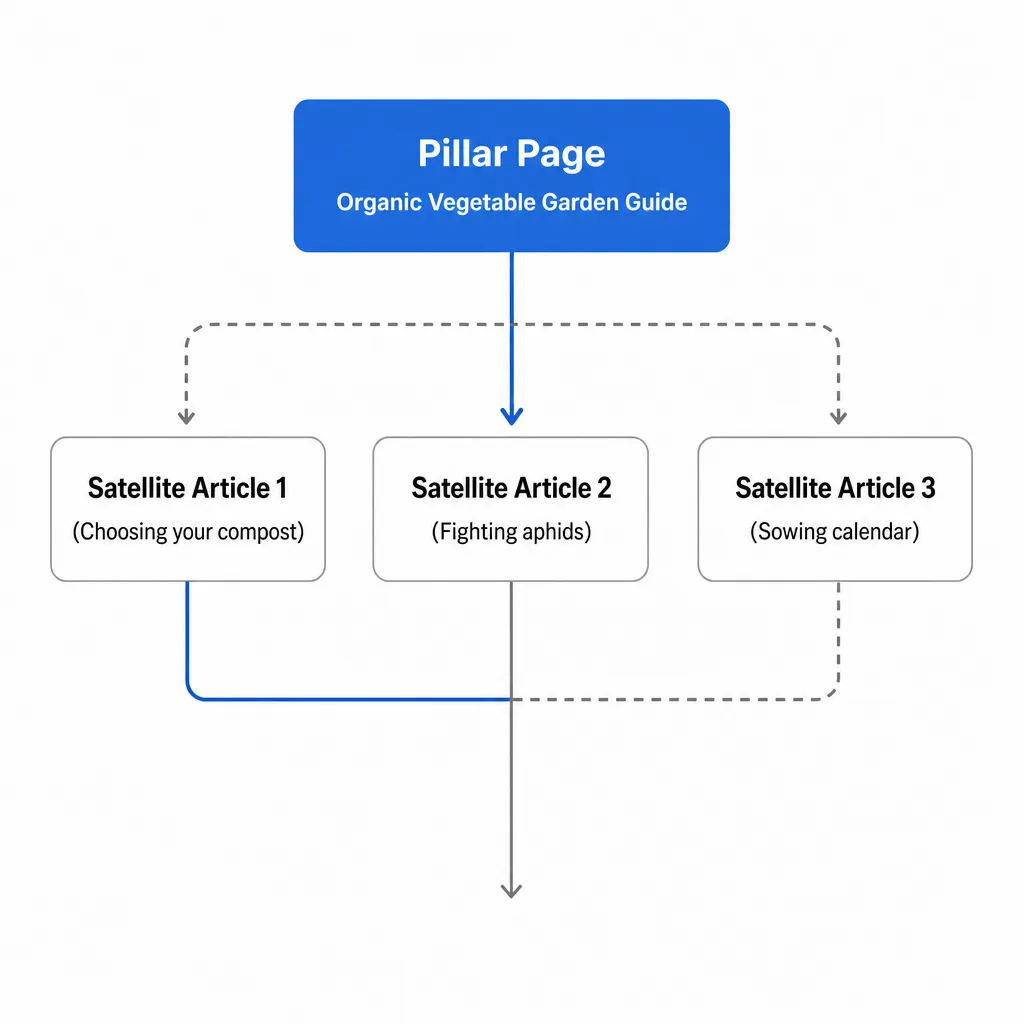
This silo method is particularly effective for e-commerce sites. For a concrete application, read our detailed guide to PrestaShop SEO.
Putting strategic internal linking into practice
This guide shows you how to improve link juice transfer through a thorough SEO audit, a well-thought-out site structure (topic clusters) and smart internal linking to spread authority across your strategic pages. These techniques need to be paired with a rigorous link building policy and close monitoring of your backlinks to keep the risks down. We explain how to turn your analysis into a concrete action plan, measure your results and take a transparent approach so that link juice genuinely serves your goals. Go further with our guide to choosing an SEO agency
Set up clear breadcrumbs, well-structured menus and "related articles/related products" sections. Use the rel="nofollow" attribute for secondary external links (such as login pages or filters). Analyse your architecture with tools like Screaming Frog or Gephi to find and fix orphan pages (pages with no internal links).
Link building strategies to earn quality external link juice
If internal linking is your distribution system, backlinks are the sources that feed your site with external authority. A successful link building campaign takes time and a precise methodology.
Prioritise topical quality
A single backlink from a site that's an expert in your field carries far more weight than dozens of unrelated links. For example, a link from a specialist running blog to your "running shoes" page will do a lot more for your credibility than a link from a general web directory.
- Aim for topical consistency: Look for links from sites that cover the same subjects you do.
- Diversify your sources: Build a natural profile by earning backlinks from blogs, trade media and forums.
- Vary your anchors: Use roughly 80% neutral or branded anchors and 20% optimised anchors to avoid penalties.
- Consider guest posts: Publishing on sites in your niche is an excellent way to earn relevant links.
Monitor and manage your link profile
Use tools like Ahrefs, Majestic or Google Search Console to track new links, identify toxic ones and spot anomalies. Google ignores most spammy links on its own: only submit a disavow file if you have many artificial links that caused, or are likely to cause, a manual action. Measure your results: analyse how referral traffic and rankings move after each link building campaign.
Watch out for the sponsored and ugc attributes
- Use
rel="sponsored"for paid links. - Apply
rel="ugc"to user-generated links.
Protect your link juice: redirects and technical optimisations
Building link juice is one thing. Protecting it is another, and it matters just as much. Preserving this asset whenever you change your site is vital to holding your position in the search engines.
The 301 redirect: your SEO "change of address" notice
301 redirects keep most of your link juice intact (a far better option than a 404 error). This permanent redirect transfers almost all the SEO authority from an old URL to a new one. It's an indispensable tool during a site redesign or when you remove a page.
A concrete example: deleting a page with lots of backlinks without a redirect (404 error) = lost SEO value for your site. A simple 301 redirect to the most relevant page keeps that precious authority.
The canonical tag: your weapon against duplicate content
The rel="canonical" tag tells Google which version of a page should be treated as the "original" when similar content exists in several places. It concentrates all the link juice on a single URL instead of letting it scatter.
Practical steps to preserve link juice
After a merge, migration or restructure: submit a sitemap, set up well-planned 301 redirects and use the URL inspection tool to request re-indexing of your important pages. A typical case: merging two similar articles → redirect the old one to the new one with a 301, update your internal links, then request a fresh index.
PBN risks and alternatives for your link juice strategy
This guide explains how Private Blog Networks (PBNs) work and how they artificially manipulate link juice by using expired domains, controlling anchors and hiding their footprint to funnel authority to a target site. It covers the methods (choice of domains, topical consistency, technical diversification, anchor management), the quick wins that are possible, and above all the high risk of penalties from the search engines. You'll also find sustainable alternatives such as guest blogging, digital PR, premium content creation and link building best practices (auditing, evaluating sources, natural anchor distribution) to grow your rankings the healthy way. Read the complete guide to PBNs and preserving link juice
How PBNs work and the risks involved
PBNs work by acquiring expired domains (with a backlink history) and diversifying their technical infrastructure (WHOIS, IP addresses, CMS) to redirect their authority to a target site. The risks include algorithmic or manual penalties (a sudden drop in the results, deindexing), a collapse in traffic and a lost investment.
Sustainable and legitimate alternatives
Stick to approved methods: targeted guest blogging, digital PR, original studies or free tools (naturally linkable content), broken link reclamation and turning unlinked brand mentions into links. Concrete examples: publish an industry study that naturally attracts media backlinks, or earn 2 to 5 strategic links a month through a quality-first approach.
Measure and analyse your link juice with the right tools
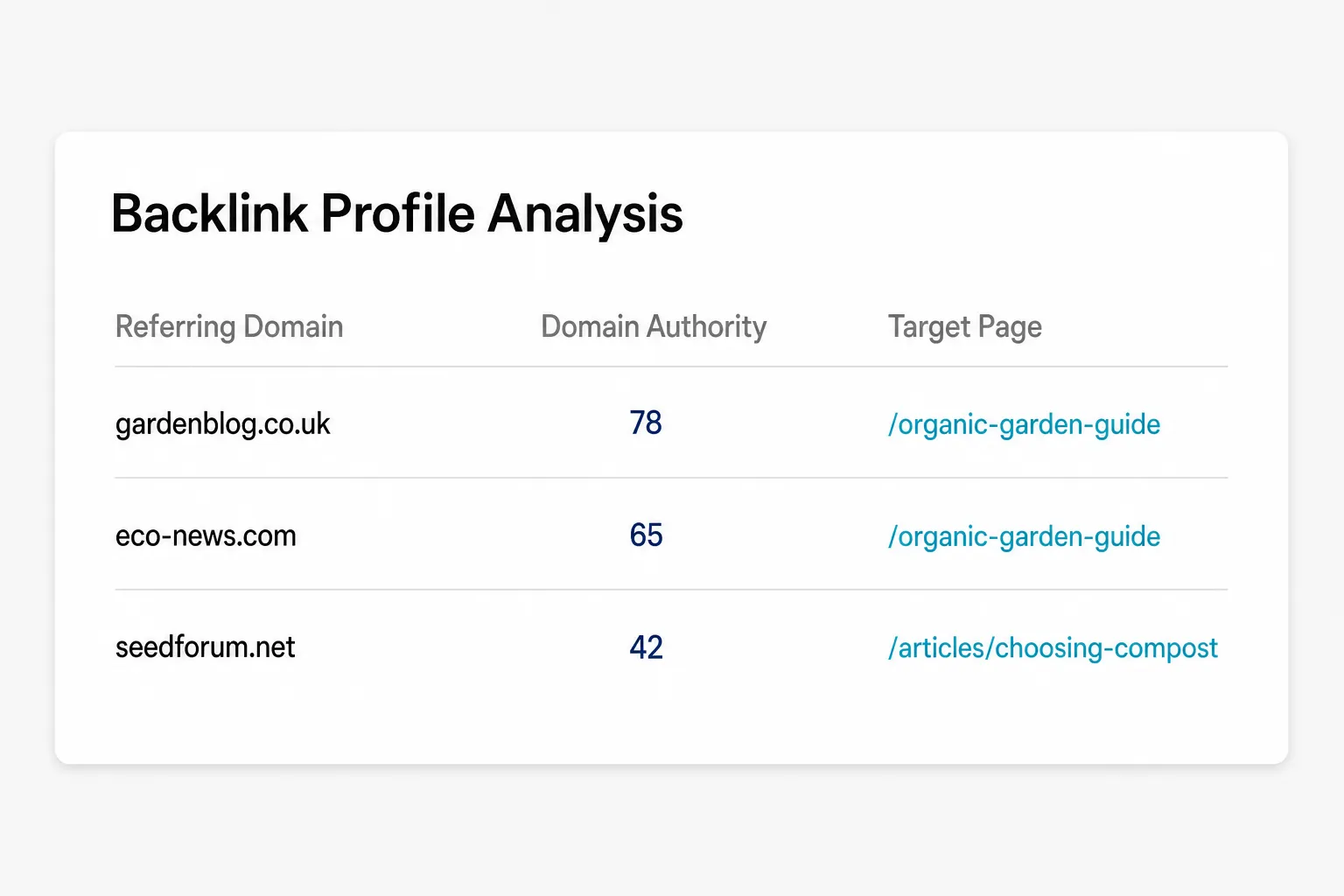
To optimise your SEO effectively, you need to measure the impact of your strategy precisely. Here are the essential tools for analysing how link juice is spread across your site:
- Google Search Console (free): Its "Links" report reveals which pages attract the most backlinks and which ones are lacking. It's perfect for managing your internal links and the ones coming from other sites.
- Ahrefs / Semrush / Majestic: These premium tools give you a detailed analysis of your backlinks, the authority of the domains pointing to you, and track how your rankings evolve.
- Screaming Frog SEO Spider: Ideal for mapping your internal linking, it detects poorly connected pages and helps you redistribute link juice more effectively.
- Gephi: This software turns your link structure into a visual graph, highlighting where to improve.
Concrete actions with Google Search Console
Adopt an effective interlinking strategy: create internal links from your pages that already drive traffic to those sitting in positions 11-20, to pass them link juice and improve their ranking. For example, in a high-performing article, add links to a product page that's stuck on the second page of Google results.
Link juice: more than a metric, a global strategy
As we've shown, link juice isn't just an abstract notion. It embodies the value you produce and how it spreads through your site's ecosystem and beyond.
Your 5 strategic priorities:
- Produce exceptional content on your key pages to build natural authority.
- Organise the flow of link juice carefully through internal linking structured into topic silos.
- Collect external link juice through relevant backlinks, always keeping topical consistency in mind.
- Protect your SEO capital with 301 redirects and canonical tags whenever you change your site.
- Improve your approach continuously with the right tools to make your SEO as effective as possible.
Modern SEO demands a big-picture view where every component (links, content, technical optimisation) helps strengthen your site's authority. Apply these principles and your links will become genuine accelerators of organic growth.
You now hold all the keys. Over to you!

Automate Your SEO With AI Agents
Sedestral connects six AI agents to your website to handle content, audits, rankings and backlinks, without the manual grind.