Want a proper explanation of what an SEO consultant actually does? You're in the right place. This guide goes well beyond a basic job description to show you why this professional has become indispensable in digital marketing. We'll walk through their core responsibilities, their impact on the visibility of websites, the skills the job requires, the salary of an SEO consultant and the career paths open to them. Organic search is a complex field, and this guide gives you everything you need to understand the job of an SEO specialist.
What is an SEO consultant: definition and strategic role
In a digital world where millions of web pages fight for the top spots on search engines, visibility is everything. The SEO consultant plays a dual role, part strategist and part technician, with one goal: driving more qualified traffic to a site. A true expert in search rankings, this SEO specialist designs and executes plans that let a business attract a relevant audience over the long term.
Their job is to translate business goals (sales, leads, brand awareness) into concrete SEO actions. For example: picking the key pages to optimise to lift conversions, or improving visibility on strategic keywords.
Their relationship with paid search (PPC) is straightforward: while SEO aims for lasting results, Google Ads campaigns deliver instant but short-lived visibility. An independent consultant will offer hands-on, personalised support, whereas an agency brings in a multidisciplinary team for more ambitious projects.
The consultant's hybrid role: analyst and operator
The organic search consultant sits in a unique position, combining analysis with action:
- Running in-depth audits: They inspect the site thoroughly, identify technical problems (slow load times, incorrect tags, broken links) and propose clear fixes with instructions written for developers.
- Prioritising the fixes: They don't just list problems, they rank them by their potential impact on rankings.
- Implementing the optimisations: On-page improvements, markup corrections, redirect management and technical adjustments.
- Coordinating the teams: They bridge the gap between developers, writers and digital marketing teams to roll out the SEO strategy efficiently.
Take a concrete example: setting up Google Search Console, putting regular rank tracking in place and training the team to publish optimised content on a CMS like WordPress or Shopify.
The main responsibilities of an SEO consultant
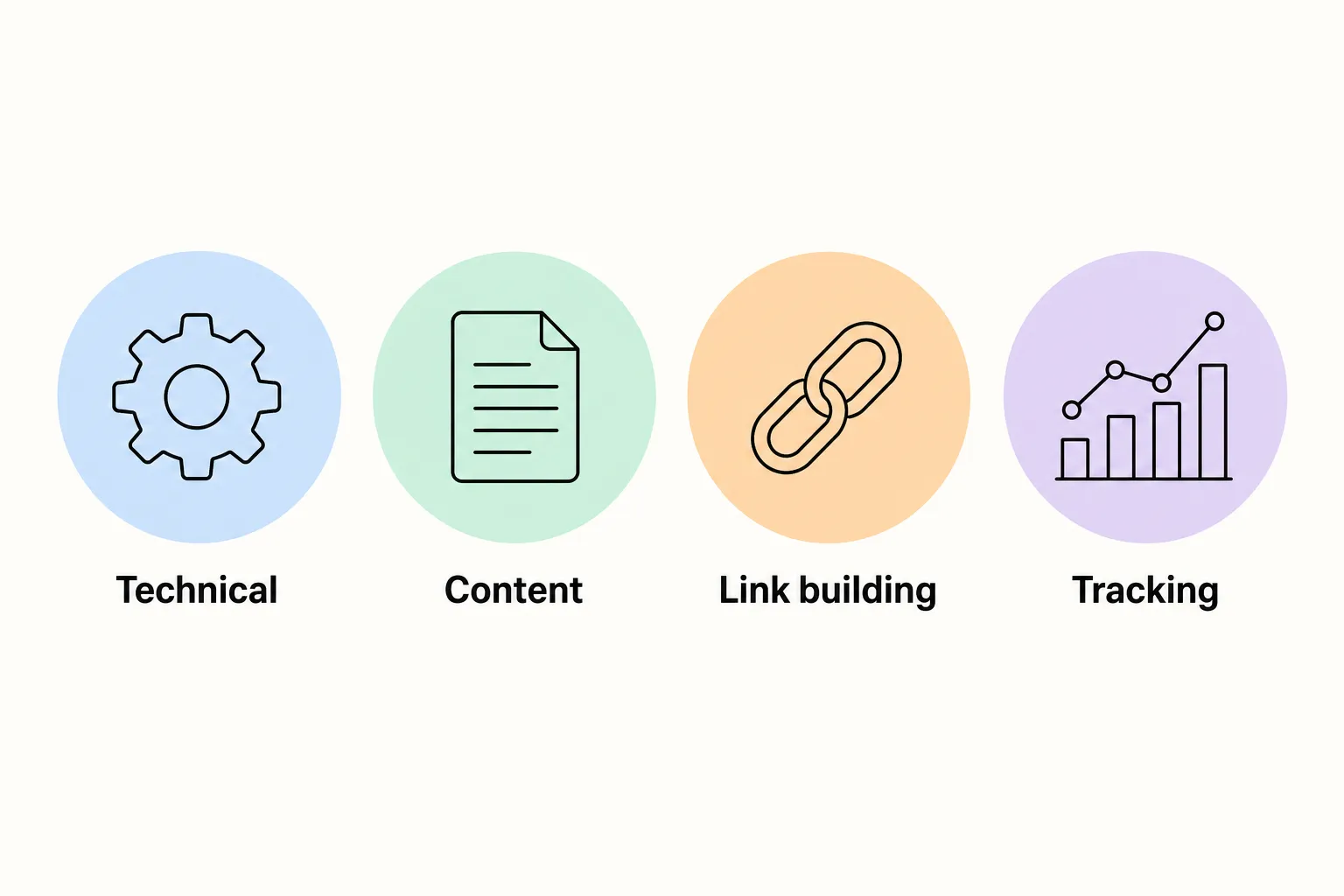
An SEO consultant builds their work around four strategic pillars that form the core of their search expertise.
Full technical audit and diagnosis
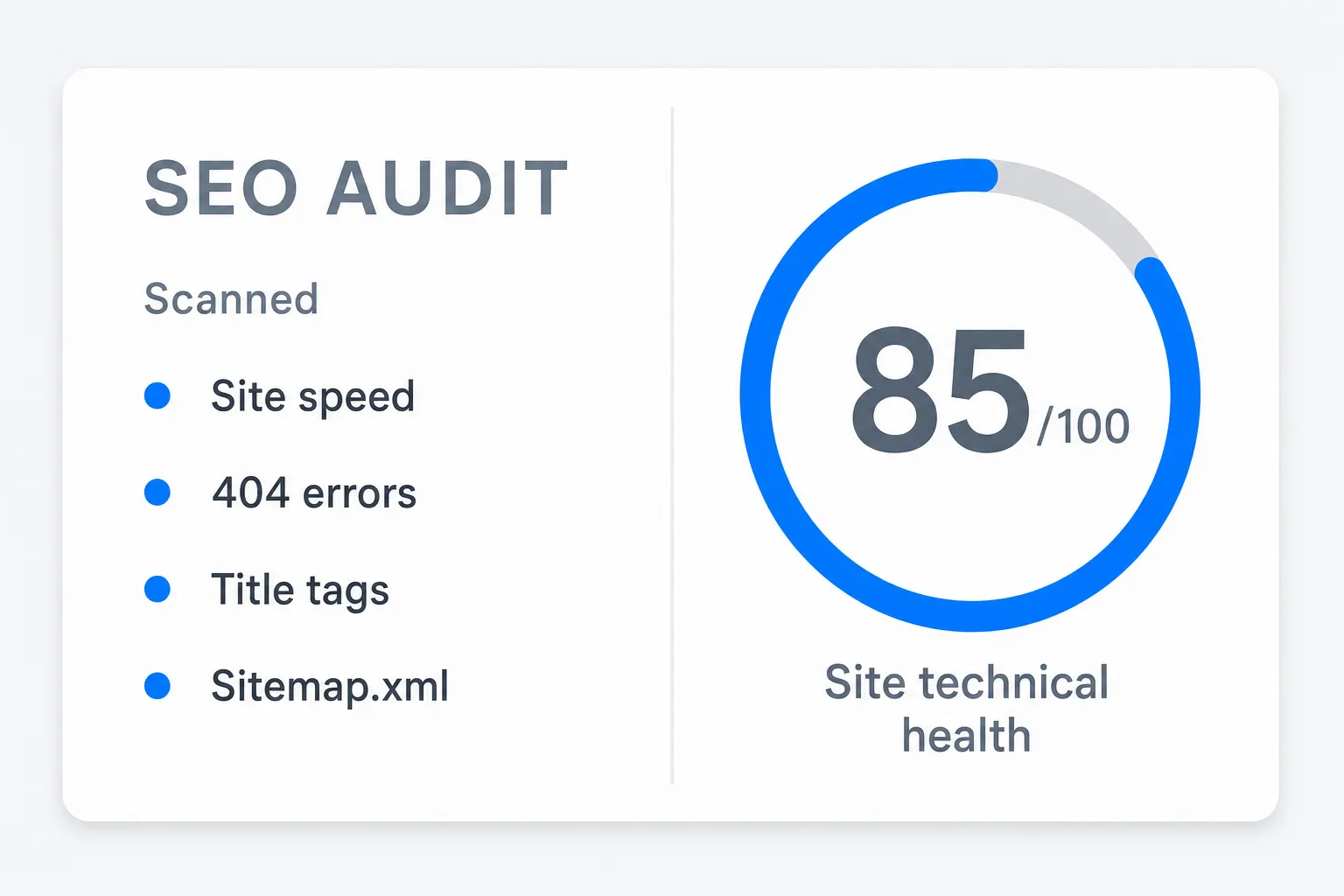
Their work always starts with a careful examination through several SEO audits (technical, content and link building) to identify what's holding rankings back. A genuine SEO expert checks the robots.txt and sitemap.xml files first via Google Search Console, tracks down pages missing from the index, fixes duplicate title tags and resolves server issues.
- Deep technical diagnosis: The consultant relies on professional tools to simulate how Google sees the site and detect anomalies. These technical problems often explain sudden traffic drops after a site redesign.
- Performance and Core Web Vitals: Measuring and improving the key metrics (LCP, CLS, INP) to meet Google's requirements.
- Site structure and accessibility: Optimising the technical elements and organising a coherent architecture.
- Quick win analysis: Identifying pages sitting just outside the top 10 for immediate gains.
Expert tip: Server log analysis is still essential. It reveals exactly how Googlebot moves through your site. You might find it spends most of its time crawling pages with no strategic value at all.
Content strategy and semantic optimisation
The SEO specialist designs and rolls out a complete SEO strategy covering keyword research, content architecture (the topic cluster method), page optimisation and a link strategy. This approach, built around what users actually need, attracts qualified, relevant traffic.
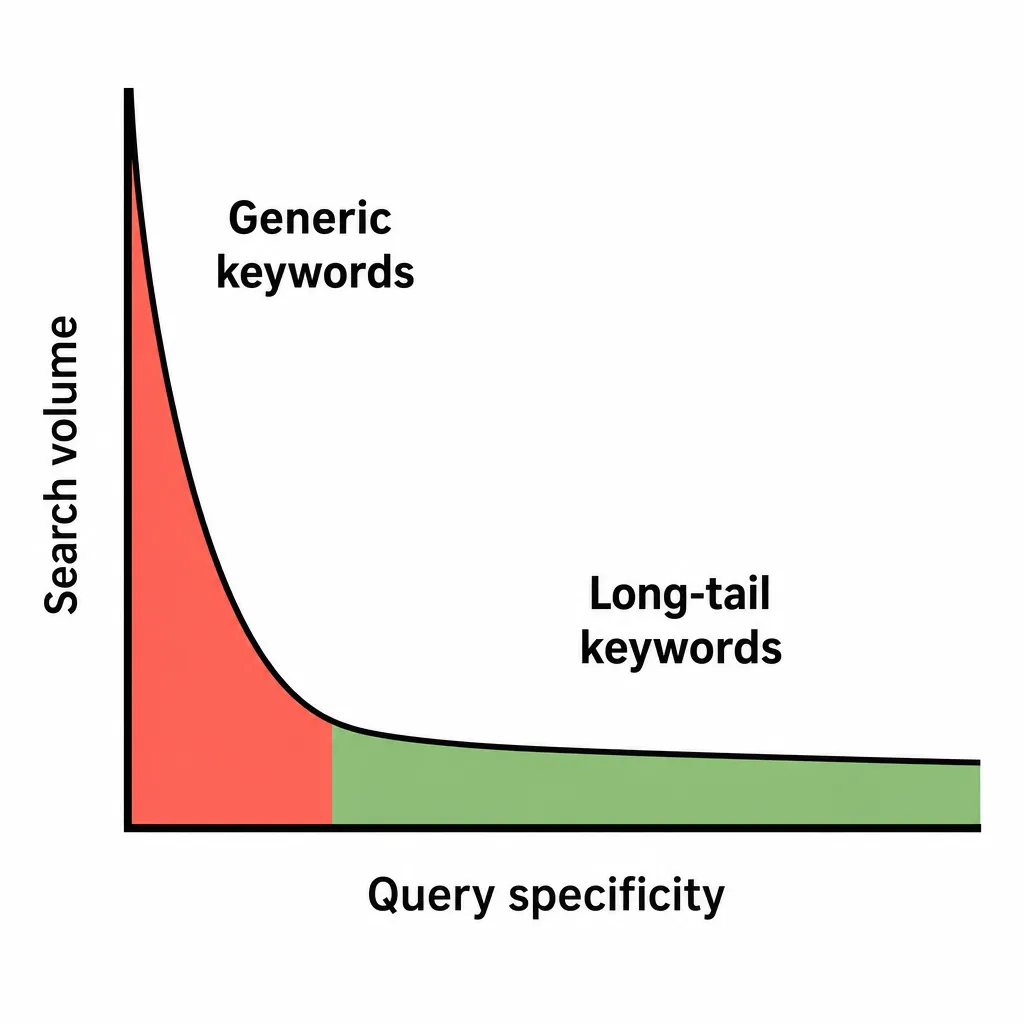
- Precise keyword research: Identifying the key queries and user questions, especially long-tail phrases, for lasting rankings.
- Building topic hubs: Developing a pillar page supported by satellite pages. For example: a central "Running guide for beginners" page backed by content like "8-week 5K training plan".
- Detailed page optimisation: Checking titles, H1s, meta descriptions, URLs and alt tags, and adding Schema markup (FAQPage, Article).
- Editorial roadmap: Planning and tracking the production of optimised content following web writing best practices.
This guide walks you, with the expertise of an organic search consultant, through the key steps to build and maintain a high-performing SEO strategy. You'll find all the best practices in there:
- The technical SEO audit (performance, HTML code, broken links, security and site architecture)
- Content analysis based on search intent and semantic criteria
- Page optimisation (manual or AI-assisted)
- Building an editorial calendar around priority topics
- Regular publishing of optimised content
- Integration with the main CMS platforms
- Tracking through Google Search Console for constant improvement
Discover our complete guide to launching your SEO project
E-commerce special case: Optimising product pages and category pages is decisive. For a step-by-step method, see our dedicated guide to PrestaShop SEO.
Link building and authority
In the eyes of Google's algorithm, every backlink is a vote of confidence. The SEO consultant develops a strategy to earn quality inbound links while strengthening your site's authority, always putting the relevance of the source first.
- Link profile analysis: reviewing existing backlinks with professional tools (Ahrefs, Majestic, Semrush)
- Acquisition plan: identifying quality partner sites, writing guest posts, building relationships with online media
- Clean-up: detecting and disavowing potentially harmful links
- Internal linking optimisation: creating semantic silos to boost your most important pages
Tracking, reporting and performance management
The consultant handles regular monitoring and continuous adjustments: setting up tracking tools (GSC, GA4, PageSpeed), defining SMART goals, producing reports and prioritising actions. This monitoring phase is crucial for evolving the strategy based on results.
- Analytics setup: building dashboards with the right metrics (rankings, impressions, clicks, conversions)
- Monthly reporting: tracking changes in rankings, qualified traffic and conversions
- Continuous improvement: A/B testing title tags and meta descriptions, refreshing strategic content every 6 to 12 months
- Competitor analysis: studying competitors' tactics and adjusting the strategy
Essential skills to become an SEO consultant
To succeed in this profession, you need to combine sharp technical skills with genuine people skills. An accomplished SEO consultant knows how to blend digital expertise with human qualities.
Must-have technical skills
The job rests on four key skills:
- Mastery of SEO tools: Knowing how to use Google Analytics, Search Console, Screaming Frog and Semrush/Ahrefs is fundamental for any competent SEO specialist.
- Technical web expertise: A solid understanding of HTML/CSS, performance optimisation, crawling and CMS platforms to improve speed and accessibility. That includes things like converting images to WebP, implementing lazy loading or fixing heading tags.
- Deep analytical ability: Being able to process and interpret large volumes of data and turn them into actionable recommendations.
- Keyword research skills: Spotting long-tail queries through Google Suggest and People Also Ask, then ranking them by potential, competitiveness and relevance.
Personal and interpersonal qualities
Beyond technical know-how, certain personal qualities make all the difference:
- Intellectual curiosity and constant monitoring: With Google's regular algorithm updates, ongoing SEO training is essential.
- Tenacity and patience: Organic search delivers gradual results, often only visible after several months of effort.
- Adaptable teaching skills: The ability to explain technical concepts in plain language to different audiences.
- Effective SEO project management: Rigorous management of actions and coordination across departments (development, content, marketing).
Our complete guide explores the fundamentals of organic search in detail: how crawling works (sitemap, robots.txt), technical optimisation, keyword strategy, optimised web writing, on-page optimisation (tags, metadata), internal architecture, link building and tracking with Google Search Console/GA4. Discover our step-by-step method to understand the SEO consultant's role
Salary, status and career prospects
Salaries vary widely depending on experience, position and location. The job of SEO consultant can be done in different settings: at a digital agency, in-house or as an independent (freelance), and each status has its own advantages.
| Profile | Status | Annual Salary / Day Rate | Main Responsibilities |
| Junior SEO Consultant | Employee | $50,000 - $65,000 (£26,000 - £34,000) | The junior SEO consultant carries out basic analyses, on-page optimisations and produces reports under the supervision of a manager. |
| Mid-level/Senior SEO Consultant | Employee | $75,000 - $110,000+ (£40,000 - £65,000+) | The senior SEO consultant builds complete strategies, leads complex SEO projects and mentors new talent. |
| Freelance SEO Consultant | Self-employed | $500 - $1,200+ / day (£400 - £900+) | Technical expertise, in-depth audits, strategic SEO advice, team training and support for business owners. |
Possible career paths
In the world of SEO, several routes for progression are open to professionals:
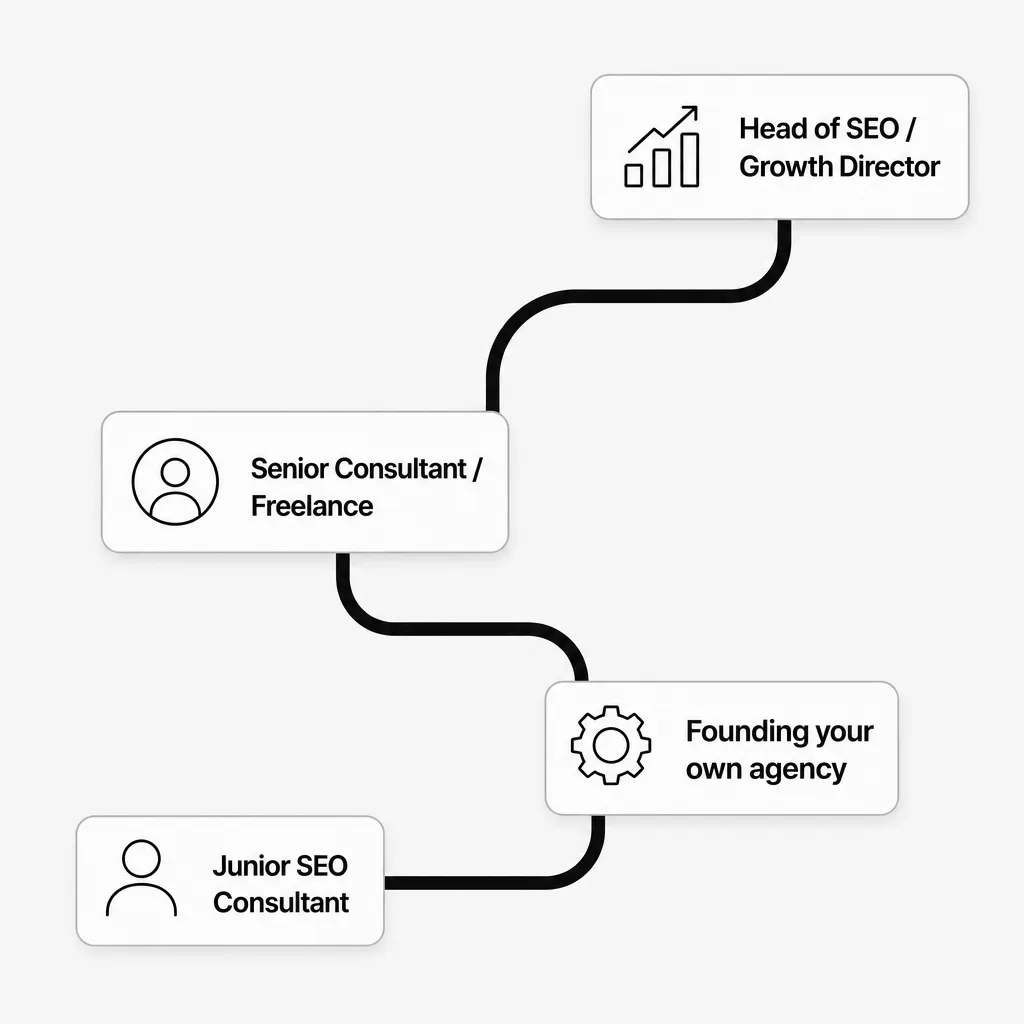
- Moving up the ladder: Stepping into roles like SEO project manager, SEO Manager, Head of SEO or even SEO Director in larger organisations.
- Technical specialisation: Focusing on specific areas such as technical SEO, e-commerce sites or international projects.
- Entrepreneurship: Founding your own agency, developing specialised tools or offering premium services.
- Passing on knowledge: Becoming an SEO trainer, conference speaker or author of expert content.
How to become an SEO consultant: a practical roadmap
There's no single path into the job of SEO consultant, but a few key steps help you build the skills you need to do this work successfully.
Education and specialisations
- Recommended qualifications: A bachelor's or master's degree in digital marketing, communications, e-commerce or computer science gives you a solid foundation.
- Specialised SEO training: Professional certifications and intensive programmes are the ideal complement to academic study.
- Alternative routes: Web professionals (webmasters, developers and so on) can move into organic search with the right SEO training.
Gaining hands-on experience
- Personal practice: Starting a blog or helping non-profits lets you apply your SEO knowledge in the real world.
- Internships and junior roles: Joining a digital agency gives you valuable field experience in digital marketing.
- Portfolio and case studies: Documenting your wins, however modest, with measurable results is essential.
Our guide to long-tail SEO explains, in plain terms: what it is (queries of at least 3 words), why it matters (lower competition and often a better conversion rate), and a 3-step method to make the most of it - analyse search intent, build topic clusters and optimise each page. Discover the complete guide to mastering long-tail SEO
Continuous skills development
- Active industry monitoring: Keeping up with the news through specialist blogs and industry experts is non-negotiable.
- Tests and experiments: Because organic search never stops evolving, regular hands-on practice is a must.
- Professional network: Attending SEO events lets you swap ideas with peers and keep improving.
Let AI Handle Your Content Publishing
Alya researches keywords, writes and publishes content directly to your CMS, WordPress, Shopify, Wix and more, on autopilot.