We're all drowning in information overload. Feeds refresh faster than anyone can read them, and most of what gets published is forgotten within the hour. That's exactly why slow content feels like a breath of fresh air for brands and creators who want to stand out. Here's how this approach reshapes your editorial strategy by putting quality ahead of quantity, and how to build it into your content marketing.
What is slow content?
The definition of slow content rests on a simple but powerful principle: value over frequency. This way of thinking about content creation invites you to slow down and produce evergreen content that leaves a lasting mark on your readers.
Quality over quantity
Adopting slow content breaks with the usual playbook. Instead of churning out snack content at a frantic pace, this approach favours the publication of a few flagship pieces.
- Premium-quality content: in-depth guides of 2,500 to 5,000 words that cover a topic thoroughly, with verified data and sharp analysis
- Deep research: field investigations, expert interviews and verified testimonials
- Long-lasting formats: practical guides, detailed industry analyses and exhaustive case studies that stay relevant over time
- Added value: content that becomes a reference in its field, consulted and shared by professionals again and again
This method builds solid credibility. A complete guide to SEO best practices, for example, will keep bringing in traffic for years, whereas a viral post fades within days.
How it differs from snack content
The contrast with snack content is striking. Where snack content is built for quick consumption, slow content aims for deep understanding and long-term recall.
Snack content feeds a need for instant entertainment through short formats such as disappearing stories. Slow communication, on the other hand, encourages reflection, careful analysis and gradual learning. A pillar article is read in stages, which strengthens recall and creates genuine engagement.
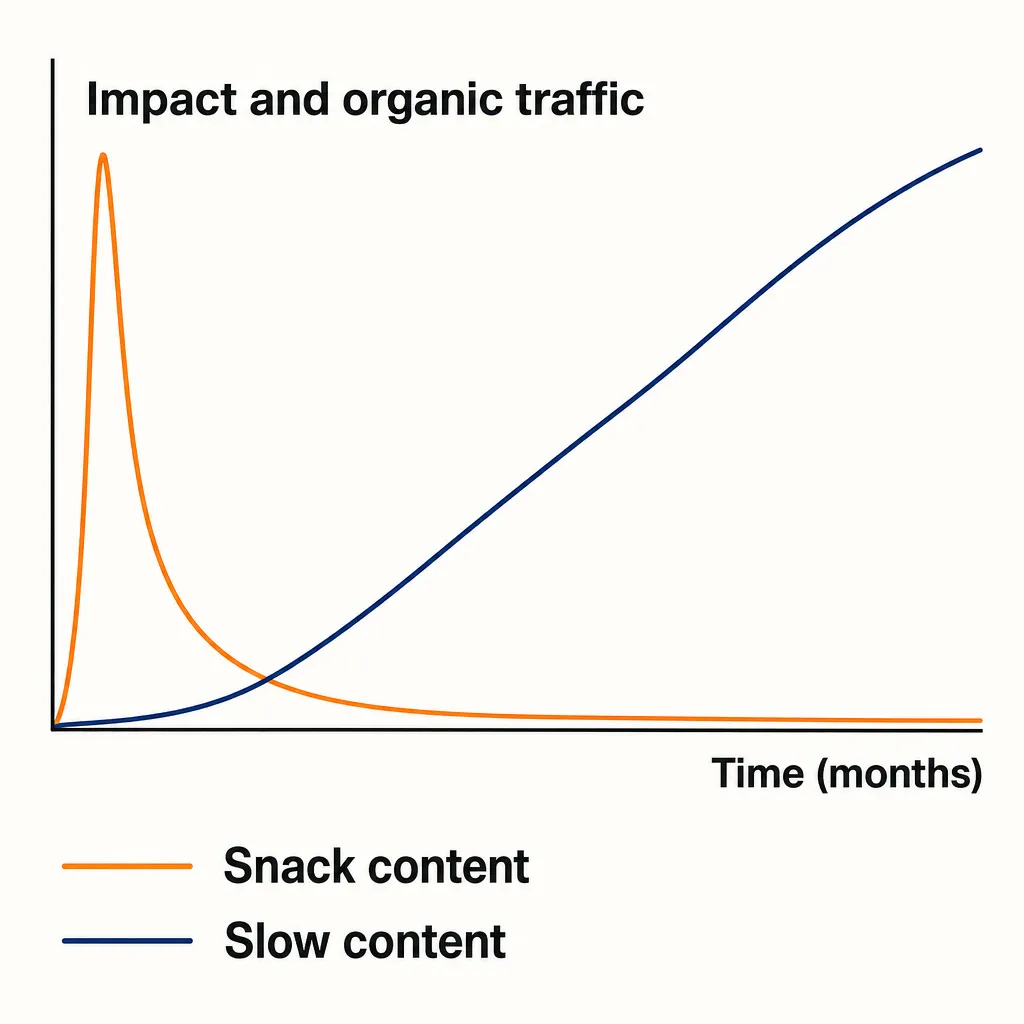
Key formats and benefits
Among the flagship formats of evergreen content, think long-form articles, in-depth podcasts, complete courses and educational email series. Each one is designed to teach, well beyond simple entertainment.
The impact of slow content shows up in several indicators: reading time, conversion rate, qualified lead generation and the strength of the relationship you build with your audience. These metrics reveal real engagement rather than a fleeting win.
Thanks to slow content, brands forge a distinctive identity. They step out of the race to publish constantly and focus on creating tangible value for their audience.
Building an editorial strategy around slow content takes a rigorous method. The key? A perfect understanding of your audience's needs, so you can create pillar content that sticks.
From idea to slow content pillar
Slow content creation starts with careful topic mapping. This foundational step decides whether your approach succeeds, because it pinpoints the subjects where you can assert your expertise.
Map topics and search intent
Slow content relies on picking timeless themes. A thorough analysis reveals your audience's recurring concerns, the angles your competitors have barely touched, and the opportunities to position your brand as the go-to reference.
In-depth keyword research lets you decode the real intent behind user queries. Far more than a simple keyword list, this method uncovers whole topic networks worth exploring. Looking at long-tail queries, for instance, often shows that one well-built guide can answer dozens of specific questions.
Build the pillar page
The architecture of a high-performing topic cluster revolves around a central pillar page, supported by relevant satellite content. This structure strengthens your internal linking and consolidates your authority on the subject.
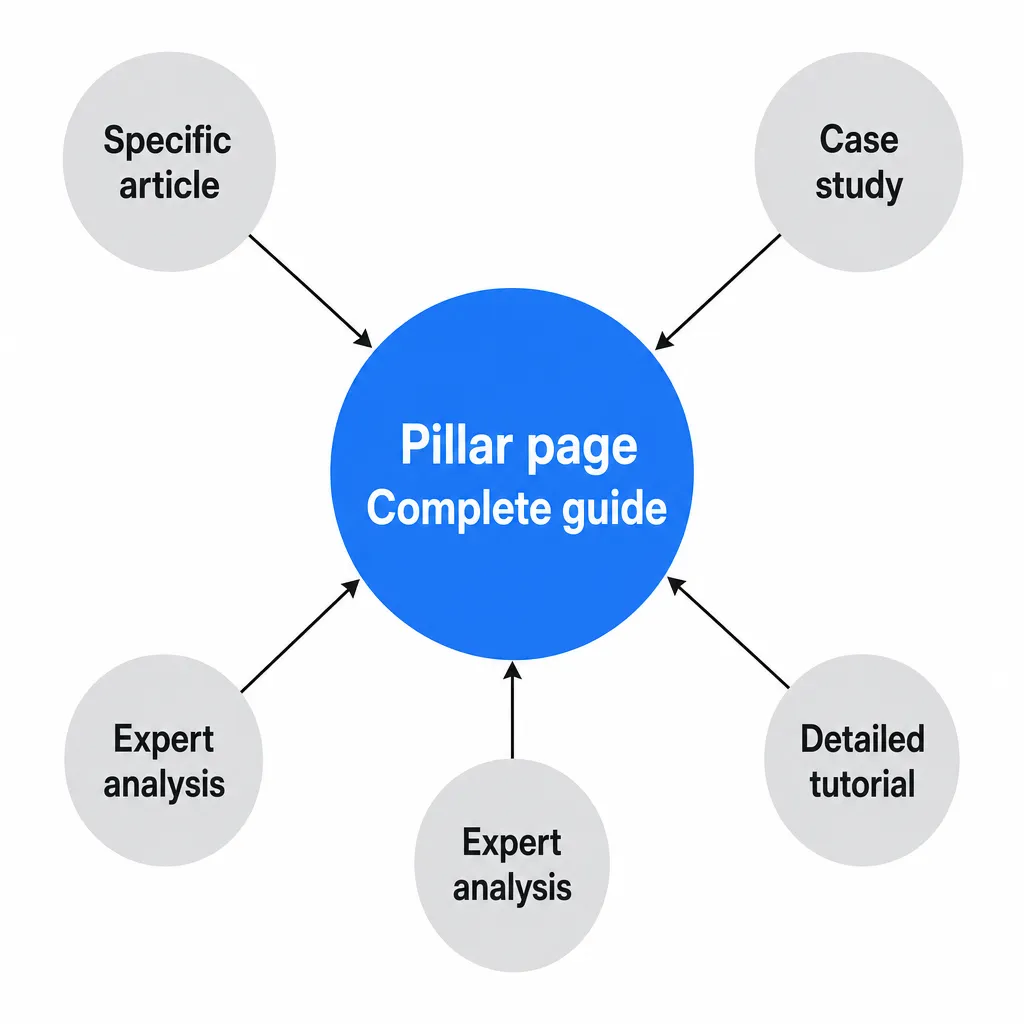
A full SEO audit checks more than 100 technical and editorial criteria to work out why a page is slow to load or fails to attract traffic: performance (Core Web Vitals), image optimisation, render-blocking scripts, caching, mobile display, 4xx/5xx errors, SSL setup, indexing, meta and heading tags, canonical tags, sitemap/robots.txt and structured data. The report gives you a clear diagnosis and concrete fixes to diagnose and speed up your slow pages, improving user experience and driving qualified traffic.
Optimise, repurpose, measure
Optimising a slow content pillar demands close attention to the technical details. Relevant title tags, compelling meta descriptions, a clear heading structure and accurate structured data help search engines understand your pages.
Smart content repurposing gets the most out of a single pillar. One complete guide can become Instagram posts, short videos, an email series and infographics. This slow content strategy makes your editorial investment work much harder.
Performance is judged over the long run. Focus on indicators such as organic traffic, time on page, conversion rate and naturally earned backlinks. These metrics genuinely reflect how effective your content creation is.
The success of a slow content strategy depends first and foremost on solid SEO foundations. Without rigorous technical optimisation, even the most relevant articles risk getting lost deep in the search results, far from your audience's eyes.
SEO foundations for slow content
The technical side multiplies the reach of your quality content. This pairing of editorial depth and SEO optimisation gives your content pillars maximum visibility and a measurable impact.
Indexing and performance
Technical performance directly determines your slow content's ability to generate engagement. An outstanding guide that ranks nowhere stays invisible, wiping out months of careful work.
- Optimised indexing: a full audit of XML sitemaps, fixing robots.txt errors and removing misplaced noindex tags
- Better performance: improved Core Web Vitals, compressed media and stripped-out unnecessary scripts for a smooth user experience
- Mobile compatibility: a flawless fit on every screen and optimised load times to hold readers' attention
Those technical fixes let the quality content shine at last.
Markup and structured data
Modern technical SEO demands a spotless semantic architecture for in-depth content. Article schema helps search engines understand your content. Google no longer shows rich results for HowTo markup (since 2023) or FAQ markup (since May 2026), so neither will change how your page looks in the SERPs.
A thorough SEO audit reviews more than 100 technical and editorial parameters to understand what's holding back your visibility, with a clear diagnosis and tailored fixes via an in-depth diagnosis of your content. This rigorous method identifies the technical blockers that are limiting your editorial pillars.
Measurement and iteration
Tracking technical metrics complements the qualitative review. Google Search Console reveals your strategic queries, your best-performing pages and your opportunities for semantic optimisation.
Continuous optimisation keeps your flagship content relevant. A quarterly refresh of your evergreen guides, adding new statistics and updating internal links, preserves their authority and their performance in the search results.
Adopting an editorial strategy built on slow content is a fitting answer to today's digital marketing challenges. This approach fosters a genuine relationship between brands and their audience, creating a virtuous circle where quality and engagement feed each other.
Why choose slow content
Switching to slow content brings advantages that go well beyond SEO gains. This philosophy profoundly transforms the brand-audience relationship by favouring substance over surface.
Authority and lasting engagement
Slow content establishes you as a legitimate expert in your field. Every editorial pillar you publish reinforces your credibility, naturally earning backlinks and recommendations from influencers.
The engagement you get is radically different from what conventional content generates. Your visitors spend longer on your resources, share them more thoughtfully and subscribe more readily to your communications. This qualified audience converts better, too.
ROI and digital sobriety
An editorial strategy geared towards slow content delivers a durable return on investment. Fewer but better-optimised pieces end up generating more impressions, clicks and conversions than an excessive quantity of shallow posts.
This approach is also an environmentally responsible one. Going slow reduces your digital carbon footprint while pushing back against information overload. One well-thought-out piece of evergreen content brings more value than ten throwaway posts.
Developing a slow content strategy takes a well-organised method. The process runs through several key stages, from the initial diagnosis to the continuous optimisation of your pillar content.
Slow content pillar action plan
Slow content follows a logical progression. Each phase builds on the last to create a content ecosystem that's both effective and sustainable.
From audit to content hub
The audit is the unavoidable first step in moving to slow content. It reveals content that's barely visible, spots technical or semantic obstacles, and sets out a prioritised action plan.
- In-depth analysis: a review against 100+ criteria to find invisible pages and understand their weak points
- Strategic selection: identifying your strongest themes to build solid, high-performing pillars
- Precise planning: an operational calendar with measurable goals and clearly defined milestones
This initial phase is crucial. A careful assessment often shows that 10 well-crafted pieces outperform 100 scattered posts.
Distribution and repurposing
Creating a centralised content hub optimises the distribution of your pillars. This architecture improves user experience and strengthens topical coherence.
Smart repurposing extends the reach of every core piece. A complete guide becomes a range of formats suited to each channel: LinkedIn posts, Instagram visuals, TikTok videos and targeted email campaigns.
This method respects what works on each channel while naturally steering your audience towards your in-depth resources. The goal? Build a smooth journey that always leads back to your pillar content.
Measure and maintain
Performance tracking favours indicators that matter over the long term: stable organic traffic, high engagement, a healthy conversion rate and naturally earned inbound links.
Regular monitoring keeps your pillars alive. Periodic updates refresh the information, add new data and fine-tune the internal structure as your strategy evolves.

Rank Higher Without the Manual Work
From technical audits with Nox to competitor monitoring with Marc, Sedestral's AI agents cover every layer of SEO so your team doesn't have to.