This in-depth guide shows you how to use storytelling in marketing to turn your campaigns into stories people actually want to follow, stories that give your message real meaning. You'll see how this well-proven communication technique builds a genuine emotional bond with your audience and, yes, lifts your conversions along the way.
Storytelling: definition and meaning
Storytelling is a communication method that borrows the narrative structure of traditional tales to deliver a message with meaning. It takes raw information and turns it into a story that's easy to follow, easy to remember, and that lands particularly well with your marketing target audience.
Why storytelling creates meaning
First and foremost, storytelling gives your communication a point. This method helps your audience build a lasting relationship of trust with you by creating an authentic connection. Classic examples like John Deere (The Furrow magazine) or Michelin (the Michelin Guide) managed to inform and inspire their customers without a hard sell, and built serious brand equity in the process.
This narrative form taps into emotion, which naturally improves receptiveness and recall. A well-built customer story conveys a product's benefits far better than a plain list of specs. The narrative gives your message real depth and sets it clearly apart from purely rational approaches.
The elements of a good story
Effective storytelling rests on a few key elements: a hero people can identify with, a challenge to overcome, a visible transformation and a takeaway value. Emotion plays the central role here, creating empathy between the characters and the audience and making the message hit that much harder.
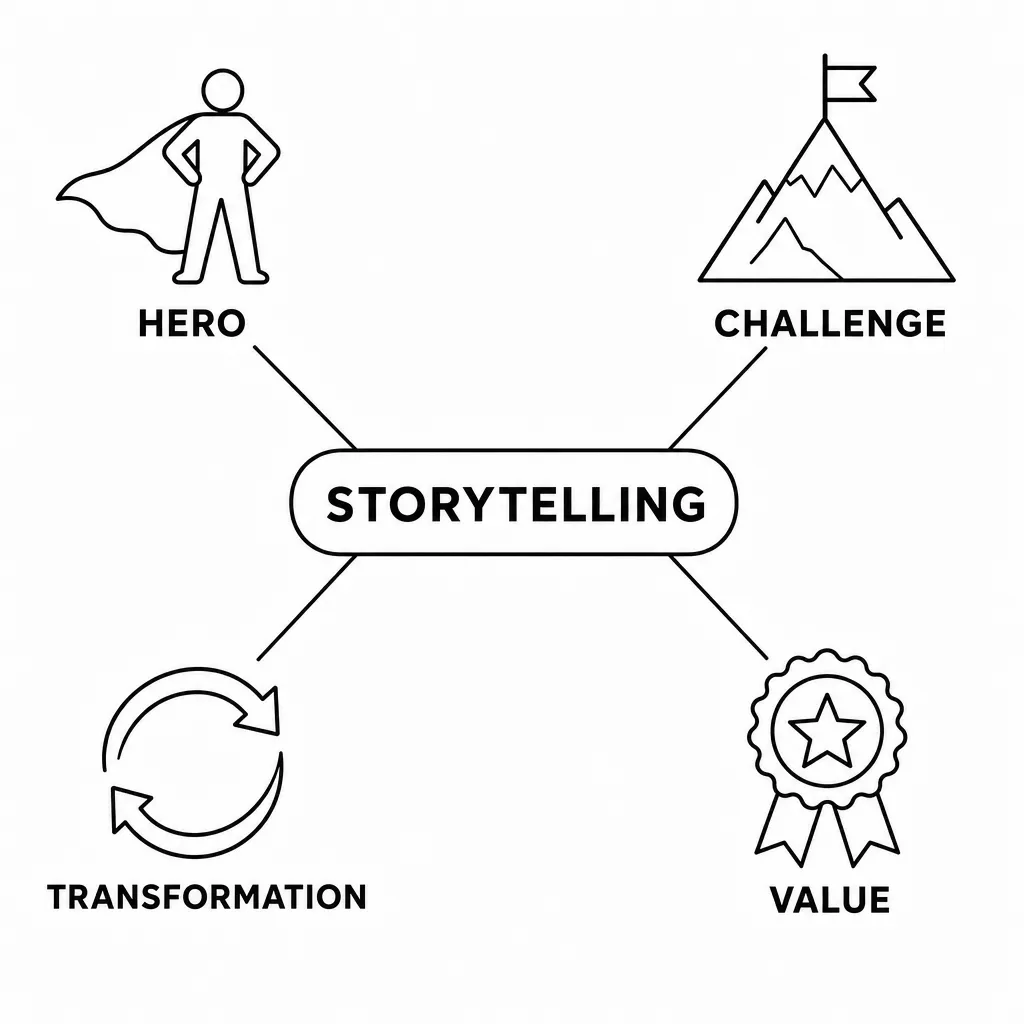
The ideal structure swaps the classic problem-analysis-solution outline for a narrative built around attention and change. The aim is to grab attention, spark the desire to change, then win people over through an engaging story.
Emotion and memory in action
The psychological power of storytelling lies in its ability to mobilise emotion and create memories that stick. Unlike purely logical arguments, a well-crafted story builds an emotional connection that makes the message easier to remember and easier to buy into.
Storytelling comes in many forms: anecdotes, "true tales", narrative universes, or data storytelling, which pairs data visualisation with narrative to make complex figures simple. That variety lets you adapt the method to your context and your goals.
Authenticity is non-negotiable. Favouring true, credible stories strengthens trust, while made-up ones can do lasting damage. The company can shape its own narrative, but consumers are co-authors too, through user-generated content.
Storytelling in marketing: goals and examples
Storytelling in marketing means using a powerful story to give a brand meaning and reach the hearts of its audience. It's far more than an advertising technique: it's a craft that creates real emotion and a deep connection with consumers.
Goals and key moments to use it
Successful storytelling serves several strategic goals: delivering a memorable message, humanising the brand and inspiring its audience. It works especially well in launch campaigns or to strengthen a brand identity on social media.
The best moments to use it:
- Creating a lasting impact with your story
- Developing a consistent brand narrative
- Tailoring your content to a specific audience
From strategy to formats
To create effective storytelling, start by defining:
- Your primary persona
- The narrative arc that will carry your story
- The KPIs you'll use to measure success
This complete guide explains how to fold storytelling into your overall marketing strategy, with concrete examples and tips to boost your SEO visibility.
Explore different content formats:
- Blog posts enriched for SEO
- Visual content for social platforms
- Punchy narrative videos
Measure and optimise the story
Review the impact of your storytelling regularly by tracking:
- Your performance across channels
- The emotional engagement it generates
- How your digital positioning evolves
Use analytics tools to refine your approach and make sure every element of your story is pulling its weight towards your marketing goals.
Storytelling techniques that make sense
Storytelling relies on a subtle mix of techniques to hold your audience's attention. These methods turn your messages into memorable, emotionally charged stories, while giving them the meaning that drives people to act.
Structure to capture and convert
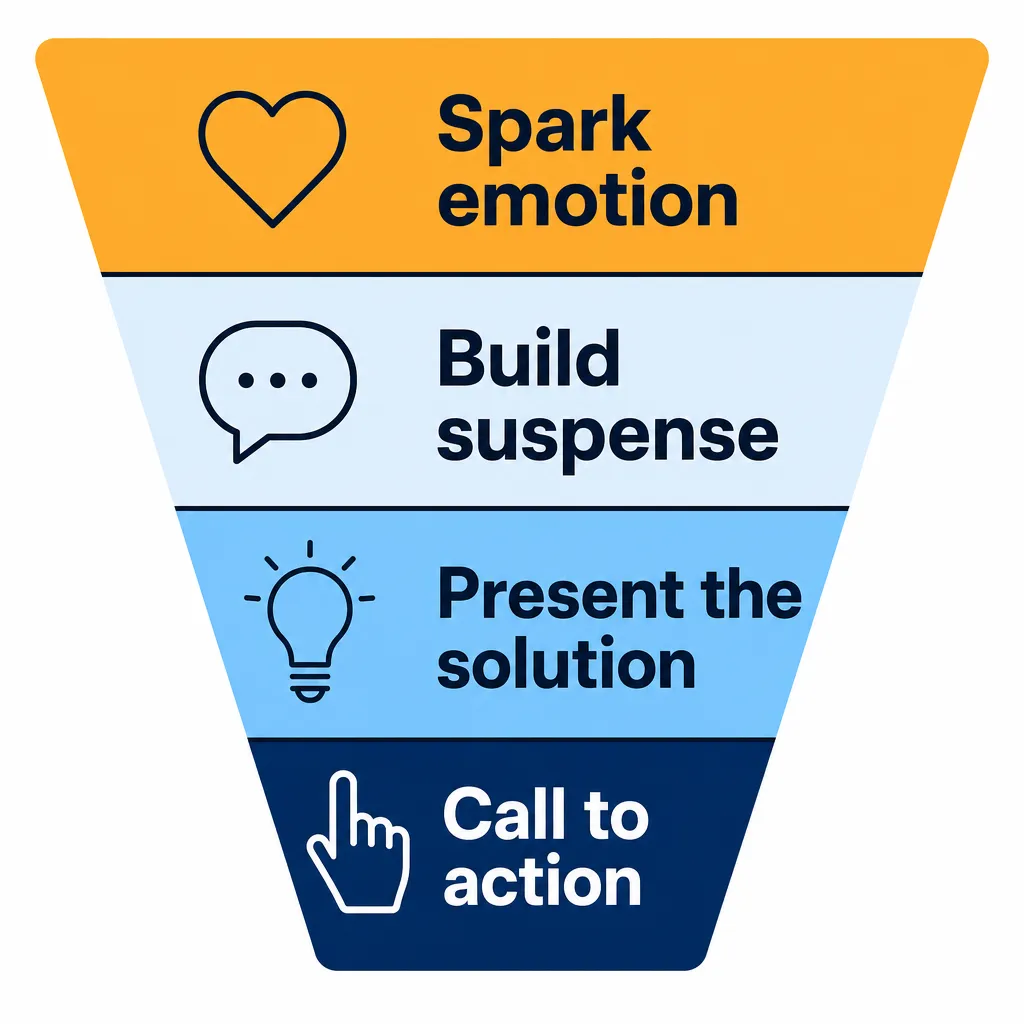
A solid narrative structure is the key to an effective story. It breaks down into four natural stages: opening situation, rising tension, action or resolution, and conclusion. That framework walks your audience through your message.
In marketing, adapt this progression to:
- Spark emotion from the very first line
- Build suspense around a concrete challenge
- Present your solution backed by tangible proof
- Close with a precise call to action
- Striking opening: a start that grabs attention immediately and sets the scene
- Dramatic momentum: a rising rhythm that keeps people hooked
- Credible resolution: your offer presented as the logical answer to the problem
This kind of narrative works on any channel, as long as you respect the natural progression that leads your audience towards the goal.
Choosing the hero and the conflict
Your hero should embody the aspirations of your target audience. Whether it's a customer sharing their experience, an employee or a symbolic character, the hero is what creates the emotional link.
Emotion often comes from revealing the humans behind the business, or, as Red Bull does so well, from building a coherent narrative universe around values shared with its audience.
The conflict, the heart of your story, must reflect the real challenges your customers face. That's what gives your message meaning and makes your solution legitimate.
Data, proof and emotion
Data storytelling is a formidable method for making complex data accessible while still hitting an emotional note. It turns numbers into a story that lands.
Social proof (testimonials, case studies) enriches the narrative, makes your message more credible and drives your audience's engagement at the same time.
Storytelling example in practice
To really understand how to use storytelling effectively, nothing beats practical examples. These real-world cases show exactly how to adapt the method to different contexts and goals.
Real-world multichannel cases
The best examples show the art of adapting a single story to different channels. Take the story of Emma and her favourite bag: a product page can describe how she uses it every day, while a testimonial video adds a more personal emotional touch.
This guide walks through a complete method for bringing storytelling into an online store: set clear goals, pick the right formats and showcase customer feedback to build trust.
From founder to customer hero
Brand storytelling often has its roots in the founding story. Telling the origins, the values and the way things are made brings the authenticity that creates lasting emotional bonds with customers.
UGC (user-generated content) amplifies that narrative power. Encouraging customers to become the heroes of their own story through testimonials, then weaving those into your communication, considerably strengthens both engagement and credibility.
How to create effective storytelling
To design storytelling that holds attention, you need a method that combines a powerful story with a well-thought-out strategy. This guide shows you how to craft stories that resonate with your audience while delivering a clear, measurable message.
Key steps and priority formats
Our 7-step method starts with setting a precise goal. Then we build the story, choose the right hero, work on the emotion we want to trigger, select the ideal format, write the script and distribute it with an optimised strategy. This approach guarantees a perfect fit between your message and how your target audience receives it. For SEO, prioritise well-optimised pillar content that you then repurpose into different formats.
- Precise strategy: set SMART goals, identifying your personas and your core message before you start creating.
- Relevant formats: choose them based on your resources and your audience (short videos, in-depth articles, podcasts, customer case studies).
- Multichannel distribution: repurpose your flagship content into different formats to maximise its touchpoints.
This organised method avoids wasted effort and makes every story more effective. The key is to keep a consistent, authentic voice that reinforces your brand image.
SEO, internal linking and KPIs
Optimising your narrative content for SEO keeps it visible over the long run. KPIs worth watching: engagement, time on page, click-through rate, conversions and SEO rankings. These indicators measure the impact of your stories precisely.
Smart internal linking between your different pieces of content creates smooth journeys that lead naturally to conversion. For instance, a brand story can lead to a narrative product page, itself linked to customer testimonials.
Tools like Google Analytics 4, Search Console or dedicated SEO platforms let you assess exactly how well your stories perform. This ongoing tracking helps you spot your best stories, optimise them and replicate what made them work.
Test, learn, iterate
A/B testing your narrative elements reveals what really works: try different hooks, heroes, emotional tones or calls to action to boost your conversions. This data-driven approach sharpens your stories over time.
As Christian Salmon, a leading storytelling scholar, points out, ethics in this practice is essential. Stay authentic, keep a consistent voice and always respect your audience to avoid any harmful manipulation.
Continuous improvement is crucial: analyse the feedback, adjust your messages, test new formats and build on what works to design stories that hit harder every time.
Let AI Handle Your Content Publishing
Alya researches keywords, writes and publishes content directly to your CMS, WordPress, Shopify, Wix and more, on autopilot.