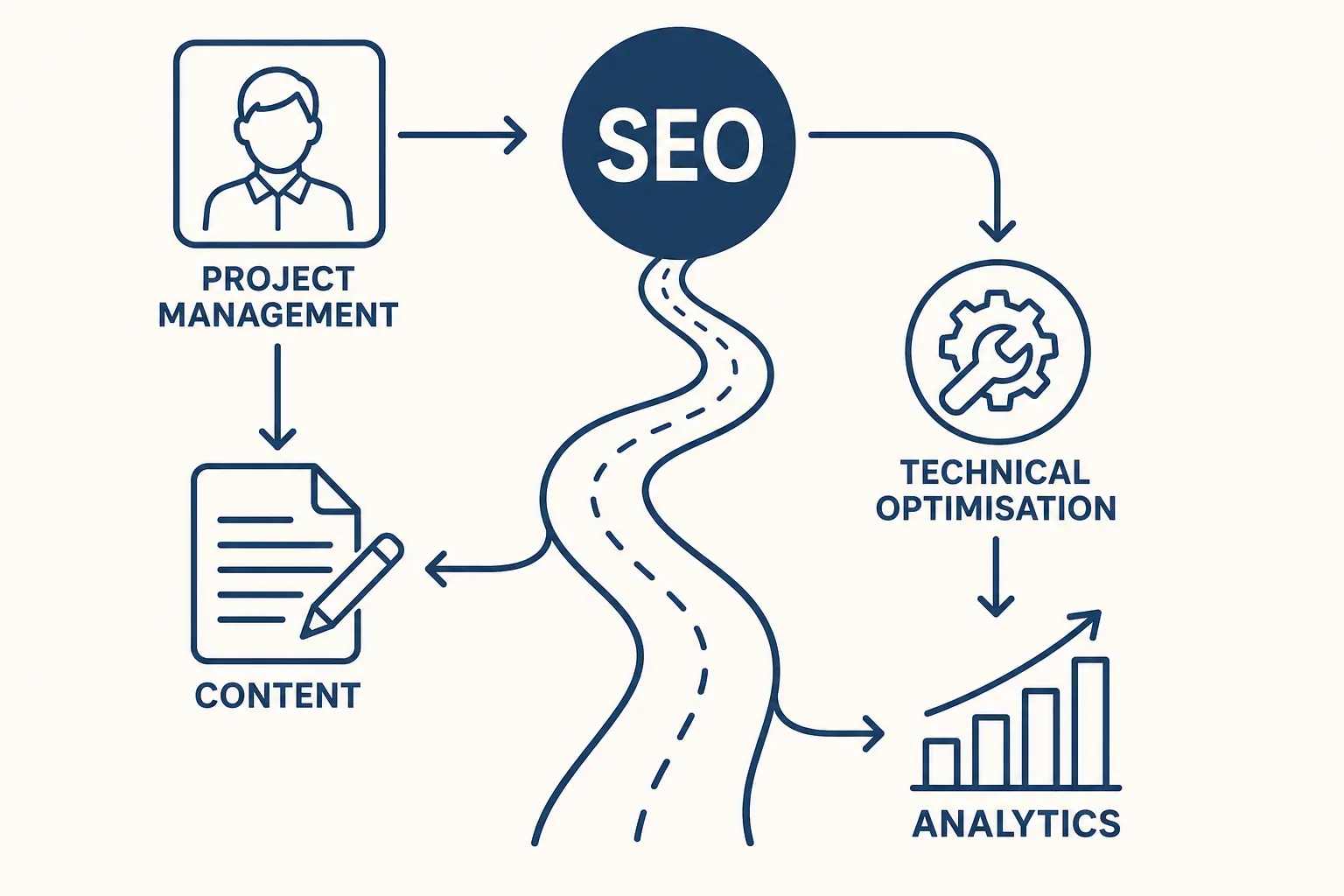
SEO project management is not just technical coordination: it's the strategic framework that turns a vision into measurable results in the search engines. A successful SEO project needs technical expertise, content creation and a solid organic search strategy working in sync, all steered by people who've done it before.
If you plan to outsource, our guide to choosing an SEO agency walks you through the key points for picking a provider and delivering your web project: assessing the provider's own rankings, reviewing its track record, interviewing the team, running a thorough technical audit (architecture, speed, crawling, tags) and defining a SMART action plan. You'll also find advice on site organisation (topic clusters), editorial SEO strategy, link building techniques, the right tools (Search Console, Analytics, Semrush, Ahrefs), plus best practices for transparency, reporting and follow-up so diagnostics turn into measurable progress. Read our complete guide to choosing an SEO agency.
Setting the strategic framework for your SEO project
A poorly designed SEO project is doomed from day one. This careful preparation phase is the solid base your future success rests on, and it makes every action in your SEO strategy count.
Setting SMART goals and relevant KPIs
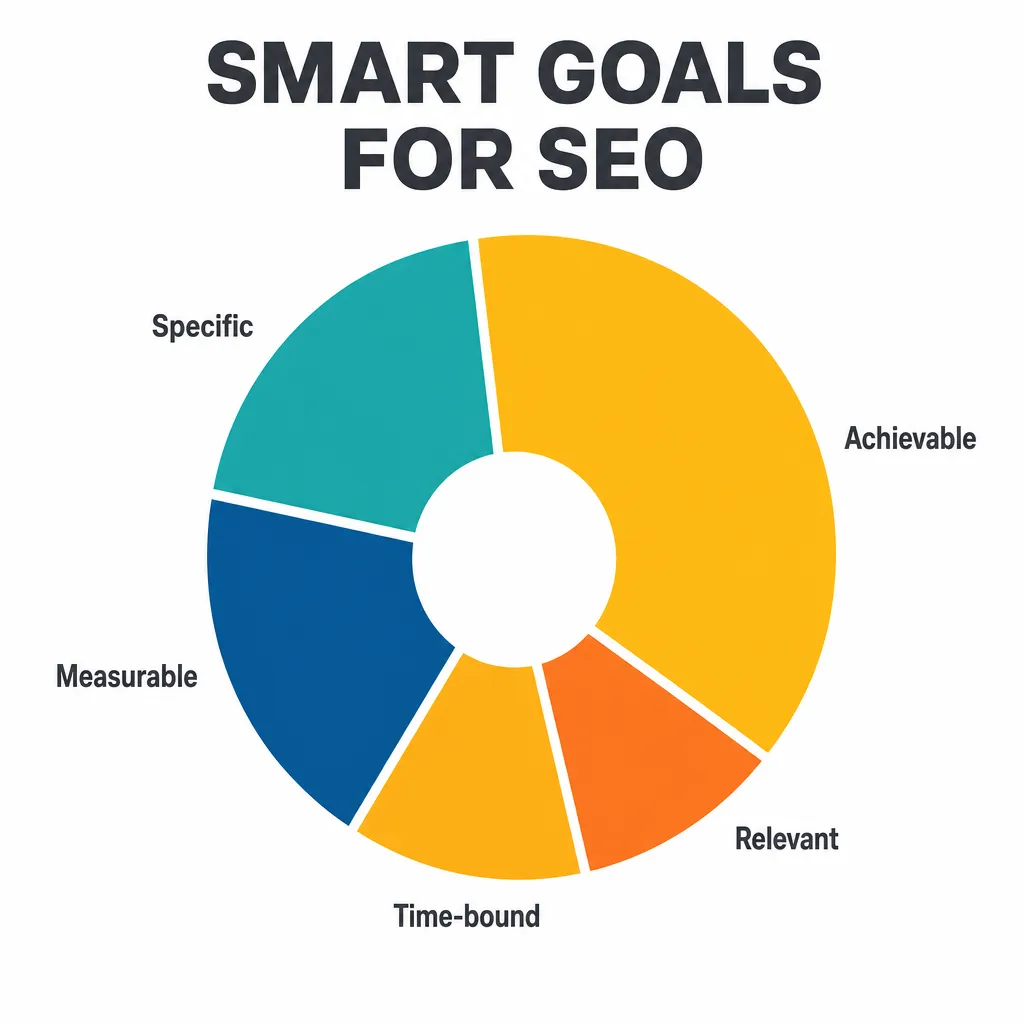
To stay on track and focus your efforts on real SEO performance, your strategy has to start with SMART goals tied to your business priorities. This disciplined approach lets you measure precisely what your organic search strategy delivers.
- Specific and Measurable: Grow organic traffic to your product pages by 30% in one year. Generate 50 extra qualified leads every month through organic search.
- Achievable and Realistic: Improve the ranking of 15 strategic keywords, moving from an average position of 8 to positions 3-5 on Google.
- Time-bound: Plan quarterly checkpoints with monthly analyses. The first significant results of a well-run web project usually show up between 3 and 6 months in.
Expert tip: The biggest mistake is aiming for "more visitors" and nothing else. A good KPI has to reflect a measurable business impact. A thousand qualified visitors who convert are worth far more than ten thousand who bounce.
Initial audit and methodical prioritisation of actions
We always start with an in-depth SEO audit. This detailed analysis looks at three essential pillars: technical optimisation, content relevance and the link building strategy.
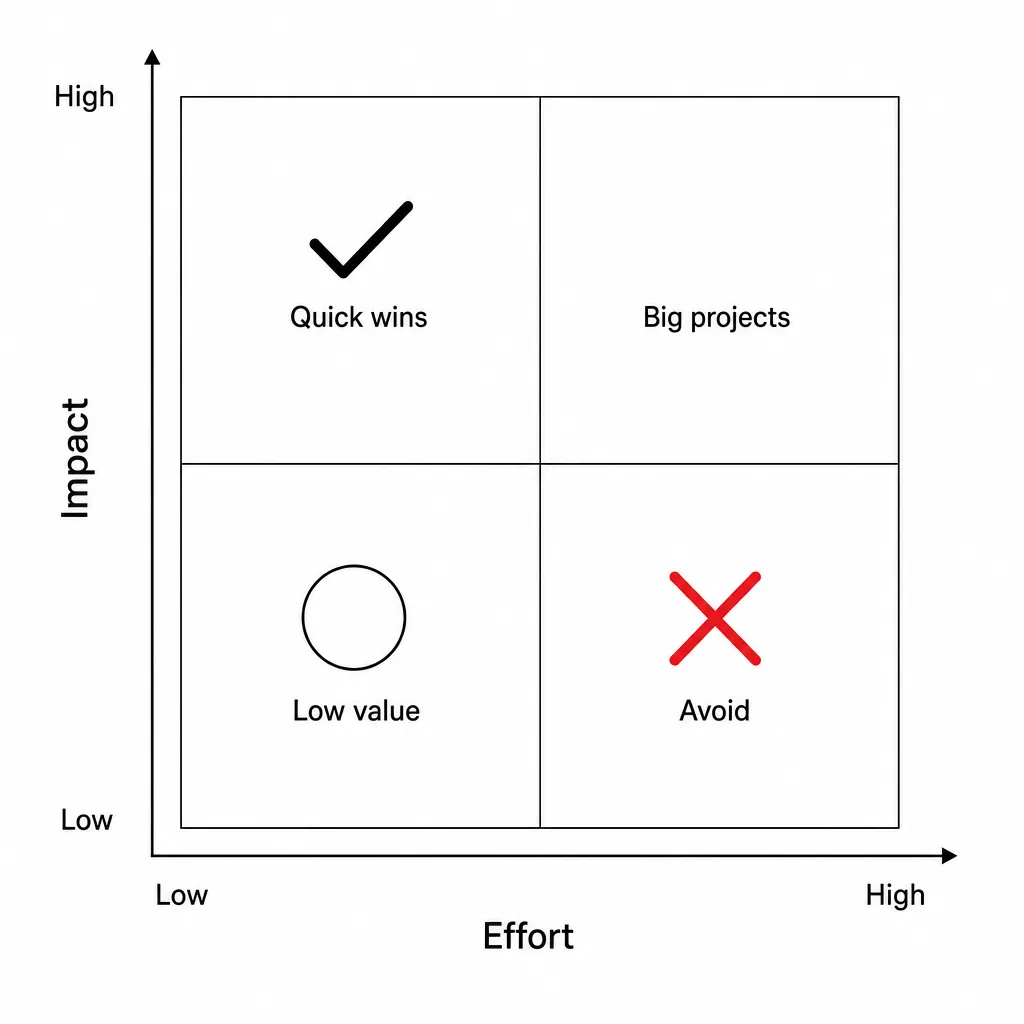
Using specialist tools such as Screaming Frog and log file analysis, we pinpoint the key issues and optimisation opportunities. The audit surfaces quick wins as well as more complex improvements. From there we build a prioritised roadmap (Impact/Effort matrix). Common fixes include repairing broken links, optimising title tags and restructuring the internal architecture.
Setting up rituals and structured reporting
Any digital project needs a tight organisation to succeed. We apply a proven methodology that keeps everything on track:
- Weekly check-in (30 min): Status update, unblocking issues and adjusting priorities based on the KPIs.
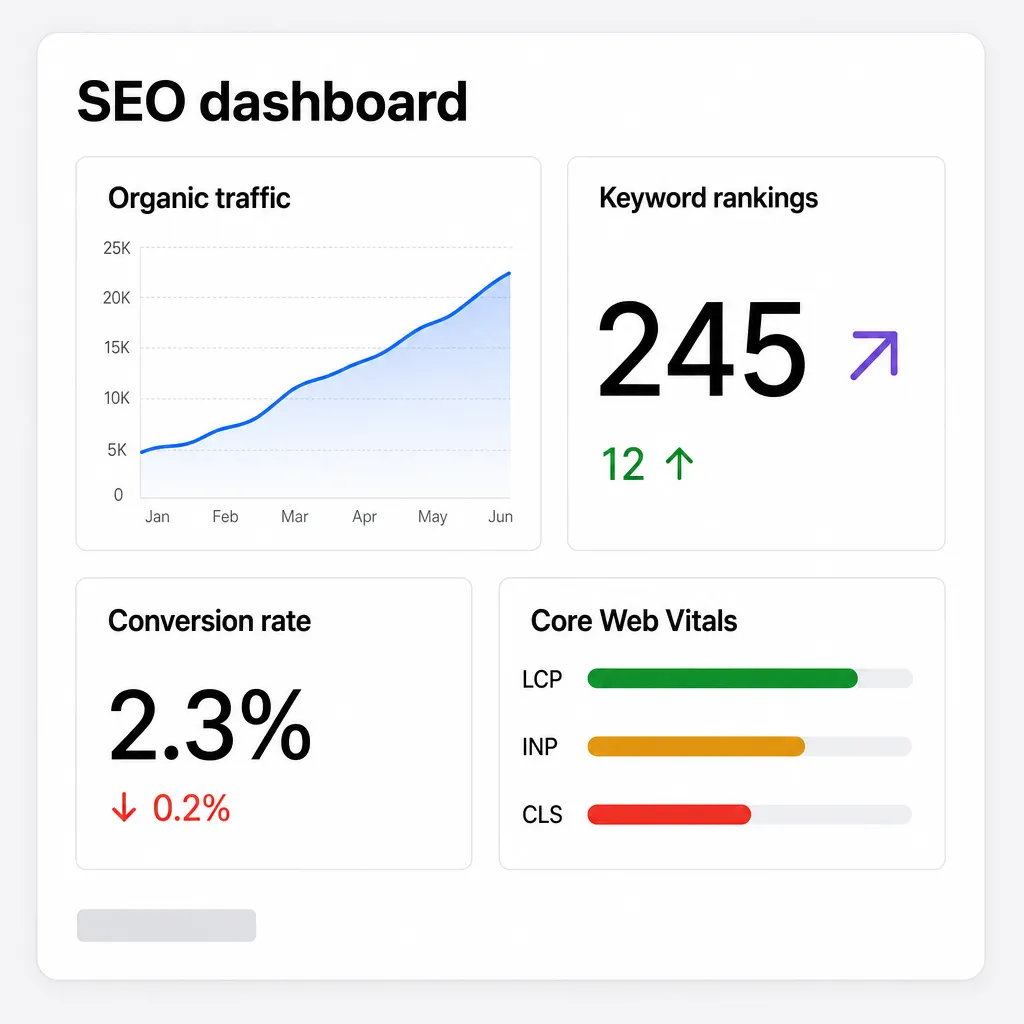
- Monthly analysis: Full report covering SEO rankings, traffic trends, CTR and technical performance.
This structured framework keeps collaboration with our clients smooth and lets us react fast when the algorithms shift.
The central role of the SEO project manager
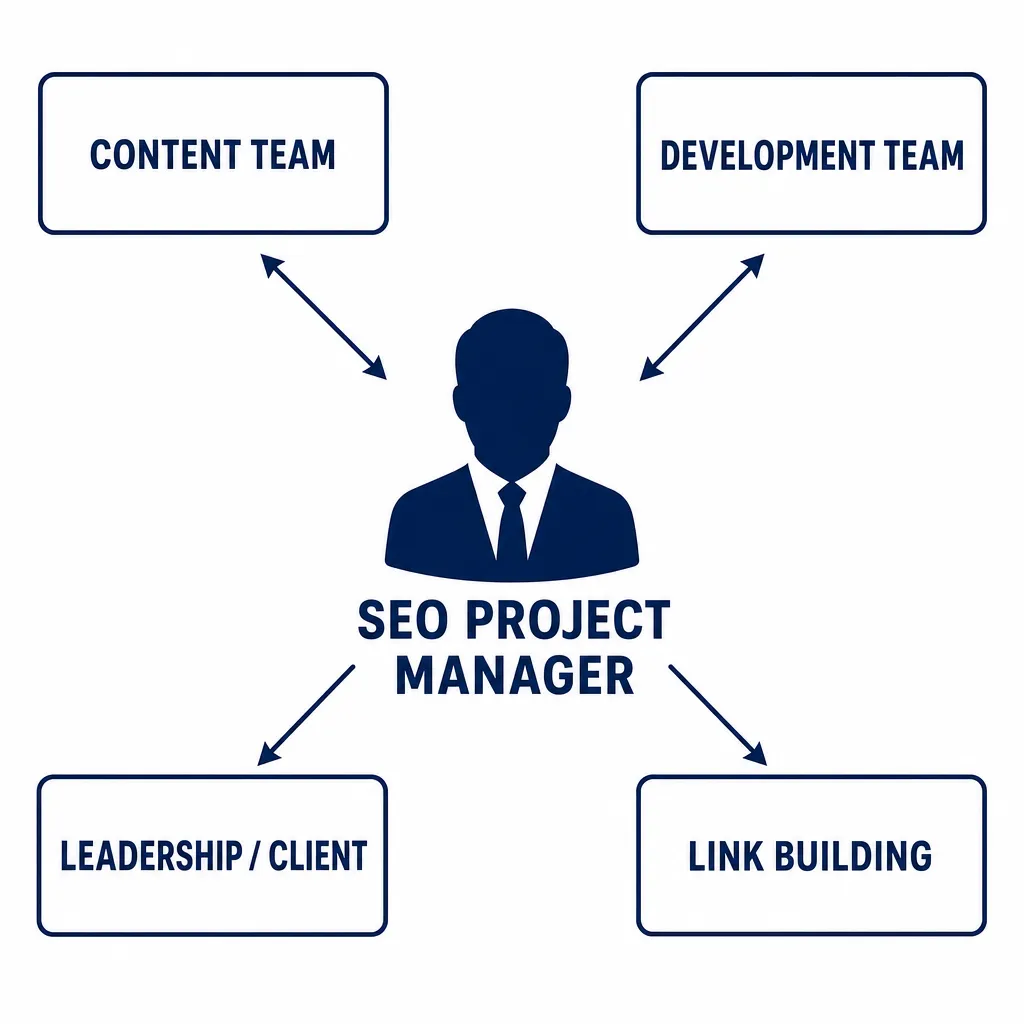
The SEO project manager sits in a strategic position, lining up the technical side, content creation and business goals. The job demands solid technical skills plus a real talent for teamwork and collaboration.
Operational duties and strategic deliverables
Their main responsibility is turning the SEO strategy into concrete actions. The project manager orchestrates and optimises every resource to get the most out of each campaign:
- Audit & Strategy: They analyse the website and its competitive landscape in depth to define a clear, actionable roadmap.
- Operational Planning: They structure the work in 3 to 6 month cycles with precise milestones and a sensible split of tasks between teams.
- Technical Coordination: They produce detailed working documents: content briefs, technical specs for developers, and acquisition strategies for the link building team.
- Analytics Follow-up: They set up and use the analytics tools (Google Analytics 4, Search Console) before producing performance reports to assess ROI.
From the field: "The project manager is really a translator. Their job? Turn business goals into technical tasks developers can understand, then explain technical results in terms of commercial impact for leadership. Communication is most of their day."
Key skills and career progression
A great SEO project manager combines technical expertise with people skills:
- Solid Technical Expertise: They need to understand how crawling and indexing work to earn credibility with technical teams. That know-how is the foundation of their authority when steering the SEO project.
- People Skills: A background in digital marketing helps, but soft skills make the difference. They have to explain complex concepts in plain language and use tact to coordinate everyone involved. The role naturally leads on to Head of SEO or SEO manager positions.
Editorial strategy and content architecture
Your content is the cornerstone of your online visibility. We turn semantic analysis into high-performing articles, carefully structured to establish your topical authority with the search engines.
Personas and strategic keyword research
Our approach goes well beyond collecting keywords. We build detailed SEO personas, including their motivations, their questions and what holds them back from buying. This in-depth keyword research methodology lets us identify queries that aren't just popular, but that actually attract a highly qualified audience.
Our complete guide to SEO copywriting offers a step-by-step method for creating optimised content: identifying strategic keywords, building the content brief, adapting the HTML structure, technical optimisation, internal linking, semantic markup and tracking through Google Search Console. You'll also find advice on integrating multimedia, using AI sensibly and keeping your content up to date, all essential to improving your SEO project management and generating qualified traffic over the long term. Discover the complete SEO copywriting guide
Topic cluster architecture and content silos
We structure your content into logical thematic groups, known as topic clusters. Each cluster is built around a "pillar page" (an exhaustive guide) targeting a main keyword, backed by satellite articles that explore specific aspects of the topic.
This silo architecture, connected through strategic internal linking, brings two major benefits:
- It lets Google recognise your deep expertise on a given subject
- It naturally guides your visitors through their information journey right up to the final decision
Example scenario: SEO turnaround for a fashion e-commerce site
- Starting point: A well-stocked e-commerce store suffering from flat organic traffic and product pages that were invisible in the search results.
- Our overall approach:
- Technical Audit: Fixed hundreds of 404 errors and resolved the major indexing issues.
- Content Strategy: Rolled out an "evening dress" topic cluster with a central guide and satellite articles.
- Product Optimisation: Fully rewrote the metadata of the strategic pages.
- 🚀 What to expect: this is an illustrative scenario, not a client result. A plan like this usually needs 3 to 6 months before rankings and sales start to move.
Editorial calendar and approval workflow
Our content production runs on a strict calendar that alternates new creation and optimisation of existing content. Every publication gets a complete brief and goes through a demanding approval process before going live, which keeps quality consistent.
Technical optimisation and SEO foundations
Technical optimisation is the pillar no effective SEO strategy can do without. Even with great content, a slow or disorganised site will never rank well in the search engines.
Optimised indexing and crawl budget management
Our mission is to make life as easy as possible for Google's crawlers, so they index your strategic pages accurately. We work on several decisive levers:
- Crawl budget optimisation: stop wasting resources on secondary or duplicate content.
- Proper redirect management and removal of the 4xx/5xx errors that hurt user experience.
- Effective canonicalisation to permanently resolve duplicate content issues.
- Smart configuration of the
robots.txtandsitemap.xmlfiles to guide indexing.
Mobile performance and Core Web Vitals
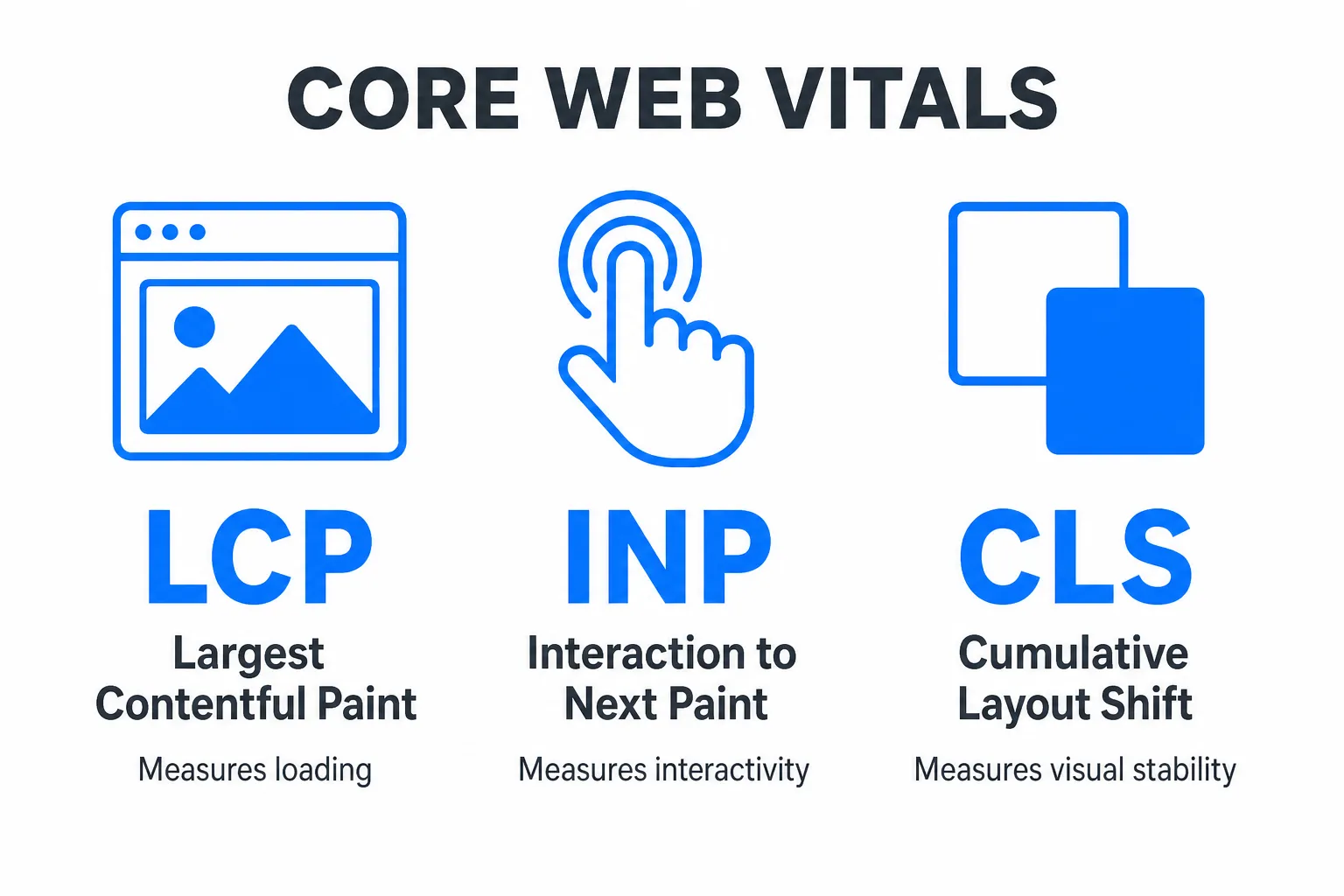
Since Google moved to mobile-first indexing, mobile performance has become a major SEO factor. We systematically improve the Core Web Vitals, the key performance indicators:
- LCP (Largest Contentful Paint): get the main content on screen faster.
- INP (Interaction to Next Paint): make interactions smoother and more responsive.
- CLS (Cumulative Layout Shift): stabilise the layout to eliminate unexpected jumps.
To get there, we reduce image weight (using the WebP format), set up effective caching and cut back non-essential JavaScript.
On-page optimisation and structured data
We refine every detail of your pages: a logical heading structure (H1, H2, H3), relevant image alt tags, and internal linking that reinforces topical coherence.
Implementing structured data (Schema.org) enriches your search results: star ratings, prices, stock availability. These rich snippets significantly improve your click-through rate and visibility.
Agile management and continuous improvement
Organic search isn't a one-off project. It's ongoing optimisation work that sits at the heart of your digital strategy.
Planning in 90-day cycles
We organise our work in quarterly cycles broken down into 2-week sprints. This method lets us get concrete results quickly, measure how well they work and refine our approach based on the data.
Our practical guide for beginners details a proven method for running your SEO project: from crawl and indexing analysis through technical optimisation, link building and performance tracking (via Google Search Console, GA4 or PageSpeed) to content strategy. It covers the key stages (audit, keyword selection, editorial calendar, internal linking, topic clusters) and the essential indicators for generating lasting traffic, with practical advice for managing your SEO effectively day to day. Running your SEO project: read the practical guide
| Weeks | Main goal | Key deliverables |
| 1-2 | Diagnosis and Planning | Full audit, prioritised action plan |
| 3-6 | Technical Fixes | Error resolution, speed optimisation |
| 7-10 | Content & Link Building | Pillar articles published, strategic partnerships |
| 11-12 | Review and Next Cycle | Performance report, preparation of the next quarter |
Strategic KPIs and continuous testing
Our approach is based entirely on data. Through custom dashboards and specialist SEO tools (often built in Data Studio, called Looker Studio until April 2026), we track the indicators that directly affect your business:
- Organic Visibility: Average positions, competitive share of voice, total and qualified impressions.
- User Engagement: Click-through rate (CTR), session duration, browsing depth.
- Commercial Performance: Leads generated by SEO, revenue directly attributable to organic search.
We regularly run A/B tests on title tags, meta descriptions and conversion elements to keep improving the return on your strategic pages.
Let AI Handle Your Content Publishing
Alya researches keywords, writes and publishes content directly to your CMS, WordPress, Shopify, Wix and more, on autopilot.