Want your digital marketing to actually deliver? It starts with a content strategy that works. Below you'll find concrete content strategy examples: action plans that bring in traffic, turn visitors into leads and build your brand's reputation. Real cases and a playbook you can adapt to your own business.
An effective content strategy example
A successful digital content strategy combines a variety of formats with a consistent editorial line. The leading brands run several complementary channels at once, yet they never lose the thread. Here are the formats that perform best right now.
Formats that perform today
In content marketing, some formats stand out because they have a proven track record. Master them and you get results that are concrete and, above all, repeatable.
- Blog and guest blogging: a powerful pair for reaching a wide audience fast. Publish on your own blog while contributing to external sites to maximise your visibility.
- Data-driven content: articles built on hard numbers, backed by well-designed visuals, consistently convert better than opinion pieces.
- Educational video series: short, regular episodes (two minutes every week) become an appointment your audience looks forward to. The share of businesses using video marketing jumped from 61% to 85% between 2016 and 2020, and it has kept climbing since.
These formats work because of their regularity and the genuine value they deliver. They keep prospects coming back while positioning your business as the expert in its field.
Why these formats convert
Guest blogging is still a formidable weapon for acquiring traffic. Some startups built their early audience largely through guest posts before investing in their own blog.
Free tools that slot into people's daily routine create a lasting relationship. A free SEO audit or a well-built headline generator brings in qualified leads while being genuinely useful. Regular improvements keep users engaged.
Reference content (glossaries, complete guides and so on) captures a large share of organic traffic. A well-optimised glossary can attract steady organic traffic and natural backlinks, which does wonders for your site's authority.
How to get started fast
To roll out your digital content strategy quickly, focus on the actions with the biggest impact. Here are the essential steps for fast, measurable results.
- Competitor analysis: identify 5 promising topics where your competitors are absent or barely present
- Free tool: build a calculator or a diagnostic tool tied to your area of expertise
- Regular publishing: one blog post a week targeting strategic keywords
- Guest posting: pitch your articles to 10 authoritative sites every month to earn backlinks
This method usually shows its first visible results within 3 to 6 months. The key is to keep the rhythm going and analyse performance so you can keep refining your approach.
The companies that succeed systematically work several channels in parallel. They adapt their content to the quirks of each platform while keeping a strong, consistent identity.
Content marketing and SEO working together
Optimising your SEO alongside your digital content strategy significantly boosts your visibility on Google. Build your content around well-defined topic pillars, link relevant supporting articles to them, and you'll improve your rankings naturally while hitting your marketing goals.
Pillars, clusters and internal linking
An effective content strategy is organised around pillar pages that cover broad subjects, connected to more niche content. This structure lets you answer every stage of the customer journey, from initial research to the buying decision.
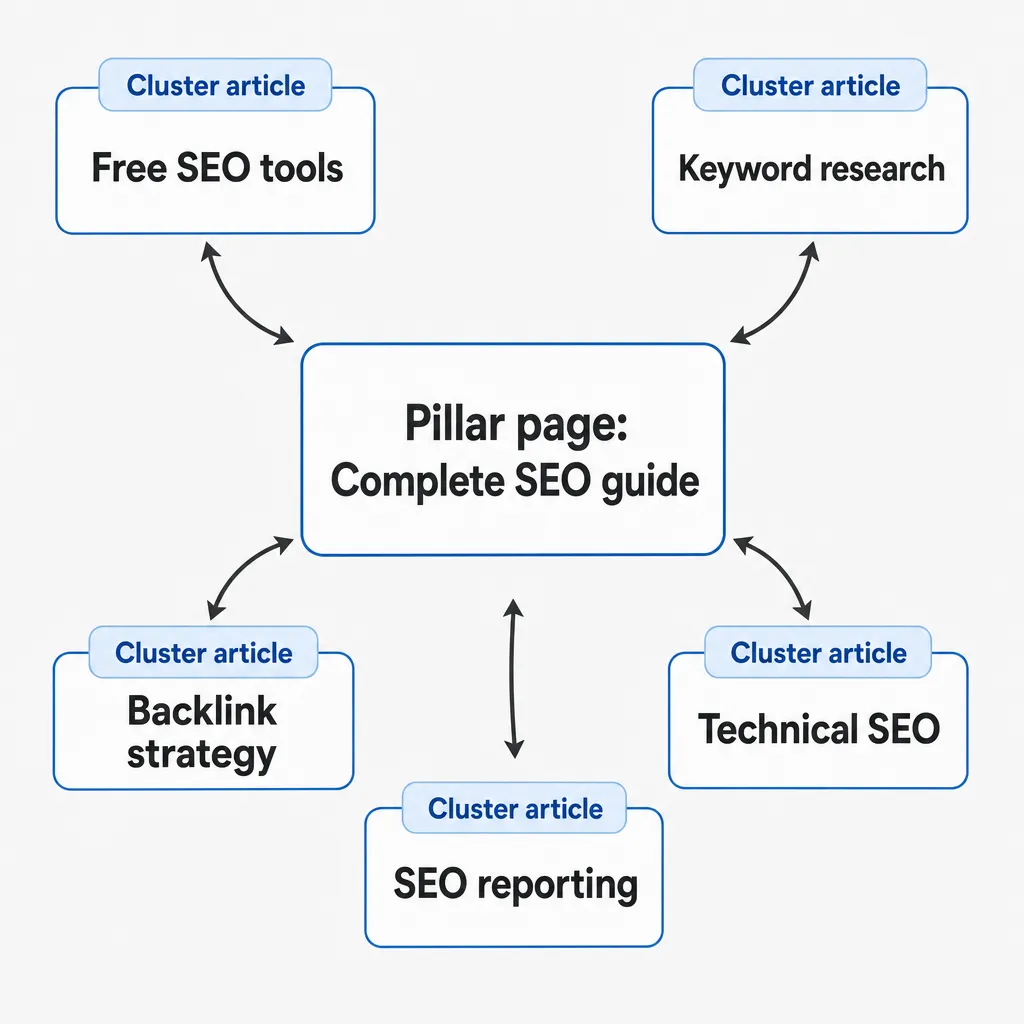
Take a pillar page called "The complete guide to choosing an SEO tool". It gets backed up by articles like "The 5 best free SEO tools" or "Premium SEO platforms compared in detail". This organisation draws in a broad audience first, then converts it with more specific content.
KPIs and measurement steps
Content pillars are the foundation of your editorial strategy. Each pillar needs a clear objective: generating leads, demonstrating expertise or growing revenue.
- Organic traffic: track how SEO traffic evolves for each pillar, month by month
- Rankings: regularly check where your strategic keywords rank
- Conversion rate: calculate the share of visitors who become qualified leads
- Time on page: assess how genuinely engaged users are with your content
These key indicators help you spot the content that performs and adjust your content strategy accordingly.
| Format | Main objective | Key KPI |
| Blog posts | Lead generation | Visitor-to-lead conversion rate |
| Technical glossary | Building authority | Number of backlinks earned |
| Free tools | Retention | Recurring active users |
| Video and podcasts | Brand awareness | Engagement (shares, comments) |
Social media content with impact
Social media gives you a tremendous opportunity to widen your reach and build a one-of-a-kind relationship with your audience. By tailoring your content to each platform, you multiply both your visibility and your impact.
Instagram content strategy
To shine on Instagram, combine a striking visual identity with a mix of formats and a constant dialogue with your followers. The accounts that perform juggle educational posts, punchy Reels and engaging Stories.
Consistency is still the key: an editorial calendar with 3 to 4 posts a week keeps engagement alive. Interactive Stories drive participation, while themed carousels cement your authority.
- Visual consistency: a graphic identity people recognise instantly
- Format mix: 40% carousels, 30% Reels, 20% product posts, 10% UGC
- Fast replies: respond to interactions within 2 hours at most
This approach grows an invested community that naturally shares your posts. And the algorithm rewards accounts that spark genuine conversations.
Lessons from Netflix and other brands
Netflix has mastered the art of user-generated content (UGC) and platform-native formats. Its campaigns nudge subscribers into sharing their reactions, creating digital word of mouth at scale.
Patagonia shows the power of an educational approach: repair and gear-care video tutorials, a newsletter people actually read, and a warm, straight-talking tone that brings the brand closer. This multichannel mix builds loyalty that lasts.
Coca-Cola proves the effectiveness of simple but punchy messages, carefully adapted to each target. Its tagline changes from one channel to the next while keeping its emotional core intact.
Repurpose and amplify
Smart repurposing gets the most out of every piece you produce. One complete guide becomes blog posts, a series of Reels, infographics and a themed newsletter.
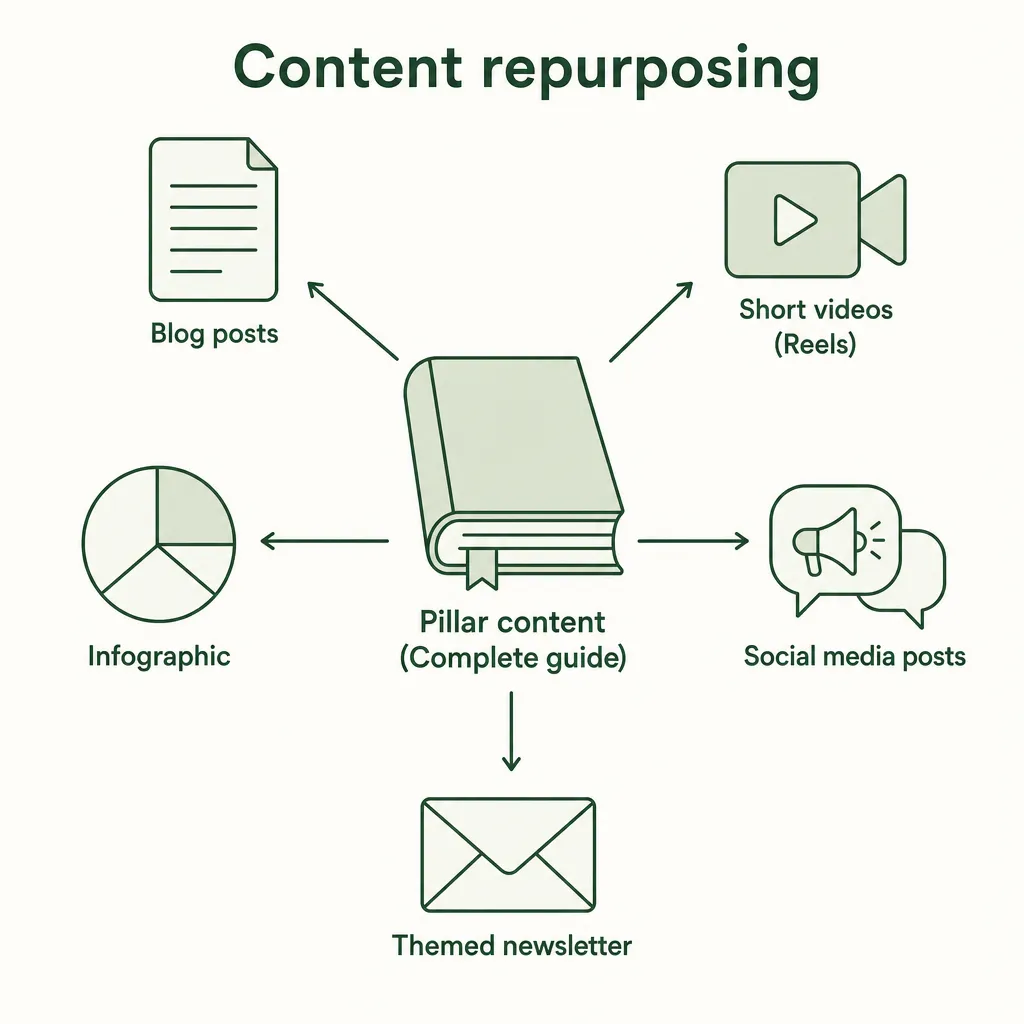
- Smart transformation: Guide → Articles → Videos → Social posts
- Careful adaptation: adjust the style for LinkedIn, Instagram or TikTok
- Optimal rollout: spread publication over 6 to 8 weeks for maximum impact
This method turns a single original idea into 10 to 15 pieces of content. The leading brands repurpose most of their content into different formats, making the most of every resource they have.
The steps of a content strategy
To make your content strategy a success, take a methodical approach and follow these key steps. From setting objectives to analysing results, every phase helps you build a content strategy that performs.
Objectives, personas and planning
Start by setting precise SMART objectives: increase your lead generation by 30%, improve the rankings of 50 keywords, or cut your acquisition costs by 20%.
A full audit gives you a clear picture: inventory your existing content, run a SWOT analysis and study your competitors. That's how you spot the opportunities where competition is weak but traffic potential is high.
- Detailed personas: "Sarah, 34, procurement manager, always reads comparison guides before making a decision"
- Optimised customer journey: attention-grabbing content → explainer → comparison → customer reviews
- Efficient editorial calendar: 2 SEO articles + 1 video + 3 social media posts a week
This rigorous structure guides your content creation and maximises your ROI.
Funnel and key formats
Adapt your content to each stage of the customer journey. Use lead magnets (ebooks, free tools) to capture attention, and testimonials to win people over at decision time.
HubSpot is the textbook example: informative content at the top of the funnel, interactive quizzes in the middle, and personalised demos at the bottom. Its content marketing strategy generates thousands of leads every month.
Colgate illustrates the power of non-commercial content: its oral health resources answer everyday questions without selling anything. This approach builds trust well before any sale takes place.
Content and AI in the service of SEO
Artificial intelligence is transforming content creation and SEO optimisation. Used wisely, it speeds up production while keeping the quality of your content where it needs to be.
Where AI adds the most value
AI content tools shine when it comes to generating ideas and structuring your editorial strategy. In record time, they can suggest dozens of article concepts, analyse their SEO potential, size up the competition and propose outlines that perform.
- Keyword research: smart identification of long-tail keyword opportunities and analysis of their relevance to your target audience
- SEO optimisation: suggestions for compelling titles and strategic questions to maximise your chances of landing in featured snippets and AI Overviews
- Automated reporting: continuous performance analysis with personalised recommendations to improve your content
This technological assistance frees up time on repetitive tasks, so you can focus on what matters: creating content that fits your audience perfectly. Tools like ChatGPT (for idea generation) or Surfer (for semantic optimisation) radically change your editorial workflow.
Guardrails and editorial workflow
Even with the progress of AI content tools, SEO optimisation still needs a human sign-off. Brand voice, factual accuracy and cultural fit remain areas where human expertise is irreplaceable.
The ideal workflow combines AI and human input sensibly: the AI provides the groundwork and first drafts, while the editorial expert refines the strategy, personalises the message and guarantees the final quality. This partnership delivers both efficiency and authenticity, whatever type of content you produce.

Rank Higher Without the Manual Work
From technical audits with Nox to competitor monitoring with Marc, Sedestral's AI agents cover every layer of SEO so your team doesn't have to.