Domain authority is one of the pillars of any SEO strategy that actually delivers. This key metric is often misread, yet it's essential for gauging how credible your website looks and how well it can rank. It has a direct impact on your visibility and on your ability to outrank competitors in the search engines.
One caveat before we go further: domain authority is a metric built by third-party SEO tools (Moz, most famously). It is not a direct ranking factor used by Google. Think of it instead as a predictive indicator that reflects trust signals, mainly the quality of your backlinks, which Google's algorithm does very much take into account.
This complete guide explains how the score is calculated, how to read it properly, and which concrete strategies you can put in place to improve it for the long haul.
What is domain authority and why does it matter so much?
Picture the web as one giant network of recommendations. In that system, a backlink (one of those external links pointing to your site) works like a vote. Domain authority sums up the strength and reliability of all those votes, reflecting the overall popularity of your site.
In other words, it represents the overall online reputation of your domain name. A quality strategy for link building (earning links from other sites) is therefore the main engine for improving it.
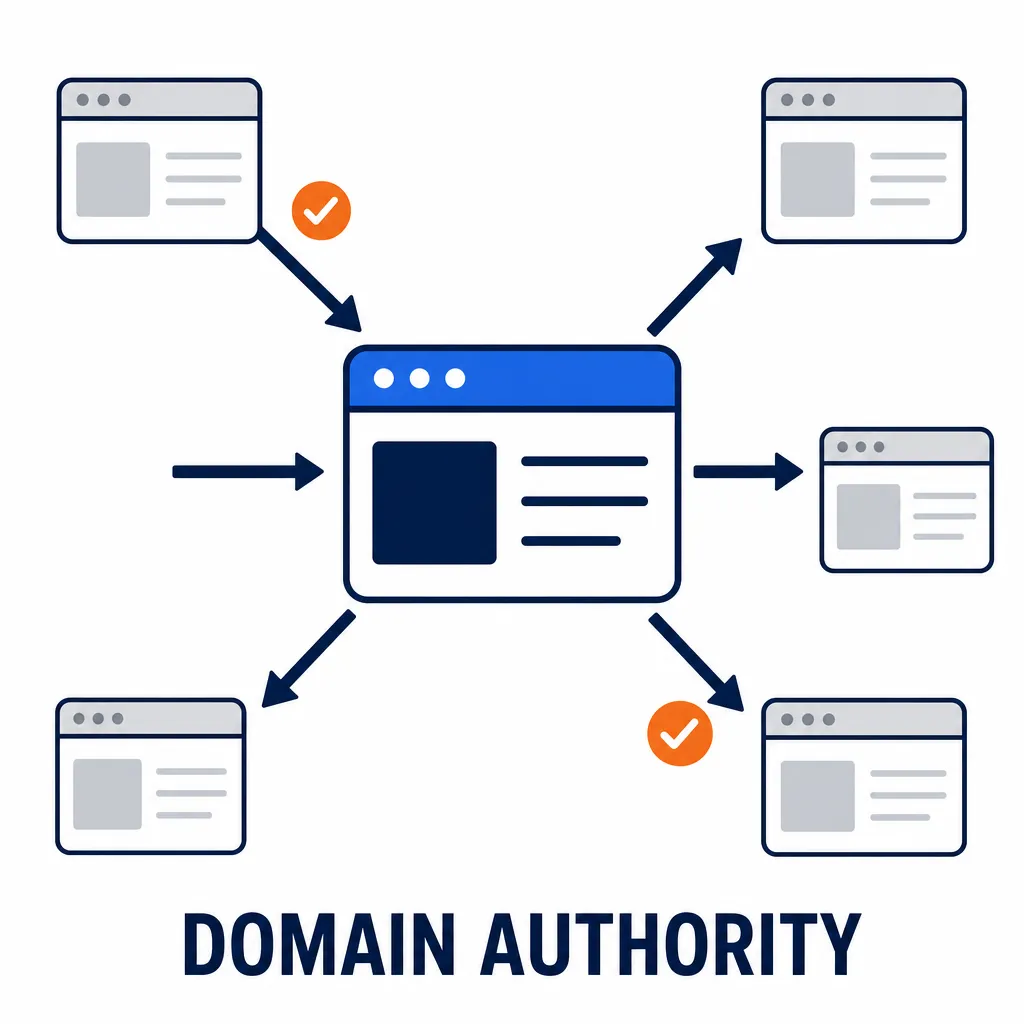
Your domain's reputation is a strategic indicator for several reasons:
- Ranking potential: A high score predicts your site's ability to rank for competitive keywords. It's a compass for your SEO strategy.
- Competitor analysis: It's the ideal yardstick for benchmarking yourself objectively against your rivals and sizing up the effort needed to overtake them.
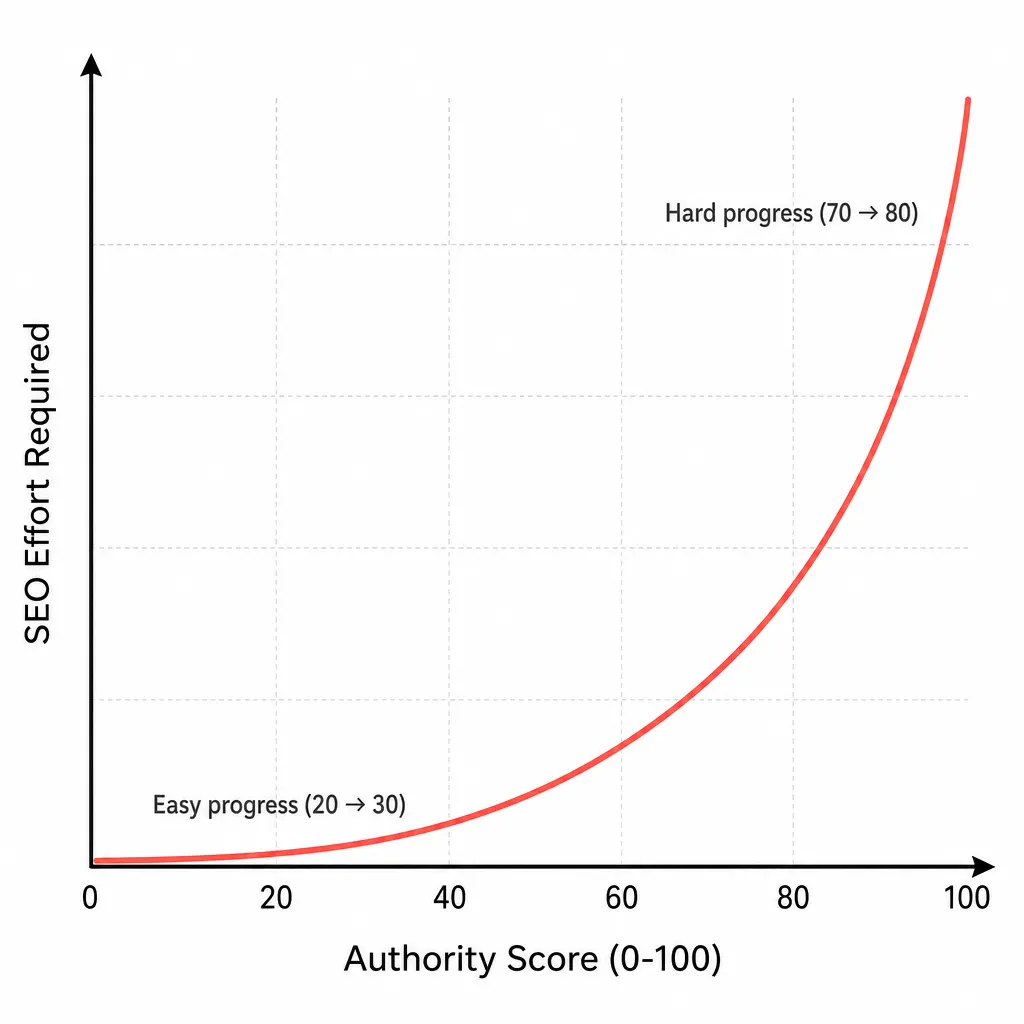
- Logarithmic scale: Understanding that the score works on a logarithmic scale is essential. Going from 20 to 30 is far easier than going from 70 to 80. That curve rewards persistence and quality over the long term.
- Impact on indexing: A site with strong domain authority is often crawled more frequently by Google, which can speed up the indexing of its new content.
DA, DR, TF: untangling the authority metrics
The word " authority" is used by several tools, each with its own algorithm. It's vital not to mix them up, and to always stick with the same tool for consistent tracking.
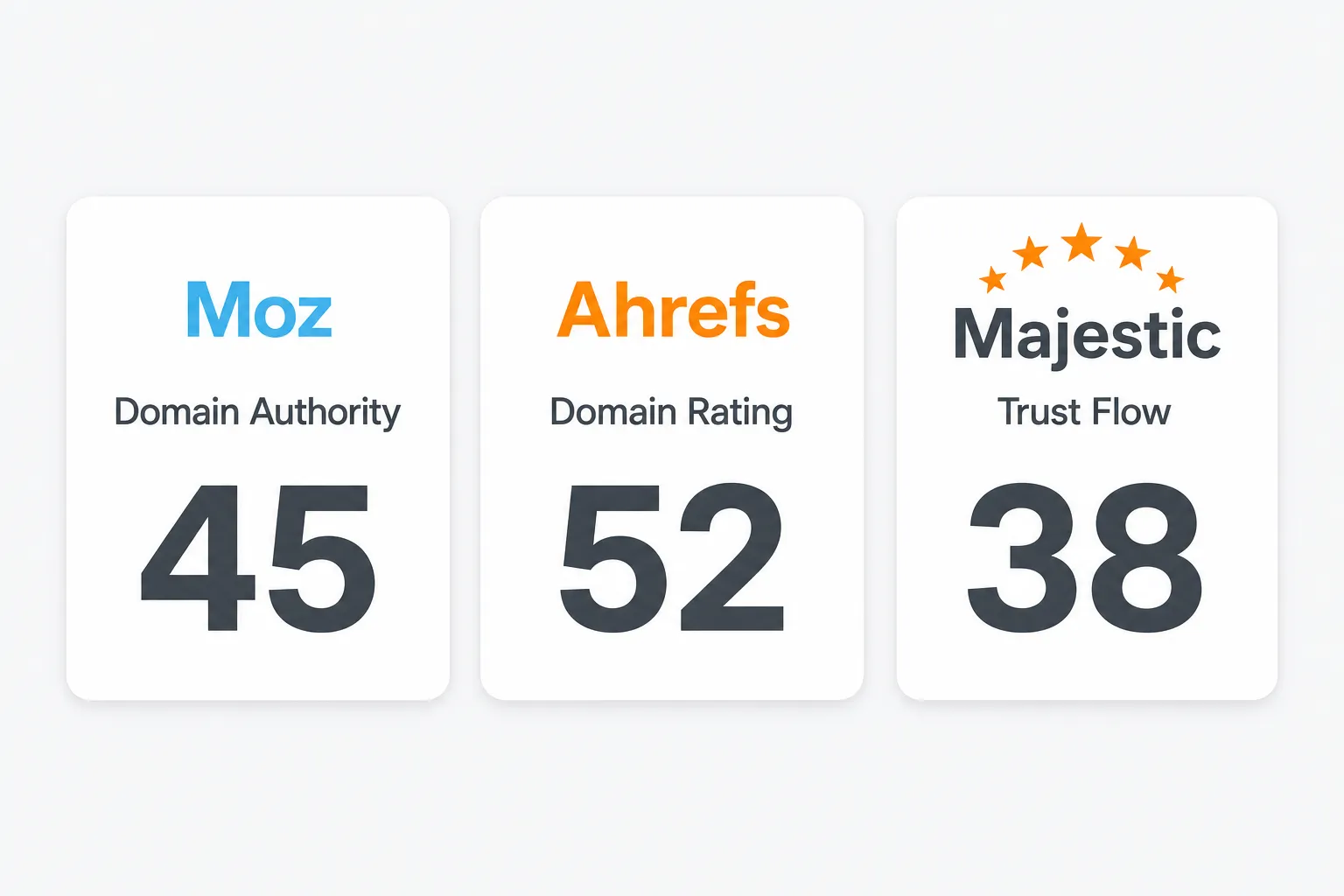
- Domain Authority (DA) by Moz: The best-known metric. It rates a domain on a scale of 1 to 100 based on around forty signals, including the number of referring domains and the quality of inbound links.
- Domain Rating (DR) by Ahrefs: Similar to Domain Authority, DR focuses almost exclusively on a site's backlink profile. It measures the strength of inbound links.
- Trust Flow (TF) by Majestic: This one is built around the idea of "trustworthiness". It rates a site on how close it sits to a seed set of trusted sites identified in advance.
The key takeaway: Don't panic if your Domain Authority is 45 and your DR is 52. Those gaps are normal. What matters is tracking the metric you've chosen over time and comparing it with the other players in your sector within the same tool.
How to interpret your authority score?
A rating like the Authority Score isn't a grade, it's a benchmark. Its value is purely relative and depends on your industry. A domain score of 40 can be excellent for a local tradesperson in a niche market, yet weak for a nationwide e-commerce site.
The only approach that makes sense is comparison. Look at the domain authority score of the 3 to 5 players ranking for the keywords you're targeting. Your goal is to close the gap, then overtake them.
To give you a rough idea:
- New site: < 15
- Well-established niche site: 30-50
- Major national player: 60-80
- Web giants (e.g. Wikipedia, the BBC, The New York Times): 90+
The action plan to improve your domain authority
Improving your authority is a marathon, not a sprint. It rests on the interplay between three fundamental pillars.
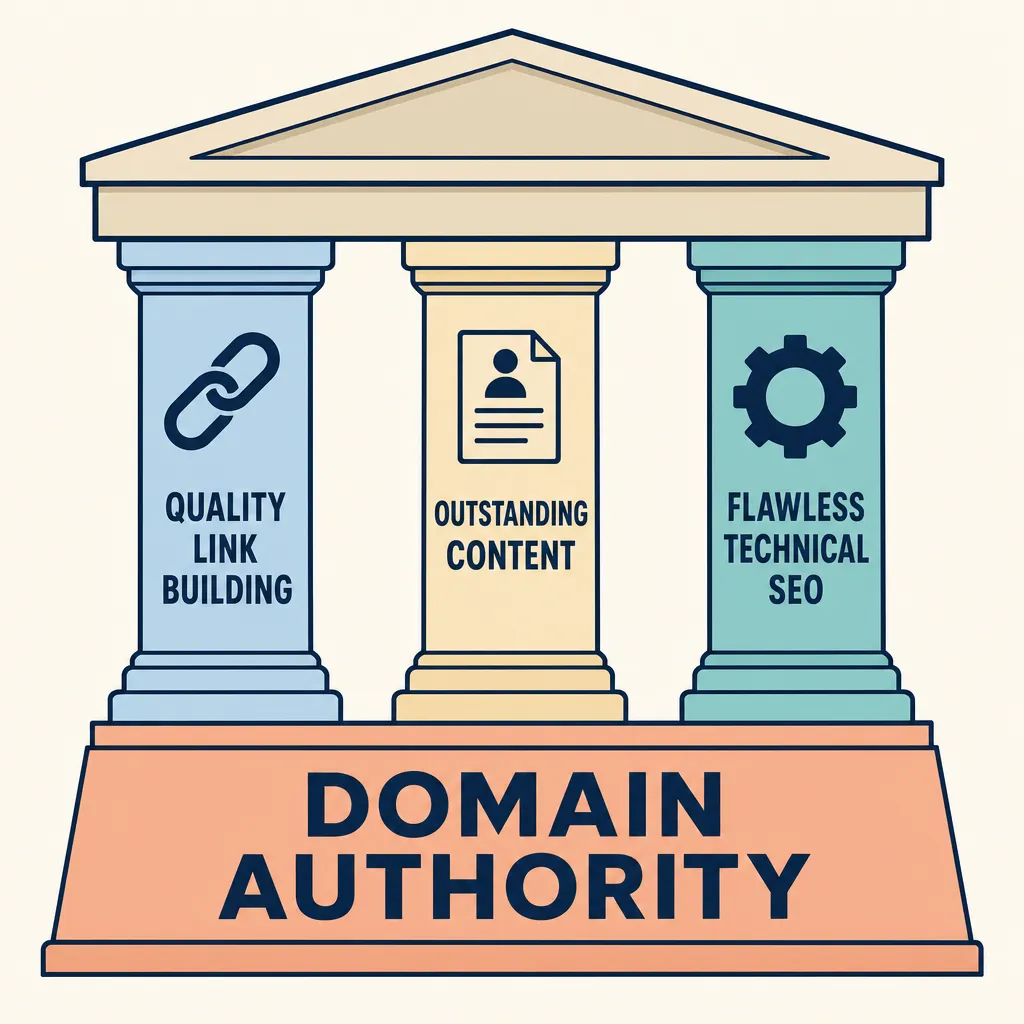
High-quality link building: the engine room
Quality always beats quantity. A single link from an authority site in your field is worth more than 100 links with little relevance.
- Put relevance first: Look for links on sites that cover your topic. A link from a food blog to your restaurant is worth more than a link from a car forum.
- Aim for dofollow links: These are the ones that pass "link juice". Nofollow links aren't useless (they can bring in qualified traffic), but they don't directly affect your rankings.
- Vary your anchor text: The anchor is the clickable text of the link. A natural anchor profile is crucial. Aim for mostly branded anchors ("MyCompany") or URL anchors ("www.mycompany.com"). Use keyword-rich anchors ("best seo consultant") sparingly, and only when they read perfectly naturally.
Tactics that work: Guest posting, finding mentions of your brand with no link and turning them into one, and fixing broken links on partner sites.
Outstanding content: become a go-to source
The best way to earn natural links is to create content so exceptional that other sites will want to reference it. That's what's known as link baiting.
- Analyse your rivals: Use SEO tools to identify which of your competitors' pages attract the most backlinks. Can you create content that's 10x better, more complete, more up to date?
- Create unique resources: Ultimate guides, case studies with hard numbers, original infographics, free tools... This kind of content is a natural backlink magnet.
A flawless technical foundation
Your technical SEO doesn't directly strengthen your domain's reputation, but it makes it far easier for Google to recognise and reward the credibility you're building.
- Speed and mobile: A fast, fully responsive site is a prerequisite.
- HTTPS security: A baseline trust signal.
- Internal linking: Use internal links to connect your pages to one another. This helps distribute the weight earned by your strongest pages to other strategic pages on your site.
Pitfalls to avoid: protecting your authority
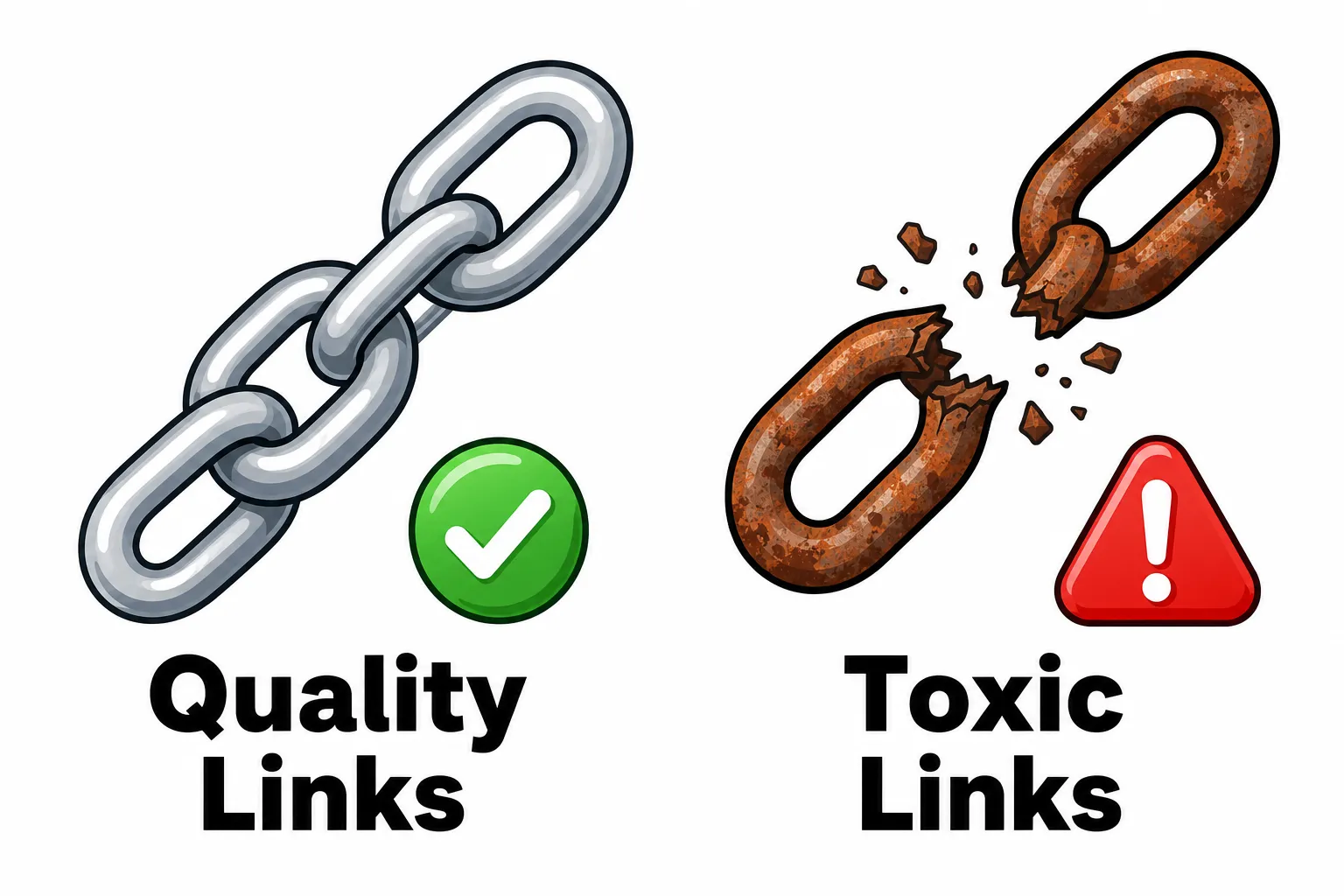
Some so-called "black hat" practices promise quick wins but carry enormous risk.
- Bulk link buying and PBNs (Private Blog Networks): Google actively fights these techniques. Using them can trigger manual or algorithmic penalties, resulting in a sharp, lasting drop in your traffic.
- Toxic links and spam: Monitor your inbound backlink profile regularly. Links from low- quality sites can damage your reputation. Use Google's disavow tool with extreme caution and only as a last resort.

Automate Your SEO With AI Agents
Sedestral connects six AI agents to your website to handle content, audits, rankings, backlinks and images, without the manual grind.