In the fiercely competitive arena of Google's search results, your page has a few seconds to win someone over. The meta description is your best weapon. It's far more than a line of text: it's your marketing hook, the promise you make to the user before they've even clicked.
This practical, complete guide walks you through a proven method for turning your meta descriptions into genuine click magnets. You'll learn how to write meta descriptions that punch above their weight, are optimised for SEO and fit every single page on your site.
What is a meta description?
The meta description tag is a short snippet of HTML code placed in the <head> of a web page. Its job is to give a concise, appealing summary of the content and to define the meta description of a page clearly for both users and search engines. That summary usually appears under the blue title in the SERP, forming what's known as the snippet.
In practice, it plays three strategic roles:
- A sales pitch: It works like a mini billboard. Its purpose is to get searchers to click on your link rather than a competitor's.
- A click driver (CTR): A convincing description significantly lifts click-through rate. That's a major positive signal sent to Google about how relevant your page is.
- The first impression: It's often the very first direct contact between a user and your content. So it needs to be clear, relevant and trustworthy.
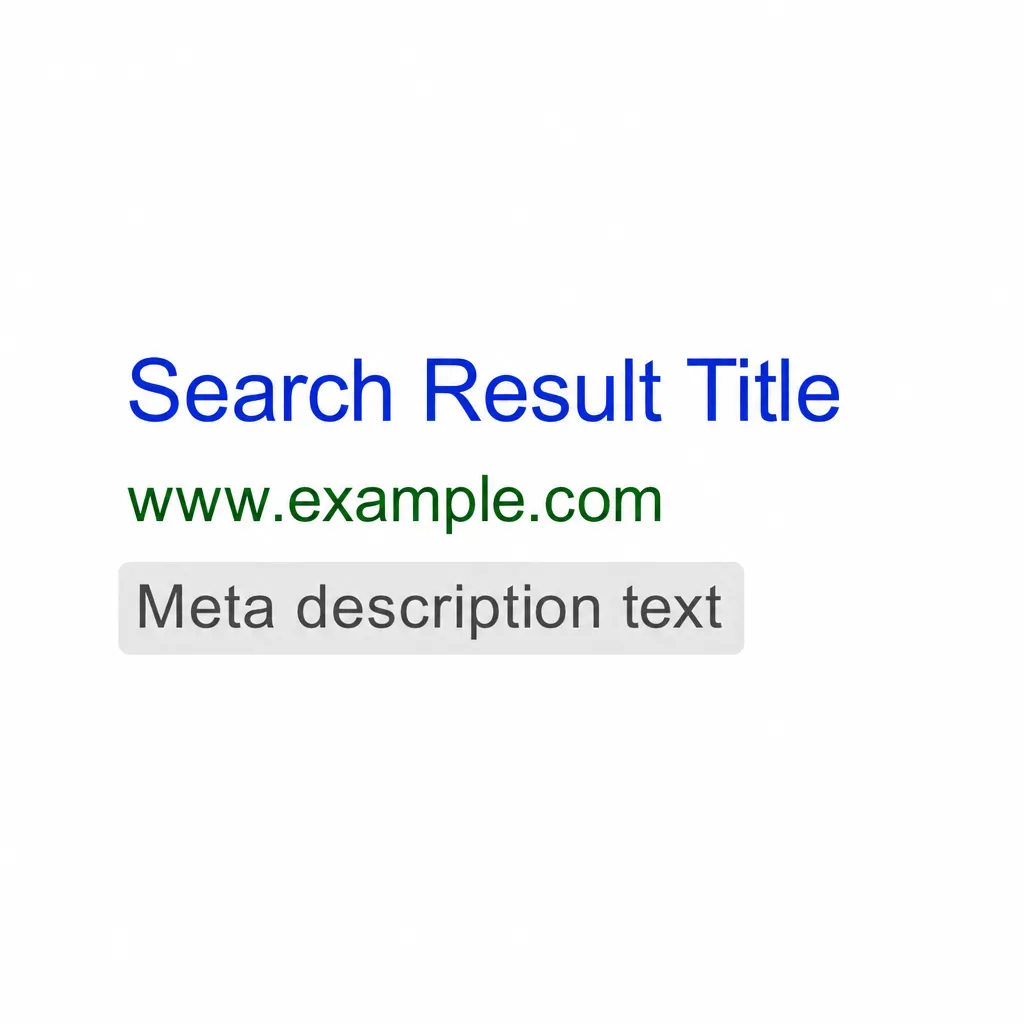
Where does the meta tag go?
In HTML, the syntax is simple and it only ever goes inside the <head> section of your page:
<meta name="description" content="Your unique, appealing summary goes here.">
Of course, this meta name tag is just one of many places where markup matters; for the bigger picture, have a look at our guide on HTML and SEO: optimising your markup.
The good news? Modern CMS platforms like WordPress, Shopify or BigCommerce make the job easy. Popular SEO plugins like Yoast SEO or Rank Math give you a dedicated field to write it, with a live preview of how it'll look on Google.
The real impact on SEO and click-through rate (CTR)
Let's be clear: Google has confirmed that the meta description is not a direct ranking factor. Stuffing your description with keywords won't move your position.
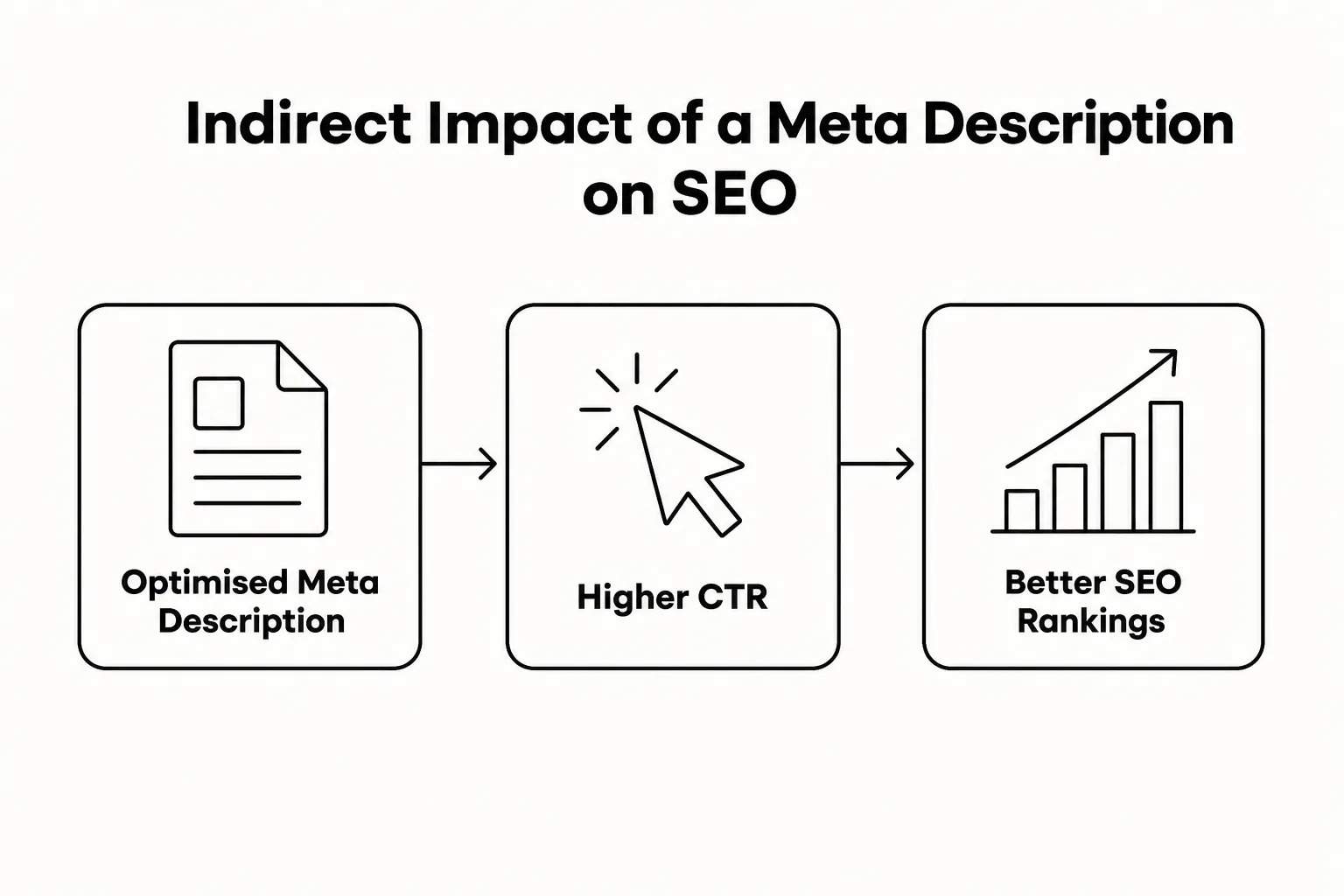
That said, its impact on SEO is indirect but powerful.
At the same position, a page with a punchy meta description will get more clicks. That lift in CTR (click-through rate) tells search engines your result is more relevant and more appealing to users. Over time, a strong CTR can have a positive influence on your rankings. For a full view of every lever available to you, our beginner's guide to SEO is the ideal place to start.
How to write the perfect meta description
Crafting an effective meta description is an art that blends marketing psychology with technical precision. Good copywriting is essential if you want to stand out and convince. This section takes you step by step through how to write a meta description that does the job.
The optimal length: aim for precision
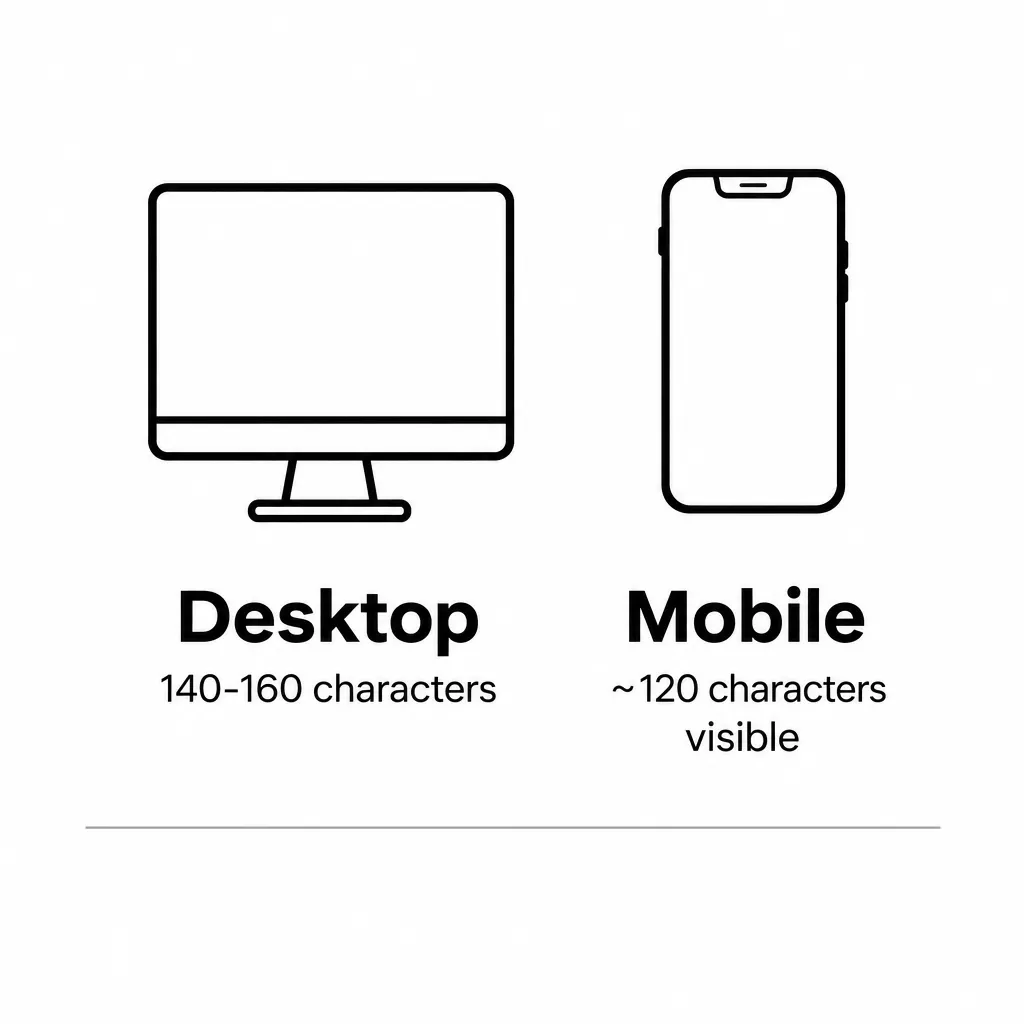
The golden rule is to stick to a sensible length so your message doesn't get cut off.
- Keep it concise. Google sets no character limit and truncates snippets to fit the device width, so there is no ideal length.
- Screens are narrower on mobile. So put your most crucial information and your main keyword right at the start.
Structure and best practices
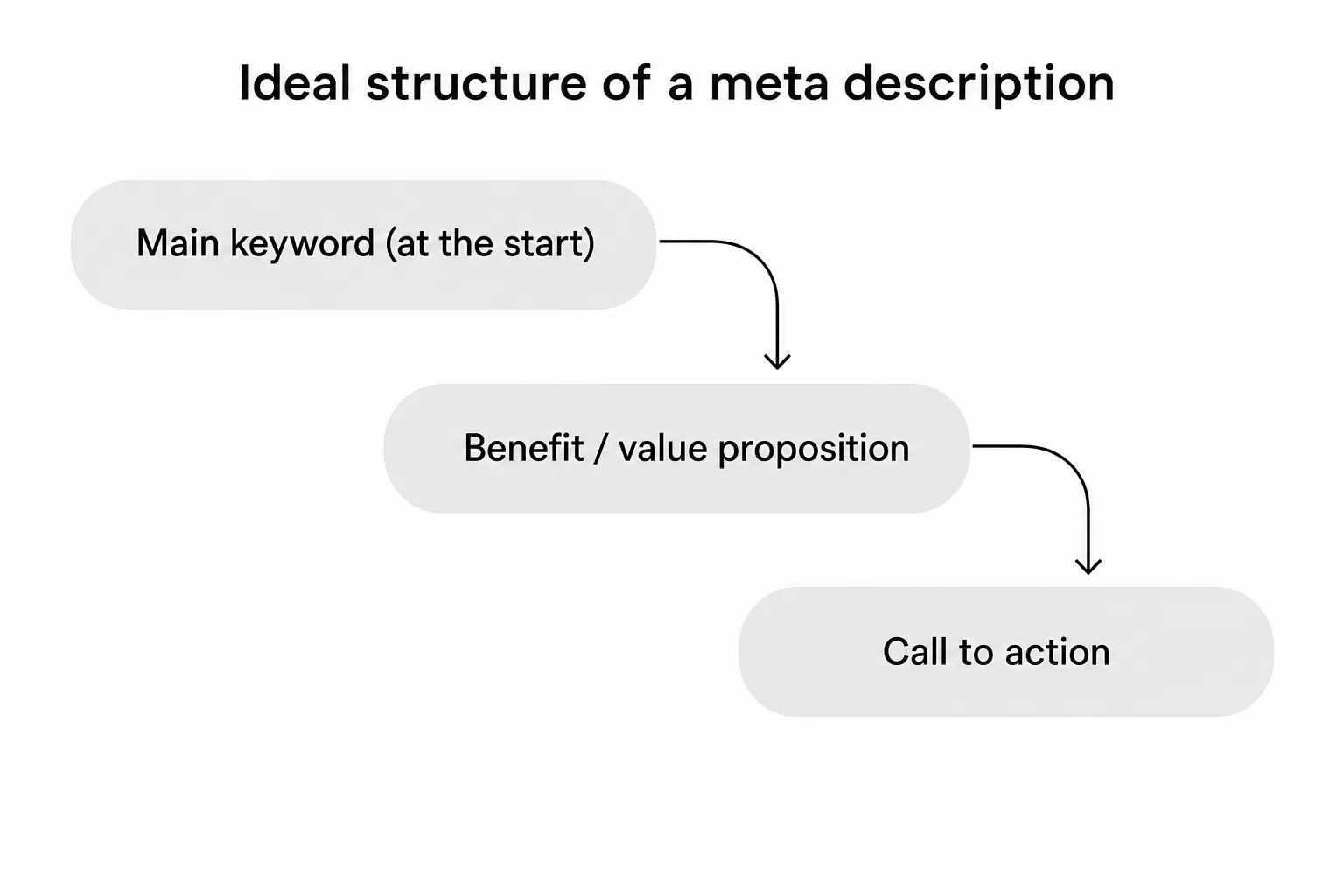
A successful description follows a logical, persuasive structure:
- Write a unique description: Every page on your site needs its own unique meta description. Never duplicate!
- Include the main keyword: Place it naturally near the start. Google will bold it in the search results when it matches the user's query, which draws the eye.
- Lead with the benefit: Don't just describe what the page is, say what it does for the reader. What solution, what information, what advantage will they get?
- Use action verbs: Prompt action with dynamic verbs. "Discover", "Learn", "Compare", "Save", "Get"...
- Keep it active: Avoid passive constructions that weigh the message down. Be direct and engaging.
Example: "✅ Discover our pick of the best pike lures, tested and approved by our experts. Guaranteed results on your next trip!"
This example shows the principles of an effective description in action. You'll find plenty more meta description examples for different industries by looking at the top-ranking pages for your target queries.
Tailor the message to the page type
The tone and content of your description must match the intent of the page. No exceptions.
- Product page: Be factual and persuasive. Mention the price, a key feature, free shipping, a promotion. Create a sense of urgency ("Limited stock!") or trust ("500+ customer reviews").
- Blog post: Lead with the informational value. Promise an answer, a solution, a step-by-step guide. "Learn how to...", "The complete guide to...", "5 mistakes to avoid...".
- Local service page: Be practical. Include your service area, a key advantage (free quote, same-day service) and a phone number if it makes sense.
Tailoring your message this way is crucial, because the meta description is only the front door: it has to match the rest of your page perfectly. That's the whole point of SEO content: the guide to creating content that ranks.
Testing and continuous optimisation
Your work isn't done once the description is written. Optimisation is an ongoing process.
Use Google Search Console to spot pages with a high number of impressions but a low CTR. Those are your best candidates for a meta description rewrite. A good meta description can make a real difference to CTR. Don't hesitate to run A/B tests by changing a description and reviewing the performance after a few weeks.
Google and you: controlling how you appear in the SERPs
Sometimes, despite your best efforts, Google chooses to display a different snippet from your page. Understanding why is the key to taking back control of your snippet.
Why does Google rewrite your description?
Google may ignore your meta description if it thinks another passage from your text is a better match for the user's specific query. Its goal is always to serve the most relevant answer possible. A description you wrote for the main keyword may not be ideal for a long-tail search.
How to limit truncation and rewrites
You can't force Google 100% of the time, but you can strongly influence it.
- Consistency first: The best way to get Google to accept your meta description is to make sure it faithfully and concisely reflects the content of your introduction. If your description is an excellent summary of your first paragraph, Google will have little reason to change it.
- Align your tags: Make sure your title tag, your H1 and your meta description are tightly consistent. They need to tell the same story.
- Technical controls (advanced): You can use directives like
max-snippetto set a maximum length for the snippet, ornosnippetto block a snippet from showing at all. Use with care.
Let AI Handle Your Content Publishing
Alya researches keywords, writes and publishes content directly to your CMS, WordPress, Shopify, Wix and more, on autopilot.