This guide goes well beyond a quick tutorial. Built to walk you through designing an SEO strategy that actually works, it gives you a concrete, actionable plan. You'll learn how to line up your commercial goals, sharpen your pages, build quality content and grow your visibility in search engines. Follow the method and you'll end up with lasting rankings that keep improving.
This hands-on guide shows you how to put in place an SEO strategy that makes sense: setting SMART goals, running a full SEO audit and tracking results the agile way. Discover the complete method for rolling out your SEO strategy
The starting point: aligning your SEO approach with your business goals

Before you produce a single piece of content, get clear on your business goals. A successful SEO strategy draws an explicit line between your key metrics (traffic, leads, conversions) and revenue growth. For example: "Grow qualified organic traffic to product pages by 30% within a year".
Defining the vision
Organic search should be a genuine sales engine, not a vanity project. Attach a SMART goal to each metric so your roadmap has a backbone.
- Example: an online coffee retailer could set itself the target of "50 extra leads a month from SEO", then judge every action against that number.
Turning the vision into SMART goals
Pick 3 to 5 strategic metrics: your rankings, click-through rate, SEO-driven conversions, Core Web Vitals. Set up a monthly check-in and a quarterly review to keep your SEO strategy on track.
Example of a SMART goal: "Move the average position from 8th to 3rd on 15 transactional keywords and reach 20,000 monthly organic visits within 12 months".
Configure your analytics tools (GA4, Search Console) from day one: without historical data, you simply can't measure progress.
The engine room: keyword research and battle plan
Keyword research is the cornerstone of any effective SEO strategy. It will make or break your results. For the best results, study the search results pages (SERPs) carefully using Google Search in a private window, which helps you pin down what people really want when they type a query.
The explorer's toolkit
To work efficiently, combine specialist tools like Google Keyword Planner, Semrush or AnswerThePublic. Round them out with your own Search Console data, a proven way to spot pages with strong potential.
- Google Trends: essential for checking the seasonality of a query
- Ubersuggest: handy for unearthing long-tail keyword opportunities
- AlsoAsked: reveals the questions people actually ask in your niche
Looking for a complete method? Read our step-by-step guide to building a high-performing SEO strategy
From raw data to action plan
- Competitor analysis: study their visibility and dissect their backlinks to understand where they're strong.
- Impact/Effort prioritisation: go for the quick wins first, then tackle the heavier projects.
- Content creation organised in 2-week cycles for a steady, controlled output.
Building the topic map (topic cluster)
Organise your pages into coherent topic clusters. This approach gives your rankings a serious lift while making your site far easier for search engines to crawl.
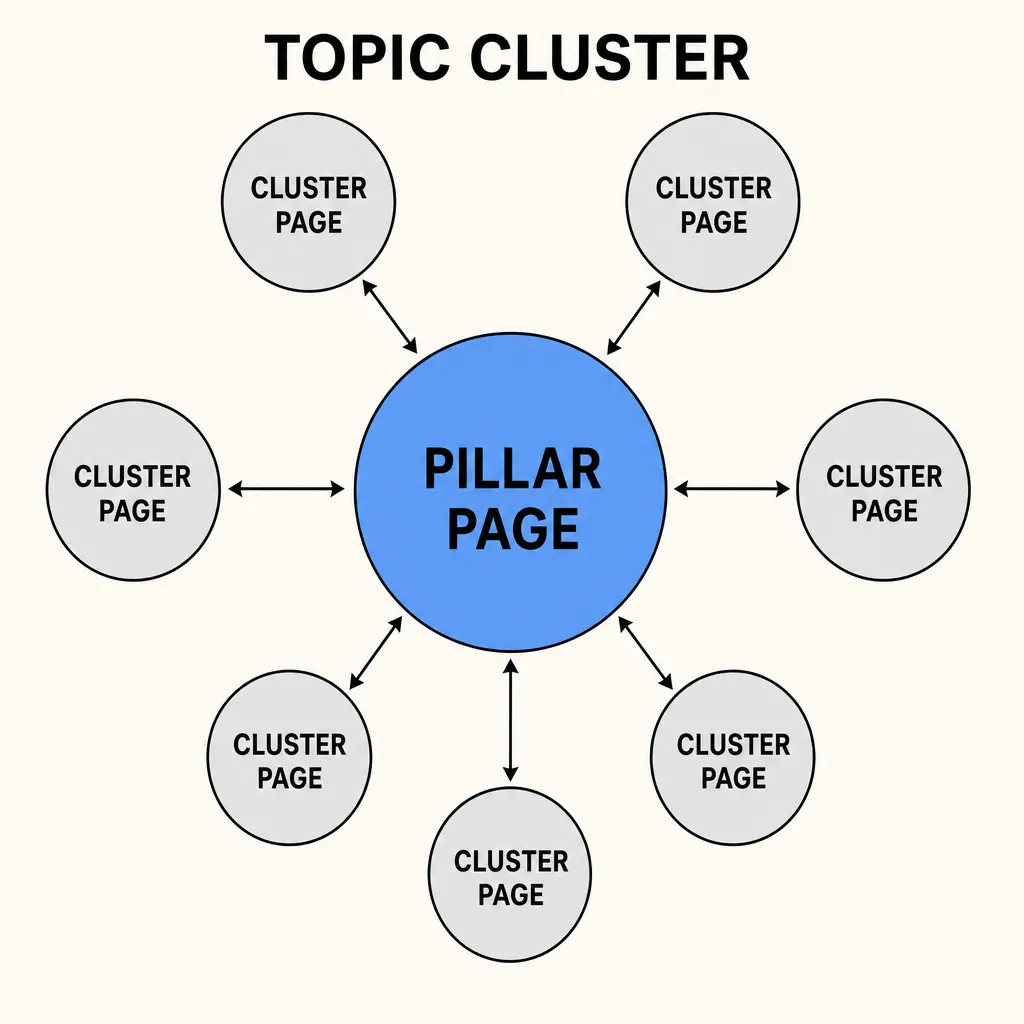
To go further on analysing search intent: Read our detailed guide to search intent analysis
Solid foundations: the technical site audit
Running a regular SEO audit helps you protect your pages and keep your SEO strategy performing.
The priority technical checks
To improve your Core Web Vitals and boost your site's visibility, focus on these essentials:
- Mobile performance: use the WebP (or AVIF) format for images and enable lazy loading.
- Tags: check your canonicals and your heading hierarchy (H1-H6).
- Security: run on HTTPS and enable HTTP/2 or HTTP/3 for a secure, fast site.
Making crawling and indexing easier
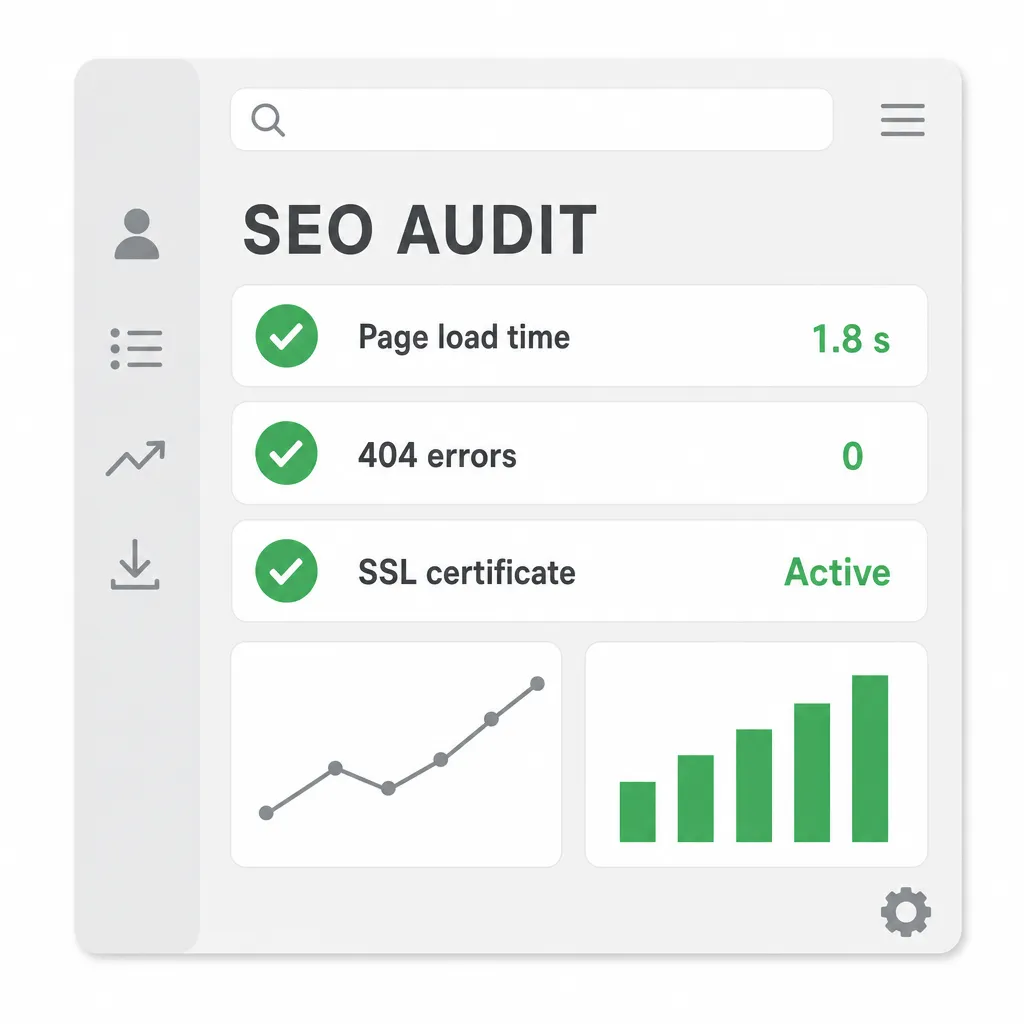
With a specialist crawler like Screaming Frog, you can analyse every URL in detail: find orphan pages, fix server errors (5xx) and manage your crawl budget more effectively.
Strategic content creation
A complete SEO strategy rests largely on effective SEO copywriting. Every piece of content you produce should answer a specific search intent and strengthen the authority of your main pages.
Bringing your topic clusters to life
Draw up a three-month content creation plan, organised in sprints. Each sprint should deliver two new cluster pages and one upgrade to an existing pillar page.
The art of editorial optimisation
- Write content as long as the topic needs, since Google has no preferred word count, with rich, related vocabulary.
- Always include an FAQ section and use structured data.
- Build an effective link building strategy by publishing genuinely useful guides that earn natural backlinks.
Steering the ship: performance tracking and continuous adjustment
A Data Studio dashboard (the tool was called Looker Studio until April 2026) brings your goals, click-through rate (CTR), traffic volume and conversions together in one place. With regular agile check-ins, you spot the blockers quickly and keep fine-tuning your SEO strategy.
Measuring SEO progress
Keep a close eye on your best-performing pages: by tweaking their title tags, you can lift their CTR and, at the same time, cement their position in the search engines.
Optimising for the long term
Updating your key content when facts, prices or offers change, rather than just changing its date, keeps a sound SEO strategy paying off year after year.

Rank Higher Without the Manual Work
From technical audits with Nox to competitor monitoring with Marc, Sedestral's AI agents cover every layer of SEO so your team doesn't have to.