You've put time and money into getting visitors to your site, but the conversions aren't showing up? Traffic looks healthy, yet your bounce rate stays stubbornly high? Don't worry, this is far more common than it looks. And the explanation is usually simple: relying on SEO alone just doesn't cut it anymore.
We're watching the rise of SXO (Search Experience Optimization), a real shift that puts user experience at the heart of every digital strategy that actually performs. Knowing how to adopt an SXO strategy is now essential, not just to reach the top positions but to stay there and convert every visit into a lasting opportunity.
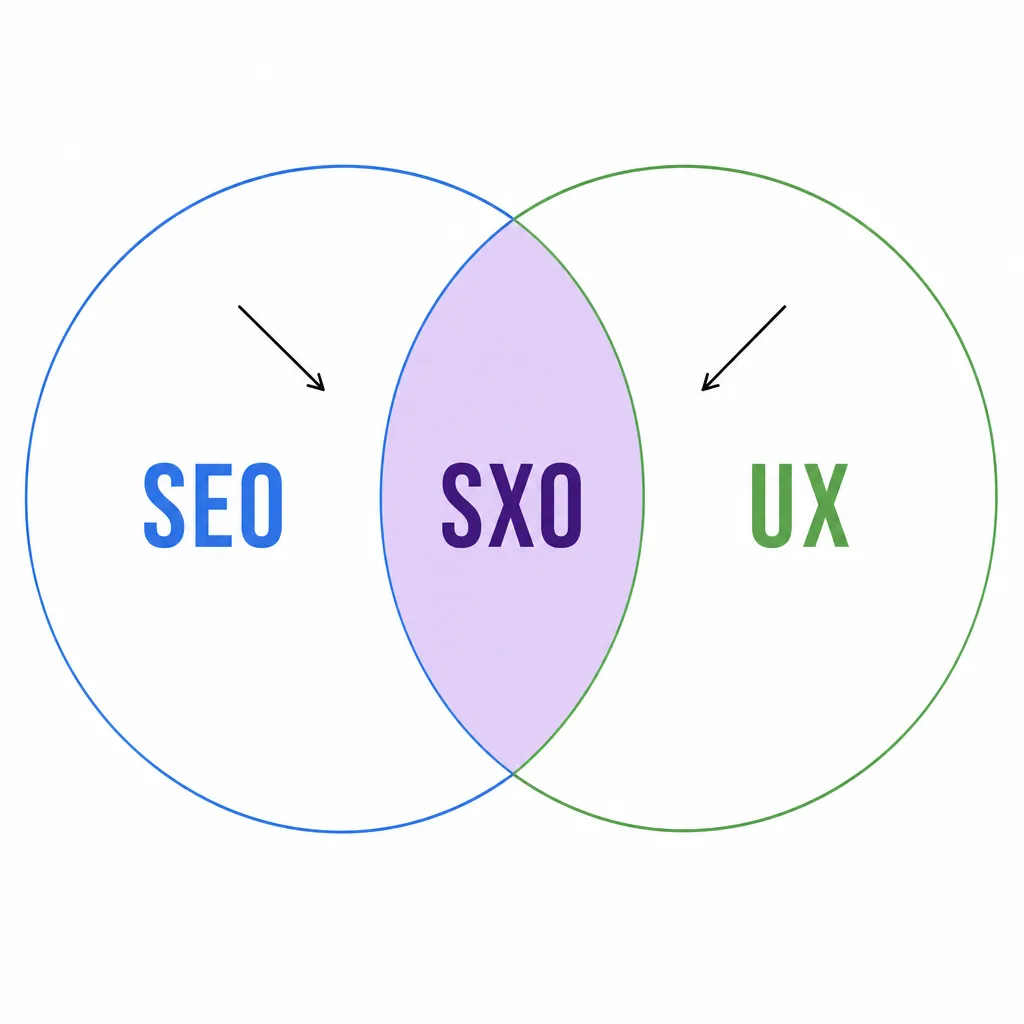
What is SXO and why is it changing SEO?
Put simply, SXO stands for Search Experience Optimization. It's a discipline that blends SEO and UX into one overall approach with two complementary goals: keeping the search engine algorithms happy while delighting your users.
SXO (Search Experience Optimization) doesn't replace organic search; it builds on it by adding the post-click dimension. Where classic SEO focuses on visibility (rankings and traffic volume), SXO brings in the user satisfaction factor to drive conversions.
Think of it this way:
- SEO is the invitation that gets people to your event
- UX is the quality of the experience that makes them want to stay and join in
- SXO is the art of running the whole thing perfectly, from the invitation to the last minute
This holistic approach combines:
- The technical fundamentals of SEO: a solid architecture, relevant content and top performance
- The core principles of UX: intuitive navigation, a smooth user journey and elements that build trust
- In-depth search intent analysis: every page has to answer the searcher's question perfectly
Google and the other search engines use aggregated, anonymised interaction data to assess whether their results are relevant to a query, as Google states in its documentation. A satisfied user sends the strongest signal there is to improve your rankings.
The 3 fundamental pillars of a high-performing SXO strategy
To make an SXO strategy work, you need to nail three key elements. Each pillar matters - neglect one of them and you could undermine your entire online presence.
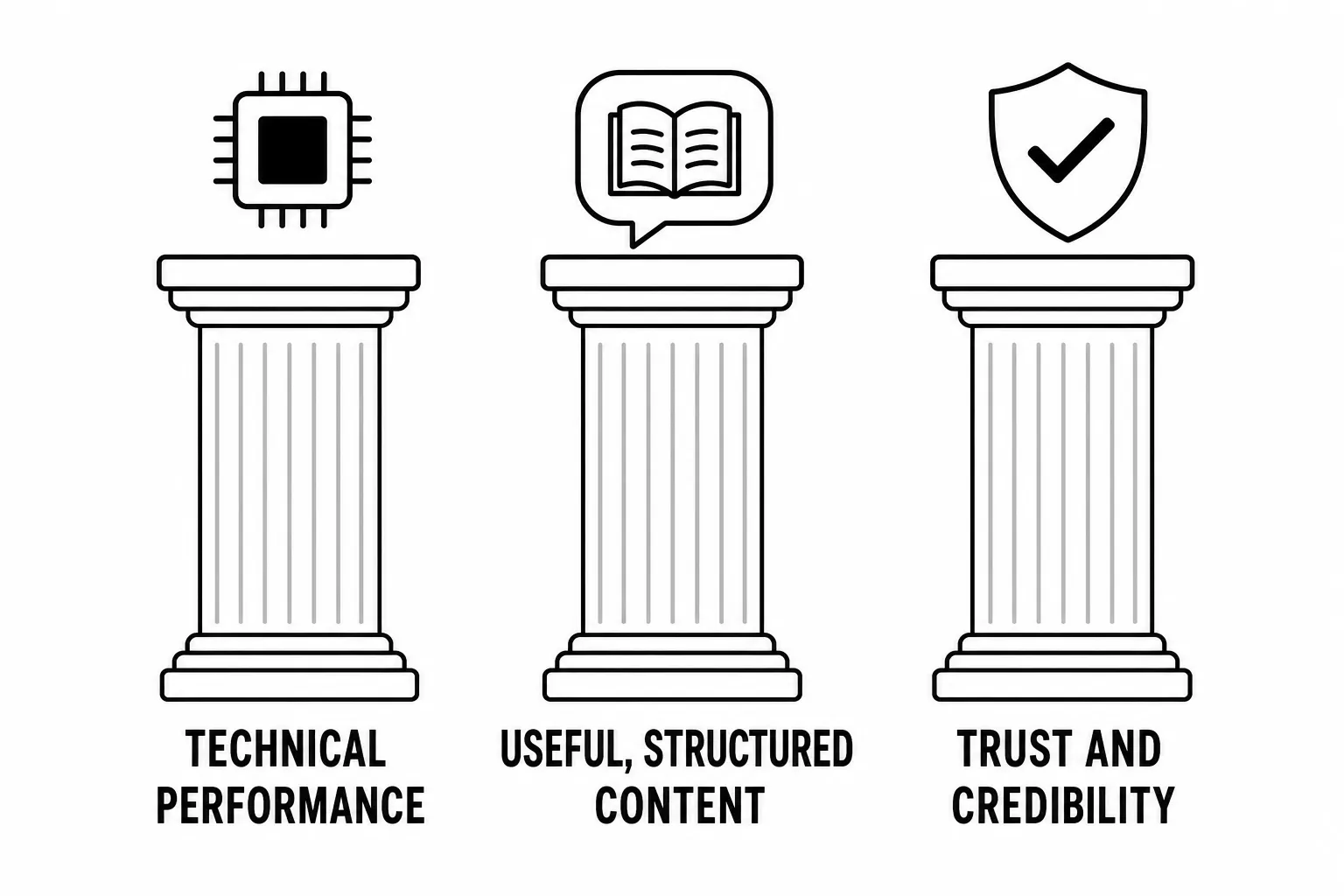
Pillar 1: flawless technical performance
A slow or poorly optimised site is the surest way to send visitors running. Technical performance is no longer optional; it's the baseline for delivering good UX and improving your rankings.
Speed and a mobile-first approach: With Google's mobile-first indexing, your site is judged on its mobile version first. So the smartphone experience has to be spot on.
- Optimise image loading: Go for modern formats like WebP or AVIF, use lazy loading and serve dimensions that suit each device.
- Cache management: Set up effective caching and slim down your CSS/JavaScript files through minification.
- Responsive design: Make sure everything displays perfectly on every screen size, with interactive elements built for touch.
- Script optimisation: Defer non-essential scripts and optimise your critical CSS so the page renders instantly.
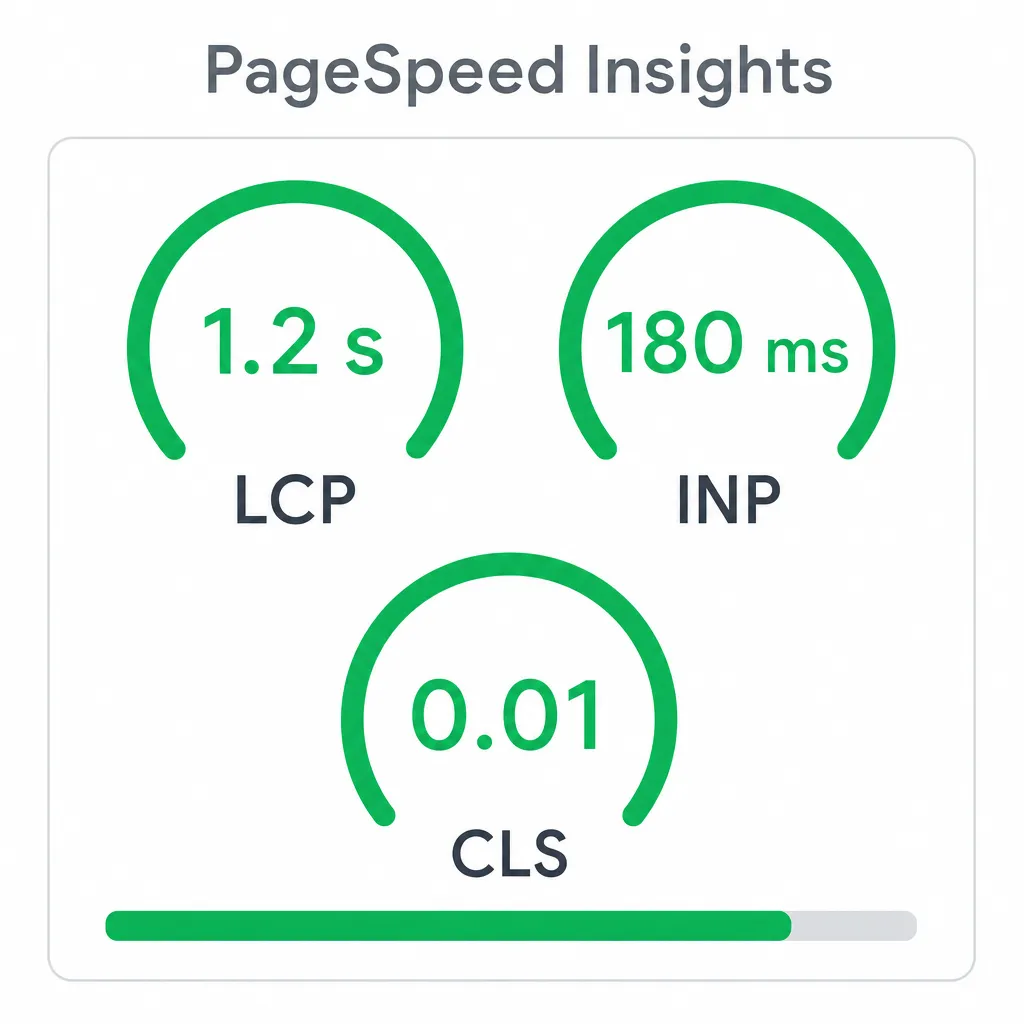
The goal is to pass the Core Web Vitals (or web vitals):
- LCP (Largest Contentful Paint) < 2.5s
- INP (Interaction to Next Paint) < 200ms
- CLS (Cumulative Layout Shift) < 0.1
These metrics reflect what the user actually perceives and have a direct impact on your rankings in Google.
Our full guide explains how to use Semrush to optimise SEO, rankings and user experience (SXO) at the same time:
- Setting up a centralised project
- In-depth technical audit (140+ checks)
- Core Web Vitals and structured data analysis
- Local and mobile rank tracking
- Advanced keyword research (Keyword Magic Tool) to build topic clusters
- Real-time content creation and optimisation
- Complete competitor analysis
All of it integrates with Google Search Console/GA4 and comes with training resources. It's an ideal way to turn data into concrete action and improve UX, content relevance and visibility in the search results. Find out how to strengthen your SXO with Semrush
Pillar 2: content built around user intent
Content is the core of the value you bring. In an SXO approach, it has to be relevant, instantly understandable and pleasant to read, so it answers the search intent perfectly.
Clear hierarchy and readability: visitors don't read every word, they skim. Structure your information clearly so it's easy to scan.
- Semantic structure: use heading tags (H1, H2, H3...) properly to build a logical hierarchy. One H1 per page is enough, and it should reflect the search intent precisely!
- Concise content and an immediate answer: keep sentences short and give the key answer in the first few paragraphs. Bullet lists are ideal for presenting complex information.
- Visual support: add images, infographics and videos to back up your points, keep the reading lively and improve the user experience.
- Strategic FAQs: include questions and answers to anticipate related queries and avoid needless bounces.
Metadata and snippets to boost CTR: the first contact with your visitor happens in the search results. Make it count.
- Title tag: write compelling titles, short enough to display in full, that include your main keyword and promise a clear answer to the search.
- Meta description: write an engaging, concise summary: Google sets no character limit but truncates snippets to fit the screen. Think of it as a micro-ad for your page.
- Rich snippets: add structured data (Schema.org) to earn rich results (ratings, prices, availability...) that give your click-through rate a serious lift.
Our guide explains how to optimise the user experience to strengthen your SXO by combining SEO and UX: it defines what UX covers (usability, performance, features and the emotional side) and describes the three essential pillars:
- Technical UX (speed, structure and Core Web Vitals: LCP < 2.5 s, INP < 200 ms, CLS < 0.1)
- Functional UX (intuitive navigation, internal links, user testing)
- Emotional UX (trust, design, loyalty)
It suggests practical tools to assess and fix your weak spots (PageSpeed Insights, Lighthouse, Google Search Console, WebPageTest, GTmetrix, Hotjar, Microsoft Clarity, Crazy Egg, GA4) and lists the priority actions (image optimisation, JS/CSS compression, cache/CDN, responsive design, A/B tests, heatmaps) to turn the experience into positive signals for Google, increase engagement and boost conversions.
Read the full guide to optimising your SXO
Pillar 3: trust and credibility
A user can leave your site within seconds if they don't feel safe. Trust is the fuel behind conversions and a powerful lever for cutting your bounce rate.
- Security (HTTPS): Your site absolutely must have an SSL certificate. Without it, Chrome and other browsers flag your pages as "Not secure", which undermines visitor trust.
- Social proof: Don't be shy about showing customer reviews, testimonials, partnerships or certifications - they all boost your credibility.
- Transparency: Make sure your contact details, legal notices and privacy policy are easy to find.
- Professional design: A modern design with no technical glitches naturally inspires trust and makes your brand look good to visitors.
Putting SXO into practice: advanced use cases
Now that the fundamentals are covered, let's see how to apply these SXO principles in more complex settings like e-commerce or international expansion.
Use case 1: SXO for e-commerce and conversion optimisation
For an online store, this approach hits revenue directly. The goal: make the user journey as smooth as possible right up to the conversion.
- Optimised product pages: Write unique, detailed descriptions, add high-quality visuals (optimised for the web), showcase customer reviews, and be upfront about prices and delivery times.
- Simplified checkout funnel (CRO): Cut the number of steps before payment. Offer guest checkout, smart forms and a range of secure payment methods. Every unnecessary click costs you sales.
- Strategic internal linking: Guide your visitors from a blog post to a product category and on to a product page with relevant contextual links (e.g. "Browse our range of...").
- Technical automation: Use plugins or apps to handle the technical side automatically (sitemap generation, redirects, canonical tags) so you can focus on strategy.
If you're on PrestaShop, we've put together a full guide on how to optimise SEO for your PrestaShop store.
Use case 2: international SXO and multilingual sites
Going international is a real challenge where factoring in UX is critical. Serve a visitor the wrong language or currency and you can kiss the conversion goodbye. In this context, implementing hreflang tags rigorously is a must for an optimal search experience.
- The basic principle: These tags tell search engines that a page exists in several language or regional versions.
- Mandatory reciprocity: Every language version has to reference all the others so the setup stays consistent.
- Valid ISO codes: Use the right codes (e.g. "en" for English) and language-region combinations (e.g. "en-GB" for the UK, "en-US" for the United States).
- The x-default tag: Provide a default page for users whose location doesn't match any of your target versions.
Google has never confirmed a "honeymoon" period for new pages: in 2021 John Mueller said there is neither a sandbox nor a honeymoon. What Google does say is that it uses aggregated, anonymised interaction data to judge whether results are relevant. For a solid SXO strategy, this shows that user experience counts just as much as content: clear titles, directly useful information, fast loading, a good mobile experience and structured data (schema.org) are essential to turn those first clicks into positive signals and improve your rankings. Find out how to make the most of the honeymoon period to optimise your SXO.
Checking all of this rigorously should be part of every SXO audit, using tools like Google Search Console or Screaming Frog. To dig deeper into this technical topic, read our guide to hreflang tags: how to use them effectively for international SEO.
Your SXO action plan in 5 concrete steps
- Assess your technical performance: use Google PageSpeed Insights to spot your weak points and prioritise the fixes (images, caching, JS/CSS) to improve loading times. Then review your Web Vitals in Search Console.
- Understand search intent: for each important page, type the main keyword into Google. Look at the type of content that dominates the rankings and make sure your page meets users' expectations better.
- Optimise your content for the search experience: revisit your title tags and meta descriptions, then structure your pages with clear headings (Hn) and concise paragraphs that answer the search intent head-on.
- Build user trust: showcase customer reviews and testimonials, check that your site runs on HTTPS and that your contact details are easy to find.
- Measure and keep improving: track bounce rate, time per session and conversion rate in your analytics tools, backed up by Google Search Console for CTR. Test, analyse, then adjust.
See how live user testing on a website improves SXO and UX by pinpointing exactly where and why a user struggles with key actions, with no code to install. By recording the screen, webcam and audio, then combining that qualitative and quantitative data, this method lets you analyse any site or web app, set tasks and follow-up questions, benchmark the experience against competitors and get fast feedback from a large international panel, along with practical advice for turning those observations into concrete usability and conversion improvements. Discover live testing to optimise your SXO
Explore a heatmap tool (click tracking, mouse movement and scroll depth) built specifically to analyse your visitors' behaviour in detail. Spot the sticking points and "rage clicks", while measuring the real impact of your optimisations on conversions. This page shows how to combine heatmaps, session recordings, surveys and user feedback to understand what motivates your users (or holds them back), and compare their behaviour by device and over time. It also offers practical case studies and a comprehensive guide to steer your product/UX decisions and improve the experience as part of an SXO approach, with a focus on GDPR/CCPA compliance and resources for marketing, product and design teams. Boost your SXO with heatmaps - discover the tool
To take your user analysis further, check out this UX testing solution for concrete insights into your visitors' journey.
Conclusion: SXO, the natural evolution of SEO
Drop the siloed view of "SEO" versus "UX" in favour of one unified vision of the search experience. Search Experience Optimization brings us back to a basic truth: behind every query is a person with a specific need. Your performance will depend directly on how quickly, effectively and pleasantly you meet that need.
By putting the user at the centre of your SEO strategy, you won't just win over the algorithms: you'll build a loyal, engaged audience, increase your conversions and secure the long-term future of your online presence. SXO isn't a passing trend: it's the logical next step for SEO, towards optimisation that's global, effective and profitable.
Ready to turn your traffic into a business lever? Start with a technical audit of your site to reveal its hidden potential.

Automate Your SEO With AI Agents
Sedestral connects six AI agents to your website to handle content, audits, rankings and backlinks, without the manual grind.