Earning quality inbound links is the foundation of any winning SEO strategy. But how do you convince serious websites to create backlinks to your content on their own? The answer lies in a smarter approach: link baiting.
Unlike artificial link building tactics, this natural method is about becoming the go-to reference in your niche. This complete guide shows you how to create viral content so compelling that other sites will happily share your resources, boosting your popularity, your traffic and your online authority.
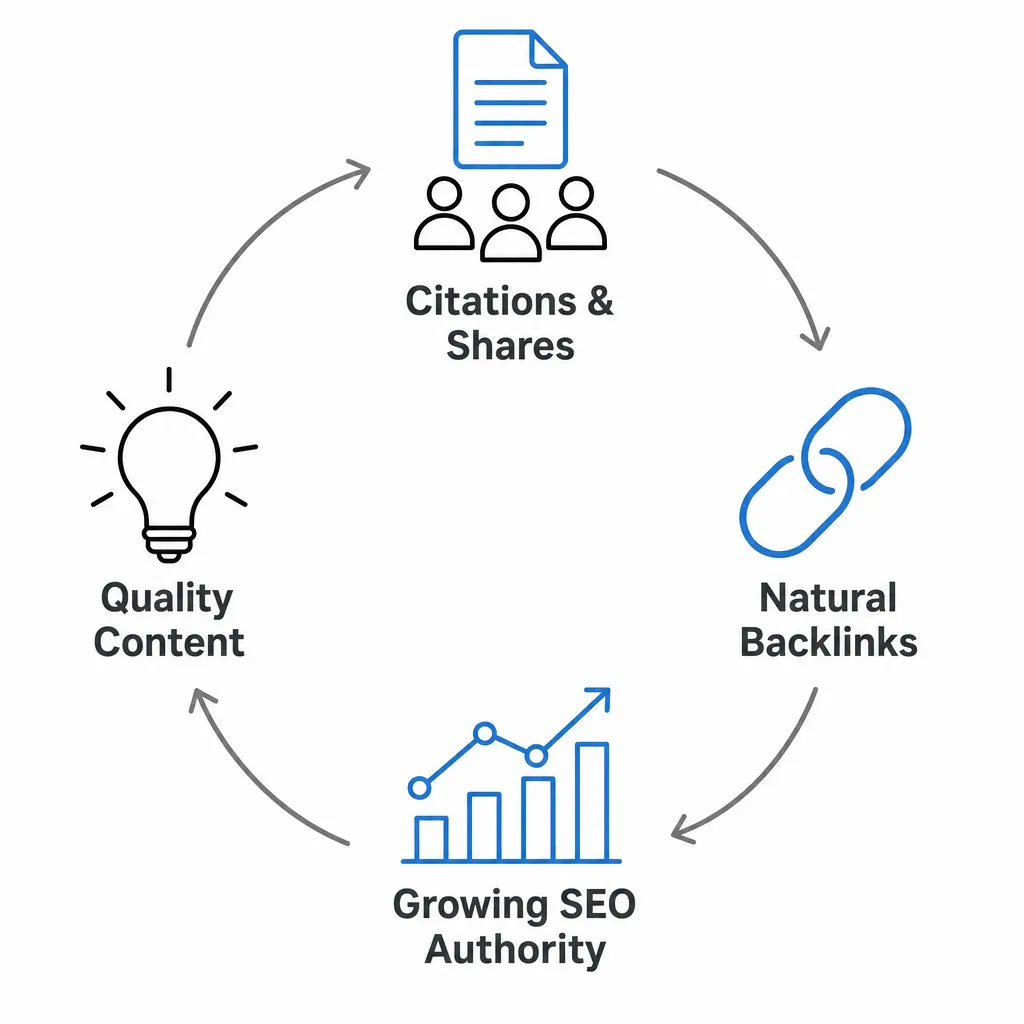
What link baiting is and how it works
Link baiting (literally, "bait for links") is a content marketing technique built specifically to generate organic backlinks. The definition rests on a simple principle: publish resources so valuable, unique or relevant that web publishers have to reference them.
Link baiting means producing exceptional content that naturally attracts inbound links. In SEO, this kind of "linkable" content strengthens three pillars: authority (through backlinks), organic traffic and brand awareness. An "Ultimate Guide to Shopify SEO" packed with exclusive data and case studies, for instance, is an irresistible resource for e-commerce specialists.
What makes a quality citation?
Careful, not all links are created equal! A backlink that actually helps your rankings has to meet strict criteria. Think of it as a recommendation: would you rather have one from a renowned expert... or from a complete stranger?
- 🎯 Topical relevance: Target source sites closely tied to your industry. A backlink from a site specialising in organic SEO will carry far more weight than a link from a site unrelated to what you do.
- 🏆 Domain authority: Focus on influential platforms in your niche. Domain authority, as measured by various SEO tools, reflects a website's credibility. Google doesn't use it as a direct ranking factor, but it's an excellent indicator for your link building strategy. To improve that authority:
- Practise quality link building with topical dofollow links and natural anchors
- Optimise your site technically (performance, mobile, security)
- Build a solid link baiting strategy by creating exceptional content (in-depth guides, unique studies, practical tools)
- Avoid shady tactics (bulk link buying, PBNs) and track your progress regularly. Results can take 6 to 12 months, but they last if your approach stays consistent and value-driven. Boost your domain authority with link baiting
- ✅ "Dofollow" reference: Only these links pass "link juice" to your site. Nofollow links are useful for diversifying your link profile, but they don't directly influence your rankings.
- 🔗 Optimised anchor: The link text should include your keywords naturally. For example, "check out this effective link baiting strategy" is a well-balanced anchor that helps your SEO without looking spammy.
Links pointing to your site work like digital recommendations. A single quality backlink from a relevant, highly authoritative site is worth more than dozens of low-quality links.
The crucial difference from clickbait
Don't confuse link baiting with clickbait. Clickbait uses misleading headlines to generate clicks, usually at the expense of the actual content quality, and it can damage your reputation.
Link baiting stands out because of its real added value. It isn't chasing a fleeting click; it aims to become a source so useful that it deserves to be cited naturally. Where clickbait is short-termist, this is a sustainable content strategy that strengthens your expertise over the long run.
Strategy: the 3-step method
Success doesn't come from simply hitting publish. For your content to attract backlinks naturally, it needs to be part of a considered, end-to-end strategy. Here are the three essential steps to create content that earns quality links.
Step 1: Research and ideation
This is the foundation of everything. Identify topics your audience genuinely cares about that also have strong citation potential. The goal: deliver relevant content that is truly useful.
- Understand your audience: Analyse conversations on AnswerThePublic, forums (Reddit, Quora) and comment sections to pinpoint what your readers need.
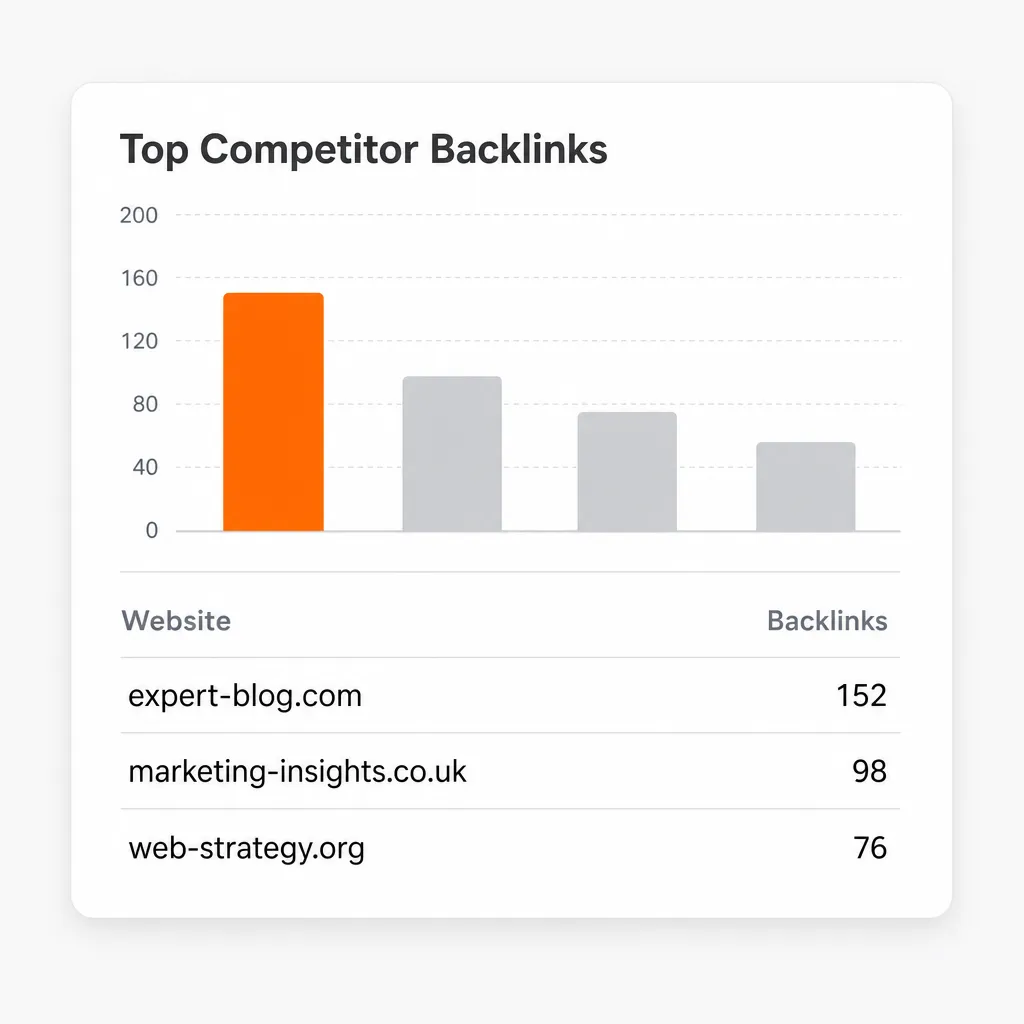
- Analyse the competition to do better: Spot the content that earns links for your competitors. Our complete Ahrefs guide walks you through how to:
- Use backlink analysis
- Detect top-performing pages
- Make the most of the Content Gap tool
- Identify who links to your competitors
- Find link opportunities
- Reclaim broken links
- It also shows you how to study anchors, prioritise optimisations and organise topic clusters to create relevant content before measuring results. Find out how to maximise your link baiting
- Capitalise on trends: Keep an eye on news in your industry. Open data, reports or your own surveys are gold mines for creating content the media will want to share.
Step 2: Essential on-page optimisations
Your page needs to be technically flawless so Google ranks it well and people can share it easily. Good off-page SEO starts with solid foundations.
- Clean URLs: Go for short, descriptive addresses (e.g.
/blog/guide-linkbaiting). - Optimised tags: Polish your title tag and meta description to lift your click-through rate. Structure your text with consistent H1, H2 and H3 headings.
- Easy sharing: Add clearly visible share buttons. For an infographic, provide an embed code that includes your credit.
Make citing you easy: supply ready-to-use content (embed codes, key quotes, PDFs), encourage sharing with effective CTAs and write a punchy press summary.
💡 Our SEO expert's tip: "Don't forget to use Schema.org markup to structure your data. For an article, use Article: this technique helps Google understand your content better (FAQ rich results are no longer shown). You increase your chances of earning rich results, which improves your visibility and credibility in search results."Step 3: Distribution, outreach and tracking
Publishing your content and waiting passively isn't enough. To succeed at link baiting, you need an active promotion strategy. Smart, targeted distribution turns good content into a real content marketing win.
Personalised outreach plays a key role here. Identify the journalists, influencers and webmasters who already cover topics close to yours. Contact them with a short, relevant message explaining why your resource would be useful to their specific audience.
To widen your reach, make full use of social media. It's the perfect tool for driving traffic and encouraging viral spread.
| Distribution channel | Main goal | Expected results |
| Outreach email | Earn quality links and mentions | 5-15% positive response rate |
| Social media | Create initial buzz and encourage sharing | Viral spread to a wide audience |
| Press relations | Land coverage in the media | Mentions from highly credible sources |
| Newsletter | Keep your existing audience engaged | First interactions and social shares |
The formats that attract the most citations
Some attractive content formats naturally earn more citations than others. To get the most out of your link baiting strategy, focus on viral content that grabs your audience's interest straight away.
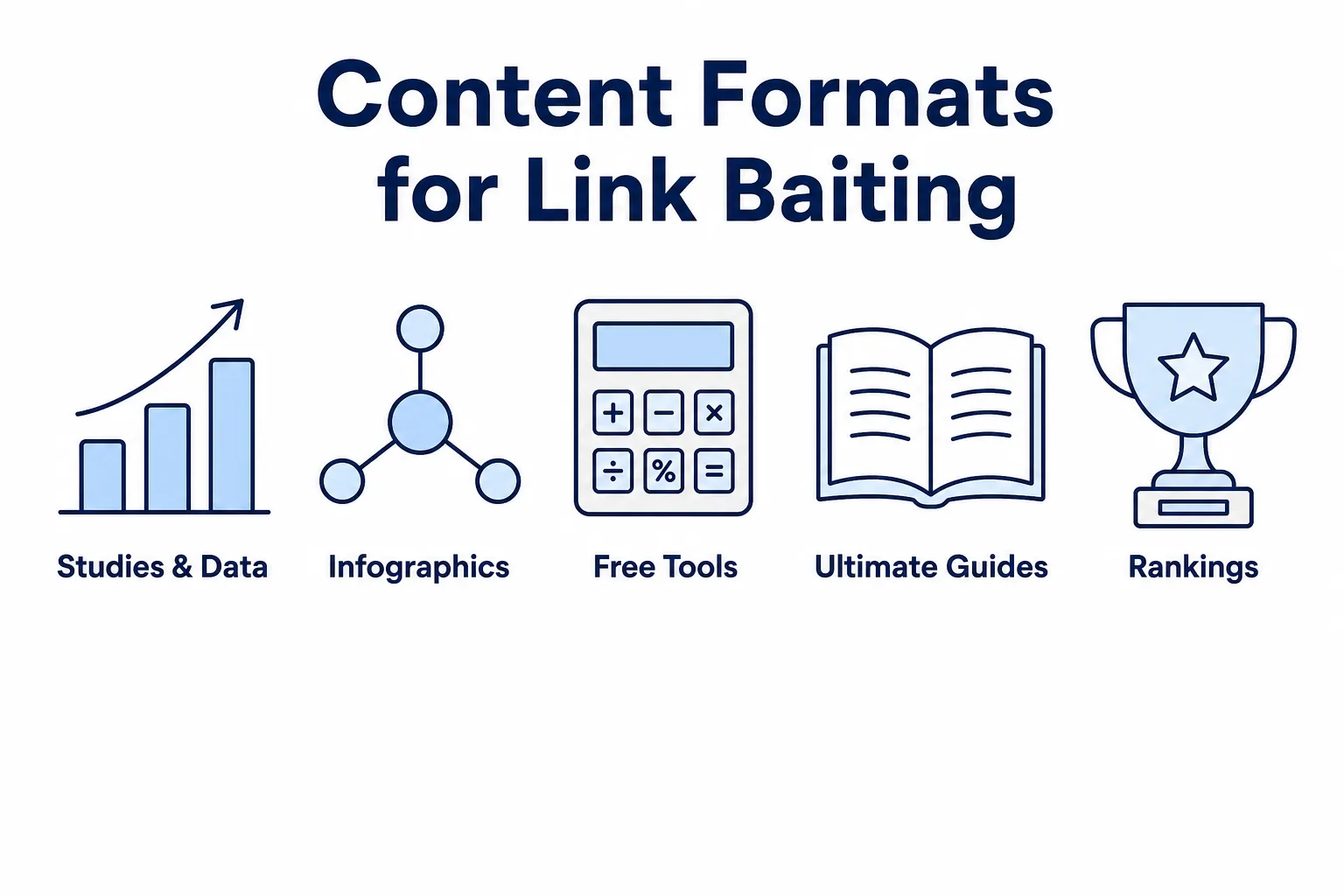
Favour formats that are easy to share: clear infographics, interactive visualisations or embeddable content. A dynamic infographic on market trends, paired with a simple embed code, will naturally prompt websites to republish it, creating backlinks with no extra effort.
- 📊 Original studies and exclusive data: The format of choice. Run your own research, analyse rare data and present your findings. This kind of content quickly becomes a must-cite reference in your field.
- 🎨 Impactful infographics: Explain complex ideas simply with striking visuals. This type of attractive content spreads fast and has strong viral potential.
- 🛠️ Free, practical tools: Build a calculator, a simulator or any tool that solves a specific need. Your audience will adopt it and recommend it on their own.
- 📘 Comprehensive guides and tutorials: Write the ultimate resource on a given topic. A piece of content creation so complete that it becomes the undisputed reference.
- 🏆 Rankings and comparisons: These formats ("The 5 best solutions for...", "Complete comparison of the tools...") automatically generate mentions, especially from the companies featured.
The key? Offer value nobody else provides (original data, exclusive tools, complete guides). Pick the format that fits your goals: studies to showcase your proprietary data, infographics to maximise social sharing, practical tools for their concrete usefulness, lists for their reference value.
Real-world example: the impact of a study: Picture an HR software company. Instead of a standard article, it publishes a national survey on "The effect of remote work on productivity".
- Originality: Unique, never-before-seen analysis.
- Media appeal: Trade journalists actively look for this kind of information.
- Results: Hundreds of quality backlinks from reputable media outlets, positioning the company as an expert in its field.
Best practices and protecting your work
Building a high-performing link baiting strategy means mastering a few essential rules. The quality of your writing and your methodological rigour will make all the difference.
- Methodical approach: Be impeccable on transparency. Always cite your references and explain clearly how you gathered your data. Trustworthiness (the "T" in E-E-A-T) is the basis of all credibility.
- Polished presentation: Exceptional content deserves a setting to match. Pay close attention to design, especially for the visuals that support your argument.
- Protect your work: Put your logo and your site's URL on everything you create. Add a clear notice such as: "Any reuse must credit the original source with a live link". This simple trick encourages sharing while protecting your rights.
Plan your distribution from day one: a catchy headline, a punchy summary, an attractive bonus and a dedicated landing page will considerably boost your visibility. When you publish an original study, send it to journalist request platforms like Qwoted or Featured, or pitch specialist reporters directly. This method naturally earns quality backlinks.
This SEO guide reveals effective techniques for attracting links naturally (link baiting): producing irresistible content (comprehensive guides, striking infographics, detailed studies, free tools), guest posting, nurturing media relationships and turning unlinked mentions into links, always prioritising link relevance over volume. It also stresses the importance of internal linking, technical optimisation (crawling, sitemap, robots.txt), tracking through Google Search Console and Analytics, and monitoring your link profile (with the option to disavow if needed) to get the most from your link building efforts. Find out how to create content with high link potential
Ready to become a citation magnet?
You now have every key you need to run a high-performing strategy that will boost your visibility. Results take time to show up, but every piece of quality content you publish is a lasting investment whose value grows year after year.
If your goal is to earn relevant inbound links over the long term, the key is producing content that perfectly meets your audience's needs. Link baiting is one of the most effective link building techniques out there, and it stays fully aligned with Google's recommended best practices.

Rank Higher Without the Manual Work
From technical audits with Nox to competitor monitoring with Marc, Sedestral's AI agents cover every layer of SEO so your team doesn't have to.