A content audit is the step that turns a website into a real source of qualified traffic. This guide walks you through a complete method to review, analyse and optimise your content, and to spot the opportunities that can actually improve your visibility in search engines.
Goal and scope of the content you audit
Before you get into the technical analysis, be clear about the goals and the scope of your SEO content audit. This first step decides whether your SEO optimisation strategy succeeds, and it steers everything you do afterwards.
How to frame the goal and the scope
To run an effective content audit, start by setting SMART, measurable goals. Be specific about your targets: improve the rankings of particular pages, grow overall organic traffic, or lift the conversion rate of the content you already have.
- Define your key metrics: set precise targets, such as moving a page from position 30 to position 3, or growing organic traffic by 40% in 6 months
- Choose your strategic pages: focus on content with strong commercial potential rather than skimming the whole site
- Analysis period: allow a window of at least 6 months to get reliable behavioural data
- Resources needed: assess the people and tools required to run the audit and implement the recommendations
This initial framing stops you wasting time on optimisations that won't pay off. It also makes it easier to explain to your team what's at stake and what results to expect from your SEO work.
Map and analyse your key pages
A detailed inventory of your content is the foundation of the audit. This in-depth semantic analysis reveals how your site is structured and flags the content with the most room for improvement.
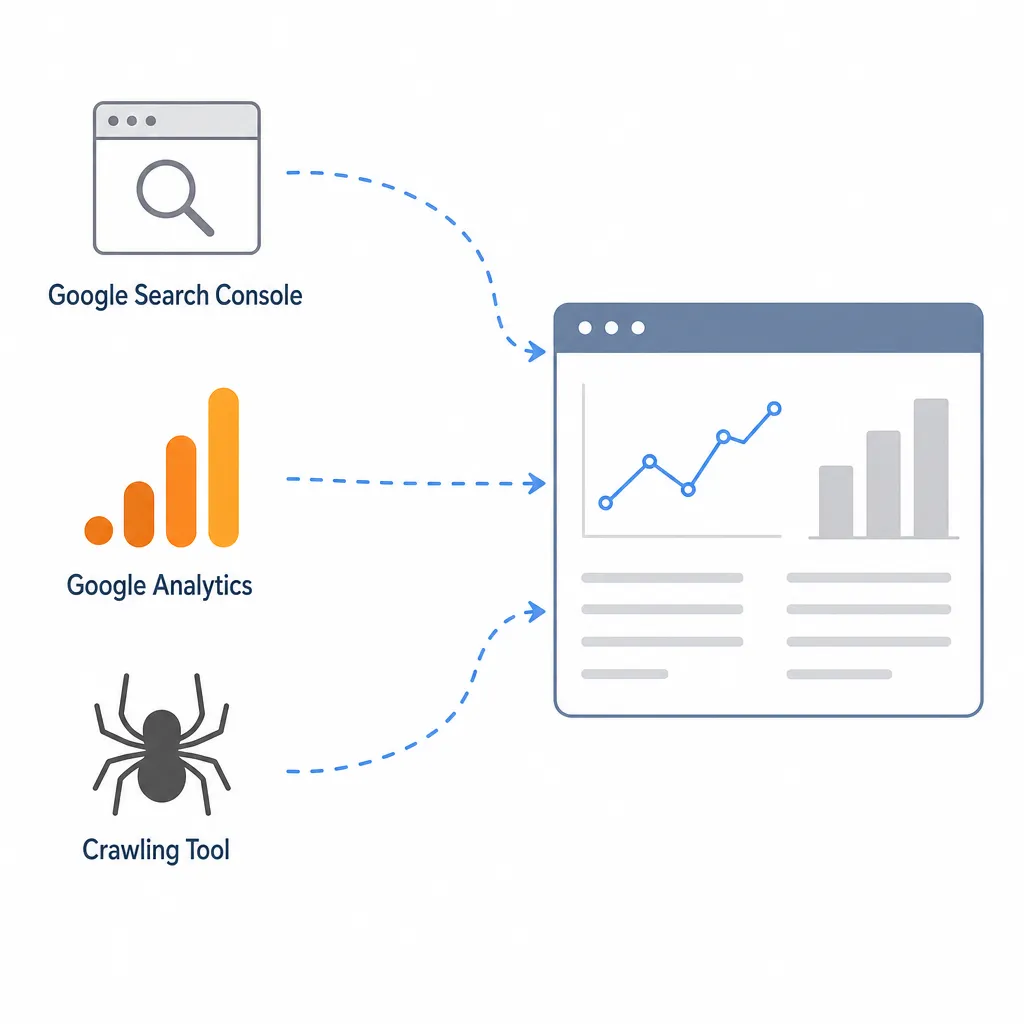
Pull every URL with a crawling tool, then enrich that data with Google Search Console and Google Analytics. Build a dashboard that lists, for each page: the URL, the title, the meta description, the main keyword, organic traffic, impressions, CTR, average position and conversions.
Prioritise high-impact actions
Once the inventory is done, rank your pages on an effort/impact matrix to maximise your ROI. Pages sitting between positions 5 and 20 usually offer the best potential for quick improvement.
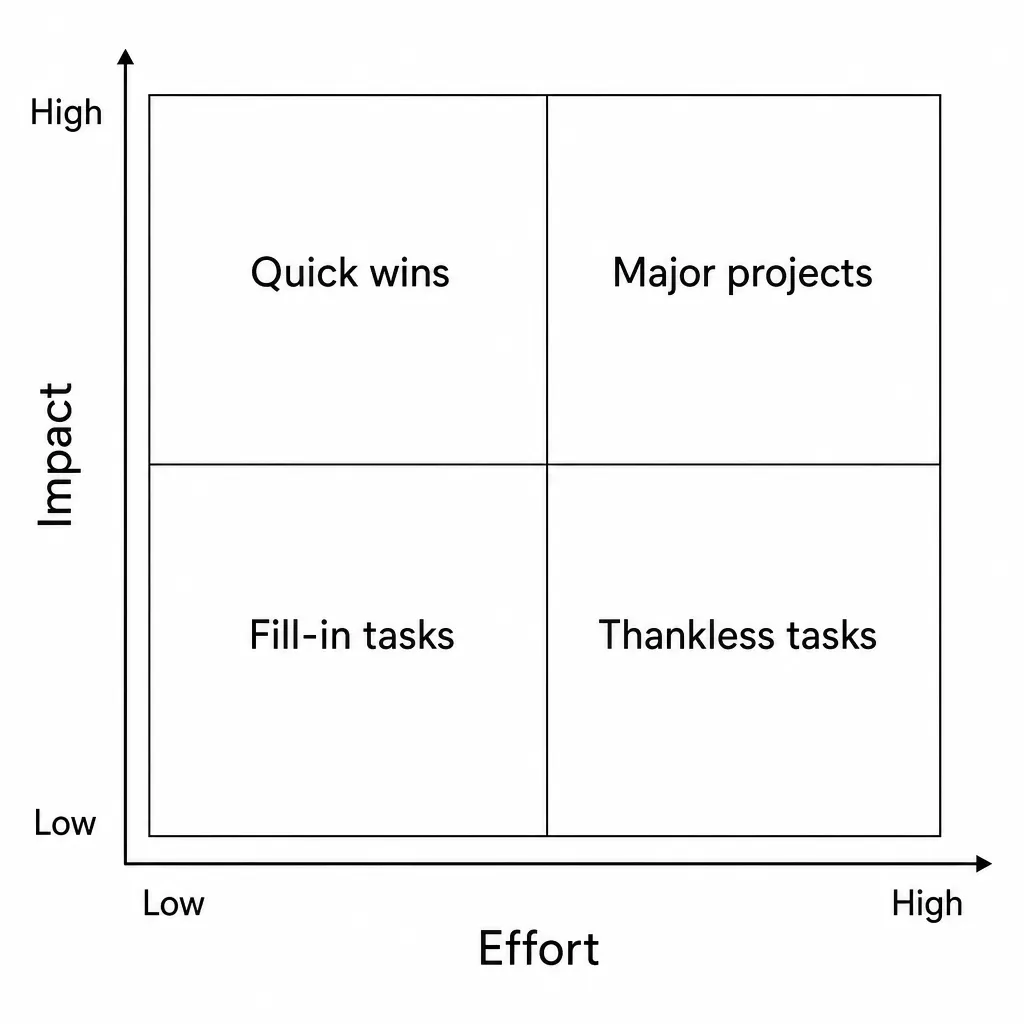
Hunt for the "low-hanging fruit": pages with lots of impressions but a low CTR, content that ranks well but has a high bounce rate, or articles that already perform and could be expanded semantically.
Flag the bigger jobs too: rewriting outdated content, building missing topic clusters, or reworking the site architecture to improve user experience and indexing.
The technical audit is the backbone of any SEO strategy that performs. It helps you spot the blockers that hold back your content's visibility on Google and the other search engines.
Check technical health and web performance
Your site's technical architecture directly affects how search engines crawl and rank your pages. Even perfectly optimised content won't deliver if the technical foundation is weak.
Which technical checks matter
A complete SEO content audit should always include a thorough technical diagnosis to catch anything that hurts indexing and rankings. The point: spot your room for improvement fast.
Our guide explains how to run a rigorous technical SEO audit and why you should pair it with an editorial audit. By checking 60+ parameters (load speed, meta tags, indexing, internal linking, URL architecture, security and mobile-friendliness) and cross-referencing data from Screaming Frog, Google Search Console and PageSpeed Insights, you'll be able to:
- Spot the major errors and the areas to improve
- Get practical advice (image optimisation, cache management, redirect fixes)
- Build a prioritised action plan with regular follow-up
Read our detailed guide to nailing your technical SEO audit
- Indexing and crawling: check robots.txt, the XML sitemap, noindex tags and the server errors that block access to your pages
- Strategic tags: check that title tags, meta descriptions and H1 headings are unique and well written on your key pages
- URLs and redirects: review the logic of your URLs and fix badly configured temporary redirects
- Structured data: implement the relevant JSON-LD schemas (Article, Product, Breadcrumb) to help Google understand your pages
These technical checks are what make your editorial optimisations count. A perfectly written title tag does nothing if the page is excluded from the index.
Improve speed and mobile
Core Web Vitals and the mobile experience are now part of Google's official ranking signals. Internal linking also helps spread authority across your pages and makes navigation simpler.
Measure the key metrics (LCP, INP, CLS) on your strategic pages. Favour WebP for images, enable compression and set up an efficient caching system to meet Google's standards.
Connect technical and content
The technical audit and the editorial analysis go together. A technically perfect page with thin content won't perform, and brilliant content stays invisible without a solid technical base.
Cross-reference your technical data with content performance to find high-potential pages held back by minor technical issues. Start with the fixes that will unblock the visibility of the content you already have.
Follow a three-step strategy: fix the critical problems, optimise performance, then refine the user experience. This step-by-step approach maximises the impact on your organic rankings.
Analyse content page by page
Going through each page one by one is how you find the improvements that pay off most. This key step shows you how to optimise your copy to bring in qualified traffic from search engines.
Align intent and keywords
Every effective SEO content audit starts by checking whether your content actually matches your audience's search intent. That match is what attracts and converts your readers.
- Target the main keyword: place your key term naturally in the H1, the intro and the meta description
- Understand the intent: work out whether the search is informational, commercial or transactional, and shape your copy accordingly
- Widen the vocabulary: bring in synonyms and frequently asked questions to cover the whole semantic context
Google Search Console data is gold for finding queries that get plenty of impressions but few clicks. Those numbers usually reveal a gap between what searchers expect and what your page delivers.
Optimise structure and readability
How your content is organised shapes how Google interprets it and how appealing it is to readers. Match the format to the search intent: a detailed guide for informational queries, a comparison for buying queries.
Structure it with explicit H2/H3 headings, short paragraphs and visual elements. Add lists, tables and FAQs to answer precisely what people need and maximise your chances of winning featured snippets.
Internal linking and conversions
Smart internal linking spreads authority while guiding visitors towards your goals. Every link should serve both the user and your SEO strategy.
Link your pillar content and its supporting pages deliberately. Use descriptive anchor text that says what the linked content is about and adds real value.
Place relevant calls to action according to the user journey. An informational article can lead to a deeper guide, while a product page should make buying easy with reviews and guarantees.
Content performance and GEO analysed
Generative AI is reshaping the fundamentals of SEO. To succeed, your content now has to hit two targets: show up in the classic search engine results, and be relevant enough to get cited by AI assistants.
Make your content extractable
A complete SEO content audit can no longer ignore GEO (generative engine optimisation). It keeps you visible when AI answers people's questions directly, sometimes bypassing the traditional results altogether.
Adopt a clear editorial approach: state the main answer right from the introduction (answer-first), then structure your text with a concise summary (TL;DR). This makes life easier for the AI models and for readers who skim.
Markup and technical rendering
Modern tools rate your AI visibility on three pillars: technical quality, semantic clarity and brand reputation. That triple check directly affects whether you get included in automated answer systems.
Keep your structured data accurate and make sure your pages read fine without JavaScript, knowing that no special markup is required to appear in AI Overviews or AI Mode. Phrase your headings (H2/H3) as precise questions - this strategy significantly improves your chances of being cited as a reference.
Measure citations and AI visibility
Tracking GEO performance calls for new metrics alongside the classic SEO ones. Keep a close eye on:
- Your appearances in AI answers
- How often you show up in automated suggestions
- Your visibility in Google's AI Overviews
Set up monthly benchmarking: analyse the structure and sources of the competitor content that AI cites most. This research lets you keep fine-tuning your editorial approach.
Systematically back up your content with verifiable data (recent studies, testimonials, official statistics). It strengthens your authority in the eyes of the algorithms and makes you a more likely source to be cited.
Running an effective SEO content audit takes a methodical approach and the right tools. This guide shows you how to analyse your pages and turn what you find into concrete actions.
Pro Tip
Audit Before You Create New Content
Run Nox's technical audit on your existing site before asking Alya to publish new pages, fixing crawl issues first means your new content ranks faster.
Step by step: SEO audit
A successful content audit rests on three pillars: collect the data, analyse the competition and prioritise the actions. This strategy tells you exactly where to act to improve your performance.
Collecting and scoring pages
Our automated audit tool reviews your content, identifies your main keywords and compares you with the top Google results. It rates content quality and suggests the optimisations to tackle first. It analyses what works for your competitors (vocabulary, HTML structure, tags, media) and generates advice in real time. Regular monitoring helps you refresh products, articles and topic pages to grow your organic traffic. Optimise my pages with an SEO content audit
Start by listing every URL with a professional crawler. Cross-reference that with Google Search Console and Analytics data plus user behaviour to get the full picture.
| Metric | Data source | Goal | Tracking frequency |
| Organic traffic | Google Analytics | Measure attraction | Monthly |
| Average position | Search Console | Assess visibility | Weekly |
| CTR | Search Console | Optimise snippets | Fortnightly |
| Time on page | Google Analytics | Content quality | Monthly |
Score each page on content depth, topical relevance, technical structure and visitor engagement. This scoring surfaces your high-potential content.
Quick wins and bigger projects
Sort your optimisations by difficulty and impact to get results fast. Modern tools automatically detect the fixes that are easy to implement.
Among the immediate fixes: optimise title tags and meta descriptions, add structured data where it is relevant, and strengthen internal linking between your strategic pages. These quick adjustments produce noticeable results.
Monitoring and continuous iteration
An SEO audit is an ongoing process. Schedule quarterly reviews to measure your progress and spot new opportunities.
Monitor your competitors automatically and get alerted when they refresh their best-performing content. This kind of watch lets you adjust your strategy and keep your edge.
You need a clear view of your budget and your returns to invest wisely and guide your strategic choices. This section covers the practical and financial side of your SEO improvement project.
Examples, pricing and SEO audit of a website
Our SEO audit tool runs a complete analysis of your site's technical and editorial aspects to spot the issues affecting your rankings. The review covers more than 100 checkpoints: meta tags, heading structure (Hn), server errors, redirects, robots.txt and sitemap.xml files, structured data, canonical tags and indexing rules. We also check performance and Core Web Vitals (image optimisation, script handling, caching, mobile version, SSL certificate). The final audit report gives you actionable recommendations, a detailed roadmap, strategic advice for your content and a competitor analysis to grow your organic traffic for the long term. We recommend running this SEO audit regularly to measure your progress. Run a complete SEO audit and optimise your content
What a sample audit contains
A complete SEO content audit delivers a precise audit report that evaluates your current content and lays out a clear action plan to improve it. This strategic document frames your next decisions and justifies your future investments.
- Analysed inventory: a full list of your web pages with their performance, main keywords and a score reflecting content quality
- Competitor analysis: a detailed benchmark against your top 10 competitors on your strategic queries, revealing where you can gain ground
- Prioritised roadmap: an optimisation strategy ranked by impact and complexity, specifying the resources needed and the key deadlines
- Dashboard: definition of the key performance indicators and a method to measure the real impact of your optimisations
The report also includes concrete optimisation examples for each page type (blog, product pages, categories...) with the recommended fixes and the expected gains in visibility and traffic.
How to estimate the price
The price of an SEO audit depends on how complex your site is, how many pages need analysing and how deep you want to go. The main cost drivers are site size, the variety of content and your commercial goals.
A standard audit covers 50 to 100 key pages with a technical analysis and general recommendations. A premium package adds advanced semantic analysis, a tailored content strategy and hands-on support to roll out the optimisations across the whole site.
Roadmap and performance tracking
The real value of an audit shows in the results. Every recommendation comes with a measurable target and a precise timeline so you can track your progress rigorously.
The first optimisations produce visible effects within 4 to 12 weeks. Ongoing tracking of rankings, organic traffic and conversions confirms whether the actions work and lets you adjust course if needed.
Run the audit again regularly: each new audit is compared with the previous one, so you see which issues are fixed and which have come back.
Let AI Handle Your Content Publishing
Alya researches keywords, writes and publishes content directly to your CMS, WordPress, Shopify, Wix and more, on autopilot.