Organising your content into topic clusters is one of the most reliable ways to improve your visibility in search results. In this guide, you'll find proven techniques to structure your pages properly, pick the right keywords and build solid internal linking that will strengthen your organic rankings for the long haul.
Content structure and SEO
The way you structure your content has a direct impact on how well your SEO strategy works. A clear organisation helps search engines understand your page, and it gives visitors a pleasant reading experience that keeps them engaged.
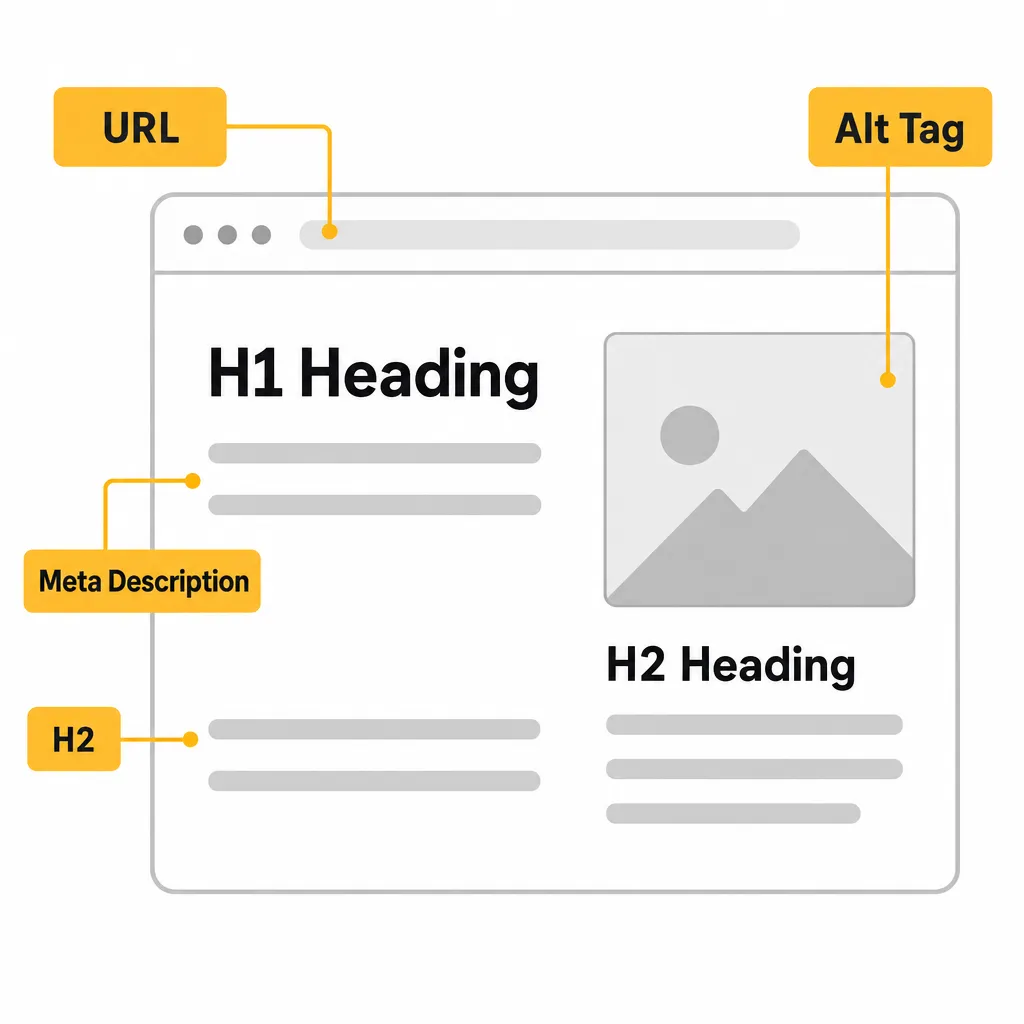
A clear H1 to H3 hierarchy
To optimise your rankings, stick to a logical structure:
- A single H1 containing your main keyword, which clearly states what the page is about
- H2 subheadings that lay out the main sections, using varied, semantically related terms
- H3s to go into the technical details and broaden your topical vocabulary
- A logical progression that naturally guides the reader towards the information they came for
This heading hierarchy makes your page easier for algorithms to understand and easier for people to read. Always respect the order of the tags (H1 > H2 > H3) without skipping a level, so your page gets indexed properly.
Titles and meta tags for organic search
Your meta tags need to reflect your content accurately:
- The title tag should be concise and punchy, with the main keyword placed first
- The meta description should briefly sum up your value proposition and make people want to click
URLs, alt text and structured data
Clean, descriptive URLs (no unnecessary parameters) are easier to index and easier to remember.
Image alt attributes should describe the visual accurately while working in relevant keywords where they fit naturally.
Structured data (Schema.org, for instance) enriches how your pages show up in the results with eye-catching rich snippets.
An effective content architecture relies on interconnected topic clusters that reinforce each other's authority across your site. This logical structure improves the user experience and spreads SEO weight more evenly between your pages. Discover our method for structuring your content into optimised clusters and boost your online visibility.
Content architecture and SEO
Building a high-performing content architecture means analysing search intent and the semantic connections between your topics with real precision. This strategic approach maximises your chances of ranking well while avoiding cannibalisation between your pages.
Pillar pages and cluster pages
Our approach uses content clusters built around a pillar page that covers a central theme in full. This hub page connects naturally with cluster pages that deal with more specific or practical aspects of the subject.
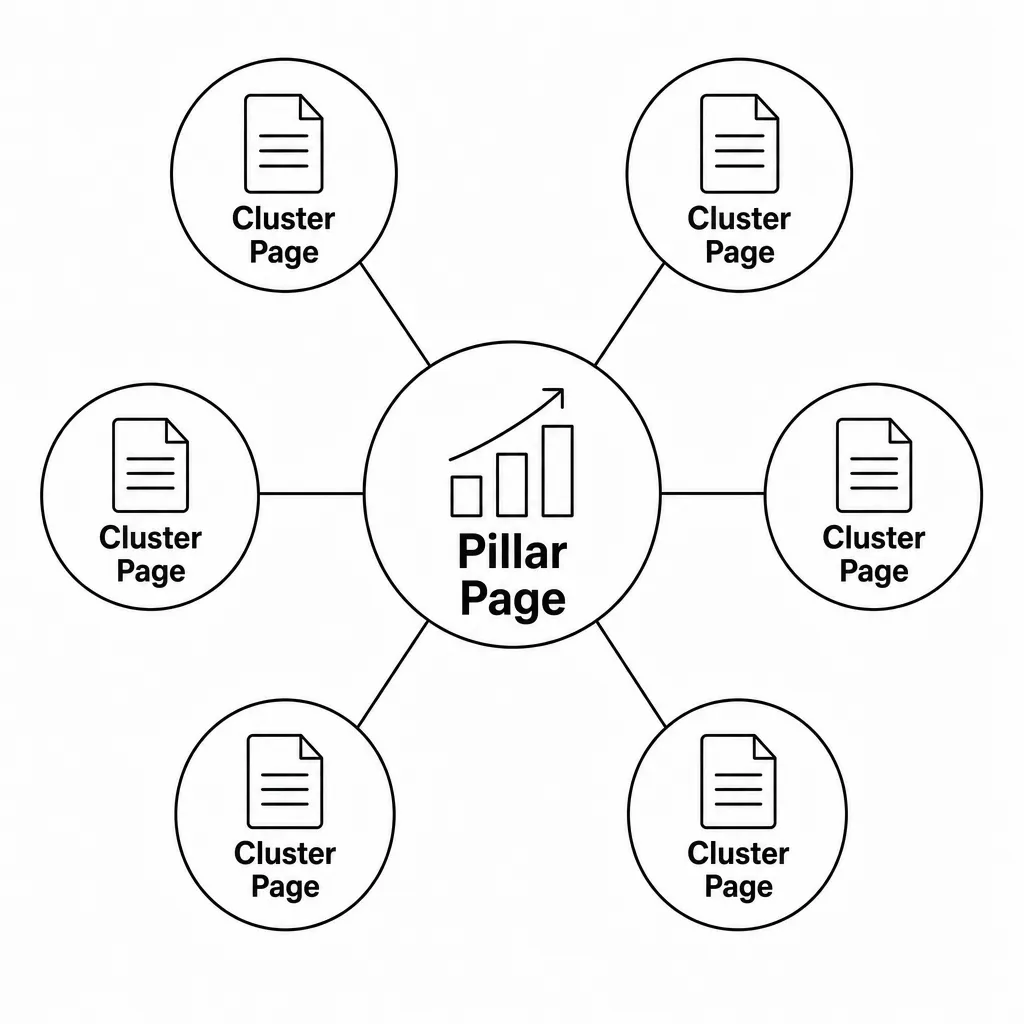
Each cluster follows a coherent progression: the pillar page provides the overview, while the cluster pages offer practical deep dives. This structure matches the natural way people look for information online.
We keep things semantically consistent with a unified vocabulary and smooth transitions between pieces of content. Careful keyword selection ensures we cover the full search volume around our main theme.
Internal linking and anchor text
Internal links position each pillar page as a central hub, passing its authority on to the cluster pages and making them easier for search engines to index. We always use descriptive anchor text that makes it clear what the linked content is about.
This two-way internal linking lets the cluster pages point back to the pillar page with relevant anchors, which strengthens the topical cohesion of the whole set. We keep a tight rein on click depth so every page stays easy to reach.
Prioritising by impact and effort
Our analysis matrix scores every content opportunity on two axes: its organic traffic potential and how complex it is to produce. That diagnosis points us towards the topics with the best payoff.
We start with clusters that are low in competition but rich in potential, which brings quick wins in visibility. This step-by-step approach then gives us the means to go after more competitive niches.
Our production rhythm runs on two-week cycles: two new cluster pages created and one pillar page updated per cycle. This sustainable cadence keeps the content fresh while leaving room to adjust our content strategy along the way.
To optimise a piece of content semantically, you need to analyse search intent closely and work in relevant keywords naturally. This methodical approach covers every potential query while keeping the reading experience enjoyable. Our complete guide walks you through this SEO content strategy step by step.
Keywords: content and SEO
How you choose and use keywords directly shapes your content's ability to bring in qualified traffic from search engines. This crucial step involves a careful analysis of search volume, competition and what people actually need, so that every page is optimised effectively.
Targeting and placing queries
Our keyword research methodology is built on:
- One main keyword per page, placed strategically in the H1, the introduction and the URL
- Long-tail phrases woven naturally into subheadings and body text
- Semantic variations that enrich the vocabulary without sounding repetitive
- Optimal placement in the strategic spots: SEO title, meta description and opening paragraphs
We systematically review the top results to understand the dominant search intent and adapt the content format accordingly. An informational query calls for a detailed guide, while a commercial intent is better served by a comparison or product reviews.
Search volume guides our editorial priorities, but we always weigh it against keyword difficulty. A moderately searched keyword (500 queries a month) with little competition can often bring in more traffic than a highly competitive term.
Vary your semantics and write naturally
We enrich our content through a content strategy built on smart internal linking. Varied, contextual link anchors reinforce the topical coherence of the whole site.
We always put readability ahead of keyword density, keeping usage to a measured 1% to 2% of the total text. This balanced approach avoids over-optimisation while still telling the algorithms clearly what the page is about.
Internal links and user journeys
Every article sits within a coherent user journey, with 2 to 3 internal links to complementary content. This guided navigation keeps visitors engaged for longer and distributes authority sensibly between your key pages.
External links to reliable sources (institutions, experts) strengthen the credibility of your content, especially on technical subjects. We use rel="nofollow" where necessary to keep a balanced organic SEO strategy.
An effective content strategy necessarily rests on solid technical foundations. On-page optimisation is a pillar you can't skip: without that base, even the best content sees its visibility shrink considerably. The complete technical optimisation guide for structuring your SEO content covers these essentials in detail.
On-page optimisation and markup
Every page needs careful technical optimisation to be interpreted and valued correctly by the algorithms. This factor, which is often overlooked, directly affects how well your content performs and its ranking in the results pages.
Title tags, meta and heading tags
Our optimisation process starts by checking that the H1 is unique and perfectly aligned with the page title. This consistency builds your credibility with search engines and removes the inconsistencies that hurt your rankings.
We measure title tag length in pixels (ideally between 500 and 600 px) rather than characters, which limits truncation in the SERPs. It can never remove it entirely: Google truncates title links to fit the device width and may even build them from other page elements. This method optimises how your results display and naturally improves click-through rate.
The heading tags follow a logical, unbroken progression, giving a clear structure to bots and users alike. We systematically enrich H2s and H3s with relevant semantic variations to flesh out the context without drifting from the core message.
Images, alt text and data
Visuals need the right markup to fit naturally into their topical context. Our descriptive alt attributes create an explicit link between the image and the surrounding text, reinforcing semantic relevance.
The WebP format is steadily replacing JPEG to cut image weight without sacrificing quality. This technical optimisation improves load times, a key factor for both rankings and the mobile experience.
Breadcrumbs and canonicals
Breadcrumbs clarify your site's architecture for visitors and search engines alike. We mark them up with structured data to optimise how they appear in the results and simplify navigation.
Managing canonical URLs prevents the authority dilution caused by duplicate content, a common problem on e-commerce sites. We implement strategic 301 redirects and rel="canonical" tags to concentrate authority on the main version of each resource.
Technical, performance and SEO
The technical quality of a website plays a key role in how search engines rank it. Solid technical optimisation is the essential foundation of a content strategy that performs and lasts.
Indexing and security
Through regular monitoring in Google Search Console, we spot the obstacles holding back your organic rankings. We fix indexing problems, blocked content and the conflicts that drag down your site's authority.
- HTTPS as standard: full security with permanent redirects and HSTS enabled for safe browsing
- Optimised robots.txt: precise configuration that lets crawlers access the resources that matter
- Dynamic sitemap: automatic updates listing your canonical URLs with an accurate last modification date (Google ignores the priority and changefreq values)
A secure site earns visitors' trust and is rated more favourably by the algorithms. We apply security best practices and keep a constant eye on SSL certificates so your site stays accessible at all times.
Speed and mobile
Core Web Vitals are used by Google's ranking systems, alongside many other signals. We achieve load times under 2.5 seconds and excellent visual stability through in-depth caching and resource optimisation.
Mobile adaptation isn't just about responsive design. It also covers smooth navigation and responsiveness. We systematically test our pages with Google's tools to identify and fix any user experience issue.
Measurement and continuous iteration
We analyse SEO performance through reports that cross-reference data from Google Analytics, Search Console and our own tools. These indicators guide our optimisation and content creation decisions.
We regularly refresh strategic content by beefing up weak sections, adding FAQs and strengthening internal linking. This ongoing attention keeps the site relevant and shores up its positions against the competition.
Content examples and search engines
Concrete examples show how well-structured SEO content can significantly improve a website's ranking and visibility. These practical cases illustrate how a methodical approach turns ordinary pages into go-to references in their sector.
SEO pillars and steps
Take an e-commerce site as an example to understand why SEO internal linking matters: a pillar page titled "The complete guide to coffees of the world" links sensibly to topical pages like "Ethiopian coffee", "Small-batch roasting" and "The perfect brew". This well-thought-out architecture builds authority while covering a range of search intents.
Organic SEO follows a logical progression: in-depth research, optimised content creation, ongoing technical optimisation and adjustments based on data analysis. Each step helps grow your organic traffic.
| SEO pillar | Priority action | Key metric |
| Technical | Indexing audit | Indexed pages |
| Content | Relevant keyword research | Organic traffic |
| Authority | SEO internal linking | Average click depth |
| Performance | Core Web Vitals | Load time |
This structured approach guarantees steady ranking improvements by tackling the technical and editorial sides at the same time. We always favour the actions with the best return on investment.
Optimising on a zero budget
Free Google SEO comes down to optimising the fundamentals: HTML tags, heading architecture, alt attributes and consistent internal linking. These simple optimisations deliver tangible results without spending a penny on ads.
- Optimised titles: rewritten with relevant keywords and catchy wording
- Semantic enrichment: adding FAQs, glossaries and complete sections that answer users' queries
- Content consolidation: merging similar pages to maximise their authority
Quality content creation remains the most effective lever for lasting visibility gains. Every new piece of content deserves careful preparation: upfront research, technical optimisation, strategic internal linking and performance tracking. The goal is structured content that satisfies both your visitors and the demands of the search engines.

Automate Your SEO With AI Agents
Sedestral connects six AI agents to your website to handle content, audits, rankings, backlinks and images, without the manual grind.