With search this competitive, publishing good content isn't enough to stand out any more. What makes the difference is how you organise your information for search engines. That's exactly what structured data does: it organises your site so the algorithms can read it as a perfectly clear source.
This guide shows you how structured data markup can transform your SEO strategy. You'll find proven methods to help Google understand your content and showcase it through rich results, those eye-catching visual listings that pull in the clicks.
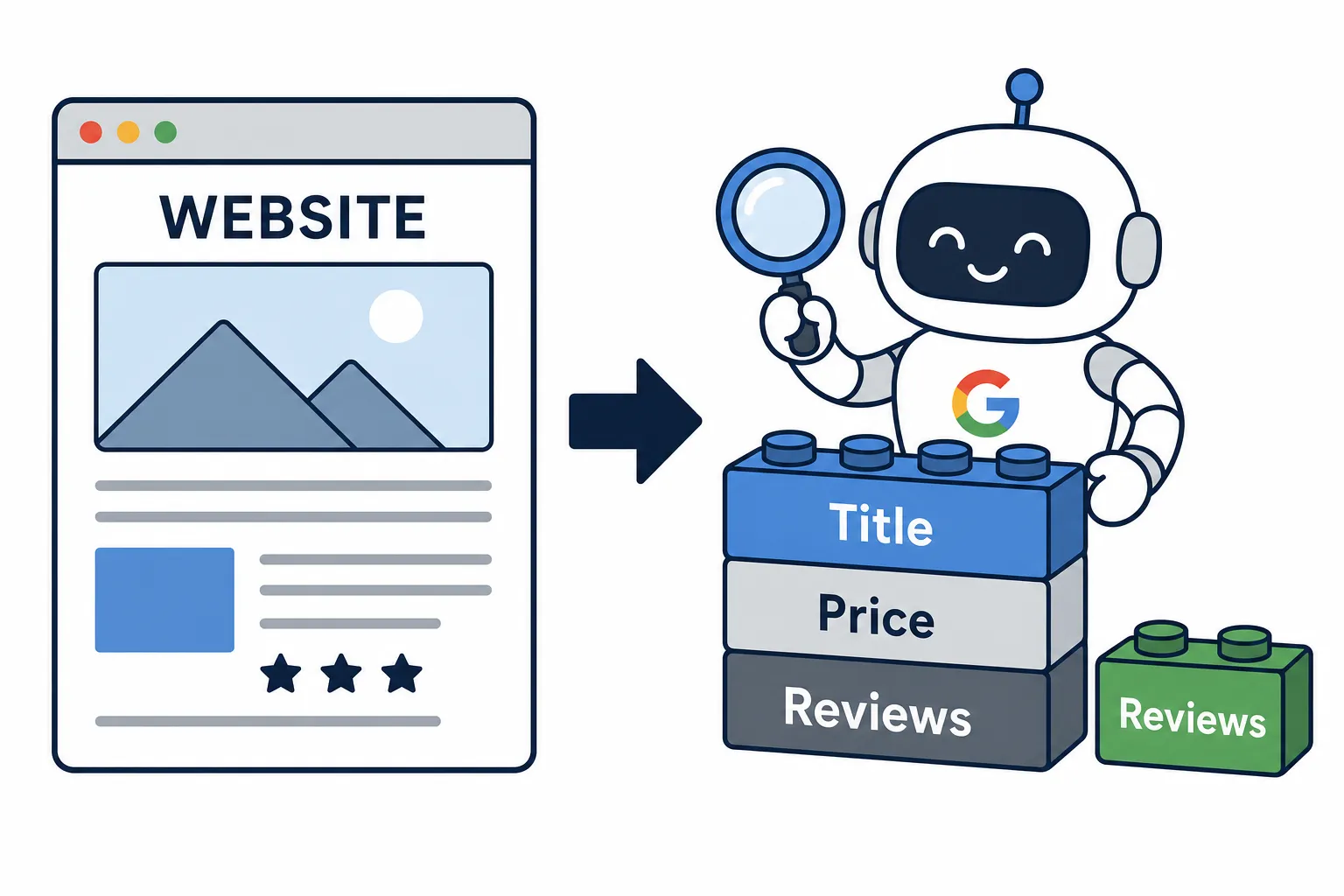
What structured data is and why it matters
Data markup (or structured data) is a standardised vocabulary you add to your website's code. Its job? Turning raw content into information that crawlers understand instantly.
Without this organised schema, a search engine only sees a page with text and images. With the markup, it understands straight away: "Here's a recipe that takes 30 minutes", "This product costs $49.99 and is rated 4.5/5", or "Event scheduled for 15 December in London".
That fine-grained understanding lets Google improve how your page appears in search results by adding striking visual elements: star ratings, prices or availability. These rich snippets radically improve your click-through rate and your visibility.
The real impact on your SEO and your business
The benefits of structured data markup go well beyond the technical side:
- CTR boost: Rich results grab attention more easily. Product listings with ratings stand out and tend to attract more clicks.
- Better-qualified traffic: Showing the price directly in search filters out uninterested visitors and attracts relevant prospects.
- Stronger credibility: Your structured information feeds Google's Knowledge Graph, establishing your site as a reference.
- AI optimisation: Structured data makes your content easier for AI systems to digest, increasing your chances of showing up in their answers.
Types of structured data to prioritise for your audience
The ideal markup schema depends on your content, your ranking strategy and your SEO goals. Here are the main types of structured data you need to know to maximise your visibility:
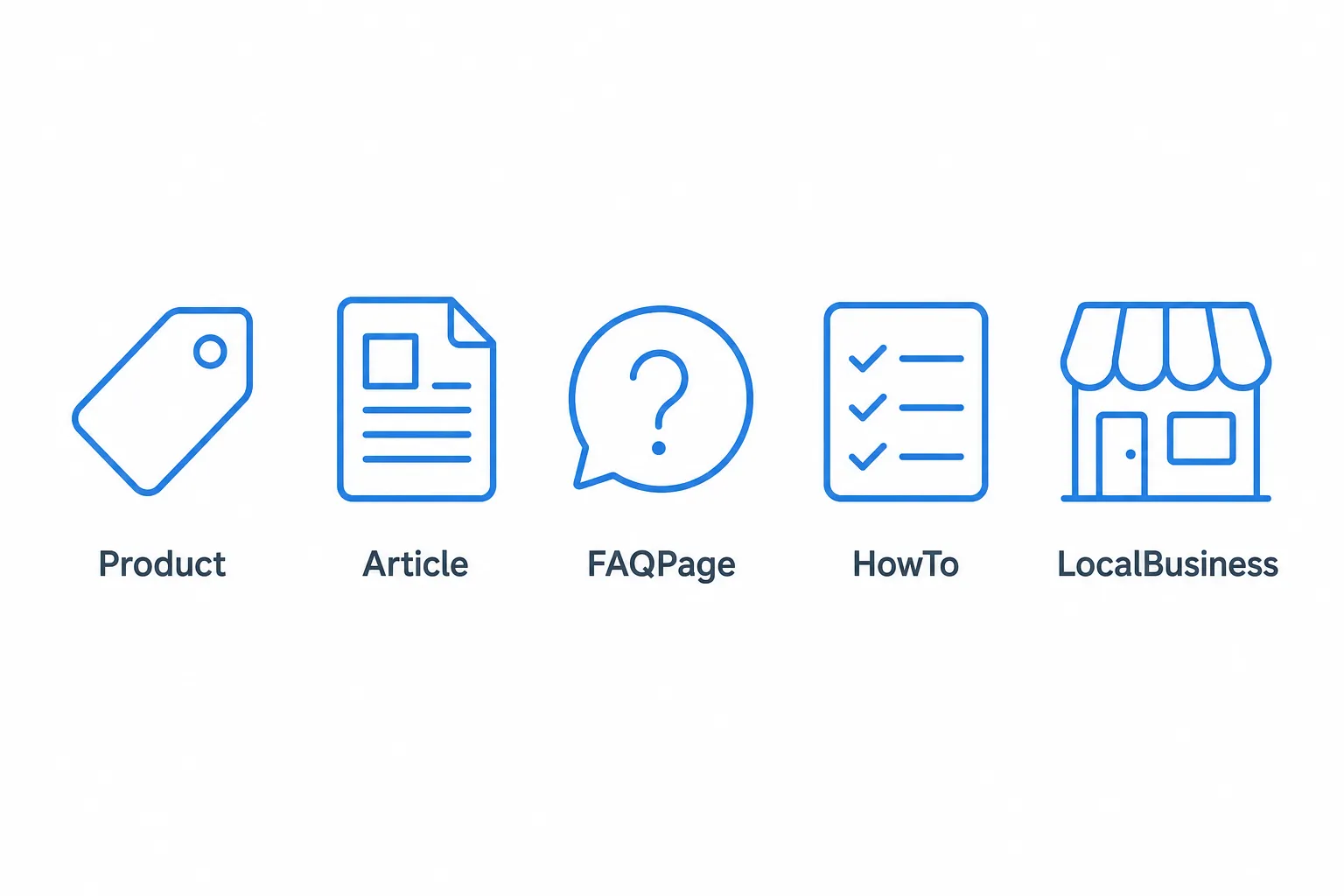
Essential schemas for each type of content
- Product: A must-have in ecommerce, this markup shows key details like price, availability or reviews directly in search results. Your product page becomes far more attractive.
- Article/BlogPosting: Essential for showcasing your editorial content. It highlights the headline, author and publication date while strengthening your credibility with search engines.
- FAQPage: Ideal for answering your audience's frequent questions. Google restricted FAQ rich results to government and health sites in 2023, then stopped showing them entirely on May 7, 2026, but the schema still helps search engines and AI assistants understand your Q&A content.
- HowTo: Built for practical guides, it structures each step of your tutorial with details like duration or required tools. Google dropped HowTo rich results in 2023, yet the markup still makes your content clearer for machines.
- LocalBusiness: A staple of local SEO. Your address, opening hours and phone number appear directly in the results, making it easy for customers to get in touch.
To get the most out of structured data, start by pinning down what your visitors actually expect. Our guide to search intent in SEO will help you match your markup to what users really need.
Technical implementation: mastering the JSON-LD format
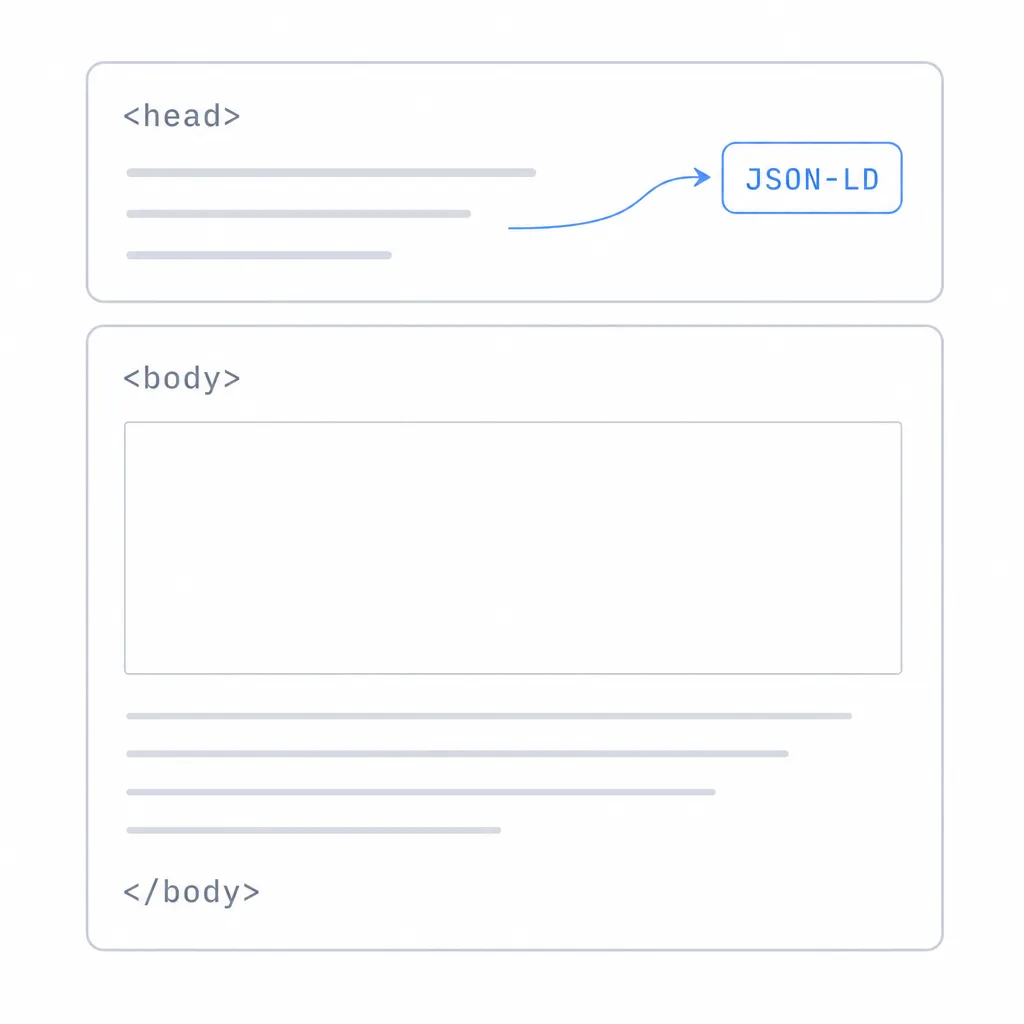
Today, data markup relies mainly on the JSON-LD format, which has become the standard thanks to how easy it is to implement and how well it works.
Why JSON-LD dominates modern markup
Other formats like Microdata and RDFa still exist, but Google recommends JSON-LD (while supporting all three) for four major reasons:
- Easy to install: A single script dropped into the
<head>or just before the closing</body>tag, without touching your HTML. - Simpler maintenance: Unlike the other methods, it stays decoupled from the HTML, so you can edit it without affecting your design.
- Automated generation: CMS platforms can generate it dynamically, keeping your structured data consistent.
- Built for modern sites: Perfect for SPAs, it supports dynamic injection through SSR or prerendering.
Our SEO guide explains how JavaScript affects indexing: for Google to detect your snippets (JSON-LD, schema.org), go for server-side rendering (SSR) or solid prerendering. Client-side rendering can hurt indexing, drag down your Core Web Vitals and hide your metadata. Our best practices: put the schema in the server-generated HTML, don't block assets, test with Google Search Console and the Rich Results Test, then use SSR/SSG solutions (Next.js, Nuxt...) to maximise visibility and eligibility for rich snippets. Make sure Google detects your structured data
Practical example of Product markup
Here's a textbook structured data use case for ecommerce:
<script type="application/ld+json">{"@context": "https://schema.org","@type": "Product","name": "Elegance Pro Smartwatch","image": "https://www.yoursite.com/images/elegance-pro-smartwatch.jpg","description": "A smartwatch that blends design and technology for stylish activity tracking.","sku": "ELEGPRO-123","brand": {"@type": "Brand","name": "Your Brand"},"offers": {"@type": "Offer","url": "https://www.yoursite.com/products/elegance-pro-smartwatch","priceCurrency": "USD","price": "199.99","availability": "https://schema.org/InStock","priceValidUntil": "2026-12-31"},"aggregateRating": {"@type": "AggregateRating","ratingValue": "4.8","reviewCount": "256"}}</script>
Validation and maintenance: keeping your markup healthy
Implementing structured data is only the start. To keep it working long term, you need rigorous monitoring and regular checks.
The biggest mistake? Adding the markup and forgetting about it. A simple redesign, a price that wasn't updated or a mismatch between your web pages and the markup can make your rich snippets vanish overnight.
Three-step validation process
- Check before going live: Use Google's structured data testing tool (the Rich Results Test) to confirm your content is eligible.
- Ongoing monitoring: Check the "Enhancements" reports in Google Search Console regularly to catch anomalies early.
- Content-markup alignment: Regularly verify that your structured information matches exactly what visitors see.
The JSON-LD format, a W3C recommendation, is an efficient way to represent linked data. This standard makes it easy to create interoperable SEO structured data that search engines and all sorts of applications can use. The official site offers:
- Practical guides
- Concrete examples
- A playground to test your snippets
- A list of tools in multiple languages
Plenty of valuable resources to boost your presence in rich results. Test JSON-LD and improve your SEO structured data

| Validation tool | Main use | Benefits |
| Rich Results Test | Real-time validation of a URL or a code snippet | Immediate confirmation of eligibility before deployment |
| Google Search Console | Long-term performance and error tracking | Overview of your markup's health across all your web pages |
| Schema Markup Validator | In-depth technical validation of the Schema.org vocabulary | Catches the most subtle syntax errors |
Advanced strategies to maximise the impact of your structured data
To go further, you need to adapt your structured data strategy both to your business goals and to the technological changes shaping the web.
Combining on-page markup and product feeds for ecommerce
For ecommerce sites, the optimal setup combines two sources of information:
- On-page markup of type
Productbuilt straight into your pages, so rich snippets show up in search results. - A product feed synced with Google Merchant Center, so you appear in Shopping results and Google Ads.
This dual approach matters a lot when you want to optimise SEO on PrestaShop and other platforms like Shopify or WooCommerce. Just be careful to keep these sources perfectly consistent, because the smallest discrepancy could stop your rich product listings from showing.
Optimising for generative AI and AI Overviews
SEO structured data is no longer just about rich snippets. It has become the go-to reference for generative AI when it answers users' queries.
Find out how Google's AI Overviews are transforming the search experience, and why no special markup is required to be cited in those results: pages need to be indexed, eligible for snippets and genuinely helpful. We share practical tips:
- Concise summaries at the start of each section
- Lists and tables that are easy to parse
- Strict respect for heading hierarchy (Hn)
E-E-A-T signals, regular content updates and tracking through Search Console or GA4 are also crucial for measuring your visibility in AI Overviews. Read our complete guide to optimising your data for AI.
A well-organised page with consistent data has a much better chance of being recognised as a reliable source. This shift means fundamentally rethinking how we approach SEO.
Our guide explains how to adapt your SEO to large language models (LLMs) by combining traditional techniques with Generative Engine Optimization (GEO). You'll learn how to:
- Tell classic search engines and generative AI apart
- Aim for the top positions in the results
- Create ultra-relevant, perfectly structured pages
- Use schema.org markup effectively
That way, your content becomes easy for ChatGPT, Gemini or Perplexity to pick up. Optimise your presence in AI answers
Specific use cases by industry
How effective your structured data is will always depend on how well it fits your line of business:
- Content sites: Optimise your pages with the Article, FAQPage and HowTo schemas to help machines interpret them (featured snippets are chosen by Google without any markup, and FAQ and HowTo rich results are no longer shown).
- Local businesses: For better local visibility, use the LocalBusiness schema with the openingHours, address and sameAs properties, essential for local SEO and voice assistants.
- Comparison platforms: Structure your product comparisons with multiple Product schemas and use the additionalProperty property to organise your tables efficiently.
- News sites: Use the NewsArticle schema with accurate author and date properties; Google News eligibility does not depend on this markup.

Building a lasting strategy with structured data
Structured data markup is no longer a technical nice-to-have. It's now a key part of any modern SEO strategy. By structuring your information rigorously, you're not just serving the bots: you're creating a coherent ecosystem that strengthens your site's authority and trustworthiness.
Careful markup pays off for the long haul. It improves your immediate visibility in search results while preparing you for what's coming next in the semantic web and AI.
Apply the methods in this guide and you have the tools to transform your online presence, win more clicks and build trust with Google and your visitors alike. The future of SEO belongs to sites that can speak to machines while fully satisfying what humans expect, thanks to relevant structured data.

Rank Higher Without the Manual Work
From technical audits with Nox to competitor monitoring with Marc, Sedestral's AI agents cover every layer of SEO so your team doesn't have to.