The history of Google is one of the most remarkable success stories to come out of Silicon Valley. What started as a clever idea from two gifted students grew into the most powerful search engine on the planet, changing the way we all find information on the web. Follow the incredible rise of Google and see how a modest university project turned into a tech giant that now decides what shows up in search results and shapes SEO for every business online.
Where it all began: Stanford, 1995
The history of Google starts in 1995 in the corridors of Stanford, where two PhD students with complementary skills, Larry Page and Sergey Brin, first met. Their shared goal? Fix the search engines of the day, which were widely seen as hopeless at returning relevant results.
Larry, who grew up surrounded by computers, was fascinated by how data is organised. Sergey Brin, for his part, was a gifted mathematician. The partnership between Sergey Brin and Larry Page clicked straight away, and they started tackling technical problems with a creativity nobody else was showing.
From BackRub to Google: a stroke of genius
By 1996, the pair had built a groundbreaking prototype called BackRub. Unlike traditional engines, BackRub didn't just count keywords: it analysed the links pointing to each page. For Larry and Brin, every link was a vote of confidence. The more quality links a page received, the more relevant it was considered to be.
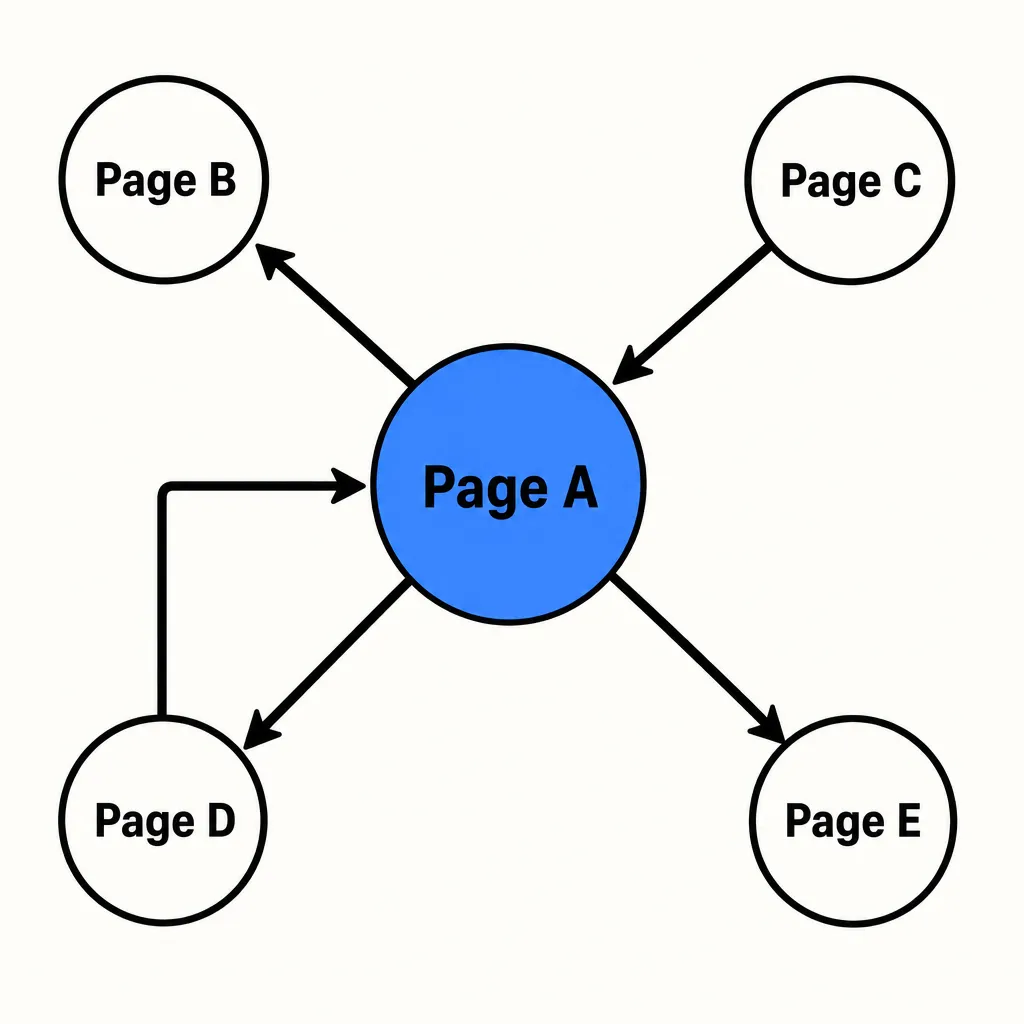
This concept, the forerunner of the famous PageRank (named after Larry Page himself), would go on to transform online search completely. Larry Page borrowed the idea from academic citations: when a paper is cited by many respected researchers, it automatically gains credibility.
- An innovative algorithm: PageRank weighs both the number and the quality of links to judge how important a page is.
- Massive indexing: Even before the company was officially founded, BackRub had already catalogued close to 25 million web pages.
- A revolutionary approach: Studying the relationships between sites delivered far more accurate results than a simple keyword search.
- Clever workarounds: To store this mountain of data, the founders built their own servers out of cheap hardware... housed in a cabinet made of Lego bricks.
The technology immediately outclassed existing search engines such as AltaVista and Lycos. While their rivals were content to match keywords, Larry Page and Sergey Brin understood just how much the links between websites mattered. Night after night, in the labs at Stanford, they refined their algorithm, building the kind of relevance that would soon make them famous worldwide.
Why the name "Google"?
In 1997, BackRub officially became Google. The name comes from the mathematical term "googol" (a 1 followed by 100 zeros), a nod to their colossal mission: organising the sheer immensity of data available on the web. Registering the google.com domain on 15 September 1997 marks the real birth of the future giant.
The choice sums up their ambition perfectly: bring order to the informational chaos of the Internet and make it accessible to everyone. Google began with a clear vision: to become the planet's digital librarian.
The birth of a giant: funding and first offices
Google Inc. was officially founded on 4 September 1998, thanks to a visionary investment from Andy Bechtolsheim, co-founder of Sun Microsystems. Blown away by a demo of the PageRank system, he wrote a $100,000 cheque on the spot. That money allowed the founders to leave Stanford and devote themselves entirely to their creation.
For the first few months, the company operated out of the now legendary Menlo Park garage, rented from Susan Wojcicki (the future CEO of YouTube). This modest space housed the first servers and the small pioneering team. The atmosphere was productive and laid-back in equal measure, with intense coding sessions broken up by games of ping-pong. It was in this garage that the creation of Google really took off.
By 1999, traffic had exploded: from a few thousand queries a day during the beta, it reached several million a day. Backed by a $25 million investment from Sequoia Capital and Kleiner Perkins, the company left its garage, hired at scale and moved to Mountain View, into what would become the famous Googleplex. This meteoric rise confirmed that the search engine was a hit with users all over the world.
The monetisation era (2000-2004)
Having proved its technical excellence, Google took on a new challenge: building a sustainable business model. In 2001, Eric Schmidt took over as CEO to structure the company's governance, forming a complementary trio with Larry Page and Sergey Brin. These crucial years laid the financial foundations that would propel the company to unprecedented heights.
AdWords and AdSense: the advertising revolution
October 2000 was a turning point with the launch of AdWords, a system whose name is now famous and which radically changed online advertising. Instead of intrusive banners, it served text ads tied directly to the keywords people were searching for. In 2002, the switch to cost-per-click (CPC) pricing revolutionised the sector by giving advertisers perfect visibility on what their spend was actually delivering.
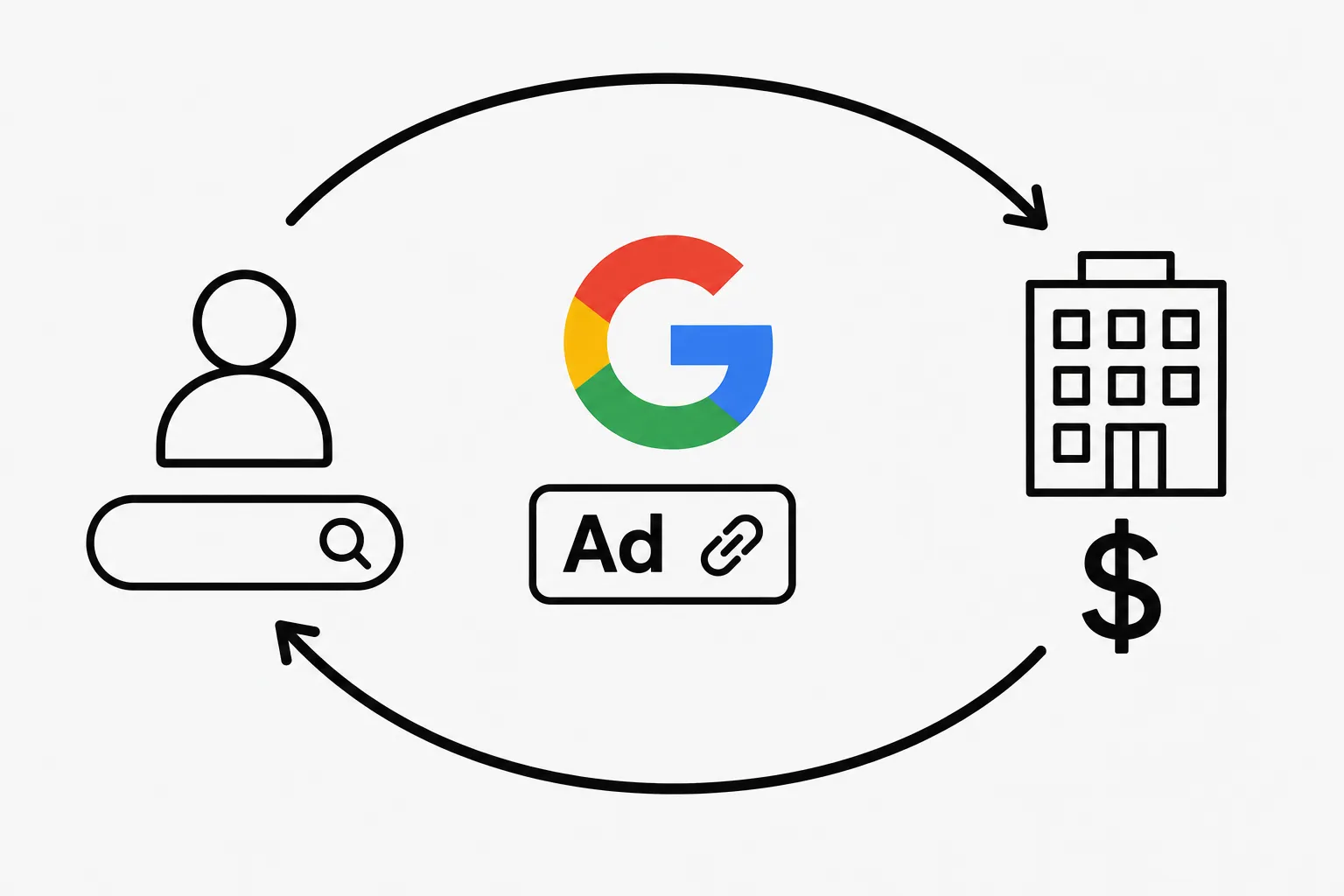
In 2003, AdSense extended this advertising technology to thousands of partner sites. The programme lets website owners earn revenue from ads that are automatically matched to their content. It's a virtuous circle that benefits everyone: Google, content creators and advertisers, and it firmly cemented the web giant's position as the sector's economic leader.
The IPO and the arrival of Gmail
19 August 2004 is a historic date: Google's initial public offering. This unprecedented financial operation raised $1.67 billion and valued the company at more than $23 billion. The proceeds funded faster international expansion, targeted acquisitions and R&D investment. The unusual auction-based system spread the shares widely, and several hundred employees became millionaires overnight.
That same year, on 1 April, Google surprised the world with the launch of Gmail. The offer sounded too good to be true, 1 GB of free storage against the few megabytes competitors offered, and plenty of people assumed it was an April Fools' joke. Yet with innovative features like built-in search and conversation threading, Gmail raised the bar for email and slotted neatly into the ecosystem of Google services.
A unique company culture
Moving into the Googleplex perfectly embodied the company's unique DNA. Between inspiring workspaces, free canteens and the famous "20% time" policy (time set aside for personal projects), the company attracted the brightest talent around. The motto "Don't be evil" captured that pioneering mindset. Gmail and AdSense were both born out of this philosophy of creative freedom, proof that this exceptional company culture actually worked.
Diversification and total dominance
Riding on its financial success, Google rolled out an ambitious diversification strategy. Through strategic acquisitions and in-house development, the company built an essential digital ecosystem that goes far beyond a simple search engine.
YouTube, Android, Chrome: the pillars of the ecosystem
- YouTube (2006): Bought for $1.65 billion, YouTube became the dominant video platform and the world's second largest search engine, a perfect complement to traditional search.
- Android (2005): Quietly acquired by Google, Android was developed as an open source mobile operating system. Launched in 2008, it held its own against the iPhone and now runs on over 70% of the world's smartphones, guaranteeing mass distribution for Google services.
- Google Chrome (2008): Launched under the leadership of Sundar Pichai, the fast and secure Google Chrome browser quickly took the lead with more than 65% market share, strengthening Google's influence over how the web evolves.
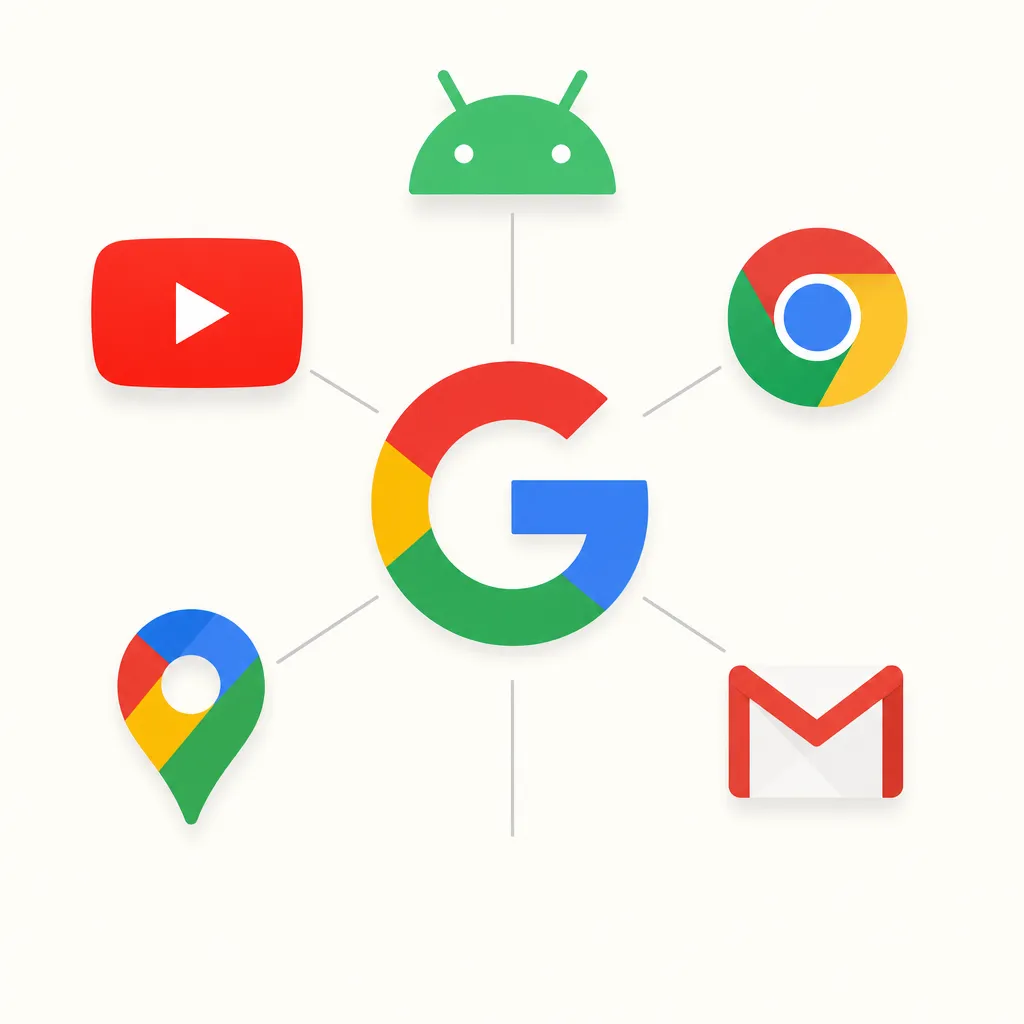
Other strategic acquisitions marked Google's progress during this period: Google Maps and Earth (2005), born from the purchase of Keyhole, revolutionised mapping; DoubleClick (2007) reinforced its advertising dominance; and Waze (2013) improved GPS navigation. Every deal was designed to strengthen the ecosystem and keep the competitive edge.
The Alphabet era and the rise of AI
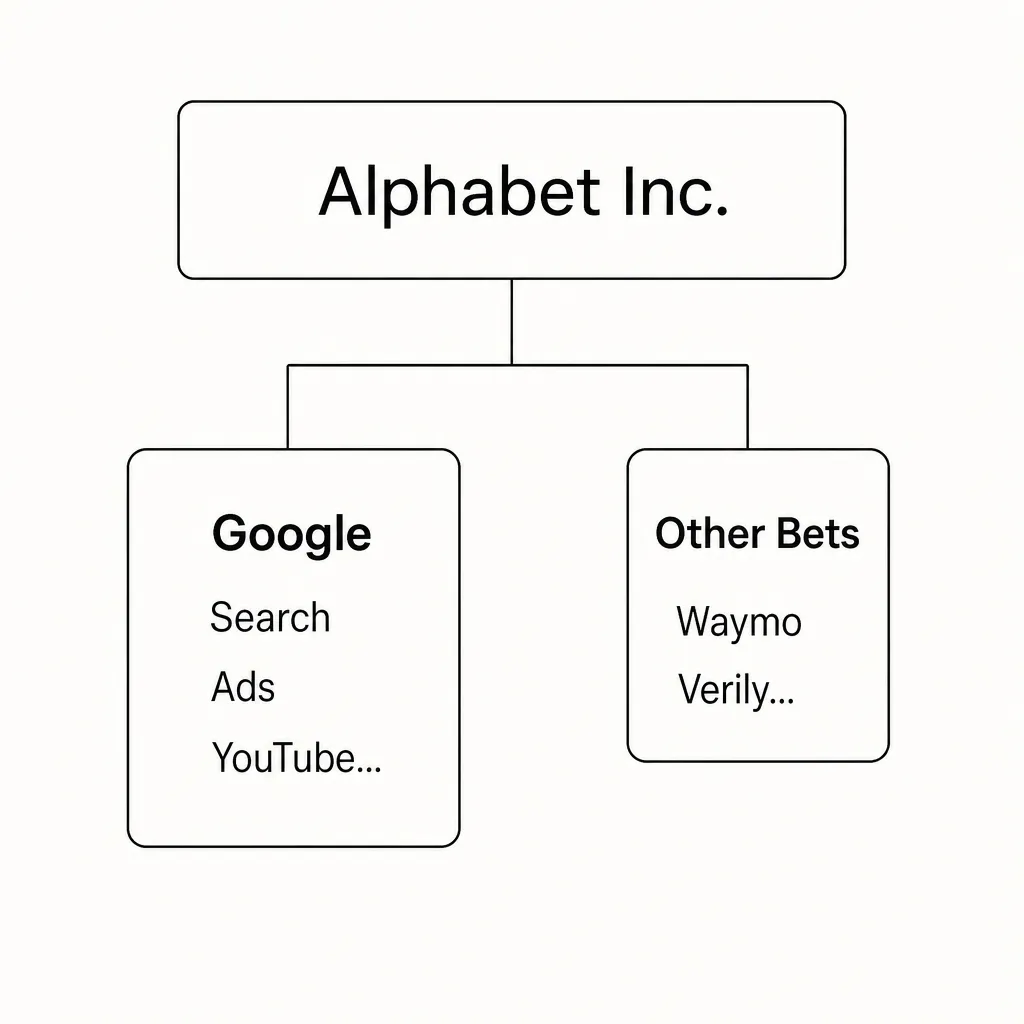
In August 2015, a major restructuring led to the creation of a parent company called Alphabet. This new entity separated Google's core businesses (search, advertising, YouTube, Android) from moonshot projects like Waymo (self-driving cars) and Verily (life sciences). Larry Page, often simply known as Larry, became CEO of Alphabet, while Sundar Pichai took the reins at Google, signalling the arrival of a new generation of leaders. Pichai went on to lead Alphabet as well from 2019.
At the same time, Google became an undisputed pioneer in artificial intelligence. The acquisition of DeepMind in 2014, combined with the work of Google Research, put the company at the cutting edge. Those advances show up in products like Google Assistant, an AI-powered Google News and, more recently, the Gemini model family, all built into Google services. AI is also redefining search itself, through systems like RankBrain, BERT and MUM, and now AI Overviews and AI Mode in the results page.
How the algorithms evolved and what it means for SEO
Google's algorithms have never stopped evolving, gradually rewriting the rules of digital marketing. Understanding these changes has become essential if you want a strategy that actually performs on a search engine.
The major algorithm updates
The history of Google's algorithms is marked by major updates that revolutionised SEO:
- Caffeine (2010): A complete overhaul of the indexing system, making it possible to surface results almost instantly
- Panda (2011): Penalises thin content and rewards pages that bring real value to users
- Penguin (2012): Fights artificial link schemes and favours natural, relevant backlinks
- Mobile-first indexing (2018): Priority given to the mobile version of sites, reflecting how search behaviour has changed
- Core updates (ongoing): Regular improvements that promote high-quality, technically sound content, joined since 2022 by the helpful content signals
These changes reflect Google's constant drive to improve the user experience. According to a 2023 Ahrefs study, 96.55% of the pages in its index get no organic traffic from Google at all, which makes SEO more critical than ever. Our all-in-one platform helps you optimise WordPress and WooCommerce sites effectively with:
- Automatic page audits
- In-depth semantic analysis
- AI-optimised content creation
- Better product pages
- Rank tracking in the search results
With our dedicated plugin, you can quickly spot the pages that need work and get concrete recommendations (content score, topic clusters, keywords). Generate perfectly optimised articles in minutes to take advantage of the latest changes to the Google search engine and boost your visibility. Discover our SEO solution for WordPress
From keyword density to user intent
In its early days, SEO often boiled down to mechanically repeating keywords. Today's search engines can analyse the real intent behind every query in depth. An effective e-commerce page has to make buying easy, while an informational article has to deliver complete, verified answers.
The E-E-A-T principle (Experience, Expertise, Authoritativeness, Trustworthiness) has become fundamental. Google particularly rewards:
- Concrete case studies
- Original research
- Contributions from recognised experts
- Content that's regularly updated
To get good results, well-optimised content is no longer enough. Above all, it has to meet what users genuinely need.
Web performance and Core Web Vitals
Since 2021, Google has assessed the technical quality of sites through the Core Web Vitals:
- Loading speed (LCP)
- Visual stability (CLS)
- Responsiveness (INP, which replaced FID in 2024)
A slow site hurts both your rankings and your conversion rate. The most common problems include:
- Render-blocking scripts
- Poorly optimised images
- Inefficient caching
- Faulty HTTPS configuration
To optimise your online presence, our SEO audit digs into more than 100 checkpoints: indexing problems, meta tags, heading hierarchy, server errors, redirects, plus essentials like the robots.txt file and the sitemap. We also assess the Core Web Vitals (performance, media optimisation, responsive design and security). The full diagnosis ranks fixes by importance and gives you a personalised action plan (technical settings, content creation, competitor benchmark) to strengthen your position in the search engines for the long term. Perfect for turning Google's algorithm changes into concrete improvements for your site. See the SEO audit and the recommendations to improve your rankings
The unavoidable impact on SEO and e-commerce
Understanding Google's updates helps you anticipate what's at stake today in SEO and digital marketing.
A revolution for e-commerce
In online retail today, Google is the main competitive arena. Success no longer depends solely on what you sell, but on how well you align your strategy with the customer journey:
- Awareness stage: Attract prospects with buying guides and comparisons optimised for the web
- Consideration stage: Help them choose with product tests and detailed reviews
- Purchase stage: Convert with product pages that tick every box the search engines care about
On top of that, technical performance (site speed, mobile-friendliness) and social proof (customer reviews, quality certifications) have become decisive factors in search results.
Modern hands-on SEO strategies
Our experience shows that moving keywords from positions 11-20 onto the first page multiplies traffic significantly. Rigorous monitoring of algorithm changes, regular audits and incremental optimisations deliver a measurable return on investment.
Our rank tracking tool measures precisely how Google updates affect your visibility: daily rankings, clicks and impressions from your Search Console (with the usual 2 to 3 day delay), alerts when a page loses rankings, detailed history, identification of declining keywords and prioritisation of high-potential pages (especially those ranking between positions 11 and 20). With its intuitive interface and e-commerce connectors, it lets you react fast after every algorithm update. Discover the rank tracking tool
Ignoring SEO today means leaving a large share of your potential customers to the competition. Modern solutions intelligently combine Google Search Console, real-time monitoring and automated recommendations to make continuous optimisation simple.
Google today: key figures and global dominance
Today, Google handles more than 5 trillion searches a year (its own figure, published in March 2025) and controls roughly 90% of the global search market. Its famous search engine indexes hundreds of billions of web pages and is available in more than 200 languages.
The Alphabet holding company employs more than 180,000 people around the world and generated over $350 billion in revenue in 2024. Android runs on over 70% of smartphones, YouTube has more than 2.5 billion monthly users, and Gmail has passed 1.8 billion active users.
We've traced the history of Google here, from its humble beginnings in 1998 with the creation of the search engine by Larry Page and Sergey Brin and the design of the revolutionary PageRank algorithm, through its global expansion and IPO, to the formation of the Alphabet group. We've also covered its diversification through strategic acquisitions and its main services (YouTube, Android, Gmail, Maps, Chrome). That journey includes its impressive server infrastructure, its economic impact and the controversies around competition and data protection. Learn more about the history of Google
Among today's challenges: antitrust regulation (record fines in Europe and landmark rulings in the US), privacy concerns and fierce competition in generative AI. Despite all that, Google keeps innovating through a range of ambitious projects and holds on to its position as the world's technology leader.
Legacy and cultural influence
Google's impact goes well beyond technology. The verb "to google" entered the Oxford English Dictionary in 2006, proof of its influence on the language itself. Larry Page and Sergey Brin rank among the wealthiest people on the planet, with fortunes Forbes estimates at well over $100 billion each.
This section covers the key developments of the Chrome browser, now central to the web giant's ecosystem: better performance, automatic monthly updates, a built-in password manager, safe browsing, advanced tab management tools, cross-platform compatibility and AI integration to improve the user experience. You'll also find practical advice on installation, customisation, privacy management and the mobile versions, which helps you understand where this product sits in the development of Google's services. Discover Chrome in detail
A core member of the Big Tech club, Google shapes our daily habits: shopping, communication, browsing, looking things up. Several of its flagship products, including Search, YouTube, Gmail, Maps and Android, have passed a billion users each, an unprecedented level of technological dominance. Its modest start in a garage is a world away from the planetary influence it wields today.
Key milestones and questions
The history of Google still captures the imagination and raises plenty of questions. It all starts with the BackRub project by Larry Page and Sergey Brin at Stanford, before the creation of Google and its transformation into Google Inc. The frequently asked questions about the web, its PageRank algorithm, the Android platform, the choice of name and the roles of Brin and Larry in this saga are all answered in detail here.
| Year | Major event | Strategic impact |
| 1995 | Larry Page meets Sergey Brin at Stanford | Start of a founding partnership around indexing the web |
| 1996 | Development of BackRub and the PageRank algorithm | A revolutionary system for ranking pages |
| 1997 | Registration of the google.com domain | Final choice of the iconic name |
| 1998 | Incorporation of Google Inc. | Official birth of the company |
| 2000 | Launch of AdWords | A disruptive business model takes shape |
| 2004 | IPO and release of Gmail | Fresh capital and expansion of services |
| 2005 | Release of Google Maps and acquisition of Android | Stronger position in mapping and mobile |
| 2006 | Acquisition of YouTube | Dominance of the online video market |
| 2008 | Launch of Chrome and rollout of Android | Control of the web and mobile experience |
| 2015 | Creation of the parent company Alphabet | Restructuring to boost innovation |
Let AI Handle Your Content Publishing
Alya researches keywords, writes and publishes content directly to your CMS, WordPress, Shopify, Wix and more, on autopilot.