Building an effective buyer persona for your website is a strategic step towards a stronger digital presence and more converted visitors. This complete tutorial walks you through creating relevant marketing personas, from gathering the data to putting them to practical use. Discover how to attract your ideal prospects by understanding their journey and their specific needs inside out.
What a persona is and why it matters
A marketing persona is a simplified but realistic picture of your audience, built on behavioural traits and hard demographic data. It shapes your strategic decisions directly: content architecture, user experience, SEO optimisation. Our guide covers every step of a high-performing editorial strategy and shows how to tailor your content to each of your segments for maximum impact.
Buyer persona vs end user
You need to tell the buyer persona (the person who decides to buy) apart from the end user (the person who actually uses the product). The distinction really matters when you create a buyer persona for your website, because their motivations are radically different. A finance director will weigh up ROI, while a technician will care about how easy the tool is to use.
This precise segmentation lets you adapt your messaging and your journeys to the profile you're targeting. Decision-makers want proof of performance. Users want solutions that are simple and quick to roll out.
Real data first
A reliable persona rests exclusively on verifiable data: analytics, CRM, customer interviews and market research. That rigour keeps guesswork out and makes sure your marketing targets real behaviours. Socio-demographic traits, buying habits and psychological drivers combine to define your priority segments precisely.
Data collection draws on several sources: pages visited, session length, traffic sources, feedback from sales and customer reviews. Cross-referencing these keeps your marketing persona relevant and genuinely useful day to day.
Persona goals and KPIs
Every buyer persona on your website should come with clear goals and measurable indicators. A "Head of Communications" persona, for example, might aim for 15,000 monthly visits with an 8% conversion rate on its dedicated landing pages. Putting numbers on it helps you prioritise actions and judge how well your strategy actually performs.
The main KPIs include: qualified traffic, engagement rate, resource downloads, conversions per channel and rankings on strategic keywords. These metrics steer ongoing optimisation and justify what you invest in each ideal customer.
How to create an effective persona step by step
Developing a useful persona takes a structured, three-step approach that turns raw data into concrete profiles. These archetypes become your go-to tools for guiding marketing, editorial and user experience decisions. The method fits neatly into a complete inbound strategy, designed to turn visitors into prospects, then into loyal customers.
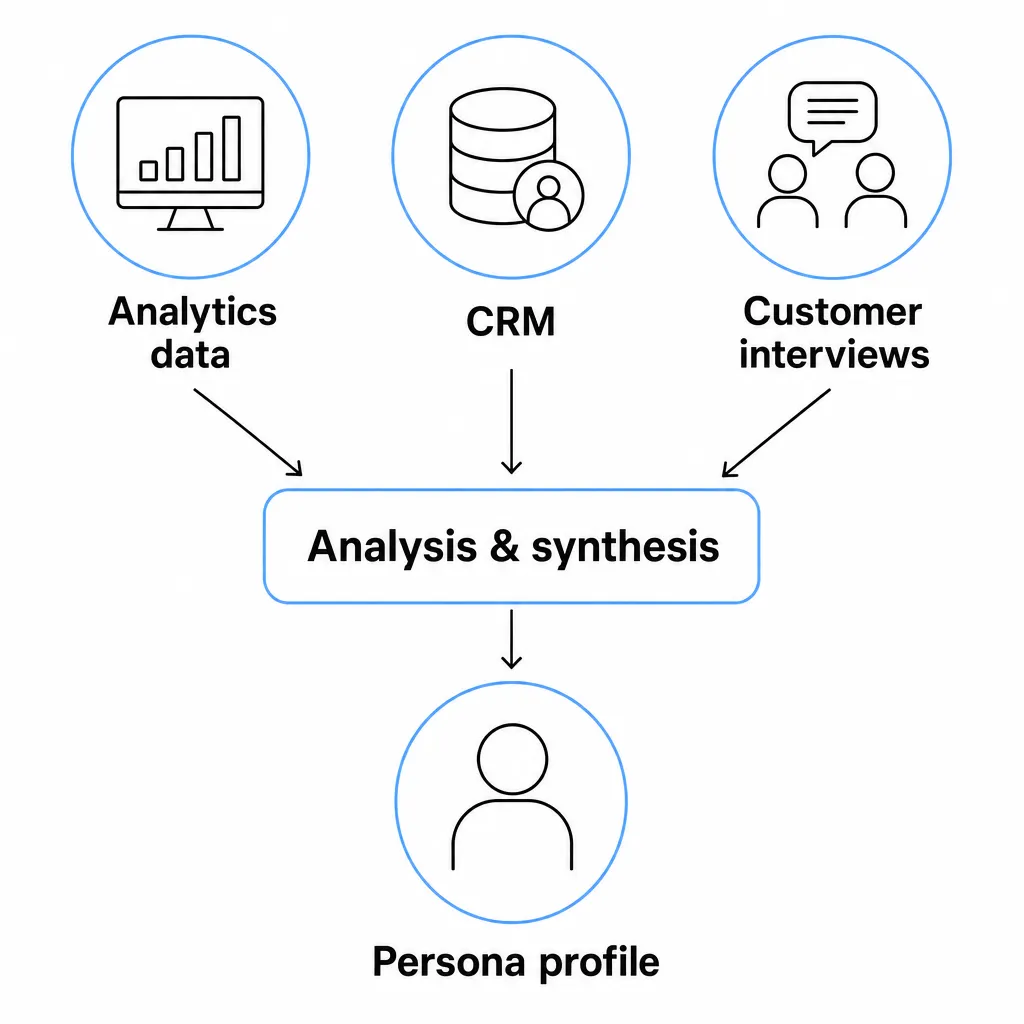
A simple 3-step method
Building your website buyer persona starts with solid analysis that combines quantitative and qualitative data. This approach produces profiles you can actually use in your future marketing.
- Define your target profiles: Run working sessions with sales, customer support and marketing to identify your main types of buyers, their usual objections and their preferred information channels.
- Dig into the research: Cross-reference your web analytics, CRM data, customer interviews and field observations to confirm your hunches and spot new behaviours.
- Structure the profile: Put together a detailed card with a fictional name, a signature phrase, ambitions, frustrations, buying journey and measurable indicators.
This rigorous method avoids personas that are too generic while keeping them practical. To get the most out of it, focus on 2-3 main profiles.
From data to a usable model
Turning data into a relevant persona example takes careful analysis that balances nuance with actionability. Every element of the profile should inform specific business decisions, from SEO to improving the customer journey.
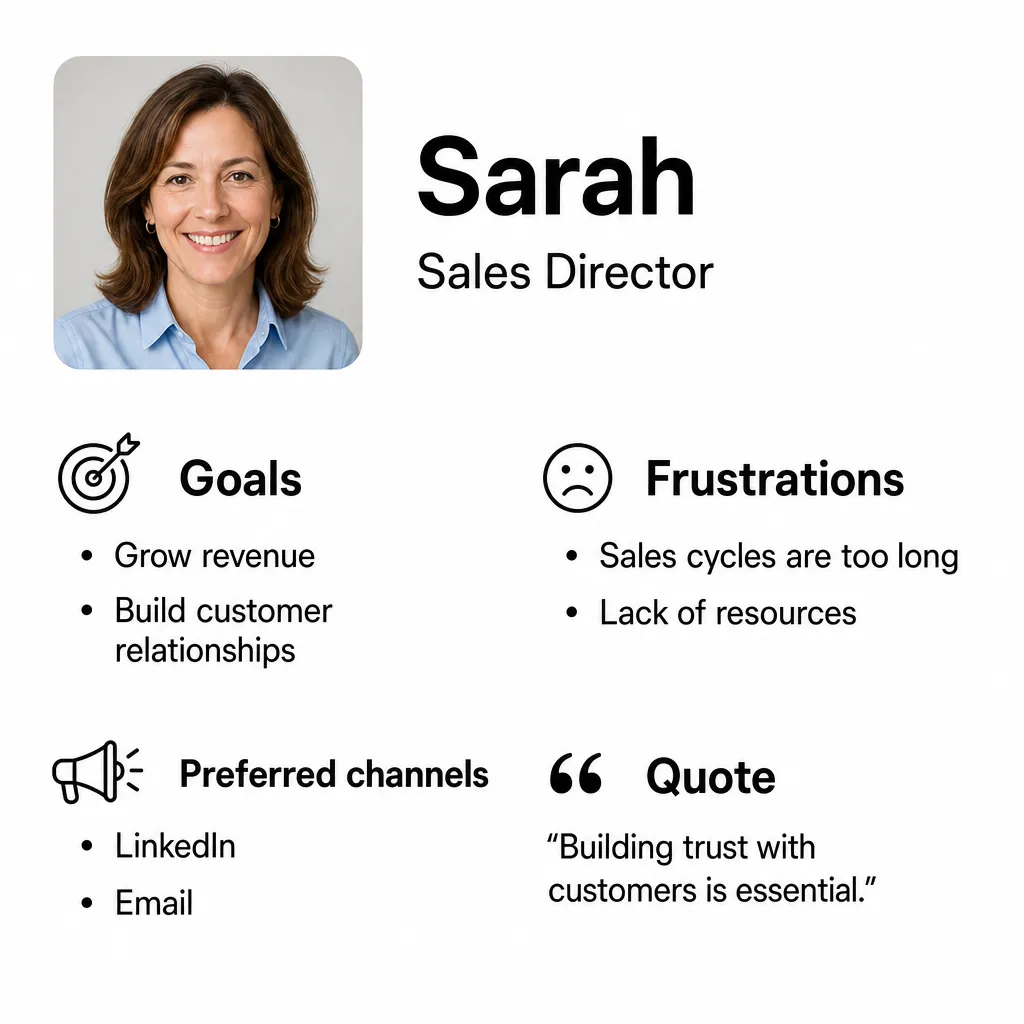
A successful model usually includes: a telling first name and photo, age and job title, key goals, sticking points, preferred media and a typical quote. This format helps teams take ownership of the persona easily and guides content creation.
Practical example: "Sarah, 42, Sales Director - Goal: automate her prospecting while keeping a personal touch - Quote: 'I want tools that fit into my daily routine' - Channels: professional webinars and Slack communities". These details dictate the tone and arguments to develop directly.
Optimised customer journey and conversion
Each persona follows a specific buying journey (awareness, consideration, decision) that determines which content is worth producing. Mapping it out helps you anticipate needs and objections at every stage.
The awareness stage calls for educational content (articles, checklists) that addresses their business challenges. Consideration demands tangible proof (case studies, comparisons). The final decision leans on reassurance (customer reviews, free trials).
Improve your conversions by personalising your calls to action: "Download the white paper" for a prospect still exploring, "Request a quote" for a buyer in the final stage. This targeted adaptation lifts your performance significantly.
Personas in action on your website
Well-defined personas can dramatically improve how your website and your digital strategy perform. By targeting your users precisely, this approach optimises the visitor journey, organic rankings and conversions, all while meeting your audience's real expectations.
Content, SEO and integrated marketing
Bringing personas into your content and SEO strategy radically changes how you approach your website. Pairing customer knowledge with optimisation techniques attracts better-qualified traffic and increases conversions over the long term.
- Long-tail keywords: Each persona helps you target specific queries that match a more relevant, less competitive search, which strengthens your rankings.
- Topic cluster structure: The persona's interests let you organise your content into thematic silos with pillar pages and supporting articles that establish your expertise.
- The right formats: Each persona's preferences (videos, infographics, guides) guide content that grabs attention and maximises engagement.
- Tone and style: The persona's level of knowledge and vocabulary directly shape how you write so the connection feels natural.
This personalisation automatically improves your SEO performance: longer time on site, lower bounce rate and more social shares. Search engines reward that relevance by ranking your pages higher.
Analysing results per persona shows which content performs best and helps you prioritise the investments that deliver the strongest return. This continuous improvement keeps your strategy sharp.
Personalised UX and user journeys
Personalising the user experience around your persona's characteristics transforms how people navigate your site. It lets you meet each profile's precise needs and remove the friction that blocks conversion.
The interface adapts to the user's technical level: simplicity and guidance for beginners, quick access to technical resources for experts. This targeting makes it easier for every visitor to reach their goals.
Forms adjust too: a minimum number of fields for mobile users in a hurry, more in-depth questionnaires for prospects at the decision stage. That flexibility increases completion rates and improves the quality of the leads you collect.
Measurement and continuous iteration
Tracking performance per persona proves your strategy actually works and guides future optimisation. This data-driven approach replaces assumptions with measurable certainty and lets you allocate your marketing budget more intelligently.
Segmented dashboards break down organic traffic, conversions and engagement by profile type. That precision reveals which personas are most profitable and which content works best. A/B tests compare how well messages and journeys tailored to each customer segment perform.

Rank Higher Without the Manual Work
From technical audits with Nox to competitor monitoring with Marc, Sedestral's AI agents cover every layer of SEO so your team doesn't have to.