If you want your marketing strategy to work, you need to organise your communication around a few key themes that bring your audience together. That's exactly what content pillars do: they act as the thematic foundation for everything you publish, while keeping your editorial line consistent. This guide walks you through how to identify, define and use those pillars to build a content approach that's logical, sustainable and actually performs.
What is a content pillar?
In digital marketing, a content pillar is the central topic that structures your whole editorial strategy. It stops you scattering your creative energy in every direction and gives a clear line to your communication on social media and every other channel.
Definition and role for the brand
A content pillar is a major theme you develop systematically to strengthen your overall strategy. It works as a strategic guide: it weeds out off-topic content and helps you target your audience effectively.
- Thematic structure: it organises your ideas into distinct categories, which makes planning and production much simpler.
- Editorial consistency: it keeps your message steady and in line with your brand values, so your audience understands exactly where you stand.
- Strategic filter: pillars help you pick relevant topics and drop the filler.
- Business alignment: every pillar should tie directly to your business goals and to the profile of your target persona.
Take a platform that sells social media management tools. It could structure its communication around pillars like "Social media strategy", "Community management careers", "Work-life balance" and "Product features". These guiding themes shape both the content and the tone of every post.
SEO benefits and topic clusters
Content pillars naturally lead you to build topic clusters, a structure where one main page covers a subject in depth and links out to more specific satellite pages. This approach helps search engines understand your site and strengthens your organic rankings.
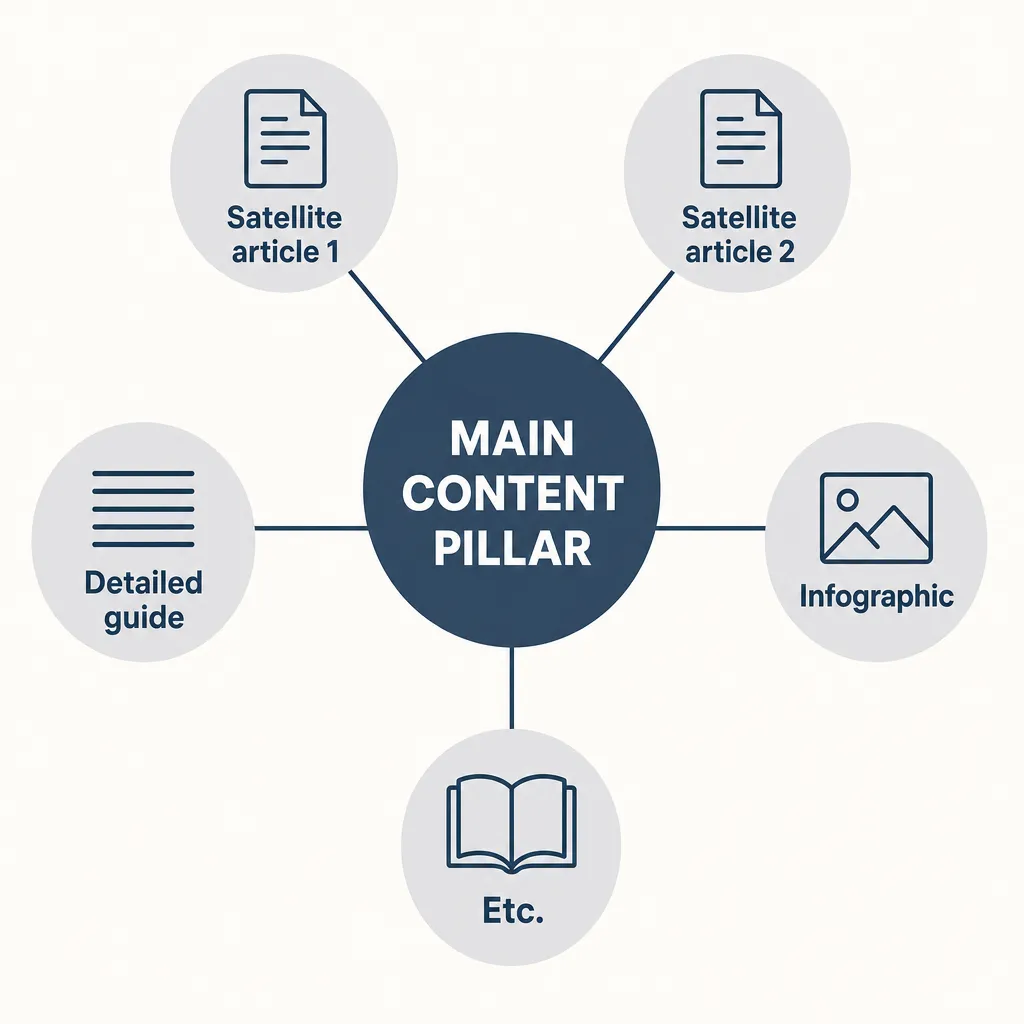
By developing 3 to 5 pillars in depth, you establish your brand's authority on those themes. That expertise translates into better visibility and a real competitive edge.
The pillar approach also lends itself to editorial series that build your credibility over time. Publish an annual "SEO trends" piece, for example, and you'll cement your leadership on that subject year after year.
How many pillars and how deep
The sweet spot is 3 to 5 pillars: enough to be comprehensive, few enough to stay manageable. Too few and you limit your reach, too many and you spread yourself thin.
To keep production sustainable, each pillar should generate at least 20 content ideas. That depth lets you publish regularly across several cycles. A clear common thread between the topics within a pillar makes relevant, coherent content creation a lot easier.
How to define your content pillars
To build solid content pillars, you need a structured method. Your business objectives are the starting point for defining themes that are both relevant and built to last.
Goals, personas and selection
Start by setting SMART goals (specific, measurable, achievable, realistic and time-bound) to guide your choice of pillars. For example: "Increase qualified leads by 20% within six months through SEO-optimised content".
Next, build a detailed profile of your persona: their characteristics, their challenges and their preferred communication channels. This step lets you identify the topics that resonate with your target audience for maximum engagement.
- Needs analysis: collect frequently asked questions, keywords and feedback to pin down what your audience expects
- Strategic alignment: choose themes that serve your commercial goals while meeting the needs you've identified
- Gradual testing: generate 8 to 10 ideas, then narrow down to the 3 to 5 content pillars that perform best in your first tests
Balancing your own goals with what your customers want is essential. To reach community managers, for instance, go for pillars built on practical tips, professional tools and work-life balance rather than topics that are too broad.
Cluster structure and SEO
Once your pillars are set, break each theme down into a variety of subtopics to schedule in your editorial calendar. This keeps production regular and balanced across all your themes.
Create the central content first, as a comprehensive guide, then gradually develop the satellite articles. Connect them smartly with internal links and smooth navigation to improve both user experience and rankings.
Planning and ongoing measurement
Rotate between your pillars in your schedule to keep a steady rhythm. For example: cover a different subtopic each week and run a quarterly review.
Analyse the key metrics (traffic, engagement, leads, conversions) separately for each pillar so you can fine-tune your strategy. This granular view shows you which themes generate the most value.
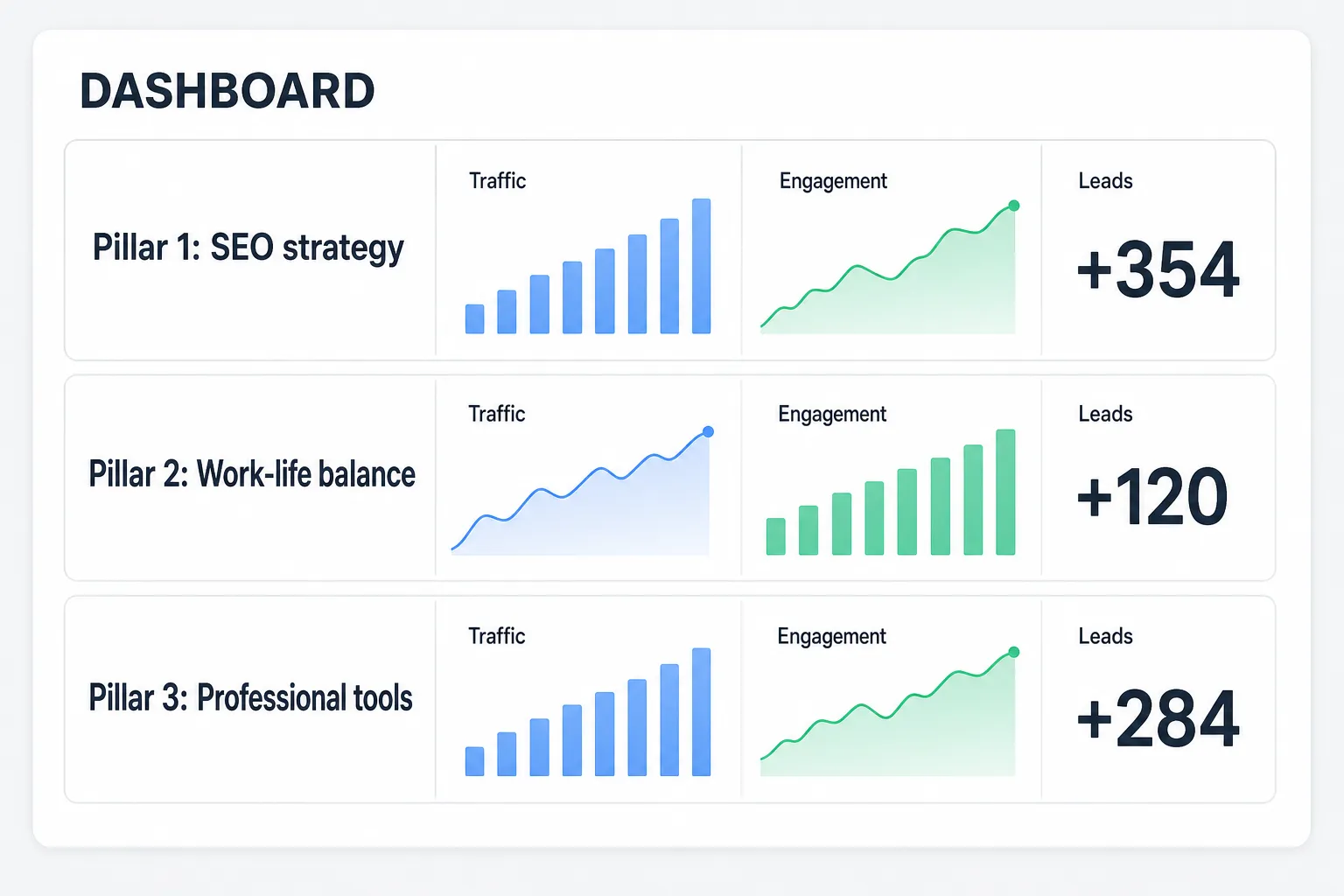
Set measurable targets and deadlines for each pillar. If the results are there, add a new pillar or double down on the existing one. If performance disappoints, revisit your persona, your message or your content formats.
Content examples and brand strategy
How you apply your editorial pillars depends on your industry and your specific goals. Here are concrete cases and proven methods to strengthen your content strategy.
Editorial pillars by industry
Well-built pillars serve four key goals of digital communication: inform your audience, inspire with practical cases, entertain to encourage interaction, and present your solutions organically.
Take a web agency that specialises in SEO. Its themes could be: "SEO techniques", "Optimisation tools", "Client success stories" and "Algorithm news". This mix delivers useful information, concrete proof and natural promotion all at once.
- Personal trainer: training programmes (education), balanced meal plans (inspiration), client transformations (social proof), coaching offers (commercial)
- Marketing consultant: digital strategies (expertise), behind the scenes of projects (transparency), high-performing tools (practical advice), training courses on offer (products)
- Fashion boutique: styling trends (inspiration), body-shape advice (education), customer outfits (community), new collections (products)
- SaaS product: key features (demonstration), technical tutorials (training), customer testimonials (trust), product updates (news)
This industry-specific tailoring is crucial for every brand. It's about finding the right balance between the value you deliver and your marketing goals, based on your precise target.
Golden rules for Instagram
On social media, and Instagram in particular, organising your content around pillars makes it easier to post regularly while keeping a consistent identity. Rotate the themes in your schedule to keep your audience engaged.
Write a detailed brief for each pillar: the tone to adopt, recurring formats, visual universe and calls to action. This framework simplifies content creation while reinforcing your brand image.
Cap purely promotional posts at 20% of your activity. Back up every sales message with high-value content to maintain engagement and build loyalty within your community.
Governance and prioritisation
Use your pillars as a filter to approve or reject content ideas. This simple system keeps your editorial line consistent over the long term.
If you speak to several distinct groups, develop specific pillars for each segment. A software vendor, for example, could define different themes for SMEs and for enterprise accounts.
Measure performance per pillar to spot the most effective ones and adjust your strategy accordingly. This data-driven approach maximises your return on investment and guides your future content strategy.

Rank Higher Without the Manual Work
From technical audits with Nox to competitor monitoring with Marc, Sedestral's AI agents cover every layer of SEO so your team doesn't have to.