This complete guide shows you how to build a social media strategy that actually works, and turn your social channels into real business assets. You'll learn how to set SMART goals, create content people engage with, run your marketing around your buyer personas, and measure precisely what all of it does for your bottom line.
What is a social media strategy?
A social media strategy is a structured plan that helps your business hit its goals through social media. It lines up your marketing activity with your commercial priorities by spelling out your target audience, your key message, the platforms worth your time and the metrics you'll track. This methodical approach turns random posting into a coherent system that brings in qualified traffic, leads and sales.
Why build one now
Having a social media strategy is no longer optional. Consumer behaviour keeps shifting and the algorithms keep getting more complex. Unlike businesses that post whenever they remember to, those that plan methodically gain visibility and convert their audience into loyal customers.
- Tougher competition: with more than 5 billion people on social media, only strategic content stands out
- Sophisticated algorithms: each network (Facebook, Instagram, X) favours different content types and time slots
- Measurable ROI: analytics tools now let you quantify precisely how posts affect sales
- New formats: the constant arrival of new formats (Reels, Stories) means you have to keep watching the space
A well-built content calendar also helps you split your resources sensibly between content production, publishing and paid promotion. Businesses that post consistently build an engaged community that naturally amplifies their reach.
How to set a clear goal
Success starts with SMART goals: Specific, Measurable, Achievable, Realistic and Time-bound. For example: "Increase newsletter sign-ups from LinkedIn by 30% within 3 months" rather than a vague "Boost our presence".
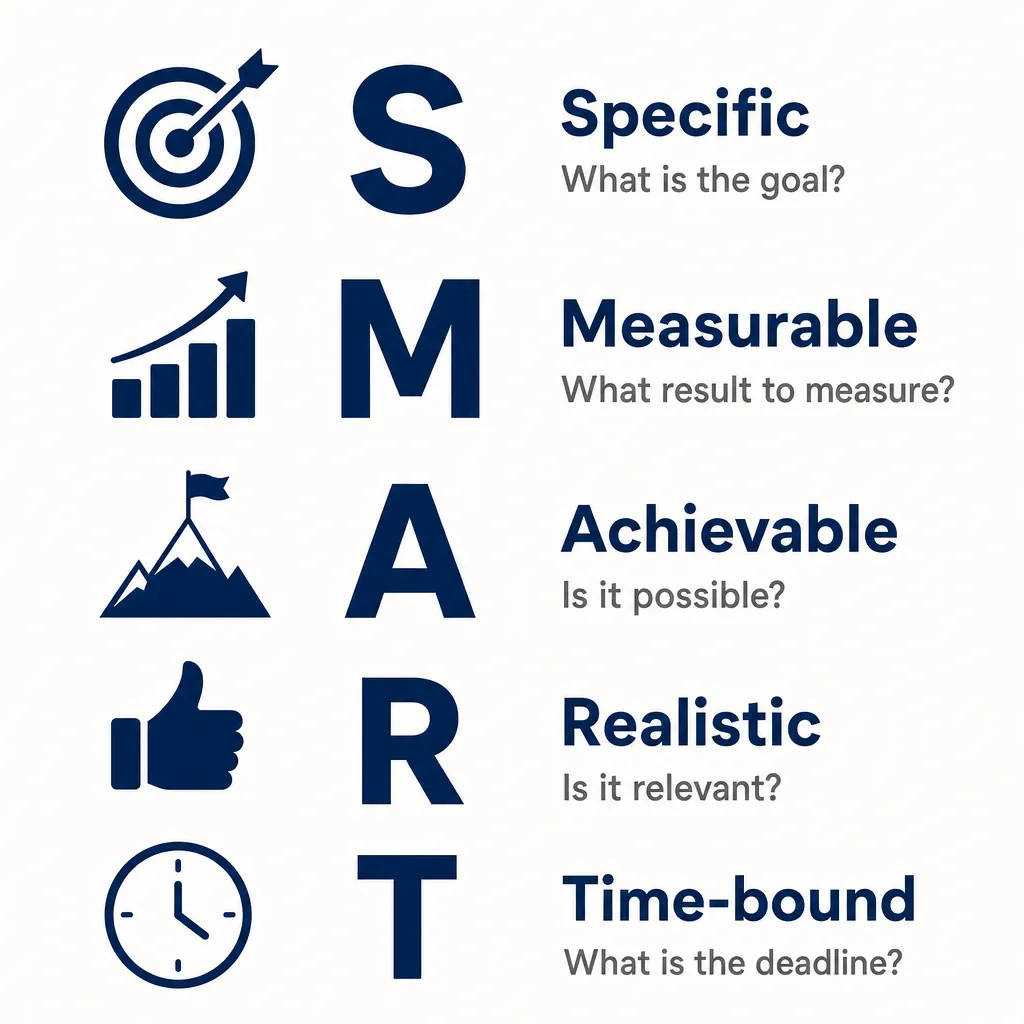
Goals usually fall into three types: Awareness (getting known), Image (getting liked) and Conversion (getting people to act). An e-commerce brand will build its strategy around sales, while a B2B company will focus on lead generation. What matters is that your social strategy lines up with your overall business goals.
Essential tools and processes
To run things smoothly, use tools that automate repetitive tasks and centralise your data. Solutions connected via API to Facebook, Instagram, LinkedIn and X let you publish across several channels while adapting the format to each network.
A unified dashboard makes a huge difference to how you handle interactions. Every comment, message and mention lands in one interface, which makes tracking easier and replies faster. This professional set-up boosts your company's credibility and keeps your community loyal.
Define your audience and your social networks
An effective social media strategy starts with knowing your audience well and picking the networks that genuinely match your buyer personas. Go for a quality presence on a few key platforms (2 or 3 at most) rather than spreading yourself thin. That focus improves your results while making the most of your marketing resources.
Build buyer personas you can actually use
Building useful personas goes well beyond basic demographics. The goal is to capture the deeper motivations, mental blockers and content habits of your target audience. A complete persona covers not just age and job title, but also day-to-day professional challenges, favourite media and the devices they use.
- Marketing Director, 35-50: checks LinkedIn every morning, values concrete case studies with hard numbers, prefers educational formats.
- HR Manager, 28-42: active on LinkedIn and Facebook, responds to content about workplace wellbeing and team engagement.
- Junior Project Manager, 22-32: on Instagram, TikTok and LinkedIn, consumes video tutorials and practical tips.
Analytics tools (Meta Business Suite, LinkedIn Analytics, Instagram Insights) enrich these profiles with valuable data: when people are online, which formats they prefer, how they interact. These insights guide your content strategy and your content calendar.
Pick the right network for each persona
Matching your personas to the right platforms is fundamental. LinkedIn excels for corporate B2B, Instagram and TikTok for young adults with punchy visuals, while Facebook still works well for local communities and the over-35s.
Adapt your digital communication to each stage of the customer journey: Reels and short videos build awareness, case studies and webinars build credibility, while product demos and testimonials help people make the final decision.
Measure the audience-network fit
To validate your platform choices, track metrics per persona: engagement rate by format, cost per interaction, and conversion towards your business goals. That data steers where your budget goes.
A persona-focused dashboard helps you spot opportunities quickly: if certain formats perform better with a specific audience, adjust your production accordingly. This data-driven approach replaces guesswork with grounded decisions.
Review your personas every six months to fold in new usage trends. Shifts in behaviour (a new format taking off, people migrating to another platform) call for regular adjustments to keep your digital marketing effective.
Create a content strategy that performs
To create a content strategy that works, the first step is to set up a central hub on your website, usually a blog, that feeds all your social channels. This smart approach lets you get the most out of every piece of content by tailoring it to the specifics of each platform.
Pillars, formats and brand voice
An effective social media strategy rests on 3 to 5 key themes aligned with your expertise and what your audience expects. These pillars might include educational resources (tutorials, guides), inspiring content (success stories, trends), social proof (customer reviews), your services, and community interaction.
Apply the 80/20 rule for the right mix: 80% information or entertainment, 20% promotion. That balance drives engagement without wearing your audience out. A specialist firm, for instance, will mostly publish practical advice, with a few well-placed offers in between.
Always adapt your formats to the quirks of each network. Short formats (15-30 sec) perform on Instagram and TikTok, while LinkedIn suits detailed content and YouTube is ideal for full tutorials. To go deeper on this approach, read our complete guide to content strategy, from the initial audit to setting SMART goals.
An efficient calendar and workflow
A well-structured content calendar guarantees a consistent presence. For a small business, think 3 posts a week on your 2 main networks, topped up with daily stories to keep the conversation going.
Streamline production with consistent visual templates and a clear process: create → edit → approve → schedule → publish. AI tools can simplify some of the work: generating copy variations, suggesting hashtags or adjusting the tone. Then analyse the results to fine-tune your social media strategy.
Repurposing and measurable CTAs
Creative repurposing amplifies your content by adapting it to different formats. Turn a guide into LinkedIn posts, an Instagram infographic, TikTok videos and a thread on X. This method boosts your visibility while making content creation far more efficient.
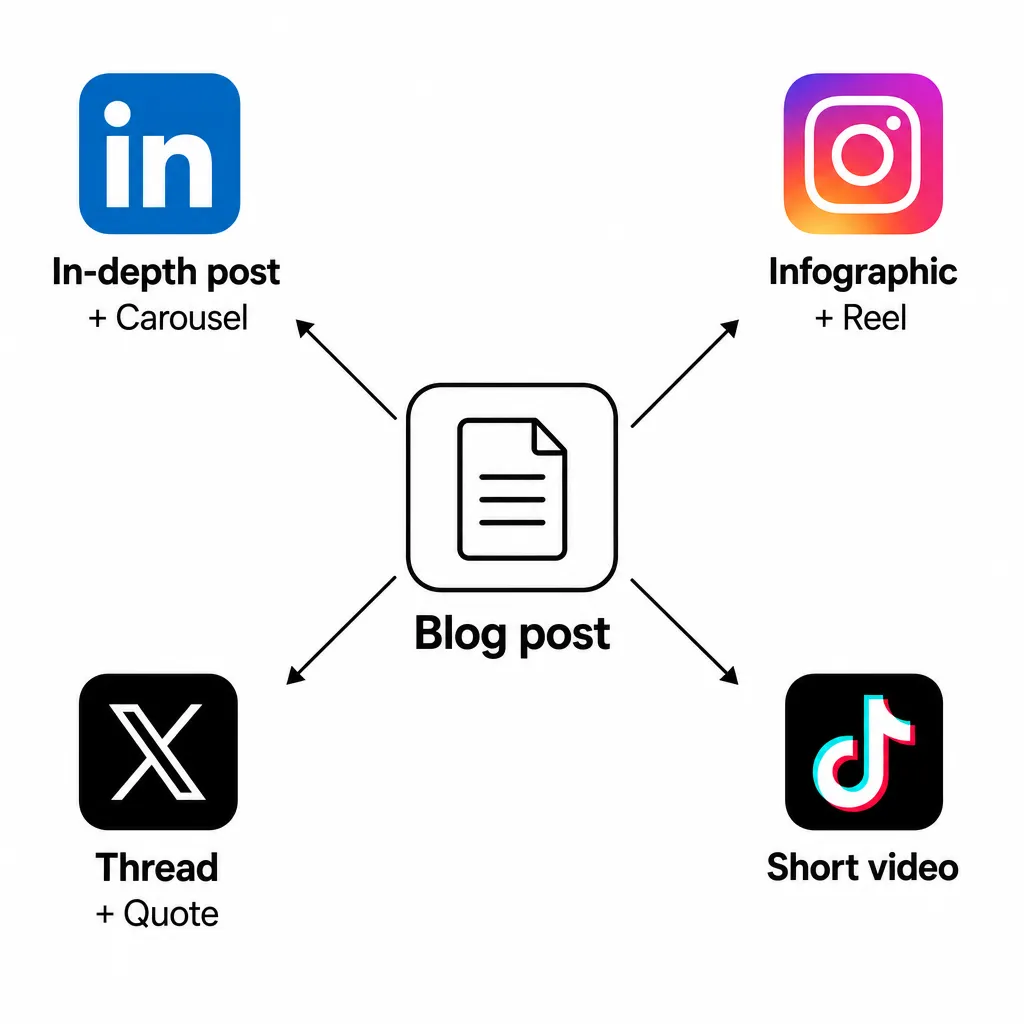
Always include measurable calls to action. Custom UTM links show you in Google Analytics which content on which platform brings in the most leads. Those insights will guide your future investment so you can build a strategy that performs even better.
Measure and optimise performance
To keep improving your social media strategy, you need a precise read on your results. Without reliable data, you can't tell what's working, allocate your resources properly or justify what you're doing to the rest of the business. The aim is to get past vanity metrics and focus on the social media KPIs that genuinely move your business.
KPIs aligned with the goal
Your social media KPIs should match your commercial goals exactly. If you want more visibility, watch reach, impressions and audience growth. To boost engagement, analyse interaction rates, shares and mentions. For an acquisition strategy, measure clicks to your site, cost per click and the traffic generated. And to track conversions, follow the leads you get, attributed sales and return on investment.
Segmenting your KPIs by audience and by stage in the customer journey sharpens your analysis. A post aimed at marketing directors might get fewer clicks than content for junior staff, but with a far better conversion rate. These insights let you shift budget towards the segments that perform best.
Test and iterate continuously
Continuous optimisation relies on a dashboard that brings together your social stats, your Google Analytics data and your business metrics. This unified reporting shows clearly how your work on social channels influences your results, which makes decisions much easier.
Regular A/B tests on all your content speed up your learning curve: compare post formats (video vs carousel), headlines (question vs statement), visuals (photo vs illustration) and posting times. By testing one variable at a time before rolling out the winning versions, you steadily improve the effectiveness of your social marketing.
Connect social, SEO and revenue
Cross-analysing your social and SEO performance reveals synergies you'd never suspect. A successful campaign on Instagram or elsewhere generates signals (mentions, shares) that support your organic rankings. An integrated social-SEO approach helps you spot those opportunities and make the most of them.
Multichannel tracking is essential to understand the real impact of what you do. A prospect might discover you on social media, run a Google search, check online reviews and then finally buy through your newsletter. That winding journey needs proper tracking tools to attribute each touchpoint correctly.
Real examples prove the potential: some businesses see their organic traffic take off once they align their social media strategy with their SEO. That growth comes from engaging content, a well-optimised link architecture and greater authority thanks to interactions on social media.
Run your social channels efficiently
To manage your social media effectively, you need a disciplined approach to resources, automation of repetitive tasks and clearly defined social media governance. This method keeps your content quality high while making your team more productive.
Tool stack and automation
Good social media management relies on a well-chosen set of tools and integrations. API connectors to Facebook, Instagram, LinkedIn and X let you run campaigns across every platform at once, while automatically adjusting messages, visuals and schedules to the specifics of each network.
- Centralised publishing: manage all your content from a single dashboard, with automatic adaptations to each required format
- Unified inbox: bring all your social interactions (comments, messages, mentions) together for faster handling
- AI-assisted creation: easily produce copy variations, hashtag suggestions and platform-specific tweaks
- Built-in analytics: get a global view of your performance through consolidated reports
Smart automation saves precious time while keeping a personal touch. For example, by grouping every message about a promotion, you can route them quickly to customer service and monitor your response rate live. That responsiveness improves the customer experience and strengthens your company's brand image.
AI content tools boost your productivity while keeping your editorial voice consistent. They automatically generate versions optimised for engagement, test what performs best, and schedule the posts. This data-driven approach keeps improving your results without adding to the workload.
Processes, roles and moderation
Clarifying roles and responsibilities avoids overlap and keeps your communication consistent. Define which tools and integrations to use for each phase (creation, approval, scheduling, moderation, analysis) with specific commitments (such as a reply within 2 hours during the working day).
A clear moderation policy sets out how to handle interactions: acknowledge positive feedback, respond to criticism constructively, escalate complex complaints. This structure builds your community's trust and turns every exchange into a loyalty opportunity.
Organic and paid amplification
A strong amplification strategy combines organic and paid approaches to maximise the reach of your content. Analyse your performance to spot your most engaging posts. Why create something new when you can boost a post that's already performing well?
Get your staff involved to grow your audience naturally. Encourage your sales team to share case studies on LinkedIn, give managers post templates to showcase their teams, or launch an internal ambassador programme. These human voices inspire more trust than corporate announcements ever will.
Allocate your ad budget by platform and goal to optimise ROI. For example: 60% for conversions on Facebook, 25% for awareness on Instagram, 15% for testing new networks. Adjust those proportions based on performance and your company's seasonal priorities.
Set out compliance and account security
Data protection rules keep tightening and social media automation tools keep multiplying, so every business needs a solid grip on the legal and security side. A proactive approach to compliance doesn't just protect your organisation, it also strengthens your customers' trust in how you use their personal data.
Data and legal obligations
On social media, data compliance requires a clear understanding of how information flows between your company, the social platforms and the management tools you use. These tools typically access account credentials and posts, and may exchange some data with external services or AI models to optimise your content.
- Data minimisation: collect only the data your social media strategy strictly needs, and tell users clearly how it's used.
- Lawful basis: make sure every use of personal data, including analysis of user behaviour with AI tools, rests on a valid legal basis under GDPR (consent is one of several), and get consent where it is required.
- Right to erasure: set up a simple procedure so users can ask for their data to be deleted, and respond without undue delay, within one month (extendable by two months for complex requests).
- Transparent processing: state in your privacy policy which data is shared and with which third parties (OpenAI, social APIs, etc.).
Selling or sharing personal data gathered via social media is tightly regulated. Under GDPR and UK GDPR, passing it to third parties needs a valid legal basis and must be disclosed to the people concerned; under the CCPA, California consumers can require a business to stop selling or sharing their personal information. This page details the privacy policy of a social media management tool: the types of data collected, how it interacts with platform APIs and whether AI services are involved. Check the data privacy terms for your social media strategy
Staying compliant also means regularly reviewing who has access to your company's social accounts. Strong unique passwords (changed immediately after any suspected compromise), multi-factor authentication and a quarterly review of access rights significantly reduce the risk of a hack that could damage your brand image and expose customer data.
Style guide and editorial strategy
Writing an editorial style guide keeps your communication consistent across every digital channel and makes onboarding new team members easier. This key document defines the tone to use, the preferred formats, the ideal posting frequency and the rules for multichannel distribution, so your digital identity stays coherent.
Organising your content into themed groups (clusters) reinforces your expertise while boosting your organic rankings. By planning 4 monthly themes (tutorials, customer stories, product launches, industry tips), you can create series of posts tied to in-depth blog articles, building an interconnected and relevant content ecosystem.
Governance and secure access
Securing access to your business social accounts means implementing single sign-on (SSO) and granular, role-based permissions. A marketing intern obviously shouldn't have the same access as a head of communications, and that segmentation greatly reduces the risk of mistakes or inappropriate posts.
Emergency procedures for digital crises round off your governance. Who has the authority to delete a problematic post? How do you defuse a brewing controversy? Who gets alerted in case of a security breach? Clearly defined protocols enable a fast response and limit the damage to your online reputation.

Rank Higher Without the Manual Work
From technical audits with Nox to competitor monitoring with Marc, Sedestral's AI agents cover every layer of SEO so your team doesn't have to.