If you've ever searched on Google, you've probably noticed that prominent box sitting at the top of the search results, giving you a direct answer before the first organic links even appear. That prime spot, known as position zero, is reserved for the much sought-after featured snippets.
When your content lands in a featured snippet, it means Google sees your information as the best possible answer to the user's query. The search engine trusts your content enough to place it above every other organic result.
This complete guide explains exactly what a featured snippet is, why it matters so much for your SEO and, above all, how to win one. You'll find practical techniques, based on SERP analysis and E-E-A-T, to position your site as the go-to source and maximise your chances of landing in position 0. Here's a typical featured snippet:
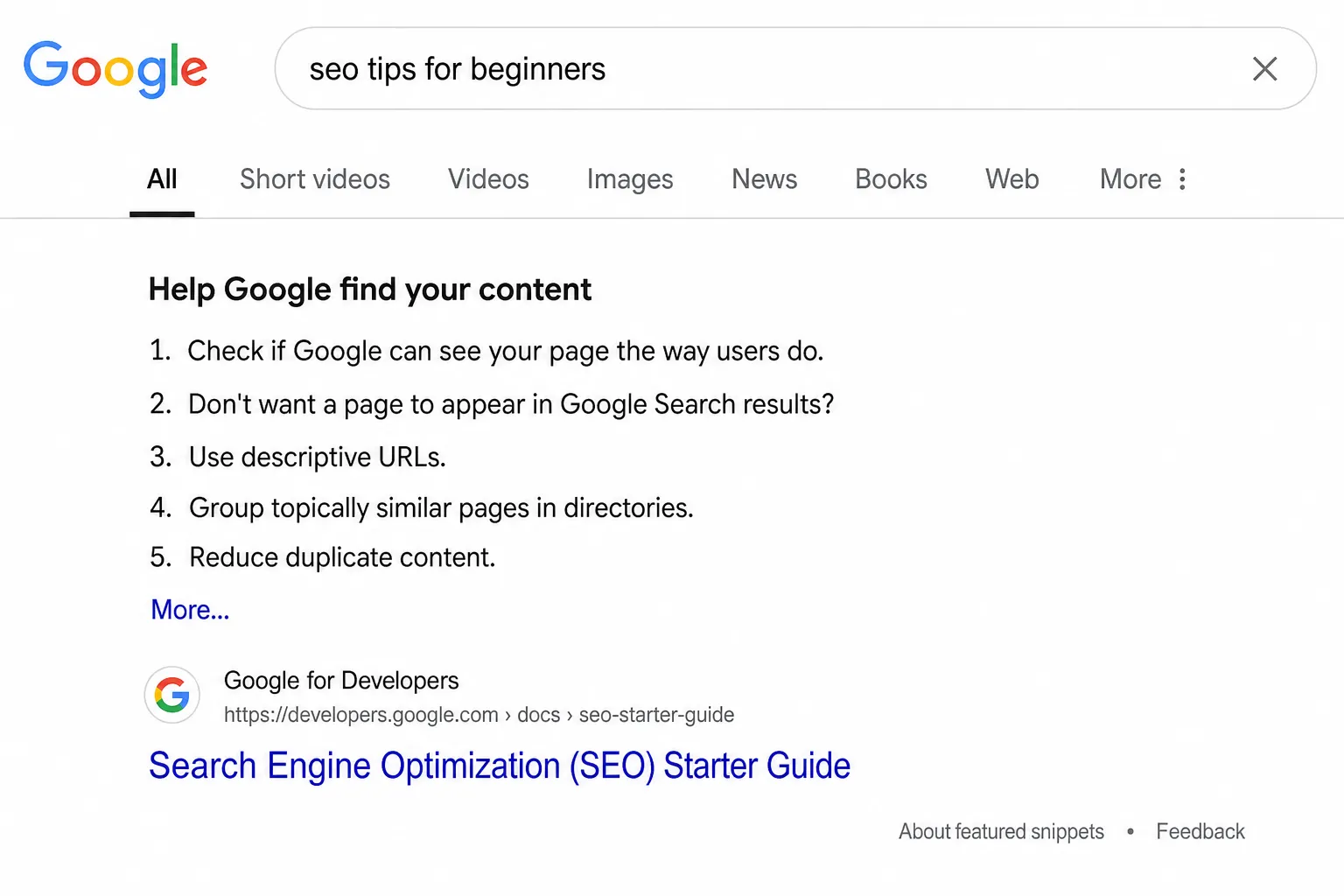
What is a featured snippet: definition and how it works
A featured snippet, sometimes called an answer box, is a highlighted block that Google places in position zero, right at the top of the results page. It gives a concise, self-contained answer to the user's search, along with the page title, the source URL and often an image.
Google picks this passage automatically from a page that's already indexed, usually one ranking in the organic top 10, and displays it in a condensed format. Its algorithm chooses the content it judges most relevant to match the search intent exactly.
This optimised snippet typically includes:
- A clickable title (the same as the source page's title)
- The URL of the original page
- A short summary of 40 to 60 words at most
- Often a relevant image as an illustration
Search engines generate these snippets automatically, favouring the pages they consider most credible and well structured for queries starting with "how", "why", "what is" or "how much".
Optimise your content to win a featured snippet
Why aim for position zero: impact on your SEO
Reaching this strategic spot gives you exceptional visibility in the search results and grabs users' attention straight away. The benefits for your SEO are substantial:
- More relevant visitors: Even when the direct answer shows up immediately, plenty of users click through for more detail. Being in position 0 brings you valuable, qualified traffic.
- Stronger credibility: When Google cites you as the reference, it instantly reinforces your image as an authority in your field.
- Better fit with voice search: Voice assistants very often use featured snippets as the source for their spoken answers.
- Answers to precise queries: This kind of snippet lets you answer specific questions and reach a very targeted audience.
Featured snippet vs rich snippet: key differences
It's important to understand these two Google concepts properly, because how they work and how they affect the SERP are fundamentally different.
| Feature | Featured snippet (position 0) | Rich snippet (rich result) |
| Purpose | Give an immediate answer to the question asked | Enhance the display of a standard result |
| Placement | Always at the very top of the search results | Can appear anywhere in the list |
| Requirements | Algorithmic decision based on relevance | Needs specific Schema markup |
| Examples | How-to guides, definitions, comparisons | Ratings, prices, dates, availability |
In short, rich snippets require specific technical groundwork, while featured snippets reward the quality and organisation of your content above all else.
Types of featured snippets: formats and use cases
To match search intent as closely as possible, Google offers several highlighted snippet formats. In SEO, we distinguish several types of featured snippets that correspond to different user needs. By adapting your content to these specific shapes, you increase your chances of winning that strategic spot.
The paragraph: for definitions and short answers
The most common featured snippet takes the form of a paragraph a few lines long. Perfect for explaining a concept or giving a simple answer, this snippet lets users grasp the essentials without clicking.
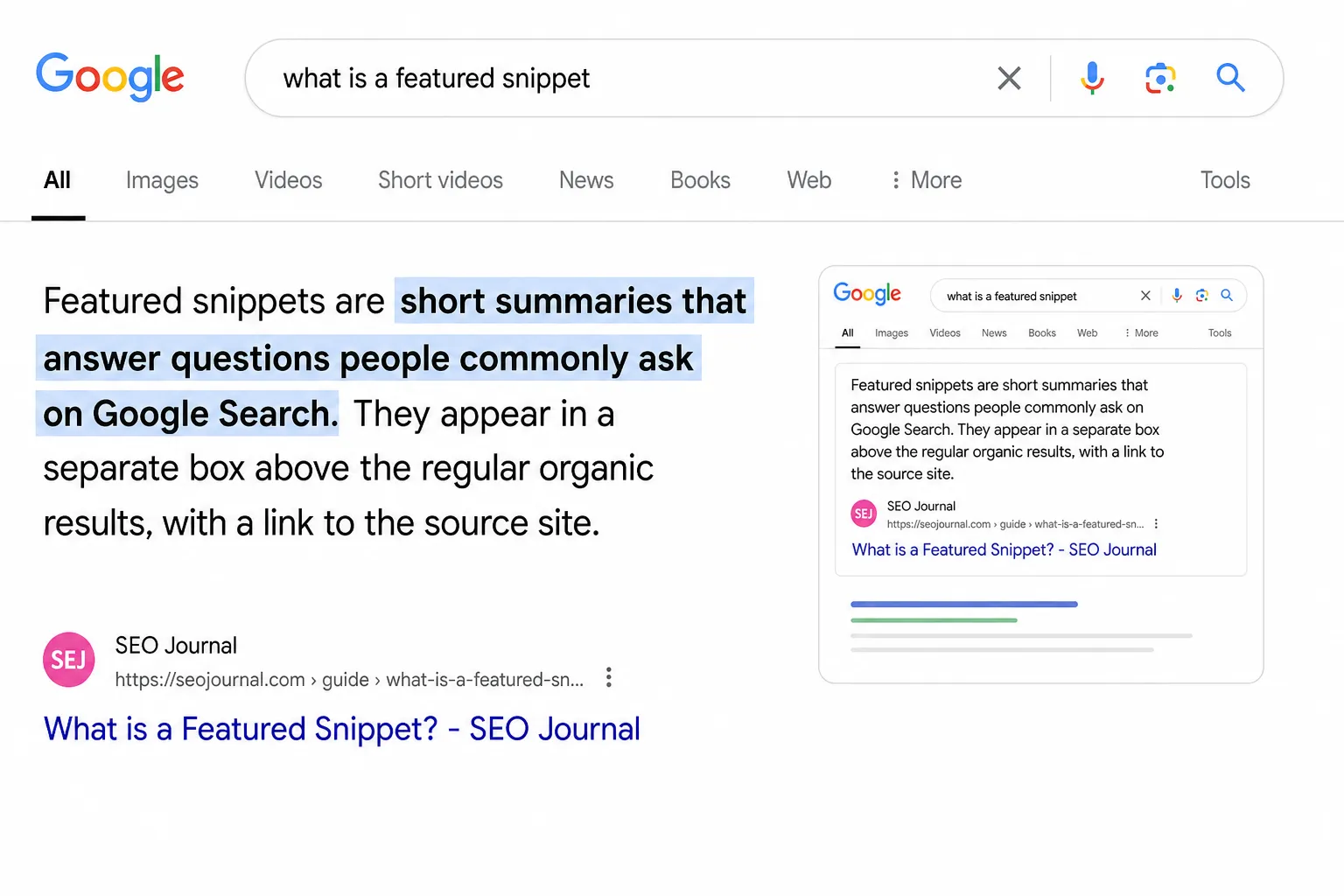
Optimisation technique: Start by rephrasing the question in a subheading, then write a clear explanation of 40 to 60 words. Your text should work as-is as a featured snippet example.
The list: ideal for tutorials and step-by-step guides
Very common for how-to queries, this format is perfect for how-to guides. Google pulls your lists (bulleted or numbered) to create a highly readable snippet.
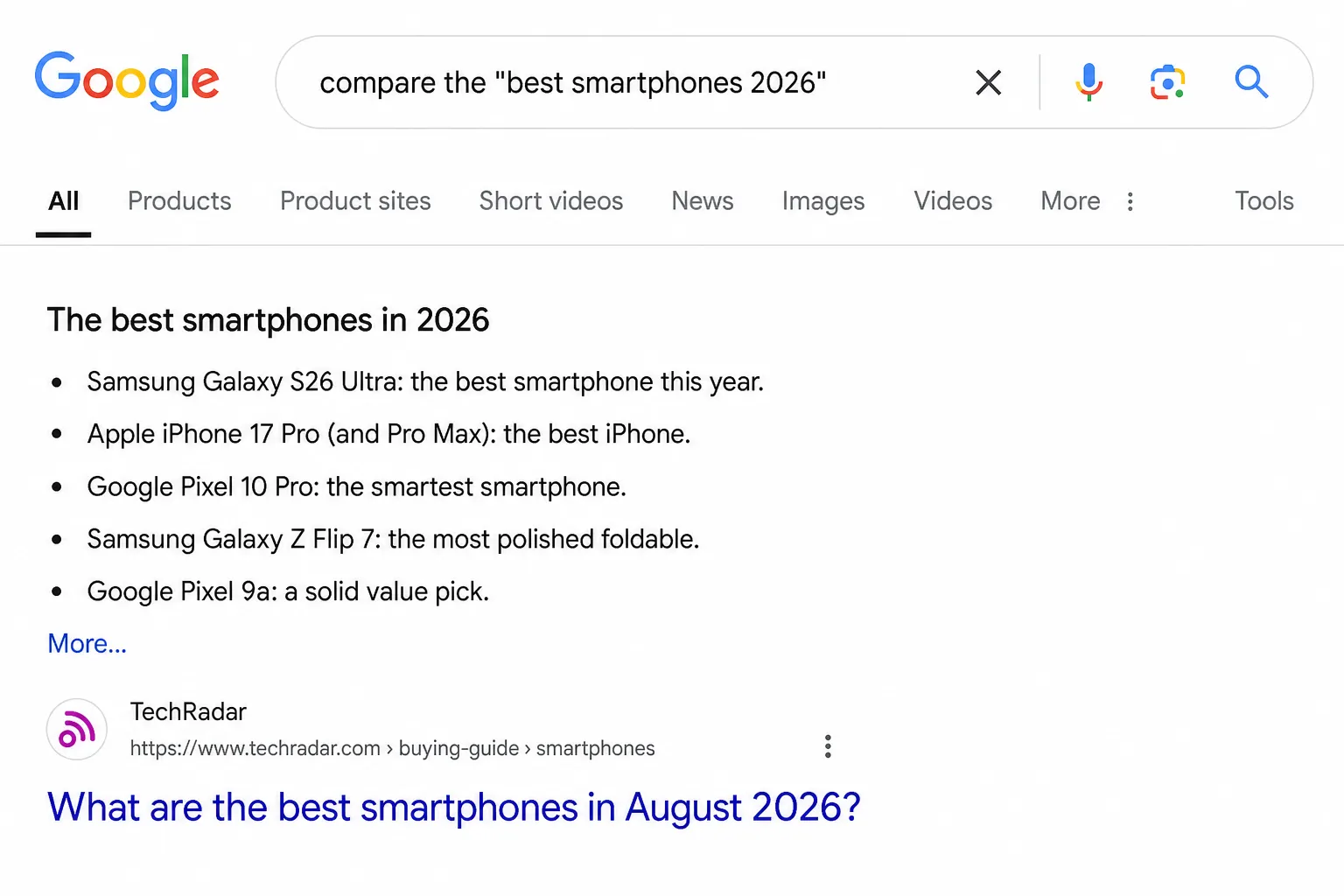
Implementation tip: Structure your content with logical lists (sequential steps or key points) preceded by a short introduction. This layout boosts your odds with this type of featured snippet.
The table: for comparisons and structured data
Less frequent, the table excels at presenting comparisons. When a user is looking for this kind of information, Google turns your HTML table into a very clear visual snippet.
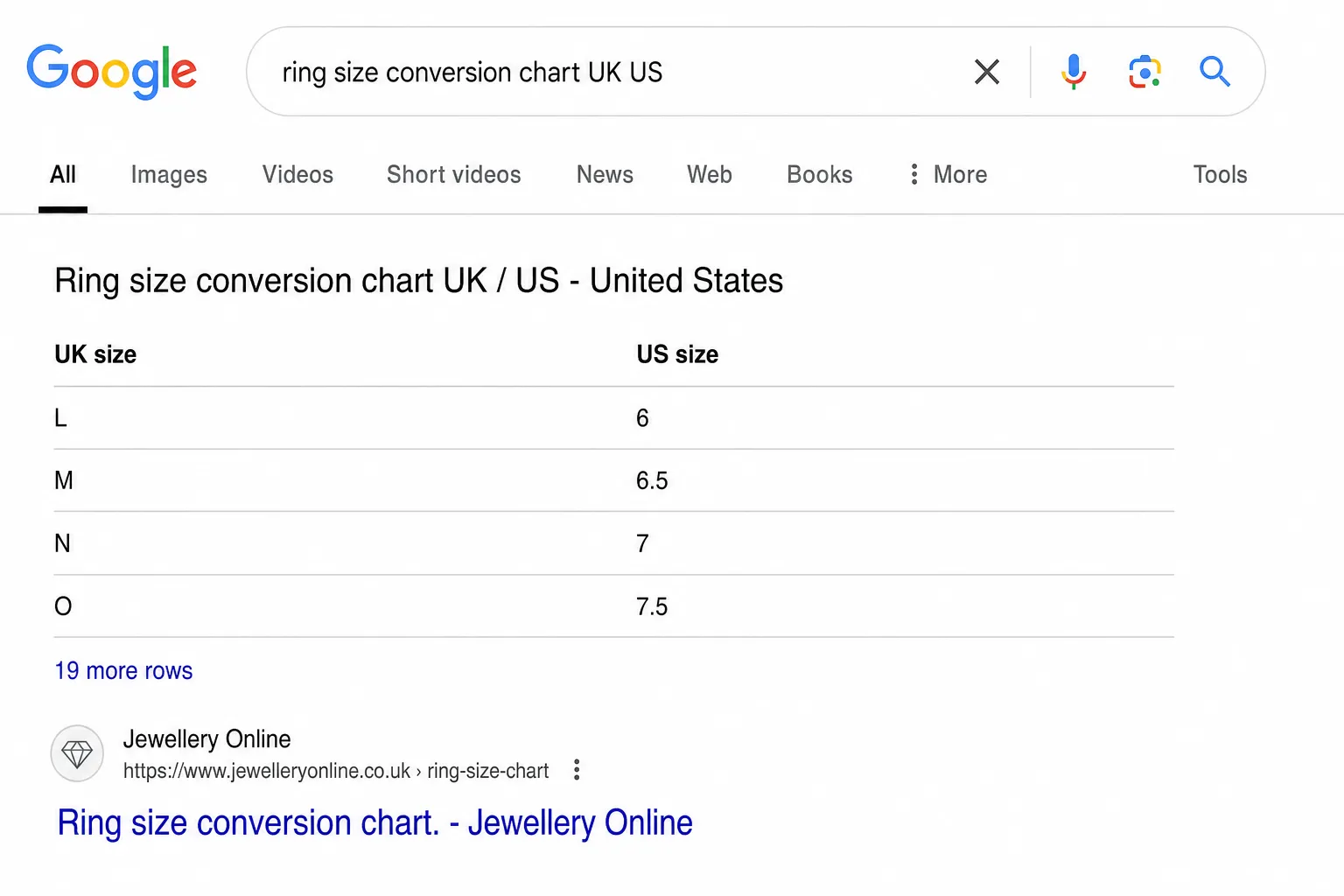
Best practice: Build simple tables (3-4 columns maximum) with explicit headers. Place them high on the page and use proper HTML markup to maximise your SEO potential.
The video: for demonstrations and visual tutorials
On some queries, a video clip is displayed as the featured snippet. Google selects a relevant segment to provide a visual answer to the query.
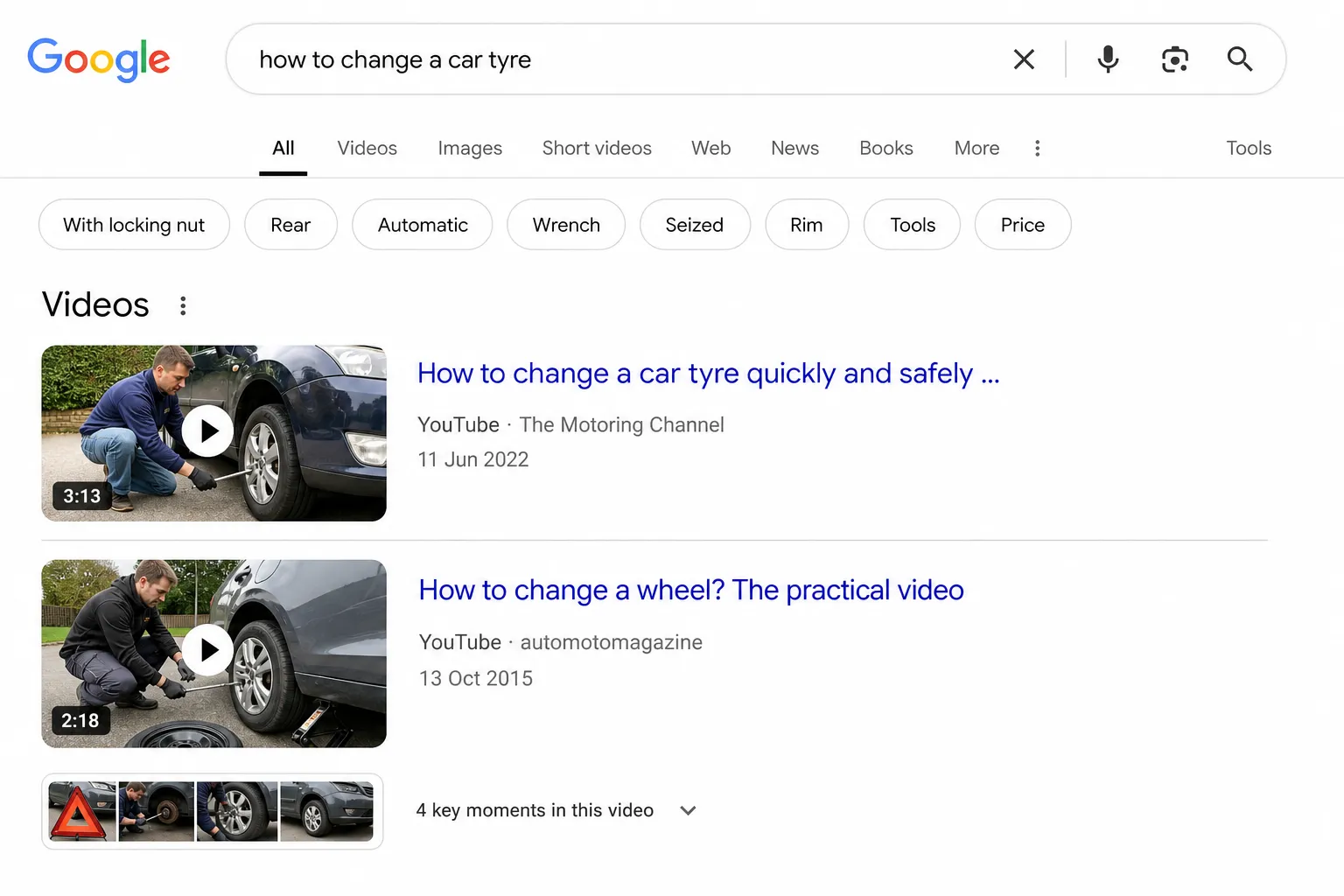
Recommended optimisation: Publish your videos on YouTube with a question-and-answer title, add timestamped chapters and a detailed description. These elements help the algorithm pick your content as a video featured snippet example.
How to get a featured snippet: a practical strategy
Reaching position zero takes a structured approach and never happens by accident. Your page must already rank among the top 10 search results, since an Ahrefs study published in 2017 found that 99.58% of featured snippets came from pages already ranking in the top 10. This strategy therefore fits neatly into a broader SEO effort.
Identify featured snippet opportunities
Start by spotting the queries most likely to trigger a featured snippet so you can focus your efforts.
- Target questions: Use tools like Semrush or AnswerThePublic to identify the questions your audience asks most often: "how", "why", "what is"...
- Analyse your performance: In Google Search Console, find the queries where your pages sit between positions 2 and 10, the ideal range for winning a snippet.
- Study the competition: Note the keywords that earn them position 0 and analyse the format of their answer so you can do better.
- Favour long-tail queries: Precise queries face less competition and improve your chances of getting a featured snippet.
Find out how to target featured snippets
Structure your content to maximise extraction
The way you organise your content directly affects the odds of Google picking it as a featured snippet.
- Question in the heading: Phrase your H2s/H3s as the precise questions people are asking.
- Clear answer: Place a concise answer (40-60 words) right after the heading to guide the search engine.
- Suitable format: Use numbered lists for steps, bullet points for lists and tables for comparisons.
- Go deeper: Then follow up with concrete examples and evidence to strengthen your content.
Optimise technical SEO and markup
Solid technical SEO helps indexing and increases your chances of reaching position zero.
- Performance: Work on load speed and the mobile experience to meet the Core Web Vitals.
- Clean HTML: Keep a logical hierarchy: a single H1, then H2s/H3s to structure your questions and answers.
- Schema markup: Implement the appropriate types (FAQPage, HowTo...) in JSON-LD format. Keep in mind that Google retired HowTo rich results in 2023 and no longer shows FAQ rich results at all, so this markup does not change how you appear.
- Optimised images: Choose a landscape format (e.g. 1200×900px) and write descriptive alt attributes.
Strengthen E-E-A-T to build credibility
Google rewards sites that demonstrate expertise and trustworthiness. Highlight your verified sources, your social proof and your qualified authors to inspire confidence, in readers and in the algorithm alike, and make winning a featured snippet that much easier.
- Demonstrated experience: Include impactful visuals such as photos, screenshots, home-made videos and real case studies.
- Visible expertise: Build complete author profiles with a biography, qualifications, a professional photo and a detailed description of your skills.
- Established authority: Earn backlinks from trustworthy sites and always cite credible external sources.
- Reinforced trust: Show the publication/update date clearly, present your editorial policy and contact details, and secure the site with HTTPS.
Monitor and iterate to hold position zero
The SERPs change constantly. Keep an eye on your rankings and adapt your approach to hold on to that valuable position zero.
- Active monitoring: Use Google Search Console and SEO tools to track impressions, clicks, CTR and average position.
- Impact analysis: Assess the effect of the snippet on your organic traffic and on your bounce rate, which is often high when the answer is complete.
- A/B testing: Experiment with different answer lengths and every possible format: paragraph, bulleted list or comparison table.
- Regular updates: Refresh your content with the latest information and industry trends to maintain your credibility.
A worked example: winning featured snippets for a store
Here is how the method above applies to a typical online store.
Example: a kitchen equipment e-commerce site
Picture an online store specialising in kitchen equipment with only a handful of featured snippets, aiming to win more snippets and grow qualified traffic.
Initial diagnosis:
- Pages ranking between positions 2 and 10 on question-based queries
- Dense but poorly organised content: overly long paragraphs with no questions in the headings
- No FAQ markup or structured data at all
- No author page and no proof of expertise whatsoever
Action plan:
- Targeted restructuring: On priority pages, add H2/H3 headings phrased as questions, each followed by a clear answer (50 words max)
- Semantic optimisation: Enrich the copy with synonyms and related terms, and rework sections into bulleted lists or tables
- Structured markup: Add Article markup with author information on editorial pages
- E-E-A-T reinforcement: Create detailed author pages with biographies, qualifications and professional photos, and add customer testimonials
- Original evidence: Run hands-on comparison tests with photos and a results table
What to track after 6 months:
- Number of featured snippets won
- Impressions on the targeted queries (Google Search Console data)
- Organic traffic on the optimised pages
- Average CTR for pages in position 0
- Conversion rate on the optimised pages
3 mistakes to avoid
- Repeating the keyword too often: Vary the vocabulary with natural synonyms rather than repeating the main term. Google gives more weight to rich, varied content.
- Answers of the wrong length: An answer under 30 words often lacks precision, while text that's too long (over 70 words) is rarely picked as a snippet. The sweet spot is usually between 40 and 60 words.
- Forgetting to maintain the content: Featured snippets can be lost when content goes stale. Run quarterly checks, since freshness helps you keep position zero.
This example shows that winning a featured snippet isn't just about SEO techniques. Understanding search intent, using a clear structure and proving your expertise matter just as much.
Advanced strategies to keep your featured snippets
Reaching position zero is the first win, but staying there against the competition is harder. Here are the methods that help keep featured snippets over the long term.
Proactive monitoring and automated alerts
Set up real-time alerts so you're notified the moment you lose a featured snippet. Changes can come from an algorithm update or from competitors improving their content. Check impressions and positions every week in Google Search Console, Ahrefs or Semrush.
Continuous optimisation and regular refreshes
Update your answers regularly by adding recent statistics, questions pulled from "People also ask" and elements your competitors in position 0 are using. Adapt the format too: for instance, turn a paragraph into a bulleted list or a table to improve your chances of being selected as the snippet.
Diversify formats and multiply opportunities
Don't limit yourself to a single type of answer. Create complementary content to generate different types of featured snippets and maximise your visibility.
- Add a structured FAQ section to answer specific questions.
- Create comparison tables ("X vs Y" or "top 10") for evaluative searches.
- Offer step-by-step tutorials as numbered lists for "how to" queries.
- Provide short, clear definitions for "what is" or "definition" questions.
Let AI Handle Your Content Publishing
Alya researches keywords, writes and publishes content directly to your CMS, WordPress, Shopify, Wix and more, on autopilot.