Choosing between inbound and outbound marketing is one of the key strategic calls for any business that wants to generate more leads and get more out of every pound you put into marketing. It shapes how well you reach the right prospects, how solid your customer relationships become and how fast you grow. In this guide, we break down both approaches, what each one does best and how to combine them effectively based on what your business actually needs.
Inbound and outbound: definition and differences
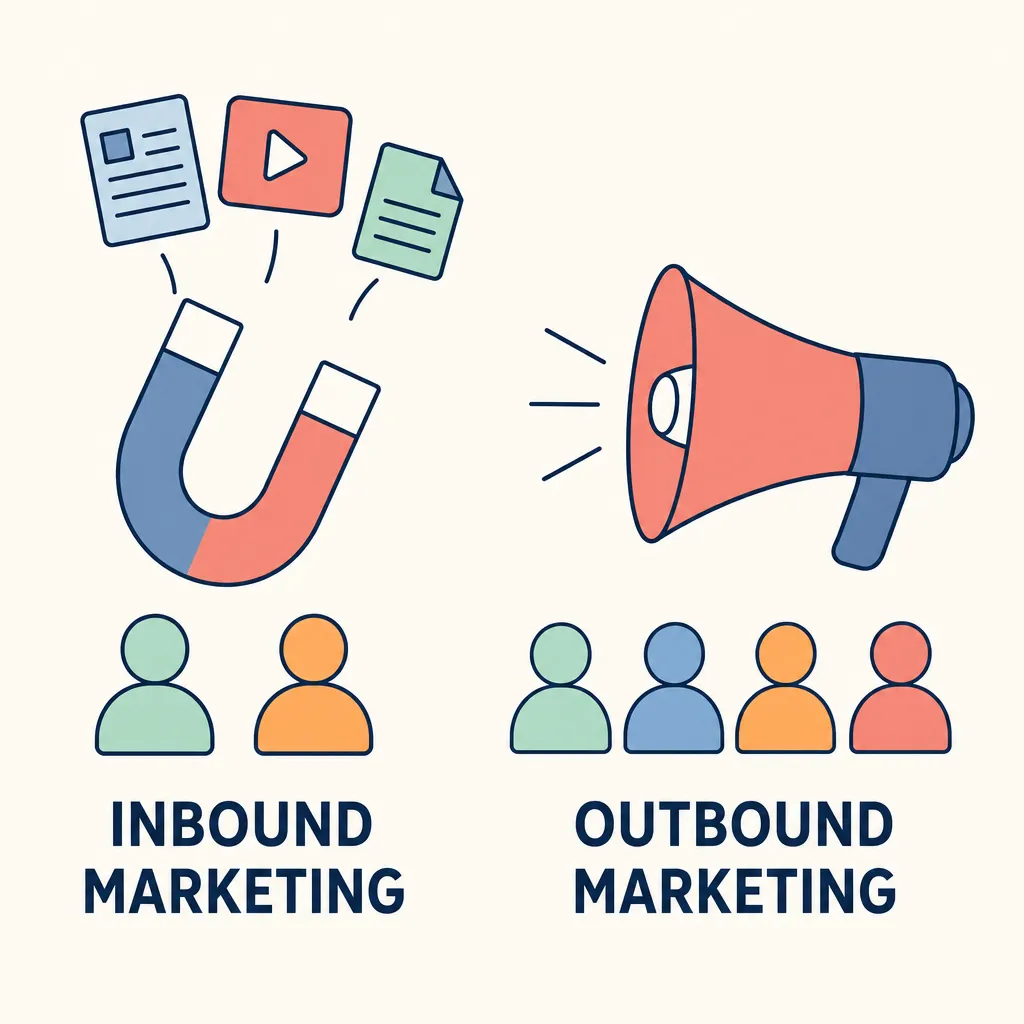
Modern marketing runs on two distinct logics for winning prospects. Inbound marketing attracts potential customers organically through valuable content. Outbound marketing takes a more direct route by actively targeting prospects. Our inbound vs outbound marketing comparison reveals fundamental differences that have a real impact on your sales performance.
What is inbound marketing
Inbound marketing is an attraction method built on creating relevant content that naturally draws in qualified prospects. Unlike outbound, it favours business relationships built over time. A single well-optimised blog post can keep generating leads for years, whereas an ad campaign stops the moment the budget runs out.
- Content marketing: blog posts, guides and resources that answer your audience's specific needs
- Lead magnets: white papers, webinars or reports exchanged for qualified contact details
- Nurturing: personalised email sequences that follow the customer journey
- Social media: sharing expertise and building organic engagement, particularly on LinkedIn
The strength of inbound? Attracting prospects who already know they need something like what you sell. An article titled "How to choose HR software" will reach HR directors who are actively researching, unlike a random cold call.
This method creates a compounding effect: every piece of content becomes a lasting asset. A library of optimised articles can generate a growing stream of leads over time while strengthening your authority in your industry.
What is outbound marketing
Outbound marketing relies on a proactive logic that uses interruptive channels. This marketing definition covers the classic promotional techniques: paid search (PPC), TV spots, mass email campaigns and telephone prospecting. The goal is fast results on a timeline you control.
Typical levers include paid ads, retargeting, targeted email campaigns and direct prospecting (phone or LinkedIn). Outbound is particularly suited to launches or time-limited promotions, because it delivers immediate, measurable feedback. A well-executed campaign generates instant traffic, but the effect stops as soon as you cut the budget.
Impact on leads and ROI
Lead quality varies radically between these approaches. Inbound captures people who've shown a clear need, which makes your prospects far more relevant. These leads arrive better informed, shorten the sales cycle and boost conversion rates.
Financially, outbound delivers quick but temporary results, while inbound starts slowly and then builds a lasting snowball effect. After 6 to 12 months, a well-designed inbound strategy can noticeably lower your customer acquisition cost.
Regulatory compliance is another major differentiator. Inbound naturally limits your exposure under GDPR, the UK GDPR and CAN-SPAM, since prospects opt in voluntarily. Outbound (cold calling, unsolicited emailing) can hurt your brand image and raise compliance issues.
Inbound marketing examples and outbound marketing uses
Here's how these two approaches fit concretely into your marketing strategy to hit your goals. Inbound marketing stands out for its ability to naturally attract qualified prospects, while outbound marketing delivers fast, measurable results.
High-performing inbound marketing examples
Take HubSpot, the textbook case of inbound vs outbound marketing done right. With free resources and an SEO-optimised blog, they generate a constant flow of leads without resorting to intrusive advertising.
Red Bull revolutionised its approach by positioning itself as a media company in its own right. Its content marketing built around extreme sports captivates its target audience and boosts its credibility, with no aggressive sales message.
- In-depth SEO articles: content that answers your audience's specific questions and brings qualified traffic over the long term
- Expert webinars: interactive events that capture motivated contacts and drive engagement
- Premium guides: high-value resources exchanged for contact details to grow your base of qualified prospects
- Case studies: concrete customer stories that speed up the buying decision
Brands like Michelin, with its famous restaurant guide, prove that relevant content can build lasting brand awareness far more effectively than traditional ad campaigns.
When to use outbound marketing
Outbound marketing shines when you need immediate results or want to boost the visibility of your content. While inbound marketing demands patience, a well-targeted PPC campaign can fill a webinar in a matter of hours.
For a product launch, for instance, ads on social media or Google Ads let you quickly validate market interest before organic search starts delivering.
- Limited-time promotions: create urgency to drive conversions
- Geo-targeted advertising: ideal for reaching specific audiences or local businesses
- Retargeting: re-engage visitors who left your site without converting
- Direct prospecting: in B2B, reach decision-makers via LinkedIn or email
Outbound can also amplify your best inbound content. A well-placed ad can give a high-performing article a serious boost and maximise qualified lead generation.
Mixing both approaches effectively
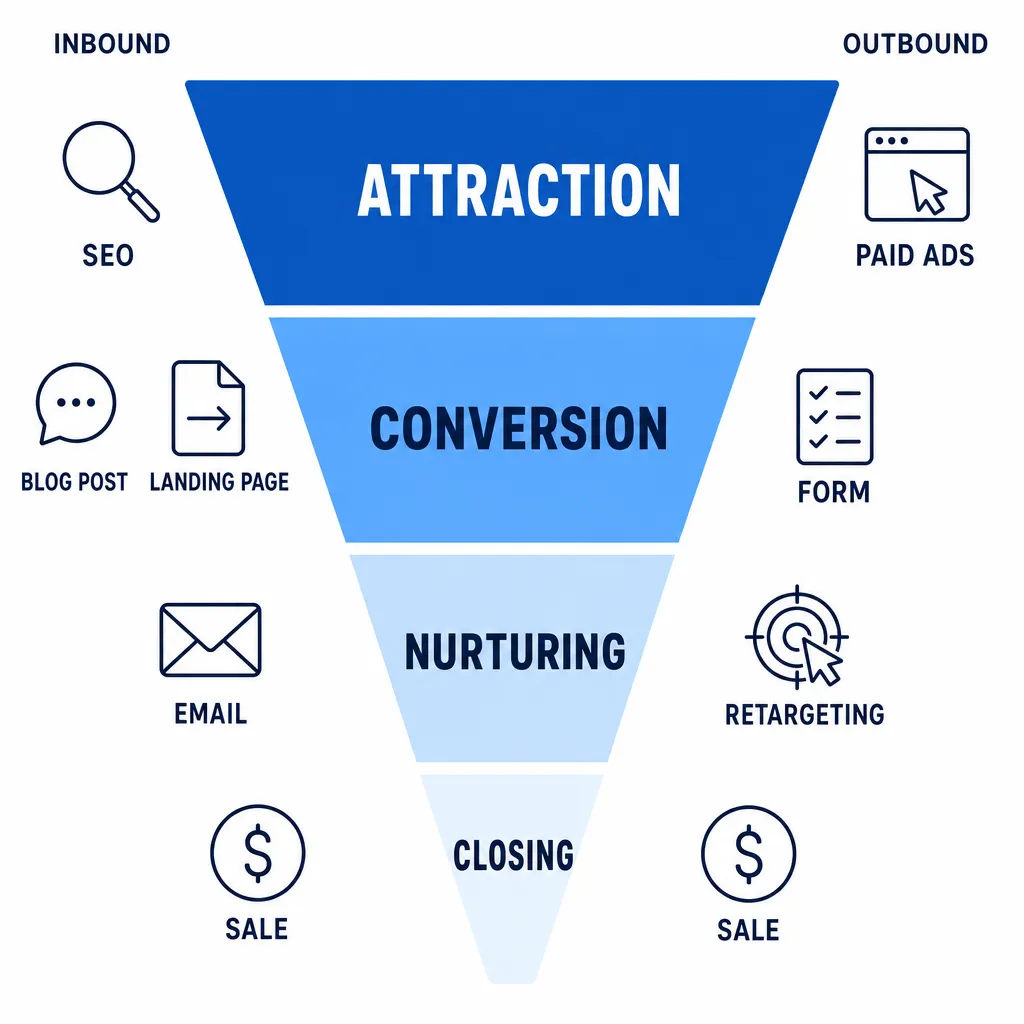
Combining inbound and outbound creates a powerful synergy. Use outbound to grab attention, then inbound to build the relationship through personalised nurturing.
Lead scoring helps you decide when to switch to targeted outbound. When a prospect checks out your pricing page, for example, a direct call from sales can tip the decision.
| Stage | Inbound | Outbound | Result |
| Attraction | SEO article + social media | Sponsored ads | Qualified traffic |
| Conversion | Landing page + lead magnet | Targeted retargeting | Identified prospects |
| Nurturing | Email automation + content | Personalised outreach | Qualified leads |
| Closing | Product demo + social proof | Direct sales call | Converted customers |
Results-driven inbound and outbound strategy
Rather than sticking to theory, go for a hands-on approach that proves measurable results for your business. The idea is simple: test several channels quickly, analyse their performance precisely and focus your effort on the ones with the best return on investment. This practical method lets you sidestep the sterile inbound vs outbound marketing debate and back what actually works.
Practical criteria for choosing
Time is the deciding factor in the choice between inbound and outbound marketing. Need immediate results for a launch or a promotion? Outbound marketing will bring you traffic and conversions in a matter of days. On the other hand, if you're after sustainable growth with acquisition costs that keep falling, inbound marketing is the smarter medium-term investment.
- Available budget: outbound requires recurring media spend, while inbound needs resources to create content and set up marketing automation tools
- Internal resources: outbound can get going with little technical setup, while inbound calls for skills in writing, SEO and lead nurturing
- Sales cycle: complex B2B processes benefit from inbound nurturing, while direct outbound works better for impulse decisions
- Market maturity: mature markets with informed buyers favour inbound, while emerging markets need educating through outbound
Your team's skills directly shape your marketing strategy. A team that's strong at content creation and SEO will excel at inbound, while an experienced sales force will get better results from outbound leads. The most effective route? Gradually build both skill sets so you can mix inbound and outbound according to your specific needs.
From signal to qualified lead
Modern growth hacking relies on a systematic approach to turning every sign of interest into a quantifiable opportunity. The process leans on the AARRR model (Acquisition, Activation, Retention, Referral, Revenue) to optimise every stage of the customer journey and maximise the value of each prospect, whatever their origin (inbound or outbound).
In practice, lead scoring automatically flags your most promising prospects: a visit to the pricing page might be worth 15 points, downloading a report 10 points, opening an email 1 point. Once a threshold is crossed, your system automatically notifies the sales team for a personalised follow-up.
Iterate and scale with data
For sustainable growth, you need to measure the impact of every marketing action precisely. Set SMART goals such as "increase organic traffic by 30% within 6 months" or "reduce cost per lead through nurturing" so you can evaluate ROI clearly. Bear in mind that an inbound strategy generally needs 6 to 12 months before it shows its full potential.
The PIE framework (Potential, Importance, Ease) helps you prioritise your tests. For example: test an SEO-optimised article, a social media campaign and cold emails for 2 weeks, then analyse performance over 30 days. This approach quickly reveals your most effective channels.
Multi-touch attribution becomes crucial when you combine different channels in your growth hacking strategy. A prospect might discover your site through your blog, subscribe to your newsletter, receive nurturing emails and finally convert after a retargeting campaign. Understanding these customer journeys helps you optimise every interaction and invest wisely in the channels that perform best.
Let AI Handle Your Content Publishing
Alya researches keywords, writes and publishes content directly to your CMS, WordPress, Shopify, Wix and more, on autopilot.