Blank-page syndrome and last-minute publishing are a thing of the past. If you want your blog or social channels to actually drive growth, one tool is non-negotiable: your editorial calendar.
This guide is your practical roadmap. We'll show you how to build a real content machine, one that structures your production, keeps your audience hooked and delivers measurable results. It's how you move from reacting to whatever lands on your desk to running a strategy that performs and lasts.
Editorial calendar: definition and strategic role in your approach
At the heart of every effective content marketing strategy sits a solid editorial calendar. It's far more than a list of ideas in a spreadsheet. Think of it as an operational brain: a living document that organises topics, formats (articles, videos, podcasts...) and distribution channels (blog, social media, newsletter...) over several weeks or months.
This practical guide explains how to build an SEO-optimised editorial calendar in 2026: applying the E-E-A-T framework, analysing the SERP and search intent, building topic pillars, choosing the right keywords (long tail included) and structuring every page (heading tags, title tag, meta description). Not forgetting media optimisation, technical performance (Core Web Vitals, structured data), a sound internal and external linking setup, sensible use of AI and a regular audit cycle to fight content decay. Our 5-step method, complete with a pre-publication checklist and the KPIs that matter, makes it simpler to create and manage a sustainable calendar that pulls in qualified traffic. Read our complete guide to building your SEO content plan.
To turn your calendar into a genuine editorial strategy, it needs to rest on three essential foundations:
- Measurable business goals: Forget vanity metrics. Set precise targets such as "+25% qualified leads from the blog in 6 months" or "+15% organic traffic to product pages by Q3". If your goal is lead generation, for instance, every flagship article should include a CTA pointing to a lead magnet (PDF guide, downloadable checklist).
- A deep understanding of your personas: Who are they, really? What challenges do they face? Which channels are they on (LinkedIn for B2B, Instagram for creatives...)? Your content has to answer their exact questions at every stage of the buying journey.
- Sharp competitor analysis: Spot your competitors' blind spots to produce unique content and uncover untapped SEO opportunities. If your rivals mostly publish listicles, stand out with in-depth case studies or detailed video tutorials.
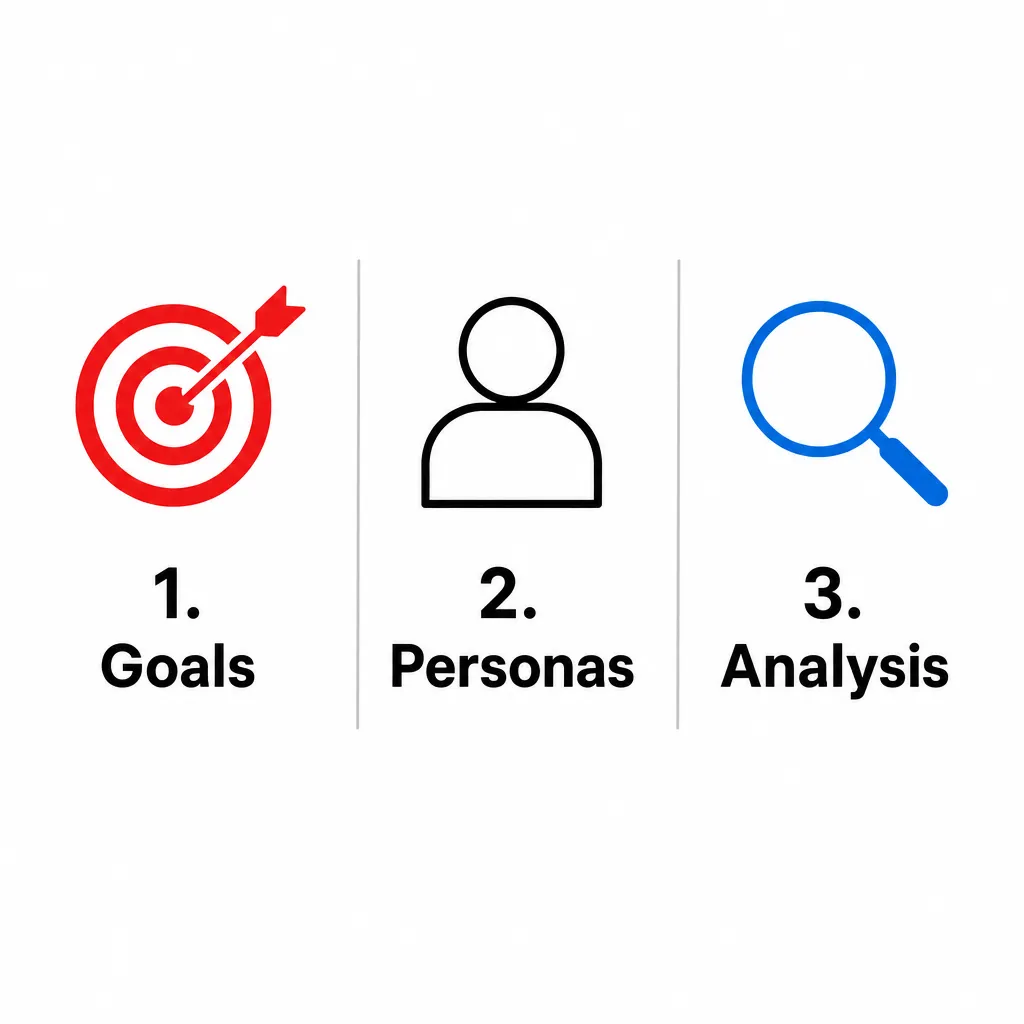
This strategic GPS guarantees that every post is relevant, and turns your content production from a cost line into a profitable, measurable investment.
From improvisation to performance: the benefits of a structured editorial calendar
An effective editorial calendar goes well beyond admin-style scheduling: it's a powerful lever that changes the way you work. Goodbye deadline stress and pointless meetings; hello organised, strategic production. Here are the concrete benefits our clients see day in, day out.
- Plan ahead to steer better: By planning content several months out, you naturally sync your publications with the key events in your industry. That big-picture view removes the gaps in your editorial schedule and lines your content strategy up perfectly with your marketing campaigns. For example: start building a full back-to-school 2026 package in January, with articles, social posts and a newsletter.
- Keep your message consistent: Your message stays unified and hits hard across every channel, which strengthens your brand identity. Every piece of content fits into a clear editorial line and speaks to your audience with one voice.
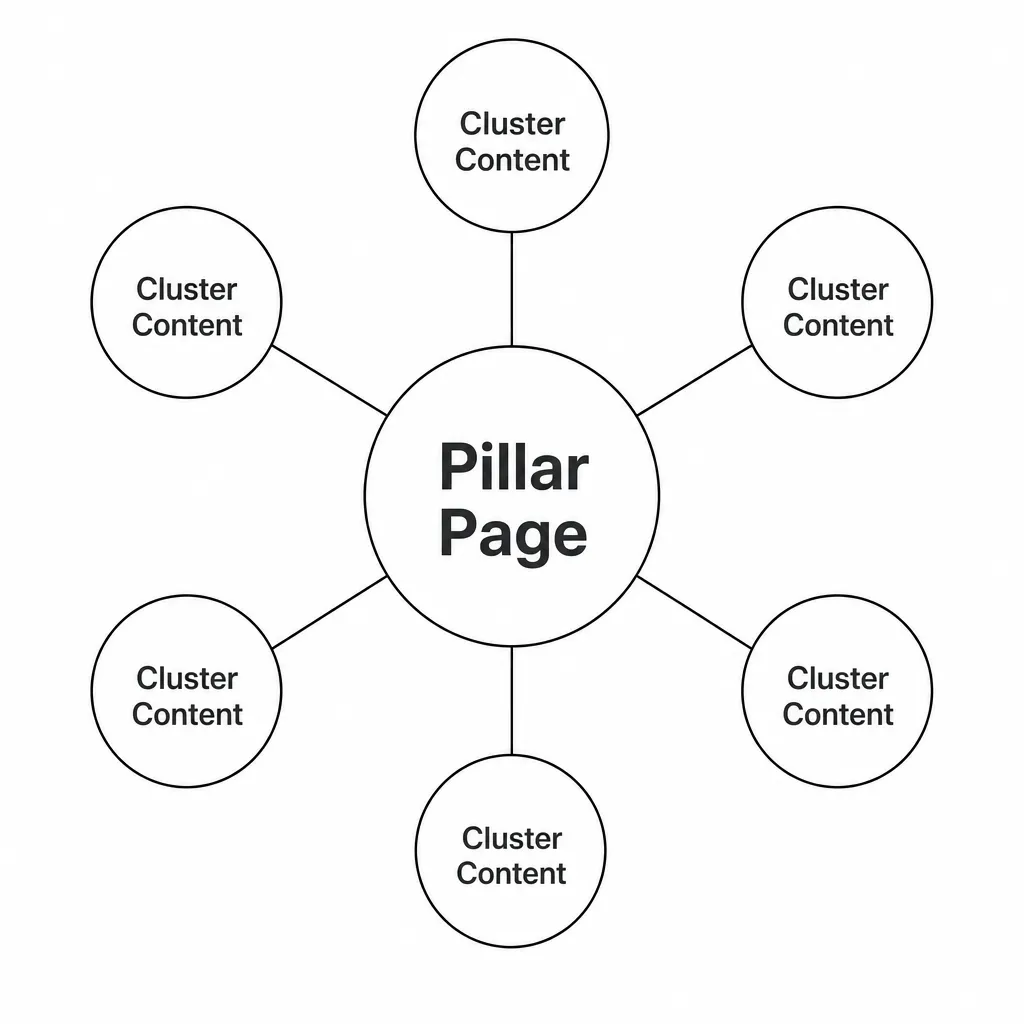
- Build recognised expertise: By organising your content around pillar pages and interconnected cluster articles, you show Google you own the subject. This cluster structure improves your SEO and lets you cover the full vocabulary of your field. To go further with this method, read our complete guide to SEO content strategy.
- Make the most of your resources: Every team member knows exactly what they own (writing, approval, design, SEO optimisation, publishing). Deadlines are transparent and bottlenecks fade away. Batching similar tasks cuts interruptions and boosts productivity.
- Guarantee regularity and visibility: A steady rhythm (2 articles a month, 1 newsletter a week) keeps your traffic flowing, drives engagement and builds loyalty. Google also favours sites that regularly publish fresh, relevant content.
- Keep room to manoeuvre: With a stock of evergreen content ready to go, you can easily rearrange your schedule when something unexpected comes up (an early launch, breaking industry news).
In practice: a shared editorial calendar in a tool like Asana or Notion cuts status meetings, because everyone can see who owns each piece and when it's due.
Our dedicated guide shows how growth hacking, an approach built on data, speed of execution and lean resources, can transform your editorial schedule. By applying the AARRR model (acquisition, activation, retention, referral, revenue) and iteration loops (hypothesis, A/B test, analysis, optimisation), you'll learn to prioritise ideas with the PIE framework, test different headlines and formats, integrate SEO and acquisition channels, then measure precisely what each piece of content brings in to accelerate growth. The result? A more agile, higher-performing and cheaper editorial calendar that boosts both acquisition and retention. Boost my editorial plan with growth hacking.
Build your control tower: the components of a robust editorial calendar template
To make your strategy tangible, your editorial schedule needs to become a clear, operational calendar template. A good editorial calendar template contains several key elements that make tracking effective and teamwork simpler.
Here are the fields you can't do without in your editorial calendar:
- Publication date: Plan your posts several weeks ahead to keep a steady rhythm.
- Status: Idea, Brief approved, In progress, In review, Ready to publish. Instant visual tracking.
- Working title: Refine it over time to improve CTR and SEO.
- Primary keyword: The main SEO target, such as "editorial calendar" for this article.
- Target audience: Define your ideal reader precisely (e.g. marketing manager at an SMB).
- Funnel stage: Awareness (TOFU), consideration (MOFU) or decision (BOFU).
- Format: Article, video, infographic, podcast or newsletter.
- Channel: Blog, social media, email, etc.
- Owner: Who handles writing, approval and publishing?
- CTA: The action you want (download, sign-up, share).
- Goal: Leads, traffic, awareness, retention.
- URL: Final link for tracking and internal linking.
- Metrics: Traffic, ranking, engagement, conversions.
- SEO brief: SERP analysis, secondary keywords, structure.
- Notes: Comments for reviewers and improvements.
Example of a typical entry:
2026-09-10 | In progress | Alice Turner | SEO Strategy 2026 | Marketing manager | MOFU | Article | Blog | PDF download | Leads | /seo-2026 | Traffic | Brief attached | Add FAQ
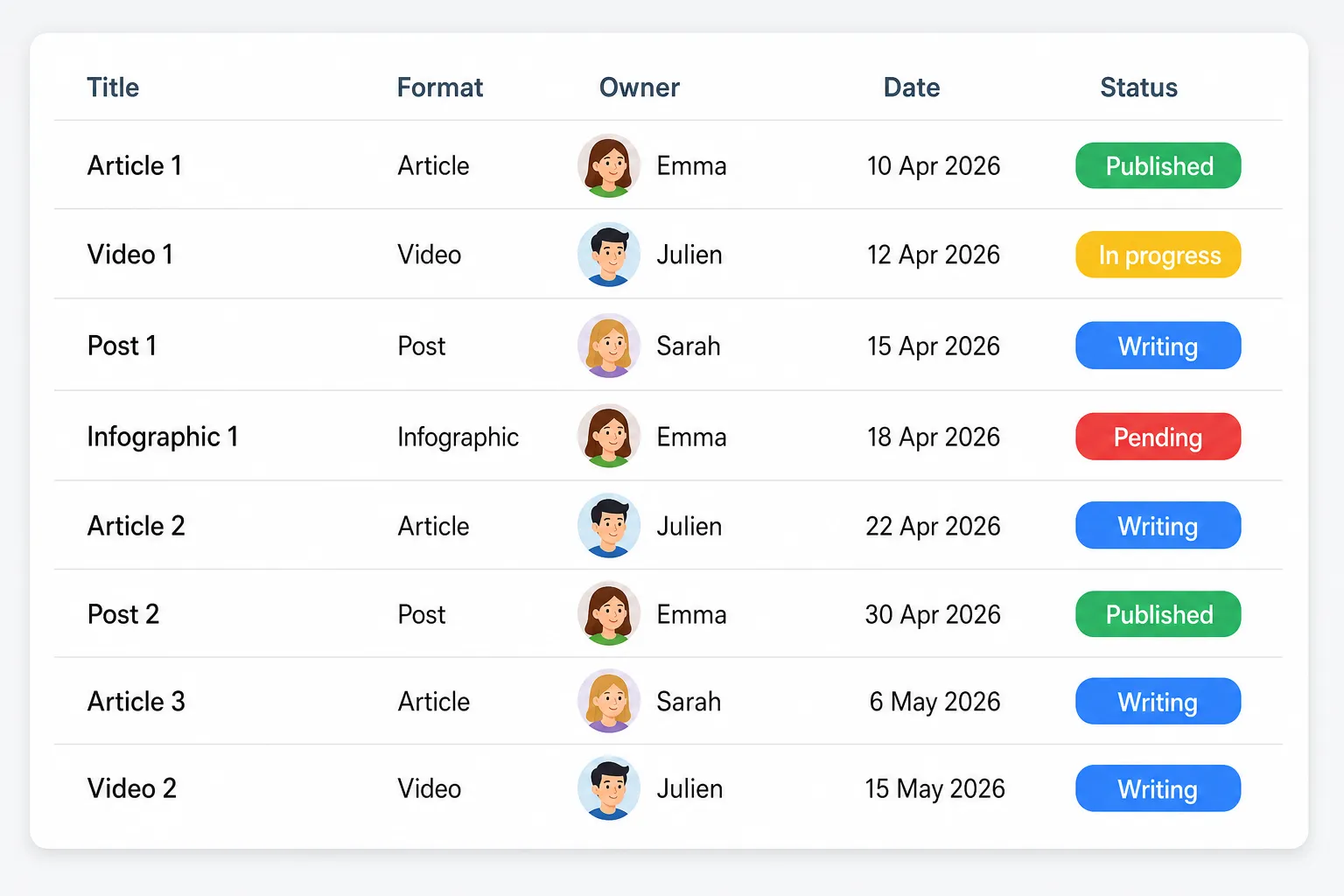
This detailed structure turns your editorial calendar into a genuine cockpit. With filters by status, persona, channel or author, you run your content production with pinpoint precision.
Tools to create an editorial calendar: from simple to seriously powerful
The right tool is the one your team will actually use every day. There are plenty of options for planning your editorial output, from a basic spreadsheet to the most sophisticated collaborative platforms.
- To start simple (free and effective): A well-organised Google Sheets or Excel file is a perfect way to create a basic editorial calendar. Versatile and collaborative, this universal tool lets you list topics, apply filters and display monthly or per-channel views. Ideal for small teams of 1 to 3 people, or for testing the method before paying for a tool.
- For visual teams (Kanban method): Trello is still unbeatable for visualising progress. Its cards-and-columns system (Ideas, Brief, In progress, etc.) shows the status of every piece at a glance. You can add checklists, attachments (SEO brief, visuals), deadlines and owners. A perfect fit for teams of 3 to 10 people.
- For advanced project management (power and automation): Platforms such as Asana, Monday.com, Notion or Airtable offer professional-grade features. They let you create task dependencies, automate reminders, generate reports and integrate other tools (Slack, Google Analytics). Perfect for large teams or agencies juggling several clients.
- For social media management: Hootsuite, Buffer, Sprout Social or CoSchedule combine an editorial calendar with automatic scheduling on social networks. Their built-in analytics measure engagement, and they become essential once you manage more than three social platforms.
Plenty of free templates exist to help you get your editorial planning off the ground quickly:
- Visual templates on Canva (perfect for a graphic monthly view)
- Templates on Notion (ideal for modular, collaborative management)
These templates help you track content that's published, in progress or planned over several months, for controlled, effective publishing.
Amplify your impact: integrating social media into your editorial calendar
A blog article doesn't end when you hit publish - that's the start of a well-thought-out distribution strategy.
Your editorial calendar should reflect your editorial line while planning smart promotion on social media, to maximise both reach and lifespan.
This approach relies on the principle of content atomisation, which lets you recycle your raw material intelligently.
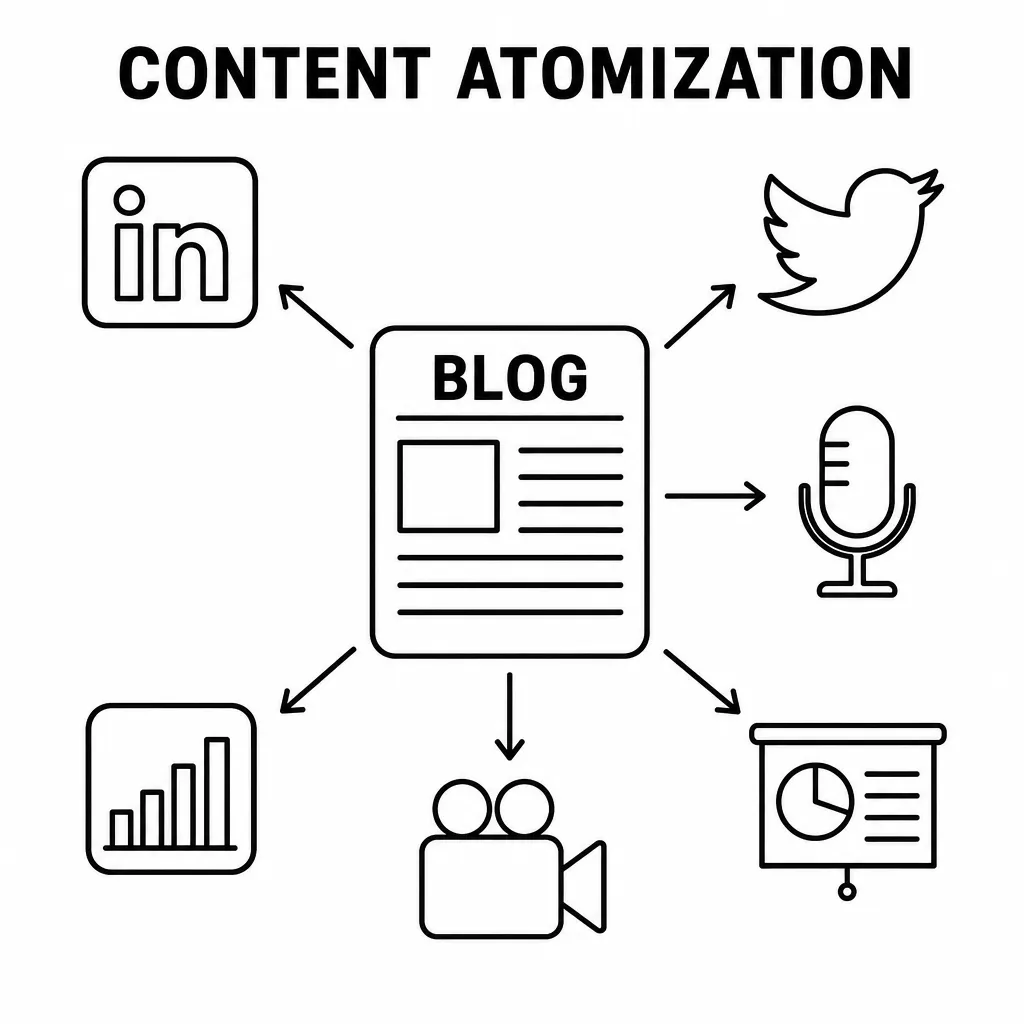
Here's how to squeeze everything out of a 2,000-word article:
- A LinkedIn carousel of 8 slides summarising the key points with punchy visuals
- 5 short LinkedIn posts, each highlighting one striking tip or statistic
- 3 X (Twitter) threads built around the most engaging parts of your content
- An infographic sized for Pinterest and Instagram, for an effective visual summary
- A detailed feature in your regular newsletter, linking to the full article
- A short video script (3 min) for short-form platforms such as YouTube Shorts or TikTok
- A targeted email to your qualified prospects, with a relevant call to action
- A PowerPoint slide you can reuse in your business presentations
Baking this systematic approach into your editorial schedule keeps you present on social media without any extra creative effort.
Plan all these spin-offs while the article is still being written, and spread the publication dates over 4 to 6 weeks: you stay visible without wearing your audience out.
A concrete example of how it fits into your calendar:
- 2026-09-10: Article goes live
- 2026-09-11: LinkedIn carousel (10am)
- 2026-09-12: X thread (2pm)
- 2026-09-13: Instagram post (9am)
- 2026-09-15: Featured in the newsletter
- 2026-09-17: YouTube Short (11am)
- 2026-09-20: Second LinkedIn post (10am)
Our 5-step method for an editorial calendar that dominates the SERP
Building an effective editorial schedule takes a methodical, well-structured approach. The editorial calendar is a cornerstone of every successful content marketing strategy. To get a firm grip on the SEO fundamentals first, take a look at our guide How to build a winning SEO strategy before working through our step-by-step process.
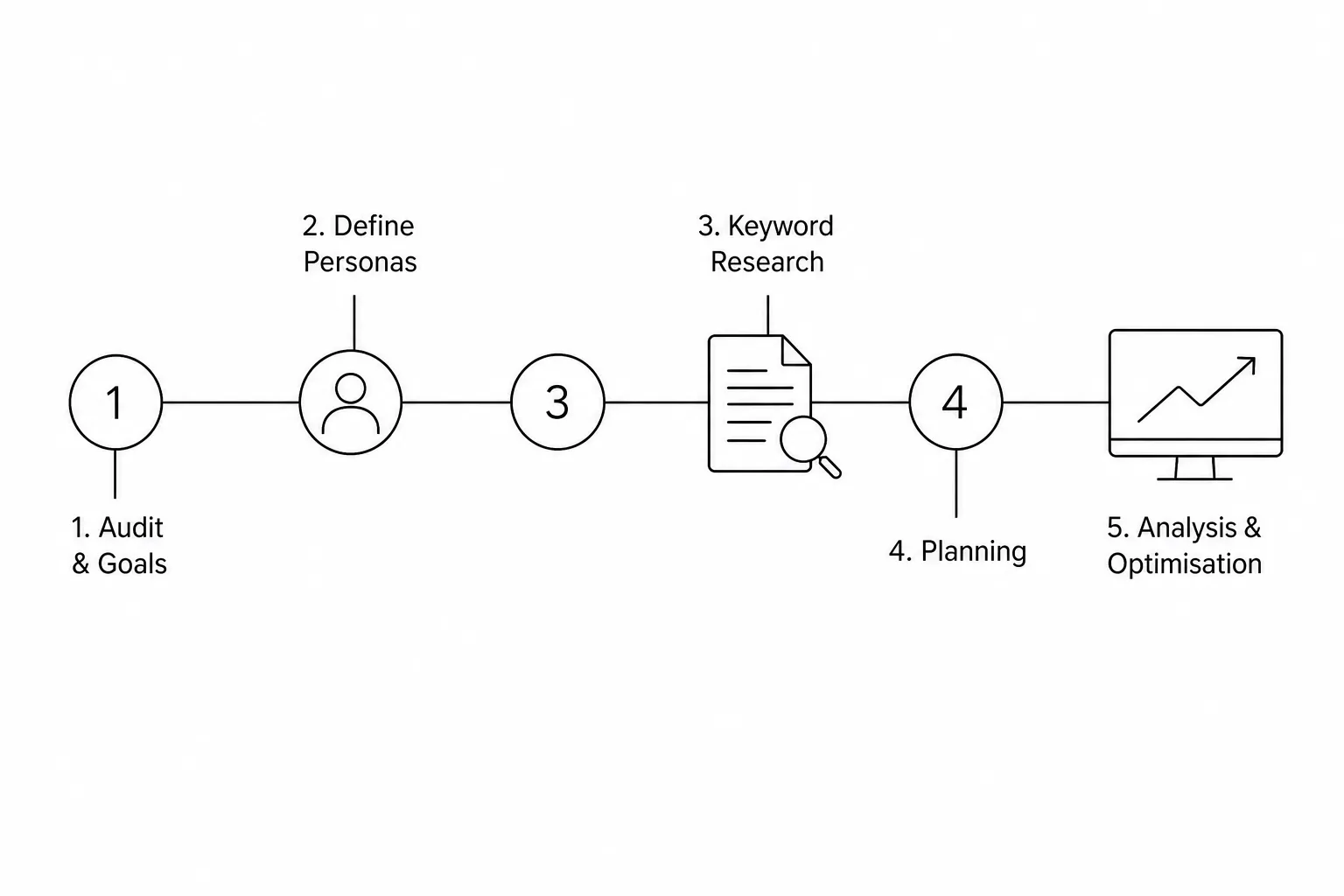
Step 1: Initial audit and SMART goals
First, unavoidable step: look at what you already have. Run a full audit of your existing content. Identify the articles that perform, the ones bringing traffic or conversions, but also the ones that are outdated or underperforming. Use tools such as Google Analytics 4 and Google Search Console to spot high-potential pages and those that need work.
Then set SMART goals (Specific, Measurable, Achievable, Realistic and Time-bound) to guide your strategy. A few concrete examples:
- "Grow the blog's organic traffic by 30% over the next 6 months"
- "Generate 50 qualified leads a month from MOFU content by Q3"
- "Double the landing page conversion rate (from 2% to 4%) by year end"
- "Publish 2 pillar articles per quarter, each supported by 8 cluster articles"
These goals become the roadmap for every editorial decision and let you measure precisely the return on your content investment.
Step 2: Defining personas and mapping the customer journey
Don't stop at basic demographics. Build detailed portraits of your personas, including:
- Main pain points: What problems do they run into every day?
- Ambitions: What results are they after?
- Information channels: Where do they consume content? (social media, newsletters, podcasts...)
- Level of expertise: Are they beginners or seasoned in your field?
- Recurring questions: What do they type into Google?
Gather this from your sales team, your customer support and the interactions on your social channels. It's what lets you feed your editorial calendar with topics your audience genuinely cares about.
Then map the customer journey by placing each persona in the AARRR funnel:
- Acquisition (TOFU): educational content, practical guides
- Activation (MOFU): tutorials, case studies
- Retention: premium newsletter, expert tips
- Referral: content that's easy to share
- Revenue (BOFU): sales arguments, demos
Step 3: Keyword research and topic cluster architecture (pillars/clusters)
Sharpen your SEO strategy with powerful tools such as Ahrefs, Semrush, Ubersuggest or AnswerThePublic. These platforms help you identify your audience's key queries, analyse their search volume, keyword difficulty and the intent behind each query (informational, transactional or navigational).
Then organise your keywords into topic clusters built around pillar pages. This topic cluster structure reinforces your expertise on a subject while strengthening your internal linking strategy.
Take a cluster on the theme "SEO content" as an example:
- Pillar page: "The ultimate guide to SEO content in 2026" (primary keyword: "seo content")
- Cluster articles:
- "How to analyse the SERP: a method for optimising your content" (keyword: "serp analysis")
- "Article schema markup: the practical guide for content writers" (keyword: "article schema")
- "Internal linking: strategies to boost your rankings" (keyword: "internal linking seo")
- "Image optimisation for SEO: WebP vs AVIF" (keyword: "image optimisation seo")
Each article in the cluster should contain 2 to 4 links pointing to the pillar page and to related clusters. Those links need to sit naturally in the text with optimised anchors, and their placement should be scheduled in your editorial calendar.
Before writing starts, prepare a complete SEO brief covering:
- A detailed SERP analysis: dominant formats (listicles, guides, videos), common questions (People Also Ask) and featured snippet opportunities
- An original angle that sets you apart from the competition
- The secondary and long-tail keywords to weave in naturally
- An internal linking strategy with predefined anchors
- The relevant structured data (Article, VideoObject, BreadcrumbList...)
Step 4: Ideation, planning and a realistic cadence
Come up with original angles and vary the formats for every topic you've identified. Lean on your unique expertise, your proprietary data and your hands-on experience rather than rehashing what's already out there.
Score your ideas with the PIE framework (Potential for SEO, Importance to the business, Ease of execution) to set priorities. For example:
- Topic A: Potential 8/10, Importance 9/10, Ease 6/10 → PIE score = 7.7 → High priority
- Topic B: Potential 5/10, Importance 4/10, Ease 9/10 → PIE score = 6.0 → Medium priority
Then set a realistic publishing rhythm based on your resources. A few sample plans:
- Solo operator: 2 cluster articles/month + 1 newsletter/month + 6 LinkedIn posts a month
- Team of 3: 1 pillar article/quarter + 6 cluster articles/month + 12 social posts/week + 1 weekly newsletter + 2 video tutorials a month
- Team of 10+: 2 pillar articles/month + 20 cluster articles/month + daily social content + 4 webinars/quarter
Add the major events in your industry to the calendar, and always keep a stock of evergreen content (4 to 6 articles ready to publish) to cover the unexpected.
Clarify who does what in your editorial process: who writes? who handles SEO? who proofreads? who approves? who publishes? who runs social promotion? Set precise deadlines for each stage (e.g. brief at D-14, first draft at D-7, SEO review at D-5, legal sign-off at D-3, publication on D-day).
Step 5: Analysis, continuous optimisation and fighting content decay
A high-performing editorial calendar is a living tool that never stops evolving.
It needs regular monitoring to stay relevant.
Analyse the results of every publication closely and adjust your editorial strategy accordingly.
Key metrics to track in your calendar:
- Rankings: In Google Search Console, identify content sitting in positions 11 to 20 that a quick optimisation could push onto page one.
- Audience: Track organic traffic and its growth in Google Analytics 4.
- Click-through rate: Rework your title tags and meta descriptions when CTR drops below 3%.
- Conversions: Measure meaningful actions (forms submitted, downloads, demo requests).
- Social interactions: Likes, shares and comments.
- Visitor behaviour: Time on page and bounce rate.
- Technical performance: Check your Core Web Vitals (LCP, INP, CLS) regularly.
Schedule a full quarterly review plus monthly checks on declining pages.
Add a recurring "Quarterly content audit" task straight into your schedule.
Optimisations to schedule regularly:
- Refreshing outdated information
- Adding FAQ sections optimised for featured snippets
- Adding new visuals
- Consolidating similar, underperforming articles
- Improving internal linking
- A/B testing titles and descriptions
Management rules to formalise:
- Content getting fewer than 50 visits/month with no conversions → merge or delete with a redirect
- Ranking stuck between positions 11 and 20 → priority optimisation
- High-performing article → expand the related topic cluster
Set up team routines: a quick weekly check-in on content progress and a monthly strategic review of performance and priorities.
Measurement, promotion and growth hacking to maximise impact
Even the best content only works if it reaches its audience. That's why your editorial calendar needs a clear promotion strategy with specific actions for every publication.
Channels to activate systematically (with their publication dates set in your editorial calendar):
- SEO: Technical optimisation, internal linking strategy and backlink acquisition (guest blogging and digital PR) for lasting rankings
- Newsletter: Personalised sends to your subscribers with relevant calls to action
- Social media: Native posts, stories, visual decks and short videos (see the section on content atomisation)
- Partnerships: Collaborations with influencers, trade media or business partners to widen your audience
- Paid advertising: LinkedIn Ads, Google Ads and Meta Ads campaigns to boost key content
- Targeted email: Personalised messages sent to your qualified prospects
Maximum mileage from every piece of content to extend its lifespan and ROI:
- In-depth article → Turned into a downloadable white paper
- Series of articles → Converted into an automated email sequence
- Practical guide → Adapted into a detailed video tutorial
- Key data → Reworked into shareable infographics
Plan these adaptations from the moment the original content is created, and stagger their release across your editorial calendar to keep engagement up.
Continuous improvement through growth hacking methods:
- Test different headline versions and measure their performance
- Experiment with different calls to action to find the top performers
- Compare formats (text, video, visual) on the same topic
- Prioritise your tests with the PIE framework (Potential, Importance, Ease)
Growth hacking ideas to build into your editorial strategy:
- Referral incentives (e.g. "Share this guide with 3 contacts and get an exclusive bonus")
- Synchronised multichannel launches (simultaneous release on blog, newsletter and social media)
- Dedicated content on partner platforms (excerpts on Medium, guest posts, etc.)

Rank Higher Without the Manual Work
From technical audits with Nox to competitor monitoring with Marc, Sedestral's AI agents cover every layer of SEO so your team doesn't have to.